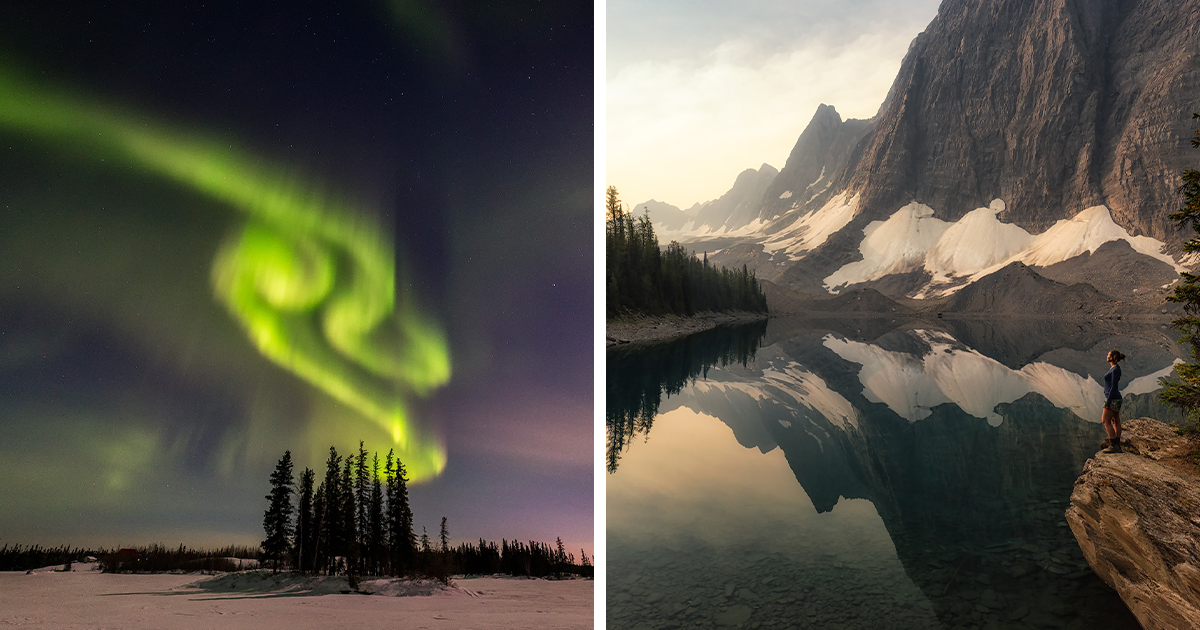
There are places that politely ask for your attention, and then there is the Canadian wilderness, which grabs your backpack strap, points at a glacier, and says, “Look at that. No, seriously, put the granola bar down.” After more than a year of hiking through forests, alpine passes, turquoise lakes, wind-polished ridgelines, and trails where the weather changes its mind faster than a squirrel in traffic, we came home with muddy boots, tired knees, and a camera roll that could probably qualify as its own weather system.
This collection of 20 photos is not just a highlight reel of dramatic mountains and moody lakes. It is a visual diary of patience, sweat, accidental wrong turns, early alarms, and the quiet kind of wonder that makes you forget your phone has notifications. From the Canadian Rockies to boreal forest trails, from wildlife viewed at a respectful distance to mornings when fog turned the trail into a mystery novel, these images show what hiking through Canada’s wild landscapes really feels like.
And yes, there were mosquitoes. They also seemed to enjoy the scenery.
A Year On The Trail: What The Canadian Wilderness Teaches You
Spending over a year hiking in the Canadian wilderness is not like taking one perfect weekend trip and returning with a heroic story about conquering nature. Nature is not conquered. Nature simply allows you to pass through if you bring enough water, respect trail rules, and avoid behaving like the main character in a survival movie.
Canada’s wild spaces are enormous, varied, and emotionally unfair to anyone with limited storage on their camera. One day you may be walking beside a glacial lake so blue it looks edited by someone with no restraint. The next, you may be crossing a forest trail where the air smells like spruce, wet soil, and the faint possibility of rain. In the Canadian Rockies, places like Banff and Jasper are known for soaring peaks, alpine lakes, glaciers, and abundant wildlife. In the boreal regions, the landscape shifts into a vast green world of spruce, wetlands, birds, and long northern light.
The best photos often came from the least dramatic moments. A boot print filling with rainwater. A raven turning its head on a fence post. Steam lifting off a lake before sunrise. The wilderness is generous, but it does not always perform on schedule. Sometimes the mountain hides behind clouds all day, and the best image is a wet backpack leaning against a tree like it, too, has given up.
The 20 Photos That Told The Story Best
The following 20 scenes represent the heart of our year outdoors. They are not ranked by beauty because that would be rude to the mountains, and we are not interested in receiving a strongly worded letter from a glacier.
1. Sunrise Over A Turquoise Lake
The first unforgettable photo came before breakfast, before coffee, and frankly before our personalities had fully loaded. A cold morning on a lake trail rewarded us with pale gold light spreading across turquoise water. The mountains reflected so clearly that the world looked folded in half. It was the kind of scene that makes you whisper, even if no one asked you to.
2. A Trail Through The Spruce Forest
Not every wilderness photo needs a giant peak in the background. One of our favorite images shows a narrow trail disappearing between spruce trees, their trunks dark from recent rain. The Canadian forest has a way of making silence feel full. You hear water somewhere, birds above you, and your own steps reminding you that walking is basically meditation with more blisters.
3. The First Wildlife Encounter From A Safe Distance
Wildlife photography in Canada is thrilling, but it requires respect. One photo shows an elk grazing far from the trail, framed by yellow grass and a line of trees. The image works because the animal is calm, unaware of being pressured, and given room to behave naturally. The best wildlife photo is never worth stressing an animal or putting people at risk.
4. Fog Rolling Through A Valley
There is a special kind of drama in fog. It turns familiar trails into theater. In this shot, clouds drift low through a valley while tree-covered slopes appear and disappear like stage curtains. The camera captured the scene, but the real memory is how quiet it felt, as if the entire valley had decided to speak softly for the morning.
5. A Glacier Seen From The Trail
Some views make you feel tiny in the best possible way. A glacier viewed from a rocky trail reminded us that wilderness photography is also a record of time. Ice, stone, weather, and light all meet in one frame. The photo is beautiful, but it also carries weight: these landscapes are changing, and images can help people care about places they may never visit.
6. The Boardwalk Across A Wetland
Wetlands rarely get the same social media applause as mountain summits, which is unfair because wetlands are basically luxury hotels for birds, insects, amphibians, and plants. One photo shows a wooden boardwalk crossing a marsh glowing in evening light. It is peaceful, textured, and alive in every direction.
7. A Mountain Pass After A Hard Climb
This photo came with sweat, questionable snack choices, and at least one moment of bargaining with gravity. At the top of a mountain pass, the land opened into layers of ridge, valley, snow, and sky. A picture can show the view, but it cannot fully explain the feeling of earning it step by step.
8. A Rainstorm Moving In
Blue skies are lovely, but storm clouds have better stage presence. One image captures dark weather sweeping over a ridge while sunlight still touches the lower slopes. The photo looks dramatic because it was dramatic. We packed the camera quickly after that, proving once again that the best wilderness photographers are also efficient panic-packers.
9. Wildflowers Beside The Trail
After weeks of rock, ice, and forest, tiny alpine wildflowers felt like confetti thrown by the landscape. The photo focuses on small purple and yellow blooms beside the trail, with mountains blurred in the background. It is a reminder to look down, not just up. The wilderness often hides its best details at ankle height.
10. The Lake That Looked Too Blue To Be Real
Some Canadian lakes are so vividly blue that your camera looks guilty, as if it has been exaggerating. Glacial flour, sunlight, and depth can create water colors that seem almost impossible. This image became one of our most shared because people assumed it was heavily edited. It was not. Nature simply has a better color palette than most apps.
11. A Quiet Campsite At Dusk
One of the most emotional photos is also one of the simplest: a tent near the trees, a cooking area cleaned and packed away, and the last light fading behind the hills. Responsible camping is not glamorous, but it is essential. Food storage, clean campsites, and Leave No Trace habits protect both visitors and wildlife.
12. Tracks In Fresh Snow
Snow changes the language of the trail. Suddenly the ground is covered in clues. One photo shows animal tracks crossing fresh snow near a forest edge. We did not follow them. The point was not to chase the story, but to notice it. The wilderness is full of lives moving around us, most of which are better off without our interference.
13. The Long Road Between Trailheads
Not every great wilderness image is taken on foot. Some are captured between hikes, when the road curves between peaks and the windshield becomes a moving postcard. The photo of a long highway under towering mountains captures the scale of the Canadian Rockies and the strange joy of being tired, hungry, and still completely unwilling to stop looking out the window.
14. A Waterfall Hidden In The Trees
Waterfalls are excellent hiking companions because they are loud enough to make your problems seem smaller. One photo shows a narrow waterfall cutting through mossy rock, partly hidden by branches. The best part was hearing it before seeing it, then following the sound like nature had dropped a pin on the map.
15. A Burned Forest Beginning To Recover
One of the most powerful images came from a landscape shaped by wildfire. Blackened trunks stood against a bright sky, while new green growth pushed up below. It was stark, beautiful, and complicated. Fire is part of many forest ecosystems, but hotter, longer, and more intense fire seasons are a growing concern across northern landscapes. The photo felt less like an ending and more like a difficult chapter.
16. A Bird On A Bare Branch
Canada’s boreal forest supports huge numbers of migratory birds, and once you start paying attention, the forest becomes much louder and more interesting. One close photo of a small bird on a branch became a favorite because it captured personality. The bird looked directly at the camera with the expression of a tiny trail supervisor.
17. Boots At The Edge Of A Viewpoint
This picture is not fancy. It is just muddy boots, a rocky ledge, and a huge valley beyond. But it tells the truth about hiking: the view is only part of the story. The rest is sore calves, wet socks, snacks crushed into backpack corners, and the quiet pride of continuing when the trail gets steep.
18. The Northern Sky After Sunset
On clear nights far from city lights, the Canadian wilderness becomes an entirely different world. One long-exposure photo captured stars over the dark outline of trees. Night photography requires patience, warm layers, and the willingness to stand very still while your brain invents sounds in the forest. Worth it? Absolutely. Comfortable? Let’s not get carried away.
19. A Trail Sign Covered In Frost
Some photos tell you exactly what the day felt like. A frost-covered trail sign, shot early in the morning, captured the cold better than any weather app. The sign pointed toward a route we had planned for weeks. We checked conditions, adjusted our layers, and started slowly. In wild places, flexibility is not weakness. It is how you avoid becoming a cautionary tale.
20. The Final Photo: A Small Human In A Huge Landscape
The last image in the series shows one hiker standing in a wide valley, surrounded by mountains that make the person look almost comically small. That is the feeling we kept returning to all year. The wilderness does not shrink you in a negative way. It right-sizes you. It reminds you that you are part of something bigger, older, and far less interested in your inbox.
What Makes Canadian Wilderness Photography So Powerful?
The appeal of Canadian wilderness photography is not only the scenery. Yes, the lakes are stunning, the mountains are dramatic, and the forests seem designed to make photographers whisper “one more shot” until their hiking partners lose patience. But the real power comes from contrast.
Canada’s wild landscapes can feel both welcoming and intimidating. A sunny lakeshore may sit just below a snow-covered peak. A gentle forest path may pass through active wildlife habitat. A calm morning can turn windy by lunch. These contrasts create visual tension, which is photographer language for “this place refuses to be boring.”
Light also plays a starring role. In open alpine areas, sunrise and sunset can stretch across ridges in warm bands. In dense forest, light arrives in narrow shafts, touching moss, bark, and wet leaves. On cloudy days, colors become softer and richer. The trick is not waiting only for perfect weather. The trick is learning what each kind of weather gives you.
Hiking Lessons We Learned The Muddy Way
Check Conditions Before Every Hike
Trail conditions in mountain environments can change quickly. Snow may linger at higher elevations well into summer, storms can move in fast, and seasonal closures may protect wildlife or visitors. Before each hike, we learned to check official updates, weather forecasts, and route information. The mountain does not care that your itinerary has a cute spreadsheet.
Respect Wildlife Like A Guest With Manners
Seeing wildlife is unforgettable, but distance matters. Use binoculars or a telephoto lens, never feed animals, and never approach for a selfie. A calm animal makes a better photo than a stressed one, and no picture is worth creating danger for wildlife or people.
Practice Leave No Trace Even When Nobody Is Watching
Staying on durable surfaces, packing out trash, respecting closures, and leaving natural objects where they belong may not sound dramatic, but they are the habits that keep wild places wild. The best compliment a hiker can give a trail is to leave it looking as though they were never there.
Photograph The Story, Not Just The Trophy View
Big landscapes are wonderful, but a hiking photo collection becomes more memorable when it includes small moments: a wet boot, a bent trail marker, steam rising from a mug, frost on a zipper, or the first light touching a tent wall. These details turn a pretty gallery into a lived experience.
500 More Words From The Trail: The Experience Behind The Photos
After a year in the Canadian wilderness, the strongest memories are not always attached to the sharpest photos. Some of them are blurry, both literally and emotionally. There was the morning when we woke before sunrise, convinced we were about to capture the greatest lake reflection in human history, only to discover that the entire valley had been swallowed by fog. At first, it felt like failure. Then the fog lifted just enough to reveal a single line of trees mirrored in the water, and suddenly the photo became better than the one we had imagined.
That happened often. The wilderness kept ignoring our plans and improving them.
There were long trail days when the camera stayed in the bag because the rain was too persistent or the climb too demanding. On those days, the experience became more important than documentation. We listened to the rhythm of boots on mud, the sound of water under hidden rocks, the wind pressing through the trees. We learned that not every beautiful thing needs to be captured. Some moments are meant to be carried home quietly.
We also learned that hiking for photos can be a trap if you are not careful. It is easy to chase the perfect frame and forget where you are standing. The better approach was to hike first and photograph second. When we slowed down, the images improved. We noticed how clouds moved over a ridge, how birds gathered near wetland edges, how afternoon light changed the color of stone. Photography became less about collecting proof and more about paying attention.
Food became part of the adventure too. A simple sandwich eaten beside a cold lake tasted like a five-star meal, possibly because hunger is the world’s most persuasive chef. Trail mix, however, remains suspicious. No matter how carefully you prepare it, the chocolate disappears first and the raisins somehow multiply.
The hardest days gave the photos their meaning. A summit view means more when you remember the switchbacks. A peaceful campsite feels deeper when you remember arriving tired, filtering water, organizing gear, and making sure everything scented was safely stored. A wildlife photo feels more valuable when you remember choosing distance over ego.
The Canadian wilderness changed how we understood time. In the city, time is measured by calendars and alarms. On the trail, it is measured by light, weather, hunger, distance, and how long your socks have been wet. A year outdoors did not make us fearless experts. It made us more humble, more prepared, and more grateful. The photos are beautiful, but they are only the surface. Behind each one is a lesson in patience, respect, and the simple joy of walking into a landscape that does not need you, but somehow makes room for you anyway.
Conclusion: Why These 20 Photos Matter
These 20 photos are more than a gallery of Canadian wilderness scenes. They are reminders that hiking is not only about reaching viewpoints, checking off trails, or proving endurance. It is about learning to move through wild places with curiosity and care. The Canadian wilderness offers some of the most breathtaking hiking photography opportunities in North America, but it also asks visitors to be responsible: check conditions, give wildlife space, respect fragile ecosystems, and leave each place better than you found it.
After more than a year on the trail, we came away with images of mountains, lakes, forests, storms, birds, snow, fire recovery, and quiet campsites. But the real reward was not the camera roll. It was the way these landscapes taught us to slow down, look closer, and laugh when the trail turned muddy five minutes after we cleaned our boots. Nature has a sense of humor. It also has excellent lighting.