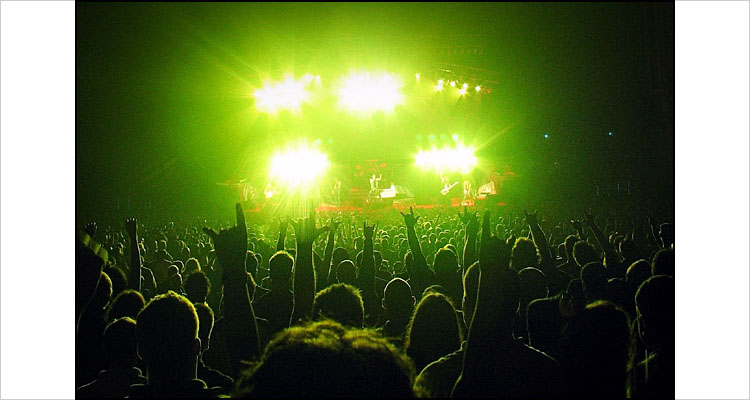
There is a tiny slice of time at every great concert that deserves its own tiny crown. It happens after the house lights drop, after the pre-show playlist fades, after the crowd suddenly realizes, “Oh, this is really happening.” The stage is dark. The amps are humming. A roadie has disappeared into the wings like a stage ninja. Somewhere, someone screams as if they have personally spotted Bigfoot holding a guitar.
This is the moment at a concert after the lights go out and before the band comes on stage. It may last ten seconds. It may stretch into a deliciously unbearable minute. But in that brief blackout, the entire room changes. Thousands of strangers become one enormous, buzzing organism. Phones go up. Hearts speed up. Friends grab each other’s arms. The floor seems to inhale.
That is why this moment fits perfectly inside the spirit of 1000 Awesome Things: it is ordinary, universal, and strangely magical. It is not the encore. It is not the guitar solo. It is not the confetti cannon, although we support confetti cannons as a society. It is the breath before the first notethe suspenseful little doorway between everyday life and live music chaos.
Why This Concert Moment Feels So Electric
The magic begins with anticipation. Humans love a good countdown, even when nobody is officially counting. When the lights go out at a concert, the audience receives a signal: the waiting is almost over. That signal activates memory, emotion, imagination, and pure fan panic. You know the band is near, but you cannot see them yet. Your brain starts filling the darkness with possibility.
Maybe the drummer will walk out first. Maybe the singer will appear in a spotlight. Maybe the band will open with the hit song everyone has been secretly hoping for. Maybe the first chord will be so loud that your skeleton briefly considers moving to another zip code.
Great live music depends on this tension. A recorded song begins when you tap play. A concert begins before anyone plays anything. It begins in the collective pause, when the crowd becomes alert to every sound: the feedback squeal, the click of a pedalboard, the low rumble from the PA system, the mysterious thump from backstage that might be a bass drum or a crew member dropping a water bottle.
The Lights Go Out, and the Crowd Becomes One
One of the best parts of this moment is how quickly the audience transforms. Five minutes earlier, people were separate little islandschecking tickets, finding seats, debating merch prices, pretending a $17 drink is normal. Then the lights drop, and suddenly everyone has the same job: lose their mind politely but enthusiastically.
That shared reaction is part of what makes live concerts feel bigger than streaming music at home. At home, you can listen to the same song in sweatpants while eating cereal out of a mug. Beautiful? Yes. Historic? Probably not. In a venue, the song becomes social. You are not only hearing music; you are hearing other people hear it with you.
The darkness helps. When the venue dims, attention moves away from the everyday detailsthe sticky floor, the tall person in front of you, the fact that your shoes were not built for standing for three hours. The dark points everyone toward the same invisible center. The stage becomes a promise.
The Psychology of the Pre-Show Blackout
There is a reason this moment feels almost cinematic. Darkness creates focus. Silence, or near-silence, creates suspense. A sudden lighting change tells the body that something important is about to happen. In live production, lighting is not decoration; it is storytelling. The house lights dim to move the audience from “we are waiting” to “we are entering the show.”
Music also plays with prediction. Listeners enjoy patterns, surprises, and emotional release. The second before the band appears is packed with prediction: What song? What outfit? What mood? What version of the show will we get tonight? The brain loves that uncertainty because it makes the payoff stronger. When the first sound finally hits, the release feels earned.
That is the secret: the moment before the band comes on stage is powerful because nothing has happened yetand somehow everything has happened. You bought the ticket. You counted the days. You found parking, which should legally qualify as an athletic event. You made it through the opening act, the bathroom line, and the person behind you explaining the band’s entire discography. Now the lights are out, and the night is balanced on a matchstick.
From Small Clubs to Stadiums: The Same Awesome Feeling
This moment works in almost every type of venue. In a tiny club, it might feel sweaty and intimate. The lights click off, the curtain moves, and you can see the guitarist’s silhouette three feet away. You might notice the setlist taped to the floor. You might hear the singer laugh backstage. The excitement feels close enough to touch.
In an arena, the moment becomes massive. The crowd roar rolls upward like thunder trapped in a building. Wristbands flash. Video screens flicker. A giant curtain, platform, or glowing cube may be involved because arena tours enjoy asking, “What if the stage looked like a spaceship with feelings?” The scale is bigger, but the emotional mechanism is the same: darkness, suspense, reveal.
At a festival, the blackout may be replaced by a dramatic change in stage lighting, a sudden audio intro, or the lowering sun turning the whole field into a waiting room for joy. People who were casually chatting become instantly alert. The crowd tightens. The front rows surge. The air changes texture.
Why Fans Remember the Moment Before the First Song
Fans often remember the opening seconds of a concert as clearly as the biggest chorus. That pre-show darkness gets attached to memory because it marks a transition. You step out of normal time and into event time. For the next hour or two, ordinary rules loosen. Singing loudly is encouraged. Strangers become temporary friends. Crying during a bridge is acceptable, especially if the bridge has strings, a key change, or emotional damage.
The first glimpse of the band also confirms something important: the artists are real. Yes, you have seen them on screens, album covers, interviews, and possibly one strangely lit cooking video online. But when they walk onto the stage in the dark, they become physically present. The distance between fan and artist collapses just enough to feel personal.
That is why the roar can be so intense before the music even starts. The audience is not only cheering for the band. They are cheering for the wait, the memories, the favorite songs, the friendships, the ticket purchase, the road trip, the outfit planning, the emotional survival required to refresh a ticketing page 700 times. The cheer says, “We made it.”
The Sound Before the Sound
Every concert has a pre-song soundtrack. It is not always music. Sometimes it is the low drone of equipment. Sometimes it is a recorded intro, a heartbeat, a movie quote, a storm sound, or a strange electronic rumble that makes everyone wonder if aliens are opening the show. Sometimes it is simply the crowd itself.
That sound matters. It tells the audience where to put their excitement. A soft intro can make people lean in. A huge bass swell can make the whole room erupt. A familiar audio cue can trigger instant recognition. Fans love being the first to realize what is happening. When one person screams because they identify the opening sample, the scream spreads like popcorn in a microwave.
Then the first silhouette appears. Maybe it is the drummer raising sticks. Maybe it is the bassist walking slowly into a blue beam. Maybe it is the lead singer standing with arms out like they have personally invented electricity. The crowd goes from loud to louder, which seems impossible until it happens.
How Concert Production Turns Waiting Into Drama
Modern concerts are carefully designed experiences. Lighting directors, sound engineers, stage managers, video teams, and touring crews all help shape the emotional arc of the night. The blackout is rarely accidental. It is a cue. It is part of the show’s architecture.
That cue can be simple or spectacular. Classic rock shows may use darkness followed by a single spotlight. Pop tours may coordinate video screens, wristbands, lasers, and stage lifts. Electronic shows may build tension with synchronized visuals and bass pressure. Indie bands may simply wander out through the dark, plug in, and create the same thrill with two lamps and a dream.
The tools vary, but the principle remains: delay creates desire. The audience already wants the show. The blackout intensifies that want. It gathers scattered energy and points it at the stage.
The Funny Little Human Details
Part of the awesomeness is how ridiculous everyone becomes. People who were calm adults three minutes ago suddenly behave like medieval villagers witnessing a dragon. Someone yells the singer’s first name as if they are close personal friends. Someone starts recording a completely black stage. Someone says, “This is it,” six times. Someone else whispers, “I’m not ready,” despite having purchased tickets four months earlier.
And then there is the group behavior. The crowd claps because a few people clapped. Then everyone claps faster. Then nobody knows whether this is a rhythm or a group fitness test. A chant begins. It gets louder. It gets messy. It somehow works. The darkness makes everyone bold.
This is why concerts remain special in a digital world. Streaming is convenient, clean, and available on demand. Live music is inconvenient, expensive, crowded, and occasionally smells like nachos and fog machine juice. But it offers something screens cannot fully copy: shared suspense in real time.
What This Moment Teaches Us About Joy
The moment after the lights go out teaches a small but useful lesson: joy often lives in the build-up. We spend so much time chasing the main event that we forget the doorway can be beautiful too. The pause before the first note is not empty. It is full of memory, expectation, and connection.
It also reminds us that awe does not always need to be grand. Sometimes awe is a dark stage, a screaming crowd, and the knowledge that your favorite song might be thirty seconds away. Sometimes awesome is not the explosionit is the fuse.
That is why this concert moment deserves its place among life’s small great things. It is quick, but it expands. It is dark, but it glows. It is silent, but it roars.
Extra Experiences: Living Inside That Concert Blackout
If you have been to enough concerts, you probably have your own version of this moment stored somewhere in your memory. Maybe it was your first big arena show, when the lights went out and the crowd screamed so loudly you felt it in your ribs. You had heard loud music before, but you had never heard anticipation sound like weather.
Maybe it was a small club show where the room went dark and the band entered through the same side door everyone else used. No fireworks, no giant screen, no dramatic voiceoverjust four musicians stepping into the shadows while the audience pushed closer. The singer said, “How are we doing tonight?” and everyone responded like the question had deep constitutional importance.
Maybe it was a festival at night. The previous act had ended, the crew had changed the stage, and the crowd had been waiting in that strange outdoor patience that includes dust, snacks, and people sitting on blankets with heroic optimism. Then the screens went black. A low intro began. Thousands of heads turned forward at once. In that second, the field became a single room.
Or maybe the best version happened with friends. You looked at each other when the lights dropped, and nobody needed to speak. You all knew the song you wanted. You all knew the chorus you planned to ruin with confidence. The stage stayed dark for a few extra seconds, just long enough to make everyone feral. Then the first note hit, and your group jumped at exactly the same time, which is basically friendship choreography.
The most memorable concert openings often combine tiny imperfections with huge emotion. The singer might come in late. A guitar might squeal. The drummer might count off in the dark. The spotlight might miss the performer by two feet, briefly illuminating an innocent amplifier. None of that ruins the moment. If anything, it makes it more alive. Perfection is impressive, but live music is thrilling because it can wobble.
There is also something deeply personal about how each fan experiences those seconds. One person is thinking about the first time they heard the band in high school. Another is remembering a breakup, a road trip, a summer, a parent, a friend. Someone else just wants the bass to be loud enough to rearrange their emotional furniture. The same darkness holds thousands of private stories.
That is the beauty of the blackout before the band appears. It belongs to everyone, but it also belongs to you. It is communal and private at the same time. You are part of the roar, but inside your own head, the moment has its own soundtrack.
Later, when the show is over, you may remember the big songs, the encore, the joke the singer made, the lights, the outfit, the person who spilled beer near your shoes and then became your temporary concert ally. But somewhere in the highlight reel, you will also remember the instant before everything began. The darkness. The breath. The impossible feeling that the night was about to become bigger than the room.
And that is awesome.
Note: This article is original, publication-ready content based on synthesized public knowledge about live concerts, audience anticipation, music psychology, stage lighting, and the cultural idea behind 1000 Awesome Things.