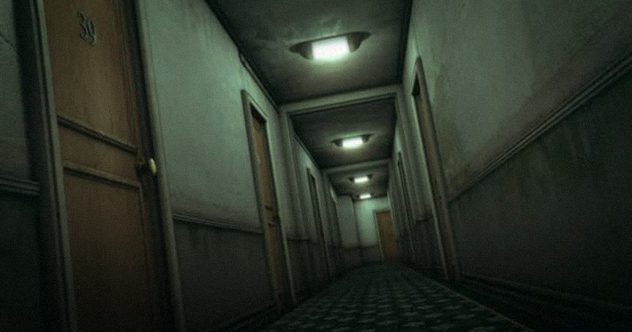
Most hotel rooms promise clean sheets, miniature shampoo, and a checkout time nobody remembers until housekeeping knocks. A few rooms, however, come with something less relaxing: a permanent place in history.
The hotel rooms below have been connected to unexplained murders, celebrity deaths, political crimes, national tragedies, and ghost stories that refuse to check out. Some are preserved as historic sites. Others have been renovated, renumbered, or transformed into expensive attractions for travelers who apparently find ordinary sleep far too easy.
This ranking emphasizes documented events rather than unsupported paranormal claims. When a haunting appears in the story, it is presented as folklorenot proof that the minibar is possessed.
10. Room 214 at the Watergate Hotel, Washington, D.C.
The Room That Helped Turn a Burglary Into a Political Earthquake
Room 214 did not witness a murder, but its occupants helped produce one of the darkest political scandals in American history. On June 17, 1972, political operatives E. Howard Hunt and G. Gordon Liddy used the room as a command post while five burglars entered the nearby Democratic National Committee offices.
Hunt and Liddy reportedly communicated with the burglary team by radio. The operation collapsed after security guard Frank Wills noticed tape placed over door latches and alerted police. The arrests eventually exposed illegal surveillance, political sabotage, secret payments, and an extensive White House cover-up.
The scandal led to criminal convictions and President Richard Nixon’s resignation in August 1974. Today, the hotel has turned the former Room 214 into the Scandal Room, decorated with a typewriter, binoculars, vintage furnishings, and other playful references to the 1970s. It is possibly the only luxury suite where “historic listening equipment” is considered a design theme.
9. Room 217 at the Stanley Hotel, Estes Park, Colorado
An Explosion, a Famous Nightmare, and The Shining
Room 217 became notorious long before Stephen King arrived. During a power outage in 1911, hotel housekeeper Elizabeth Wilson entered the room without realizing that leaking gas had accumulated inside. When she lit a lantern, an explosion tore through the room and threw her through the floor.
Wilson survived and later returned to work at the Stanley. Over time, guests began reporting that an unseen presence unpacked luggage, straightened clothing, or moved personal belongings. Those stories remain paranormal folklore, but the explosion itself is part of the hotel’s recorded history.
The room’s literary fame began in 1974 when Stephen King and his wife, Tabitha, stayed at the nearly empty hotel near the end of its operating season. King later described wandering its quiet corridors and having a disturbing dream involving his young son and a fire hose. The experience helped inspire his 1977 novel The Shining.
Room 217 is now one of the hotel’s most requested accommodations. In other words, a gas explosion and a nightmare became an extremely successful reservation strategy.
8. Room 302, Now Room 3327, at Hotel del Coronado, California
The Beautiful Stranger Who Never Truly Left
On Thanksgiving Day in 1892, a young woman calling herself Lottie A. Bernard checked into Room 302 at the grand Hotel del Coronado. She was later identified as Kate Morgan, a 24-year-old woman who appeared to be waiting for someone who never arrived.
After several days at the hotel, Morgan was found dead near an exterior staircase with a gunshot wound. Contemporary authorities concluded that she had taken her own life, although conflicting details surrounding the weapon, ammunition, and her personal circumstances encouraged alternative theories.
The former Room 302 was eventually renumbered as Room 3327. Guests and hotel employees have since reported flickering lights, unexplained sounds, moving objects, and a woman-shaped figure. None of those claims has been scientifically verified, but the hotel openly embraces the legend through historical displays and ghost tours.
Room 3327 remains highly requested. Apparently, an ocean view becomes even more desirable when bundled with a possible Victorian roommate.
7. Room 1219 at the St. Francis Hotel, San Francisco
The Party That Shattered a Silent-Film Star’s Career
In September 1921, comedian Roscoe “Fatty” Arbuckle hosted a Prohibition-era party in a three-room suite at San Francisco’s St. Francis Hotel. During the gathering, actress Virginia Rappe became seriously ill after being alone with Arbuckle in Room 1219.
Rappe died several days later from complications associated with a ruptured bladder. Arbuckle was accused of sexually assaulting her and charged with manslaughter, creating one of Hollywood’s earliest nationwide celebrity scandals.
The case produced three trials. The first two ended without verdicts, while the third resulted in Arbuckle’s acquittal. Jurors issued an unusual statement saying that a serious injustice had been committed against him. Even so, sensational newspaper coverage destroyed his reputation, and the film industry temporarily banned him.
The exact circumstances of Rappe’s final illness remain debated. What is certain is that Room 1219 became the center of a media spectacle that changed how studios managed celebrity behavior and public scandal.
6. Room 306 at the Lorraine Motel, Memphis, Tennessee
A Preserved Room at the Center of American History
Room 306 should not be treated like a spooky tourist attraction. It is a solemn historic space connected to one of the most consequential assassinations in the United States.
Dr. Martin Luther King Jr. stayed at the Lorraine Motel while supporting Black sanitation workers who were striking over dangerous conditions, discrimination, and inadequate pay. On April 4, 1968, King stepped onto the balcony outside Room 306 and was fatally shot.
The assassination triggered grief, anger, and unrest across the country. The Lorraine eventually became the centerpiece of the National Civil Rights Museum, which examines slavery, segregation, the civil rights movement, and continuing struggles for equality.
Room 306 has been preserved to resemble its appearance in 1968. Visitors see the beds, furnishings, balcony, and nearby vehicles frozen in time. Unlike rooms marketed through playful ghost stories, this room demands reflection. Its darkness comes not from legend but from the documented cost of confronting injustice.
5. Room 105 at the Landmark Motor Hotel, Hollywood
Janis Joplin’s Final Night
Janis Joplin spent her final days recording what would become Pearl, the celebrated album released after her death. On October 4, 1970, the 27-year-old singer was found unresponsive in Room 105 of the Landmark Motor Hotel, later known as the Highland Gardens Hotel.
Her death was ruled an accidental heroin overdose. She had failed to arrive for a scheduled recording session, prompting her road manager to look for her. The unfinished song “Buried Alive in the Blues” appeared on Pearl as an instrumental because Joplin never recorded its vocal track.
Joplin’s death occurred only weeks after Jimi Hendrix died at the same age, contributing to the mythology of the so-called 27 Club. Room 105 subsequently became a pilgrimage site for music fans, some of whom specifically requested to stay there.
The room’s emotional power does not depend on ghost stories. It represents a brilliant career interrupted at the moment Joplin seemed ready to enter a new creative phase.
4. Room 434 at the Beverly Hilton, Beverly Hills
The Loss of Whitney Houston
Whitney Houston was staying at the Beverly Hilton before a major pre-Grammy event in February 2012. On February 11, she was found unresponsive in the bathtub of her fourth-floor room, widely identified as Room 434.
The official cause of death was accidental drowning, with heart disease and cocaine use listed as contributing factors. Police later closed the investigation after finding no evidence that a crime had occurred.
Houston’s death generated an intense public response, with fans attempting to visit and photograph the room. The hotel reportedly removed its number and temporarily took the accommodation out of regular circulation to discourage unauthorized access.
The room’s story illustrates the uncomfortable relationship between celebrity tragedy and tourism. Fans may intend to pay their respects, but a hotel must also protect guests, employees, and the dignity of the person who died. Not every historic room needs to become a selfie station.
3. Bungalow 3 at Chateau Marmont, Los Angeles
John Belushi’s Fatal Hollywood Hideaway
Chateau Marmont has long offered celebrities something rare in Hollywood: privacy. Unfortunately, privacy can also conceal a crisis.
On March 5, 1982, actor and comedian John Belushi was found dead in Bungalow 3. He was 33 years old. The cause was an accidental overdose involving cocaine and heroin, a combination commonly called a speedball.
Belushi had become famous through Saturday Night Live, National Lampoon’s Animal House, and The Blues Brothers. Friends and colleagues were aware that his substance use had become increasingly dangerous, but the entertainment culture surrounding him often rewarded excess rather than interrupting it.
Bungalow 3 consequently represents more than a famous death scene. It symbolizes the darker side of celebrity protection, where wealth, access, and discretion may allow destructive behavior to continue behind closed doors.
2. Room 100 at the Hotel Chelsea, New York City
Punk Rock’s Most Infamous Unsolved Death
The Hotel Chelsea housed writers, musicians, filmmakers, painters, eccentrics, and enough dramatic personalities to keep several biographers permanently employed. Its darkest room may be Room 100.
Sex Pistols bassist Sid Vicious and his girlfriend, Nancy Spungen, were living there in 1978. On October 12, Spungen was found dead in the bathroom with a stab wound. She was 20 years old.
Vicious was charged with second-degree murder, but the case never reached trial. He died from a heroin overdose in February 1979 while free on bail. Because the prosecution was never tested in court, his legal guilt was never established, and competing theories about Spungen’s death have continued for decades.
Room 100 became inseparable from punk mythology, but the romanticized version can obscure a grim reality: two young people were consumed by addiction, violence, and an environment that frequently treated self-destruction as authenticity.
1. Room 1046 at the Hotel President, Kansas City
America’s Most Perplexing Hotel-Room Murder
Room 1046 earns the top position because nearly every detail of its story seems designed for a locked-room mysteryexcept the victim and violence were real.
In January 1935, a young man checked into the Hotel President under the name Roland T. Owen. He carried no luggage, requested an interior room, kept the curtains closed, and spent long periods sitting in near darkness. Hotel employees overheard him speaking with or receiving calls from a person named Don.
Staff members later discovered the guest bound, beaten, and stabbed. When asked who had attacked him, he reportedly refused to identify anyone. He died at a hospital and was eventually identified as Artemus Ogletree.
The investigation produced strange evidence, anonymous telephone calls, confusing witness accounts, and a mysterious individual who paid for the victim’s funeral. No one was convicted, and the identity of “Don” remains unknown.
Unlike a polished ghost legend, the Room 1046 case contains a documented victim, surviving police records, and unanswered questions that have persisted for more than nine decades. The room does not require creaking furniture or flickering lights. Its file is disturbing enough.
What Is It Like to Stay in a Hotel Room With a Dark Past?
Spending a night in a historically notorious hotel room creates an unusual battle between expectation and ordinary reality. You may enter prepared for shadowy figures, unexplained whispers, or a dramatic temperature drop. Instead, you usually find a bed, a television remote with questionable hygiene, and an air conditioner that sounds like farm equipment.
Expectation Changes Every Ordinary Sound
Once guests know a room’s history, normal hotel noises can feel suspicious. Plumbing knocks become footsteps. An elevator door becomes a distant moan. A guest returning from the ice machine at 2 a.m. becomes an unidentified presence dragging something metallic through the hallway.
This response is understandable. Psychologists use the idea of priming to explain how expectations influence perception. When travelers arrive after reading stories about apparitions and unexplained activity, they pay closer attention to sensations they would normally ignore. The room has not necessarily changed; the guest’s interpretation has.
The Experience Can Feel More Historical Than Paranormal
The strongest reactions often come from knowing that an important event occurred in the same physical space. Standing outside Room 306 at the Lorraine Motel, for example, is fundamentally different from joining an entertainment-focused ghost hunt. The preserved setting makes history immediate, personal, and difficult to reduce to a paragraph in a textbook.
Celebrity rooms create another kind of connection. Music fans visiting a room associated with Janis Joplin, Whitney Houston, or John Belushi may feel sadness rather than fear. The modest size of a hotel room can make a public figure’s final moments seem painfully private and human.
Dark Tourism Requires Basic Etiquette
Travel centered on tragic locations is often described as dark tourism. It can encourage education and preservation, but it can also become intrusive when visitors treat real suffering as a prop.
Responsible guests should follow hotel rules, avoid disturbing other travelers, and remember that employees are not unpaid paranormal performers. Knocking repeatedly on an occupied door because someone famous died there is not historical research. It is simply an excellent way to meet hotel security.
Visitors should also avoid leaving candles, alcohol, drugs, graffiti, or personal objects in a room. These gestures may be intended as tributes, but they create safety concerns and additional work for staff.
Not Every Story Should Be Taken Literally
Historic hotels frequently combine documented events with folklore. A real explosion may produce later ghost stories. An unexplained death may attract theories unsupported by physical evidence. A strange sound reported by one guest can become a permanent supernatural resident after enough retellings.
The best experience comes from appreciating both categories without confusing them. Records, inquests, court documents, contemporary reporting, and museum research can establish what happened. Haunting stories reveal how later generations interpreted those events. Both are culturally interesting, but they are not the same type of evidence.
Would You Actually Sleep Well?
That depends less on ghosts and more on imagination. Some guests report peaceful nights in supposedly haunted rooms. Others remain awake because every reflection looks like a person standing near the bathroom.
A traveler seeking the full experience may read the room’s history before bed, explore the property respectfully, and keep notes about anything unusual. A traveler who genuinely wants eight hours of sleep should probably save the research for breakfast.
Ultimately, staying in a hotel room with a dark past is an exercise in proximity. It places travelers close to events that otherwise feel distant: a political crime, a cultural turning point, a mysterious death, or a lost artist’s final hours. The most memorable rooms do not merely frighten guests. They make history feel uncomfortably present.
Conclusion
The world’s most infamous hotel rooms prove that buildings can become containers for public memory. Room 214 recalls political corruption. Room 217 connects a real accident with a landmark horror novel. Room 306 preserves a national tragedy, while Rooms 100 and 1046 remain tied to deaths that were never fully resolved.
Some hotels carefully protect these spaces. Others rename, renovate, or commercialize them. Yet fresh wallpaper cannot completely erase a story once it has entered popular culture.
Travelers who visit should bring curiosity, skepticism, and respect. A dark past can make a room fascinating, but the people connected to it were not fictional characters. They lived, struggled, created, made mistakes, andin several caseslost their lives. That reality is far more powerful than any invented ghost.
Note: Documented events in this article are distinguished from legends, guest reports, and unverified paranormal claims.