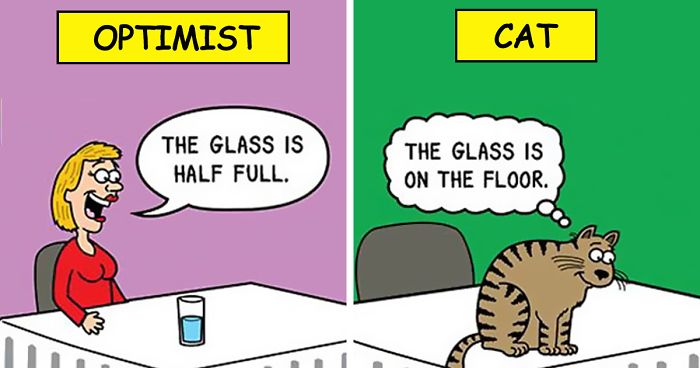
Some artists paint sunsets. Some carve marble. Scott Metzger has spent more than two decades documenting a far more complicated subject: cats behaving as if they pay the mortgage, manage the household, and graciously allow humans to live nearby. His cat cartoons are funny because they feel suspiciously like evidence. If you have ever watched a cat knock a pen off a desk while making direct eye contact, you already understand the artistic universe we are entering.
Metzger, a Northern California cartoonist, has been drawing single-panel cartoons since the 1990s, with his animal humor becoming especially beloved among cat owners. His work has appeared on greeting cards, in magazines, online, in books, and across social media feeds where cat people gather to say, “This is literally my cat,” usually while their cat is chewing a houseplant behind them.
The charm of his best cat comics is not just that they are cute. Plenty of cat content is cute. Metzger’s cartoons work because they understand the small emotional truths of living with cats: the bedtime chaos, the breakfast negotiations, the mysterious box obsession, the dramatic judgment, and the way a twelve-pound animal can somehow occupy an entire queen-size bed. His humor is clean, quick, and instantly recognizable, which makes it perfect for readers who want a laugh without needing a three-page explanation or a philosophy degree from Meowvard.
Who Is Scott Metzger?
Scott Metzger is best known for single-panel cartoons centered on cats, dogs, and everyday absurdity. His official cartoon portfolio highlights work used in greeting cards, magazines, licensing projects, merchandise, and books. Over the years, his comics have been shared widely by animal lovers and featured by humor and lifestyle publications. He has also published several collections, including Being Awesome Is Exhausting, 50 Ways to Wake Your Human, and Only Birders in the Building.
That book-title energy tells you almost everything you need to know. Metzger’s cats are not merely pets; they are tiny executives, lounge philosophers, snack criminals, alarm clocks with whiskers, and soft little chaos engines. His panels usually rely on one clean image and one strong joke. There is no clutter, no unnecessary explanation, and no attempt to make cats seem more reasonable than they are. A wise choice.
Why Cat Cartoons Are So Addictive
Cat cartoons have a special place on the internet because cats already behave like living punchlines. They sit in boxes smaller than their dignity. They sprint through the house at 3 a.m. for reasons known only to ancient spirits and possibly the plumbing. They reject expensive beds in favor of shipping cartons. They demand food, ignore it, then accuse you of betrayal.
Metzger’s best cat cartoons succeed because they turn these behaviors into tiny stories. A cat scratching furniture is not just scratching furniture; it is redecorating with confidence. A cat sitting on a laptop is not interrupting work; it is holding a mandatory meeting. A cat staring into space is not being strange; it is probably downloading instructions from the mothership.
Animal behavior experts often explain that many “annoying” cat habits are normal feline behaviors. Scratching helps cats stretch, mark territory, and maintain claws. Play behavior connects to hunting instincts. Cats are sensitive to scent, routine, body language, and environmental changes. Metzger transforms these real behaviors into comedy without making cats villains. His cartoons usually say, “Yes, this is ridiculous, but also, your cat is being a cat.”
What Makes Scott Metzger’s Cat Comics Stand Out?
1. The jokes are fast
A strong single-panel cartoon has to land quickly. Metzger’s best work does not wander toward the joke; it pounces. The setup is visible at a glance, the punchline clicks immediately, and the reader gets that lovely “I know this creature” feeling. In SEO terms, the user experience is excellent. In cat terms, the joke fits in the box, so the cat sits in it.
2. The cats feel emotionally accurate
Metzger’s cats are exaggerated, but not random. They act like cats: independent, affectionate on their own schedule, suspicious of closed doors, obsessed with food rituals, and deeply committed to supervising human activity. The humor comes from recognition. You laugh because the cartoon does not feel invented; it feels observed.
3. The art style serves the joke
The drawings are simple, expressive, and clean. Faces do a lot of work. A raised eyebrow, a flat stare, or a cat standing upright like a tiny furry landlord can carry the whole panel. The design never fights the humor. Instead, it clears a path for the punchline to stroll in wearing little toe beans.
4. The humor is warm, not mean
Some pet jokes are built on frustration. Metzger’s cartoons may laugh at the absurdity of cats, but they also feel affectionate. The human characters are confused, tired, or outsmarted, but rarely bitter. That warmth matters. Cat owners do not just tolerate feline nonsense; they frame it, post it, quote it, and build entire personalities around it.
40 Of The Best Cat Cartoon Themes Fans Love
Because the original cartoons are copyrighted works, this article does not reproduce the panels or captions. Instead, here are 40 standout themes and joke styles that explain why Metzger’s cat cartoons have remained so shareable for more than 20 years.
- The 3 a.m. sprint: Every cat owner knows the sound of invisible horse racing in the hallway.
- The food-bowl crisis: The bowl is not empty, but the visible bottom has caused emotional damage.
- The box takeover: A cardboard box becomes luxury real estate within seconds.
- The laptop sit-in: Work stops because the cat has declared itself the new keyboard.
- The closed-door scandal: A door exists, therefore it must be opened immediately.
- The selective hearing joke: A cat ignores its name but hears a treat bag from another ZIP code.
- The dramatic stare: Cats can judge an entire life choice without blinking.
- The bed invasion: A small animal somehow occupies 93 percent of the mattress.
- The sunbeam appointment: Cats treat sunlight like a scheduled wellness retreat.
- The “helping” panel: Folding laundry becomes performance art with claws.
- The scratching-post negotiation: The post is available; the couch remains irresistible.
- The vet visit betrayal: The carrier appears, and trust leaves the building.
- The counter patrol: Gravity must be tested one mug at a time.
- The water-glass inspection: Human beverages require quality control.
- The invisible enemy: A blank wall suddenly becomes deeply suspicious.
- The bird-window drama: Indoor cats discover television with feathers.
- The dog comparison: Dogs want approval; cats want terms and conditions.
- The rescue-cat sweetness: Beneath the sass, many panels show genuine companionship.
- The lap trap: Once a cat sits on you, movement becomes legally impossible.
- The tiny dictator mood: A cat can be adorable and authoritarian before breakfast.
- The holiday chaos: Christmas trees are vertical toy displays, obviously.
- The catnip aftermath: One minute calm, the next minute interpretive dance.
- The “I meant to do that” landing: Cats recover dignity faster than physics recovers balance.
- The grooming interruption: A leg in the air and a surprised expression: classic comedy.
- The guest evaluation: Visitors are inspected, approved, ignored, or sat upon.
- The breakfast alarm: No snooze button exists on a hungry cat.
- The plant investigation: Houseplants are salads with roots, apparently.
- The toy rejection: The expensive toy is ignored; the receipt is thrilling.
- The keyboard message: Cats write emails in a language made entirely of consonants.
- The bathroom audience: Privacy is a human myth.
- The soft blanket ritual: Kneading turns cozy fabric into a tiny bakery.
- The human-training joke: Cats do not obey commands; they issue them.
- The “outside but not outside” debate: The door must open, but the weather is unacceptable.
- The hairball announcement: A sound every cat owner recognizes with immediate panic.
- The furniture ownership dispute: Humans buy chairs; cats acquire thrones.
- The mysterious zoomies: Energy arrives suddenly, loudly, and without paperwork.
- The laser-pointer chase: Hope, betrayal, and exercise in one red dot.
- The emotional support loaf: A curled-up cat can improve a whole room.
- The petting limit: Affection is welcome until it is absolutely not.
- The final punchline: Cats are impossible, and that is exactly why we love them.
The Real Cat Logic Behind The Laughs
What makes these cartoons more than random pet jokes is their connection to real feline behavior. Cats are crepuscular, meaning they are often most active around dawn and dusk, which helps explain the early-morning drama. Scratching is not revenge; it is communication, stretching, nail care, and scent marking. Kneading usually connects to comfort. Hiding in boxes can offer security and warmth. Sitting on laptops may be about attention, heat, scent, or the ancient feline law that anything important to a human must immediately become a cat bed.
This is where Metzger’s work becomes clever. He does not lecture readers about cat psychology. He lets the joke do the teaching. A cartoon about a cat demanding breakfast too early may simply make you laugh, but it also reminds you that cats are creatures of habit. A panel about a cat ignoring a fancy toy in favor of packaging captures an actual truth about enrichment: cats often prefer texture, scent, novelty, and hiding spaces over what humans consider “premium.” The cat does not care that the toy cost $24.99. The cat has chosen the twist tie. Respect the artist.
Why Single-Panel Cartoons Still Work Online
In an era of endless scrolling, single-panel cartoons are built for survival. They are quick, visual, and easy to share. A great cat cartoon can travel from a website to Facebook, Instagram, Pinterest, newsletters, and group chats faster than a cat can hear a tuna can opening. The format is also highly accessible: one image, one joke, one emotional reaction.
Metzger’s cartoons benefit from that simplicity. They do not require readers to know characters, follow long storylines, or remember lore. The “lore” is simply living with cats. That gives his work broad appeal. Longtime cat owners see their own pets. New cat parents receive a warning disguised as entertainment. Non-cat owners finally understand why their friends talk about their cats like tiny roommates with strong opinions and no rent history.
Experience Section: What Reading Cat Cartoons Teaches You About Living With Cats
Spending time with Scott Metzger’s cat cartoons feels a lot like sitting in a room full of cat owners swapping stories. Someone mentions the cat who screams at closed doors. Another person describes the cat who sleeps in the sink. A third quietly admits they bought a luxury cat bed, only to watch their pet choose a flattened delivery box with the confidence of an interior designer. Everybody nods. Nobody is surprised.
The best experience these cartoons offer is recognition. They make everyday pet moments feel communal. When a comic captures the exact look a cat gives after knocking something off a shelf, it reassures readers that their household is not uniquely chaotic. The cat is not broken. The human is not failing. This is simply life under feline management.
There is also a surprisingly comforting quality to the humor. Cat ownership involves repetition: feeding, cleaning, brushing, playing, opening doors, closing doors, reopening doors because someone changed their mind. In real life, those routines can be tiring. In cartoon form, they become little celebrations of absurd devotion. You may be exhausted because your cat woke you before sunrise, but a funny panel can turn that irritation into a shared laugh.
Metzger’s work also encourages a gentler way of interpreting cat behavior. Instead of seeing scratching, staring, hiding, or zooming as random mischief, readers start to see personality and instinct. The cartoon cat becomes a translator. It says, “Your pet is weird, yes, but there is a method inside the fluff.” That shift matters because humor can make people more patient. A person who laughs at a cartoon about scratching may be more likely to buy a better scratching post than to scold the cat. A person who recognizes boredom in a joke may add more playtime. Comedy, when done well, can be sneakily educational.
Another experience worth noting is how timeless these cartoons feel. Internet humor changes quickly, but cats have been behaving like cats for thousands of years. A joke about a cat claiming a box worked years ago and will probably work in 2045, assuming cats have not taken over shipping logistics by then. Metzger’s long career shows the strength of choosing a subject with endless variation. The setting may change from newspapers to websites to social media, but the core joke remains sturdy: humans build systems; cats sit on them.
Finally, reading a collection of cat cartoons reminds us that pets make homes emotionally larger. Cats add inconvenience, fur, noise, cost, and occasional plant-related crime. They also add warmth, routine, companionship, and comedy that arrives without warning. A good cartoon captures both sides. It laughs at the chaos while honoring the affection underneath. That is why Metzger’s best cat cartoons continue to connect with readers after more than 20 years: they do not just show cats being funny. They show why humans keep loving them anyway.
Conclusion
Scott Metzger’s cat cartoons have endured because they understand a simple truth: cats are hilarious not because they try to be, but because they are completely serious while doing ridiculous things. His single-panel comics turn ordinary pet-owner experiences into sharp, warm, highly shareable jokes. From breakfast demands to laptop invasions, from box obsession to bedroom tyranny, his best cartoons capture the comedy of living with animals who are both deeply lovable and professionally inconvenient.
For cat lovers, Metzger’s work feels like a mirror held up to the furry little ruler of the house. For cartoon fans, it is a lesson in timing, simplicity, and visual storytelling. For everyone else, it is proof that the internet’s love affair with cats is not going anywhere. The cats have seen the analytics, and frankly, they approve.
Note: This article is original, fully rewritten, and based on publicly available information about Scott Metzger, his cat cartoon collections, single-panel cartooning, and common feline behavior. It does not reproduce copyrighted cartoons, captions, or images.