A successful beach cottage kitchen should feel as relaxed as a barefoot walk to the shorebut it still needs enough storage for skillets, cereal boxes, and the mysterious collection of reusable water bottles multiplying after dark. The good news is that achieving this breezy look does not require custom cabinetry or a yacht-sized remodeling budget. Ikea’s modular kitchen system provides an adaptable foundation, while warm wood, coastal blue accents, open storage, and vintage pieces supply the personality.
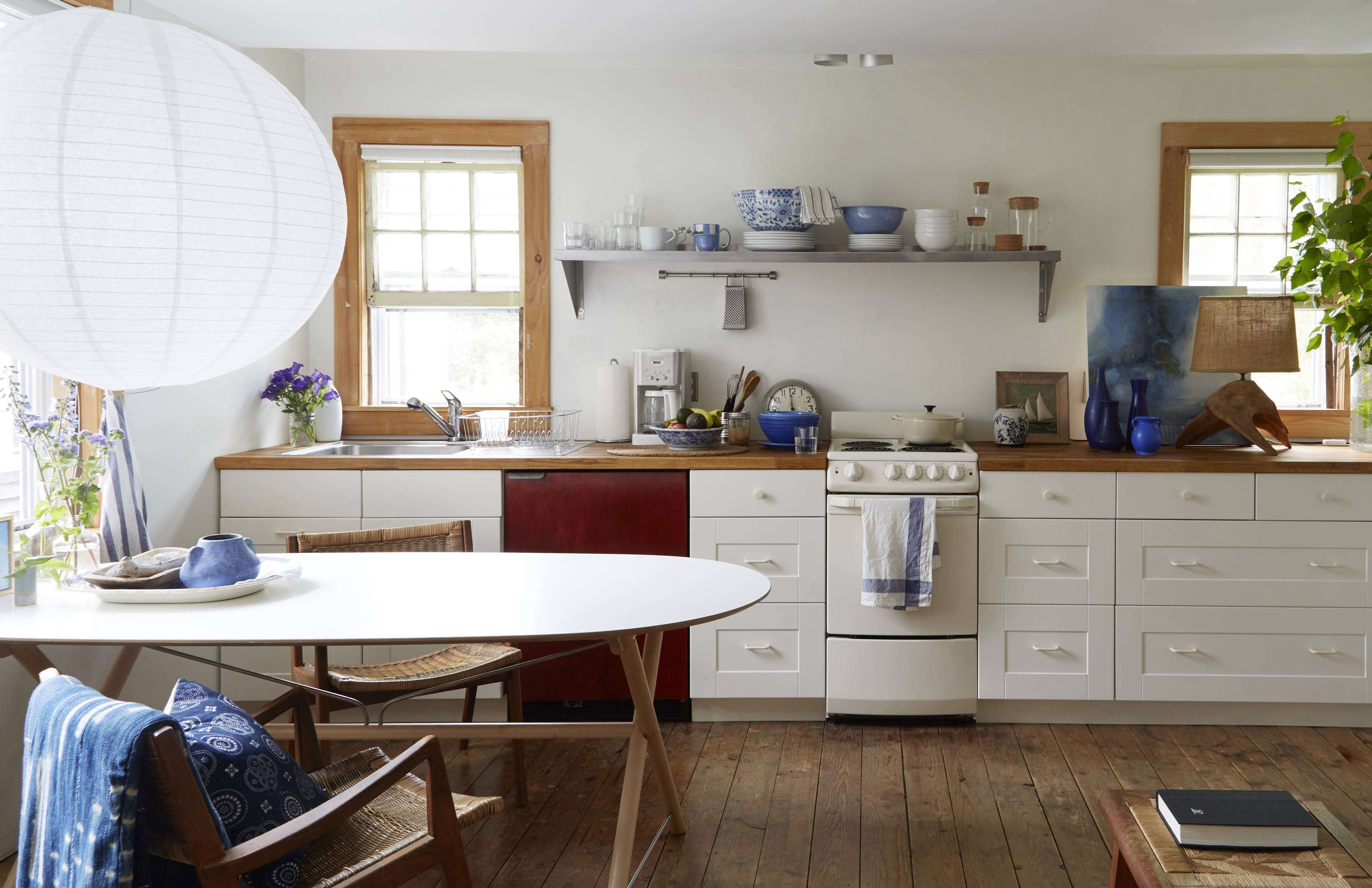
The inspiration for this look comes from designer Glenn Ban’s Provincetown, Massachusetts, cottage kitchen. Its memorable mix of blue and white, wood countertops, practical metal storage, midcentury furniture, and affordable Ikea elements proves that coastal design works best when it suggests the sea instead of dressing the room like a seafood restaurant.
Why This Beach Cottage Kitchen Works
The original kitchen is appealing because it does not depend on expensive statement materials. Its charm comes from contrast: clean cabinetry beside natural wood, ordinary kitchen tools beside collectible pottery, and crisp white surfaces warmed by vintage furniture.
Blue appears in controlled doses through serving bowls, artwork, and decorative objects. White reflects the strong coastal light, while wood prevents the room from feeling chilly. Stainless-steel storage adds a slightly commercial edge that keeps the cottage elements from becoming overly precious.
Most importantly, the kitchen looks collected rather than purchased in a single afternoon. Ikea handles the hardworking pieces, and objects with age, texture, or sentimental value make the room feel personal. That combination is the secret saucealthough, unlike actual sauce, it will not stain the backsplash.
The Beach Cottage Kitchen Formula
To recreate the look, think in layers rather than shopping for a matching set. The foundation should be simple enough to live with for years, while the more colorful elements should be easy to change.
- Foundation: white or softly colored Ikea cabinets with straightforward panel doors
- Warmth: a wood or convincing wood-look countertop, dining table, and natural woven materials
- Coastal color: dusty blue, cobalt, sea-glass green, or blue-gray used as accents
- Utility: rails, hooks, open shelves, deep drawers, and a mobile cart
- Character: vintage ceramics, framed art, striped textiles, and mismatched chairs
- Restraint: very few literal nautical decorations
A restrained palette allows everyday objects to become part of the decoration. Blue bowls on an open shelf, wooden cutting boards beside the range, or a linen towel hanging from a rail can deliver more atmosphere than a wall sign announcing that you are, indeed, near water.
Start With Ikea Cabinets
Use SEKTION as the Practical Framework
Ikea’s SEKTION system is modular, allowing base cabinets, wall cabinets, drawers, and interior organizers to be configured for different layouts. That flexibility is especially useful in cottages, where walls may have settled, corners may not be square, and the floor may possess what real estate listings politely call “historic character.”
Prioritize deep drawers near the range for cookware and a wide drawer for dishes if the layout permits. Drawers make the contents visible from above and eliminate the traditional lower-cabinet ritual of kneeling on the floor while searching for one particular lid.
Choose a Simple Door Style
AXSTAD matte white fronts have softly shaped inset panels that bridge traditional cottage style and cleaner contemporary design. Their quiet profile works well with wood counters, ceramic sinks, and vintage furnishings. For a subtler variation, use pale gray-green or muted blue on an island or lower cabinet run while keeping the upper cabinets white.
Do not feel obligated to cover every wall with cabinetry. One or two glass-front cabinets can display attractive dishes, while a short section of open shelving gives the room breathing space. The result should feel useful and airy, not like the kitchen is being slowly compressed by storage boxes.
Warm Up the White With Wood Countertops
The Provincetown inspiration kitchen pairs Ikea cabinetry with KARLBY wood countertops. A similar wood or wood-veneer surface immediately adds warmth and makes basic white cabinets feel less standardized. The grain also complements wicker lighting, cork accessories, birch furniture, and vintage teak or oak chairs.
Wood requires more attention than quartz or laminate, particularly around a sink. Water should be wiped up promptly, seams must be installed carefully, and the surface needs the finish recommended by its manufacturer. Solid butcher block may require periodic oiling or resealing. If maintenance is not your favorite hobby, use a durable wood-look laminate across the wet zone and reserve real wood for a dining table, cart, or island.
Whichever material you choose, bring samples home before ordering. White cabinet fronts can have warm or cool undertones, and the wrong wood tone may look oddly orange under your kitchen lighting.
Add Open Storage Without Creating Visual Chaos
The original cottage used Ikea’s discontinued GRUNDTAL stainless-steel rack. A current KUNGSFORS rail or a simple stainless wall shelf can provide a similar utilitarian effect. Mount it near the prep zone for frequently used tools, strainers, towels, or small pans.
Open storage is most effective when it holds objects used every week. Display blue pottery, white dinnerware, glass pitchers, and wooden boards; hide plastic food containers, bulk snack packages, and novelty mugs received from distant relatives. Open shelving should reduce friction, not turn breakfast into a public exhibition of your bran-flake inventory.
Leave some empty space around displayed objects. Three bowls with distinctive shapes will make a stronger statement than seventeen bowls packed together like commuters during rush hour.
Choose a Cottage Sink and Faucet
An apron-front sink reinforces the cottage character without requiring overt beach motifs. Ikea’s ceramic BOVIGGEN sink offers the farmhouse profile, while HAVSEN models may be available in certain sizes or markets. Verify the exact sink, cabinet, countertop, and support requirements before purchasing because apron-front installations are considerably less forgiving than dropping a toaster onto the counter.
A traditional brass-toned faucet such as GLITTRAN warms a white-and-blue palette, while stainless steel creates a simpler, more commercial look. Select the finish according to the room’s other permanent hardware rather than chasing a trend. Mixing metals can work, but repeat each finish at least once so the combination appears deliberate.
Layer the Lighting
A paper lantern captures the easygoing spirit of the inspiration room. Ikea’s REGOLIT shade can produce a similar floating shape, while a woven bamboo fixture such as SINNERLIG adds warmth and texture. Before choosing an oversized shade, confirm that cabinet doors can open freely and that tall family members will not develop a complicated relationship with it.
A decorative pendant should not be the kitchen’s only light source. Combine general ceiling illumination with under-cabinet task lights over food-preparation surfaces. The National Kitchen and Bath Association recommends illuminating every work surface appropriately, and layered lighting also allows the room to shift from practical breakfast station to relaxed evening gathering place.
Use warm or neutral-white bulbs consistently. A mixture of very cool and very warm bulbs can make white cabinetry appear to change color from one side of the room to the other.
Create an Informal Dining Corner
A modest wood table and mismatched vintage chairs make a cottage kitchen feel established rather than staged. If the original Ikea dining table is unavailable, the woven-bamboo VOXLÖV table, a compact birch table, or a secondhand midcentury piece can provide a similar natural note.
For a kitchen without room for permanent dining furniture, consider a narrow FÖRHÖJA cart or compact TORNVIKEN island. A mobile work surface can hold breakfast, groceries, or serving dishes and then move aside when more floor space is required.
Choose furniture with visual space beneath it. Slender legs and open chair backs preserve sightlines, which can make a small cottage kitchen feel less crowded.
Plan the Layout Before Decorating
Coastal style cannot rescue an inconvenient floor plan. Start by measuring walls, doors, windows, utilities, ceiling height, and appliance clearances. Record every dimension twice; kitchens have a remarkable talent for revealing a forgotten pipe immediately after the cabinets arrive.
Protect comfortable paths between the refrigerator, sink, range, and primary prep surface. National Kitchen and Bath Association guidance recommends a work aisle of at least 42 inches for one cook and 48 inches for multiple cooks where space allows. Smaller cottages may require compromises, but appliance doors should not trap the cook or block the room’s only exit.
Ventilation deserves equal attention. A range hood ducted outdoors is preferable because cooking can release moisture, odors, grease, and airborne particles. The U.S. Environmental Protection Agency recommends using a range hood while cooking and venting it outdoors when possible. This is not the glamorous portion of coastal design, but neither is a lingering cloud of fried-fish perfume.
Where to Save and Where to Spend
Spend first on the elements touched or operated every day: cabinet hardware, drawer mechanisms, a reliable faucet, countertop installation, electrical work, and ventilation. Save on paint, dish towels, open-shelf accessories, and decorative lighting that can be replaced without dismantling the kitchen.
Keep a contingency fund for installation surprises. In an older beach cottage, walls may need repair, electrical service may need updating, and moisture damage may be hiding behind existing cabinets. If the project includes structural changes, plumbing relocation, gas lines, or major wiring, consult licensed professionals and follow local permit requirements.
Prices and product availability change frequently, so build the design around dimensions, materials, and colors rather than one item number. That approach also makes it easier to substitute secondhand or locally made pieces.
How to Keep the Coastal Look Sophisticated
Modern coastal kitchens rely on light, texture, and natural materialsnot an invasion of anchors. Use blue as a supporting color and let wood, linen, bamboo, ceramic, and stainless steel provide variation. One framed coastal photograph or abstract painting is usually more effective than a committee of decorative seagulls.
Avoid artificially distressed finishes on every surface. Real cottages gain patina naturally, helped along by sandy feet, wet glasses, and enthusiastic summer guests. Begin with durable finishes and allow normal life to soften them over time.
The Experience: How This Kitchen Feels in Everyday Life
Imagine entering the finished kitchen on a bright Saturday morning. The white cabinetry catches the natural light, but the wood countertop keeps the room from feeling clinical. A blue bowl filled with lemons becomes an uncomplicated focal point, and the woven pendant creates a soft shadow overhead. The room looks coastal before anyone adds a single seashell.
The first noticeable benefit is accessibility. Breakfast bowls sit on an open shelf, coffee tools occupy one drawer, and mugs hang near the preparation area. There is less opening, closing, and wandering around with a spoon while trying to remember why you crossed the room. Frequently used objects become part of the visual composition, so convenience and decoration are doing the same job.
During meal preparation, deep drawers make a larger difference than expected. Pots come out in one motion instead of requiring an archaeological expedition into a dark cabinet. A rail keeps a towel and strainer within reach, while a small cart becomes temporary landing space for groceries. Once the food is prepared, the cart can roll toward the table and serve as a compact buffet.
The materials also affect the mood. Wood acquires small marks, brass changes subtly with handling, and vintage chairs show evidence of previous lives. These imperfections make guests less nervous about using the room. Nobody feels compelled to apologize because a bread crumb landed on the counter, which is a surprisingly useful hospitality feature.
There are practical lessons too. Open shelves require editing because unused objects collect dust, and wood surfaces reward people who wipe up water promptly. A pale kitchen also reveals splashes faster than a darker one. Fortunately, noticing a spill early is preferable to discovering it later as a permanent abstract artwork.
In the evening, layered lighting becomes the quiet hero. Under-cabinet lights keep chopping areas visible, while the pendant supplies a softer glow over dinner. The blue pottery appears richer after sunset, and stainless-steel elements reflect just enough light to add depth. Instead of feeling like a showroom, the kitchen becomes an informal gathering room where people lean against the counter, refill glasses, and offer cooking advice nobody requested.
Over time, the most successful feature is flexibility. Towels can change with the season, artwork can move, and a new set of ceramic bowls can introduce a different shade of blue. The modular storage continues handling practical work while the visible layer evolves. That is why an Ikea beach cottage kitchen can feel individual: the standardized pieces provide order, leaving room for the owners’ collections, routines, and stories.
Conclusion
To steal this beach cottage kitchen look, begin with a dependable Ikea framework and add warmth gradually. Pair simple cabinet fronts with wood, useful open storage, a cottage-style sink, layered lighting, and a few thoughtfully chosen blue accents. Invest in function before decoration, resist nautical clichés, and leave space for vintage discoveries.
The finished kitchen should not merely photograph well. It should make cooking easier, welcome damp towels and sandy feet, and feel better as it gathers evidence of real life. That is the kind of coastal style worth bringing homeeven when the nearest beach is several states away.