There comes a moment in every home’s life when the curtains start looking less like “soft, elegant window treatments” and more like “sad fabric rectangles that gave up in 2014.” If your drapes are dusty, fussy, too formal, too beige, or simply not your style anymore, good news: windows do not need curtains to look finished.
In fact, some of the most stylish window treatment ideas today skip traditional curtain panels entirely. Homeowners are using blinds, shades, shutters, privacy film, plants, stained glass, awnings, screens, shelves, and clever architectural details to create privacy, control sunlight, improve energy efficiency, and add personality. The best part? Many no-curtain window coverings are easier to clean, safer for busy homes, and more flexible than heavy drapery.
This guide explores 17 practical and good-looking ways to dress a window without curtains. Whether you live in a modern apartment, a farmhouse, a tiny home, a suburban ranch, or a rental where the landlord treats nail holes like federal crimes, there is an option here that can make your windows look intentional instead of unfinished.
Why Dress a Window Without Curtains?
Curtains are classic, but they are not always the best solution. In kitchens and bathrooms, fabric can absorb moisture, odors, and splatters. In small rooms, bulky panels may make the space feel crowded. In sunny rooms, some fabrics fade quickly. In homes with children or pets, long drapes can become climbing equipment, chew toys, or an emergency cape.
No-curtain window treatments can solve these problems while still delivering the big four: privacy, light control, style, and comfort. A frosted film can blur the view into a bathroom while keeping daylight. Cellular shades can help reduce heat transfer. Shutters can give a room structure and charm. A row of plants can soften a harsh view and make your window look like it has a hobby.
17 Ways to Dress a Window Without Curtains
1. Install Interior Shutters for a Clean, Classic Look
Interior shutters are one of the most timeless alternatives to curtains. They fit inside the window frame, swing open when you want a clear view, and close neatly when you need privacy. Plantation shutters, café shutters, and solid-panel shutters all bring a polished, built-in look that feels more architectural than decorative.
Shutters work especially well in living rooms, bedrooms, dining rooms, and street-facing windows where privacy matters. White shutters feel crisp and coastal, wood shutters add warmth, and painted shutters can become a subtle color accent. They are also easier to dust than long fabric panels, which is excellent news for anyone whose cleaning routine is mostly “notice dust, ignore dust, repeat.”
2. Try Cellular Shades for Comfort and Energy Savings
Cellular shades, also called honeycomb shades, are smart little overachievers. Their pleated pockets trap air, which can help insulate the window and make rooms feel more comfortable in hot or cold weather. They are available in light-filtering, room-darkening, and blackout styles, so they can work in bedrooms, offices, nurseries, and sunny living areas.
For the cleanest look, choose cordless cellular shades mounted inside the window frame. Top-down/bottom-up versions are especially useful because they let you cover the lower part of the window for privacy while keeping the top open for daylight. It is like giving your window a privacy setting instead of making it choose between “fishbowl” and “cave.”
3. Use Roller Shades for Minimalist Style
Roller shades are simple, slim, and modern. They roll up into a compact tube and disappear visually when raised. When lowered, they create a smooth panel that can filter light, block glare, or darken a room depending on the fabric.
This option is ideal for contemporary homes, small apartments, kitchens, and home offices. Solar roller shades are particularly helpful in rooms with computer screens because they cut glare while preserving some outward visibility during the day. For a softer look, choose textured fabric rather than plain vinyl. For a sleeker look, add a cassette-style headrail to hide the roll.
4. Add Roman Shades Without the Curtain Bulk
Roman shades offer the softness of fabric without the side-to-side drama of curtains. When raised, the fabric folds into neat horizontal sections. When lowered, it gives the window a tailored, finished appearance.
Roman shades suit bedrooms, breakfast nooks, powder rooms, and living areas where you want warmth but not full drapery. Choose linen-like textures for a relaxed look, woven patterns for visual interest, or blackout lining for a bedroom. They are an excellent middle ground for people who like fabric but do not want their windows wearing ball gowns.
5. Choose Woven Wood or Bamboo Shades
Woven wood shades, bamboo shades, and matchstick blinds bring organic texture to a room. They work beautifully in bohemian, coastal, farmhouse, tropical, and modern rustic interiors. Their natural fibers create a warm glow when sunlight passes through, adding character without heavy fabric.
Because some woven shades are more see-through than people expect, consider adding a privacy or blackout liner if the window faces neighbors, a sidewalk, or your uncle who “just happened to be passing by.” In casual rooms, woven shades can be left slightly imperfect and still look charming.
6. Go With Venetian or Wood Blinds
Venetian blinds and wood blinds remain popular because they are practical. The adjustable slats let you fine-tune light and privacy throughout the day. Tilt them upward to block views from outside, downward to direct light, or open them fully when you want sunshine to do its dramatic entrance.
Real wood blinds add warmth and richness, while faux wood blinds handle humidity better in bathrooms, laundry rooms, and kitchens. For a more current look, choose wider slats, a color close to the trim, and a cordless lift system.
7. Use Frosted Window Film for Privacy Without Darkness
Frosted window film is one of the easiest ways to dress a window without curtains. It sticks directly to the glass and creates a translucent surface that blurs views while allowing light to pass through. That makes it perfect for bathrooms, front doors, sidelights, laundry rooms, and windows that face a neighboring wall.
Film comes in plain frosted finishes, etched patterns, reeded-glass effects, geometric designs, and decorative motifs. Renters can often use removable static-cling film, which peels off without leaving permanent changes. The installation requires patience, a spray bottle, and the emotional strength to chase tiny air bubbles across glass like you are negotiating with ants.
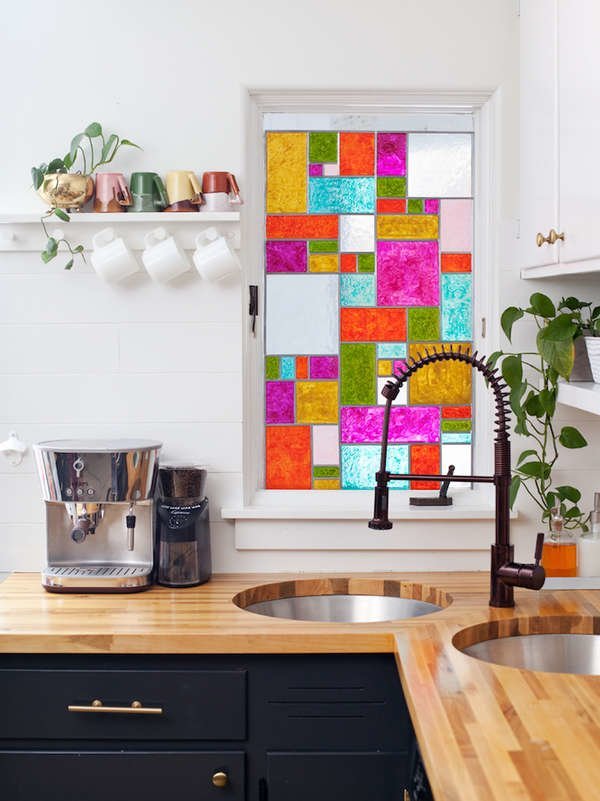
8. Add Stained Glass or Faux Stained Glass
Stained glass turns a window into art. Real stained glass panels can be custom-made or salvaged from architectural shops. They can hang in front of a window or be installed permanently. When the sun shines through, the room gets color, pattern, and a touch of old-house magic.
If real stained glass is outside the budget, faux stained glass film or DIY paint kits can create a similar effect. This idea works especially well in entryways, stair landings, bathrooms, and small accent windows. It provides privacy and personality at the same time, which is more than most mini blinds can say for themselves.
9. Place a Decorative Privacy Screen in Front of the Window
A folding screen or decorative panel can dress a window without touching the window at all. This is a smart choice for renters, oversized windows, awkward window shapes, or rooms where you want flexible privacy. A screen can be moved, angled, folded away, or used to hide a not-so-glamorous view.
Look for wood lattice, cane, rattan, metal, carved panels, or modern geometric screens. In a bedroom, a screen can soften morning light. In a living room, it can create a layered, designer look. In a home office, it can block street views just enough to stop you from staring outside and calling it “research.”
10. Dress the Window With Plants
Plants are a living window treatment. Place tall plants, hanging plants, or a row of potted herbs near a sunny window to filter views and soften hard edges. A kitchen window filled with basil, thyme, mint, and parsley looks charming and smells better than a curtain that has absorbed three years of garlic toast.
For privacy, choose fuller plants like pothos, philodendron, monstera, snake plant, bamboo palm, or ferns. Hanging planters can create a leafy curtain effect without fabric. Just match the plant to the available light. A sun-loving herb will not be happy in a dark north-facing window, and it will express this unhappiness by slowly becoming a twig.
11. Build a Window Shelf Display
A window shelf can turn glass into a display zone. Install a narrow shelf across the window or within the frame and style it with plants, glass bottles, ceramics, small sculptures, or collected objects. The display adds privacy while still allowing light to move around the room.
This idea works well in kitchens, bathrooms, craft rooms, and sunny corners. Glass shelves are especially good because they do not block as much light. Use restraint, though. A few beautiful objects look curated. Forty-seven tiny figurines look like they are holding a meeting.
12. Paint or Highlight the Window Trim
Sometimes the window does not need a covering; it needs confidence. Painting the trim a bold color can make the window feel intentionally dressed without adding anything to the glass. Black trim looks sharp and modern. Deep green, navy, or charcoal adds drama. Soft cream or warm white can make older woodwork feel fresh.
This approach works best when privacy is not a major concern or when the window already has an attractive view. It is especially effective in rooms with beautiful molding, deep sills, or vintage architecture. Think of it as eyeliner for your window: simple, defining, and surprisingly powerful.
13. Use an Exterior Awning
Awnings are not just for storefronts and charming cafés where everyone seems to own a tiny dog. They can shade windows from the outside, reduce glare, protect interiors from harsh sun, and add character to a home’s exterior.
Fabric awnings, metal awnings, and retractable awnings all create a dressed look without interior curtains. A corrugated metal awning can suit farmhouse, industrial, or cottage styles. A striped fabric awning feels cheerful and classic. Exterior awnings are particularly useful for west-facing windows that get blasted with late-afternoon sun.
14. Add Exterior Shutters for Curb Appeal
Exterior shutters may be functional or decorative, depending on the home. Even when they do not close over the window, they can visually frame the glass and make the exterior feel more complete. Board-and-batten shutters suit farmhouse and cottage homes, louvered shutters feel traditional, and paneled shutters offer a polished look.
For the best result, size shutters as if they could actually cover the window, even if they are decorative. Too-small shutters are like tiny eyebrows on a big face: technically present, but emotionally confusing.
15. Hang Art, Signs, or Salvaged Pieces Above the Window
A decorative sign, carved wood panel, vintage architectural fragment, or slim art piece above a window can replace the visual role of a valance. It draws the eye upward and makes the window feel styled without using curtains.
This idea works well in kitchens, breakfast rooms, mudrooms, and casual living spaces. A stenciled wood sign can add farmhouse charm. A salvaged transom panel can add vintage character. A simple floating ledge can display small art or seasonal decor. Just avoid anything too heavy unless it is properly anchored. “Rustic charm” should not fall on anyone during brunch.
16. Leave the Window Bare When the View Deserves It
Not every window needs covering. If you have a private backyard view, a beautiful garden, mature trees, or an architectural window worth showing off, bare glass can look intentional and elegant. This is especially true in modern, Scandinavian, midcentury, and minimalist interiors.
The trick is to make the surrounding area feel finished. Clean the glass, repair trim, style the sill, and balance the room with rugs, furniture, lighting, and art. A bare window looks chic when the room supports it. Otherwise, it can look like you forgot to finish moving in.
17. Use Smart Glass or Switchable Privacy Film
For a high-tech solution, consider switchable privacy film or smart glass. With electrical current, the glass changes from frosted to clear, often by remote, switch, or smart-home control. It is commonly used in modern bathrooms, offices, conference rooms, and contemporary homes.
This option costs more than basic film, but it provides flexibility that regular window treatments cannot. You can enjoy a clear view one moment and privacy the next. It is a little futuristic, like your window went to graduate school.
How to Choose the Best No-Curtain Window Treatment
Start With Privacy
Before choosing a window treatment, stand outside at different times of day and look toward the window. Daytime privacy can change dramatically at night when interior lights are on. A window that looks private at noon may become a stage at 8 p.m. Once you know how exposed the room is, you can choose film, shutters, shades, screens, or plants accordingly.
Consider Light Control
Bedrooms may need blackout shades. Offices may need glare reduction. Kitchens may need light filtering without fabric bulk. Bathrooms may need privacy without darkness. Match the treatment to the room’s job, not just the style photo that made you whisper, “Ooooh.”
Think About Cleaning
Window treatments collect dust, moisture, grease, and pet hair. In kitchens, washable blinds, film, shutters, or faux wood options are often more practical than fabric. In bathrooms, moisture-resistant materials matter. In homes with pets, avoid anything that swings, puddles, or looks fun to attack.
Choose Cordless When Possible
Cordless blinds and shades look cleaner and are safer in homes with young children. They also reduce visual clutter. If you already have older corded coverings, keep cords short, secured, and out of reach, and avoid placing beds, cribs, chairs, or climbable furniture near them.
Room-by-Room Ideas
Kitchen Windows
Kitchen windows need treatments that can handle humidity, cooking splatters, and frequent cleaning. Frosted film, faux wood blinds, woven shades with liners, shelves, herbs, and metal awnings are all strong choices. Avoid heavy fabric near sinks and stoves unless you enjoy laundering your decor like it works in a diner.
Bathroom Windows
Privacy is the priority in bathrooms, but natural light is still welcome. Frosted film, reeded-glass film, shutters, vinyl roller shades, and moisture-resistant cellular shades can all work. For small bathrooms, choose treatments that sit inside the frame so the room feels open.
Bedroom Windows
Bedrooms need comfort, privacy, and sleep support. Cellular shades, blackout roller shades, Roman shades, shutters, or layered shade systems are good curtain-free options. If you want softness, Roman shades provide fabric texture without long panels.
Living Room Windows
Living rooms can handle more decorative solutions. Try shutters, woven wood shades, stained glass panels, a privacy screen, painted trim, plants, or bare windows if the view is beautiful. The living room is also a good place to use window treatments as part of the design story, not merely as glass covers.
Common Mistakes to Avoid
The first mistake is choosing style before function. A beautiful shade that does not provide enough privacy will annoy you every night. The second mistake is ignoring measurements. Window frames are often less square than they look, because houses, like people, settle over time.
The third mistake is forgetting how the treatment looks from outside. Street-facing windows should appear consistent enough to support curb appeal. The fourth mistake is buying the cheapest version of a product that gets used daily. If you raise and lower a shade every morning and evening, durability matters.
Finally, do not assume curtains are the only way to make a room feel finished. A clean window frame, a tailored shade, a leafy plant display, or a beautiful film can look just as intentionaland often more modern.
Extra Experience: What It Is Really Like to Lose the Drapes
After helping homeowners rethink windows, one lesson becomes clear: removing curtains can completely change how a room feels. The first reaction is often panic. People take down old panels and suddenly the room looks brighter, sharper, and a little naked. That awkward phase is normal. Windows are major visual anchors, and when the fabric disappears, the eye needs something else to understand the space.
In one small kitchen, old floral curtains made the room feel dim and busy. The homeowner wanted something cleaner but still private because the window faced a neighbor’s side yard. Frosted film solved the problem in one afternoon. The glass still brought in light, but the view became soft and blurred. A narrow shelf with two small plants finished the look. The room felt bigger immediately, and the homeowner joked that the kitchen had finally “opened its eyes.”
In another case, a living room had heavy drapes that blocked beautiful original wood trim. Once the drapes came down, the trim became the star. Instead of adding new fabric, the homeowner painted the walls a warm neutral, cleaned the woodwork, and added woven shades inside the frames. The texture softened the windows without hiding the craftsmanship. The result felt more expensive, even though the solution was simpler.
Bedrooms can be trickier. Many people remove curtains and underestimate how much light enters at sunrise. A pretty light-filtering shade may look dreamy at 2 p.m. and deeply rude at 5:45 a.m. For bedrooms, test privacy and darkness before committing. Blackout roller shades or lined Roman shades are often the better choice. If you want hotel-level darkness, make sure the shade fits tightly and consider side channels or an outside mount.
Bathrooms are where no-curtain solutions shine brightest. Fabric curtains in humid rooms can look cute for three weeks and then start acting suspicious. Frosted film, shutters, and moisture-resistant shades are usually more practical. The biggest tip is to cover only what you need. Sometimes frosting the lower half of a window gives enough privacy while leaving the upper glass clear for sky and sunlight. It feels custom without the custom price.
Plants are another favorite, but they require honesty. If you forget to water plants, do not create a window display that depends on twelve thirsty divas. Start with hardy choices. Snake plants, pothos, and ZZ plants are forgiving. Herbs are wonderful in sunny kitchens, but they need light and regular trimming. A dead basil plant does not say “European cottage.” It says “we had optimism in March.”
The best no-curtain window treatments are the ones that match daily life. A family with kids may love cordless cellular shades. A renter may prefer removable film. A design lover may choose stained glass. A minimalist may leave the window bare and focus on trim. There is no universal answer, and that is the fun of it. Losing the drapes does not mean losing style. It means letting the window do more than hold fabric.
Conclusion
Dressing a window without curtains is not a design compromise. It is an opportunity to make the room cleaner, brighter, safer, more efficient, and more personal. From shutters and cellular shades to frosted film, plants, stained glass, shelves, awnings, and bare architectural windows, there are plenty of ways to create privacy and polish without relying on drapes.
The smartest choice depends on your room, your light, your view, your cleaning habits, and your tolerance for dust. Start with function, then layer in style. Your windows will look intentional, your rooms will feel fresher, and your old drapes can finally retire from active duty. They have seen things. Probably spaghetti sauce.
Note: This article is written in original standard American English for web publishing and synthesizes practical window-treatment knowledge from reputable home design, safety, and energy-efficiency guidance.