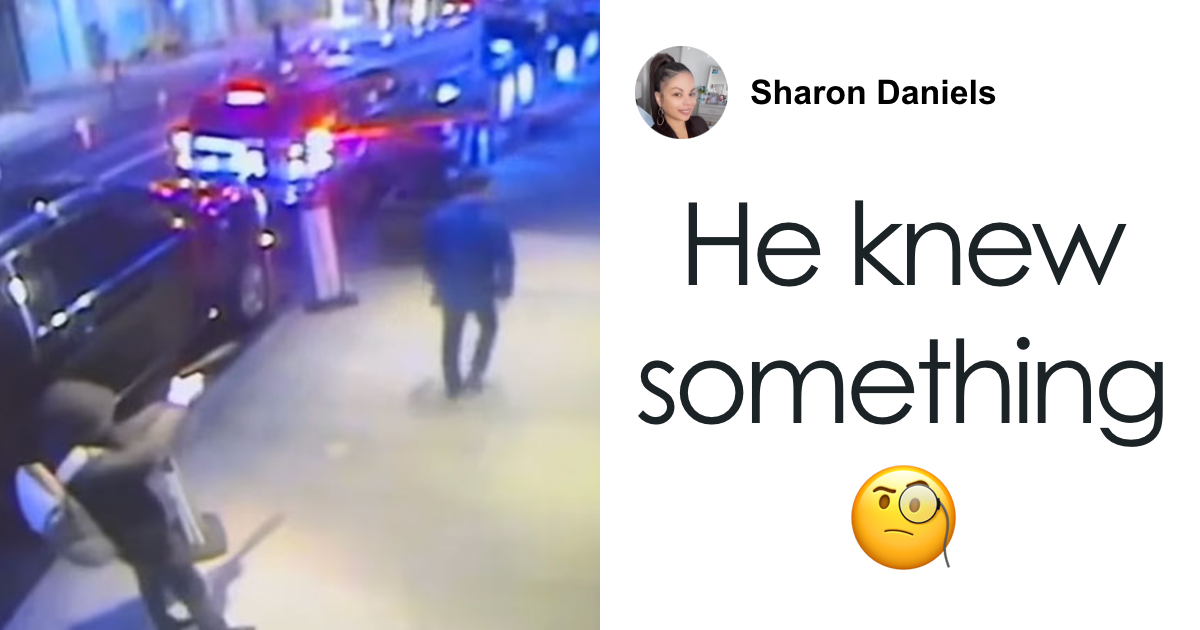
When UnitedHealthcare CEO Brian Thompson was fatally shot on a Midtown Manhattan sidewalk on December 4, 2024, the surveillance video seemed almost designed for the internet’s darkest genre: a masked figure waiting near a hotel, a quiet-looking weapon, a rapid response to a malfunction, and an escape into New York City’s morning traffic. Within hours, social media users were calling it a “professional hit.” The phrase spread faster than verified information, because online speculation rarely stops to wait for a warrant, a laboratory report, or even breakfast.
The established facts are both more concrete and more complicated. Police described the killing as targeted and preplanned. Prosecutors later accused Luigi Mangione of stalking and killing Thompson after preparing for the attack, while Mangione pleaded not guilty. Nothing publicly established that a contract killer had been hired or that a broader conspiracy directed the shooting. The “professional hit” label was an early interpretation of the footagenot a proven conclusion.
What Happened Outside the New York Hilton Midtown?
Thompson, 50, was in New York for UnitedHealth Group’s annual investor conference. At approximately 6:44 a.m., he walked toward the New York Hilton Midtown on West 54th Street, near Sixth Avenue. Authorities said a masked gunman who had been waiting nearby approached from behind and fired several times, striking Thompson. The executive was taken to a hospital and pronounced dead shortly afterward.
The phrase “in broad daylight” became common in headlines, although the attack occurred early on a December morning. What made the description feel accurate was the setting: a public sidewalk in the heart of Midtown, near a major hotel, with pedestrians, cameras, vehicles, and businesses all around. This was not a hidden rural crime scene. It was a deliberate public attack carried out in one of the most heavily surveilled urban districts in the United States.
Investigators recovered ammunition marked with the words “delay,” “deny,” and “depose.” The language appeared to echo criticism of health-insurance practices and immediately pushed the case beyond a conventional homicide narrative. The words looked like a message, and the internet did what the internet does when handed a message without a completed police file: it built a dozen stories around it before lunch.
Why Did the “Professional Hit” Theory Spread So Quickly?
The Shooter Appeared to Wait for a Specific Target
Police said the assailant appeared to ignore other people and wait for Thompson. That behavior suggested prior knowledge of the executive’s location and schedule. Thompson was heading to an investor event whose general purpose was publicly known, but knowing precisely when and where he would approach the entrance implied planning, surveillance, or both.
The Weapon Appeared to Be Suppressed
Early reports said the firearm was fitted with a suppressor. To many viewers, a masked attacker using a quieter weapon looked like a movie version of a contract killer. Firearms specialists and former law-enforcement officials offered differing interpretations of the weapon and the shooter’s apparent skill, demonstrating how uncertain the initial analysis remained. Equipment can indicate preparation without identifying who prepared, why, or for whom.
The Attacker Cleared an Apparent Malfunction
Surveillance footage showed the shooter manipulating the firearm between shots. Police officials initially said the gunman appeared proficient because he cleared the apparent problem quickly. Some commentators treated that movement as proof of elite training. Others noted that anyone who practiced with a particular setup could learn the same response. The visible action supported an inference of familiarity with the weapon, but it could not establish occupation, background, or payment.
The Escape Looked Planned
After the shooting, the attacker fled through an alley, used a bicycle, traveled toward Central Park, and moved through parts of the city where camera coverage was less consistent. Investigators later reconstructed a longer route involving a hostel, transit facilities, and travel outside New York. The sequence looked methodical, which encouraged the “professional” narrative. Yet methodical is not the same as professionally commissioned.
What Investigators Later Alleged
A five-day manhunt ended on December 9, 2024, when police arrested Luigi Mangione at a McDonald’s in Altoona, Pennsylvania, after an employee recognized him from widely distributed images. Authorities alleged that he possessed a firearm and suppressor consistent with those connected to the shooting, fraudulent identification, and writings critical of the health-insurance industry.
Federal prosecutors alleged that Mangione traveled across state lines, stalked Thompson, used interstate facilities during the planning, and committed a targeted, premeditated killing. Charging documents and statements attributed to Mangione portrayed him as acting alone and expressing hostility toward the health-insurance industry, rather than completing a paid assignment for an unidentified client. Those are prosecution allegations, and they remain subject to testing in court.
This is where the early “professional hit” theory ran into a basic evidentiary problem. A calm-looking attack can resemble a contract killing, but resemblance is not proof. Investigators would ordinarily need evidence such as communications, payment, relationships, instructions, or corroborating conduct before a hired-hit theory became more than an online guess. Publicly reported charging documents instead focused on an alleged lone actor with an ideological grievance.
Who Was Brian Thompson?
Brian Thompson had worked at UnitedHealth Group since 2004 and became chief executive of UnitedHealthcare in April 2021. Before taking the top insurance-unit role, he led government programs involving Medicare, retirement coverage, Medicaid, and related services. Colleagues described him as a respected executive, while his family remembered him as a loving husband and father.
His corporate position was enormously influential. UnitedHealthcare was the largest U.S. health insurer, covered more than 50 million people, and reported approximately $281.4 billion in 2023 revenue. Thompson therefore occupied a role that affected employers, patients, hospitals, physicians, shareholders, regulators, and public programs. That scale made him prominent within the industry even though he was not a household name before his death.
Why the Killing Triggered a National Argument About Health Insurance
The public response did not remain focused on the crime scene. Thousands of Americans used the case to recount denied claims, prior-authorization battles, surprise bills, narrow provider networks, and years spent arguing with insurers over treatments. The anger was real, widespread, and often rooted in painful personal experiences.
Data helps explain why the subject was combustible. KFF found that insurers offering qualified plans through HealthCare.gov denied approximately 19% of in-network claims and 37% of out-of-network claims in 2024. Consumers rarely appealed rejected claims. Broader polling has also shown that health-care affordability remains one of the country’s most persistent financial worries. A system can be legally complex and statistically enormous while still feeling brutally personal to the patient holding an unpaid bill.
An AP-NORC survey conducted after the killing found that roughly eight in ten adults placed a great deal or moderate amount of responsibility on the person who committed the shooting. At the same time, nearly seven in ten said insurance profits and coverage denials bore significant responsibility for the conditions surrounding the event. That does not amount to approval of murder. It shows that many Americans interpreted the crime through the lens of a health-care system they already distrusted.
The moral line should not be blurry: frustration with an industry does not justify killing an individual. Criticism, litigation, regulation, organizing, journalism, voting, and policy reform are legitimate tools. Gunfire is not consumer advocacy. Still, refusing to glorify violence does not require pretending the underlying anger appeared from nowhere.
How Social Media Turned a Murder Investigation Into Participatory Entertainment
Reddit, X, TikTok, Bluesky, and other platforms filled with frame-by-frame analysis of the shooter’s clothing, backpack, gait, firearm, escape route, and possible motives. Some users contributed potentially useful observations. Many others demonstrated a familiar online skill: achieving absolute certainty with approximately six pixels of evidence.
Reuters documented how internet sleuths searched for clues while law-enforcement experts warned about the danger of misidentification. The caution was not theoretical. Crowdsourced investigations have previously attached innocent names and faces to major crimes. Once a false claim goes viral, the correction typically arrives wearing sensible shoes while the rumor has already taken a private jet.
The Brian Thompson case also produced fake corporate claims, misleading screenshots, merchandise, memes, and unsupported stories about possible accomplices. Reuters later debunked a claim that UnitedHealthcare had immediately posted a job opening to replace Thompson. That rumor succeeded because it fit a cynical narrative, not because it was supported by the company’s hiring records.
The Legal Case as of July 7, 2026
Mangione has pleaded not guilty in both state and federal proceedings. In September 2025, a New York judge dismissed two terrorism-related state counts but left a second-degree murder charge, seven weapons-possession counts, and a false-identification count in place. The state trial is scheduled to begin on September 8, 2026.
In January 2026, a federal judge dismissed the federal murder-through-use-of-a-firearm and related weapons counts, eliminating the death-penalty path in that case. Two federal stalking charges remain, and prosecutors say a conviction could still lead to life imprisonment. On June 29, 2026, the federal trial was moved to January 25, 2027, to avoid colliding with the state proceedings.
These developments matter because headlines often freeze a case at the moment of arrest. Criminal litigation does not. Charges can be narrowed, evidence challenged, schedules changed, and legal theories rejected before a jury hears opening statements. Calling an accused person guilty before a verdict is not analysis; it is skipping the part where the justice system is supposed to do its work.
The Lasting Impact on Corporate Security
The killing forced health-care companies to reassess executive protection, event planning, online biographies, travel routines, and public-facing schedules. UnitedHealth later disclosed nearly $1.7 million in security spending for top executives in 2024, along with more than $207,000 in protection provided for certain family members. Other major health-care companies also reported increased security costs.
That response reflects a broader lesson for corporate America. Executives in controversial industries may not consider themselves public figures, but digital records can reveal conference appearances, biographies, travel patterns, home information, family details, and workplace routines. The age of searchable everything has made personal-security planning less optional, especially when public anger becomes personalized.
Experience-Based Lessons From Following a Breaking Crime Story
Separate What You Saw From What You Think It Means
The most useful habit during a fast-moving investigation is to create two mental columns. In the first, place direct observations: a person waited near the hotel, the shooter used a firearm, the weapon required manipulation, and the attacker fled. In the second, place interpretations: trained operative, angry customer, employee, activist, or hired assassin. The first column may be supported by video or police statements. The second is a menu of hypotheses. Confusing the columns is how speculation puts on a necktie and introduces itself as fact.
Use Timestamps, Not Vibes
Breaking stories change rapidly. A claim that was accurate at 9 a.m. may be outdated by dinner. When saving an article, screenshot, or official statement, record when it was published and when the underlying event occurred. This practice prevents an early rumor from being repeated after investigators have contradicted it. It also helps readers understand why responsible outlets sometimes update language from “person of interest” to “suspect,” or from a broad charge to a narrower surviving count.
Do Not Join the Facial-Recognition Posse
One of the worst online experiences in any major manhunt is watching strangers nominate real people as suspects based on eyebrows, jackets, smiles, or vague resemblance. A wrong identification can trigger harassment, threats, employment damage, and permanent search-engine contamination. Unless law enforcement has publicly identified someone, private citizens should resist posting names. The thrill of being first is not worth making an innocent person spend years explaining a false accusation.
Remember That Viral Humor Has a Human Target
Dark humor can be a way to process anger, especially when people feel powerless against large institutions. Yet a homicide is not merely a symbol, meme template, or policy metaphor. Thompson had relatives, friends, and colleagues who experienced an actual death, not a trending topic. A mature response can hold two thoughts at once: the American insurance system deserves rigorous criticism, and the public killing of an executive is morally indefensible.
Channel Outrage Toward Verifiable Reform
People who are furious about claim denials have options that produce more than engagement metrics. They can document denials, file formal appeals, contact state insurance regulators, seek independent medical review, support patient-advocacy organizations, provide evidence to journalists, testify before lawmakers, and vote on health-policy issues. Employers can demand clearer plan data, while legislators can strengthen transparency and appeal requirements. None of these actions delivers the instant emotional jolt of a viral post, but they create records, pressure, and measurable outcomes.
Read Charging Documents as Allegations, Not Screenplays
Official complaints and indictments are valuable because they explain what prosecutors believe they can prove. They are not verdicts, and they are usually written from one side of an adversarial process. The responsible reader compares them with defense filings, judicial rulings, authenticated evidence, and eventual testimony. This case is a particularly strong reminder that legal reality evolves: terrorism counts were dismissed, federal capital charges were thrown out, and trial dates moved. The loudest first headline was not the final legal map.
Conclusion
The assassination of Brian Thompson was a shocking, targeted killing carried out on a public Manhattan sidewalk. The shooter’s apparent preparation, suppressed weapon, quick handling of a firearm problem, and planned escape understandably fueled early speculation about a “professional hit.” But speculation should not be upgraded into fact simply because it makes a gripping headline.
The evidence described by authorities led prosecutors toward a different allegation: a lone attacker who planned the crime and was motivated by hostility toward the health-insurance industry. The case also exposed an extraordinary reservoir of public anger over claim denials, costs, and corporate power. That anger deserves serious reporting and policy attention. It does not excuse murder, erase the victim’s humanity, or eliminate the accused person’s right to a fair trial.
Editorial note: This article distinguishes verified facts from online theories. Luigi Mangione has pleaded not guilty, and descriptions of prosecution evidence remain allegations unless proved in court. Legal-status information is current through July 7, 2026.