Oscar night does not really end when the final envelope is opened. In Hollywood, the ceremony is only act one. Act two begins when the winners, nominees, directors, musicians, athletes, fashion icons, and the occasional “how did they get invited?” mystery guest drift toward the Vanity Fair Oscar Party. At the 2024 edition, the after-party once again became one of the most photographed rooms in entertainment. But the images that stood apart were not just red-carpet snaps or crowded dance-floor candids. They were Mark Seliger’s carefully staged portraits: quiet, cinematic, moody, and somehow louder than a room full of publicists.
The 2024 Oscars Vanity Fair After Party had plenty of headline fuel. Emma Stone arrived with fresh Best Actress glory for Poor Things. Christopher Nolan and Emma Thomas were riding the thunderous success of Oppenheimer. Billie Eilish had just added another Oscar to her already alarmingly crowded trophy shelf. Da’Vine Joy Randolph brought the emotional glow of her first Academy Award win. Around them moved Lily Gladstone, Colman Domingo, America Ferrera, Anya Taylor-Joy, Sydney Sweeney, Jennifer Lawrence, Donald Glover, Mark Ruffalo, LeBron James, Rosé, Usher, and many more.
Seliger’s studio turned that celebrity traffic jam into something more timeless. Instead of shouting, “Look who was there,” the portraits whispered, “Look again.”
Why Mark Seliger’s Vanity Fair Portraits Matter
Mark Seliger is not a photographer who simply records famous people standing in good lighting. His work is built around atmosphere, character, and that tiny moment when a celebrity stops “arriving” and starts being observed. His Vanity Fair Oscar Party portraits have become an annual tradition because they offer something rare on Oscar night: stillness.
At a normal after-party, everything moves fast. Dresses need trains lifted. Stylists hover nearby like glamorous emergency responders. Winners are pulled in five directions. Nominees try to look relaxed even after a three-hour emotional obstacle course. In the middle of that swirl, Seliger creates a temporary world where the pace slows down. A star steps into the studio, the noise drops, and the evening becomes a portrait rather than a blur.
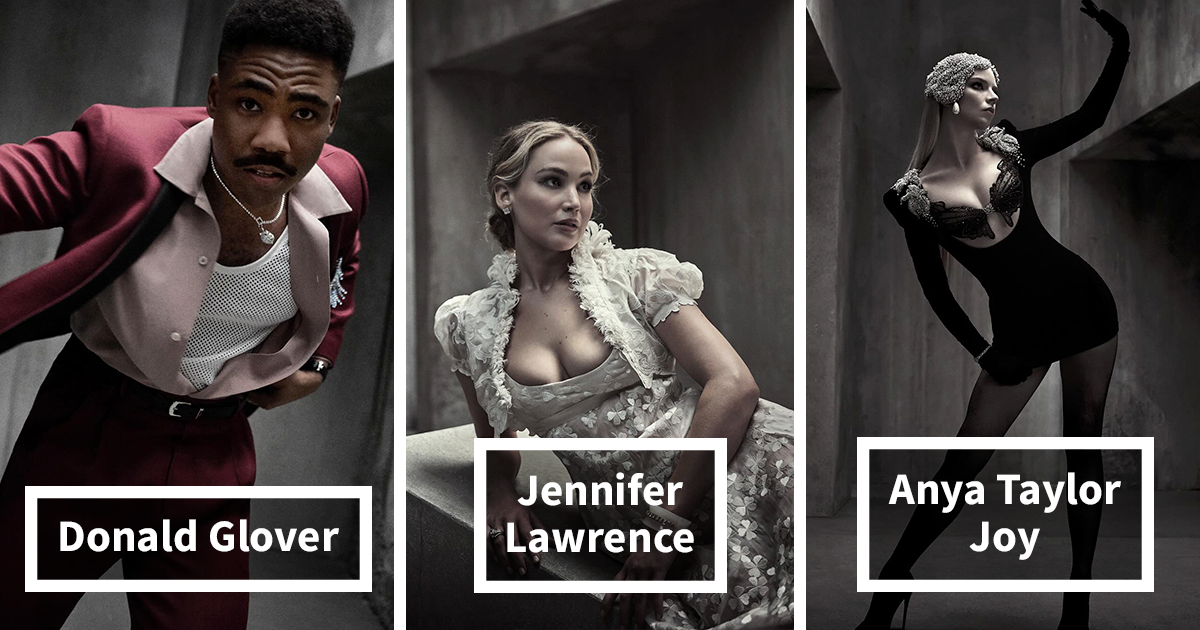
The 2024 set leaned into a sculptural, shadowed atmosphere. Concrete-like surfaces, dramatic angles, and controlled light made the portraits feel almost architectural. The result was not the usual glossy party documentation. It looked more like Hollywood had wandered into an art installation after midnight and decided to pose with excellent cheekbones.
The 2024 Vanity Fair Oscar Party: A Landmark Night
The 2024 Vanity Fair Oscar Party was especially meaningful because it marked the party’s 30th anniversary. Hosted by Vanity Fair editor in chief Radhika Jones, the celebration took place in a custom-built venue connected to the Wallis Annenberg Center for the Performing Arts in Beverly Hills. That setting has long helped the party feel less like a regular industry event and more like Hollywood’s unofficial final exam in glamour.
The guest list reflected the modern entertainment universe. Film royalty mingled with music stars, athletes, comedians, models, designers, executives, and internet-era celebrity powerhouses. One minute you could see an Oscar winner holding a statuette; the next, a pop star, a basketball legend, or a beloved sitcom veteran would appear. It was less a party than a highly polished collision of cultural weather systems.
That is what makes the Seliger portraits so valuable. They organize the chaos. They give the night a visual archive. Red carpets show what people wore. Party photos show who talked to whom. Seliger’s portraits show how the night felt: triumphant, strange, intimate, theatrical, and just a little unreal.
Emma Stone: The Silver Centerpiece
Emma Stone’s 2024 portrait instantly became one of the defining images of the series. Fresh from winning Best Actress for Poor Things, she appeared in a shimmering silver dress with her Oscar placed nearby. The image worked because it did not overplay the victory. Stone did not need to leap, scream, or hold the statuette like a championship belt. The Oscar was there, the dress caught the light, and her expression carried the confidence of someone who had just survived the awards-season marathon with both talent and humor intact.
In SEO terms, “Emma Stone Vanity Fair Oscar portrait” might be a strong keyword. In human terms, it was simply a great image. The portrait captured the afterglow of achievement without flattening it into a press-release smile. It felt composed, elegant, and slightly mischievous, which is not a bad summary of Stone’s entire public persona.
Christopher Nolan and Emma Thomas: The Power Couple of Oscar Night
Christopher Nolan and producer Emma Thomas entered the 2024 Oscar weekend as two of the night’s most important figures. Oppenheimer dominated the ceremony, and their portrait together carried the weight of a long creative partnership finally receiving the industry’s loudest applause.
What makes a portrait of Nolan and Thomas interesting is that it is not built on celebrity sparkle in the usual sense. Their appeal comes from authorship, discipline, and the sense that every detail has been considered three times before breakfast. Seliger’s approach suited them. The controlled environment echoed the precision associated with Nolan’s filmmaking while still giving the image the warmth of a shared victory.
Billie Eilish, Da’Vine Joy Randolph, and the Emotional Range of the Night
Billie Eilish’s presence in Seliger’s 2024 studio connected Oscar night to music history. Her win for “What Was I Made For?” from Barbie, alongside Finneas, reinforced her unusual position as both a pop phenomenon and a serious awards-season force. In a Vanity Fair portrait setting, Eilish’s understated cool reads especially well. She does not need bright colors or exaggerated gestures; she brings her own atmosphere with her, like a weather pattern wearing designer layers.
Da’Vine Joy Randolph brought a different kind of energy. Her Best Supporting Actress win for The Holdovers was one of the most emotionally satisfying moments of the 2024 Oscars season. In Seliger’s studio, that emotion translated into presence. Randolph’s portrait felt celebratory but grounded, glamorous but human. It was the kind of image that reminded viewers that awards are not just industry statistics. They are career landmarks, personal milestones, and sometimes the moment when years of work suddenly become visible to the whole room.
Nominees and Scene-Stealers: Lily Gladstone, Colman Domingo, America Ferrera, and Jeffrey Wright
The 2024 portrait series also honored stars who shaped the awards conversation even when they did not leave the ceremony with a statuette. Lily Gladstone, nominated for Killers of the Flower Moon, carried one of the season’s most meaningful narratives. Her presence at the Vanity Fair party represented not just a single performance, but a broader conversation about visibility, history, and recognition in Hollywood.
Colman Domingo, nominated for Rustin, brought the charisma of a performer who understands fashion, posture, and dramatic timing as if they are all part of the same instrument. America Ferrera, celebrated for her work in Barbie, represented the film’s emotional intelligence and cultural reach. Jeffrey Wright, nominated for American Fiction, brought the gravitas of an actor whose performances often reward close attention.
Seliger’s portraits gave these figures room to exist outside the win-or-lose narrative. That is important. Awards coverage can become a scoreboard, but great portraiture remembers that the season is also about artistry, influence, and unforgettable work.
Fashion as Character: Sydney Sweeney, Anya Taylor-Joy, Hunter Schafer, and Rosé
The Vanity Fair Oscar Party is famous for fashion because it gives stars a second act after the formal ceremony. The main Oscars red carpet often favors tradition. The after-party is where risk sneaks in, kicks off its shoes, and orders something sparkling.
Sydney Sweeney made one of the night’s most-discussed fashion statements by wearing an archival Marc Bouwer gown previously associated with Angelina Jolie’s 2004 Oscars appearance. In Seliger’s portrait studio, that kind of fashion history becomes more than a trivia point. It becomes texture, silhouette, and storytelling. Sweeney’s image connected Old Hollywood glamour, early-2000s nostalgia, and modern celebrity confidence in one frame.
Anya Taylor-Joy, Hunter Schafer, and Rosé each brought a different kind of fashion presence. Taylor-Joy often reads like she has stepped out of a fantasy film’s most expensive dream sequence. Schafer brings editorial boldness and an instinct for shape and mood. Rosé, known globally as a member of BLACKPINK and as a fashion-world favorite, added international pop elegance to the mix. Together, they showed why the Vanity Fair Oscar Party has become a runway with better gossip.
Comedy, Cool, and Pop Culture Crossovers
One of the pleasures of the 2024 Mark Seliger Vanity Fair portraits was the range of personalities. Jennifer Coolidge appeared with the kind of comic glamour that turns every room into a better room. Glen Powell brought movie-star ease. Sandra Oh and Catherine O’Hara represented television and film excellence with decades of audience affection behind them. Donald Glover added the multi-hyphenate mystique of actor, musician, writer, and cultural shapeshifter.
Then there were portraits that felt like pop-culture mashups: Will Arnett, Jason Bateman, Sean Hayes, and Justin Theroux together; Halle and Chloe Bailey photographed as a sister duo; LeBron James bringing sports royalty into the cinematic celebration; Usher entering the frame with performer confidence. These images prove that the Vanity Fair party is not only about movies. It is about the wider celebrity ecosystem that surrounds movies, influences them, funds them, streams them, memes them, and occasionally photobombs them.
What Makes Seliger’s Portrait Style So Distinctive?
Seliger’s Vanity Fair portraits work because they do not treat celebrity as a flat surface. His lighting often adds depth and mystery. His sets feel designed but not distracting. The subject remains central, yet the environment contributes a mood. In 2024, the studio’s hard surfaces and shadows created a tone that felt both modern and classic. The images could live online, in a magazine, or in a coffee-table book without losing their charge.
Another key element is trust. A photographer working in that environment has very little time. Stars are moving through a party, not settling in for a full editorial shoot. Seliger must quickly guide, compose, and capture. The best portraits look effortless precisely because the production behind them is not. The studio is temporary, the guest list is unpredictable, and the schedule is probably what a calendar would look like if it drank espresso.
Yet the final images feel calm. That contrast is the magic trick.
Why These Portraits Became Shareable
The 2024 Oscars Vanity Fair After Party portraits were built for cultural circulation. They had recognizable stars, award-night relevance, fashion value, and a visual style strong enough to stop a scrolling thumb. For entertainment websites, fan pages, fashion accounts, and movie communities, the images offered plenty to discuss: Who looked best? Which portrait felt most cinematic? Which celebrity seemed most relaxed? Who understood the assignment so thoroughly they deserved extra credit?
But the portraits also appealed because they felt less disposable than standard event photography. A candid party shot may trend for a day. A strong Seliger portrait can become part of a star’s visual history. Emma Stone beside her Oscar, Da’Vine Joy Randolph in victory glow, Billie Eilish in post-win cool, and Sydney Sweeney in archival glamour all carry a sense of occasion.
That is why the keyword “Stars Photographed By Mark Seliger At The 2024 Oscars Vanity Fair After Party” has lasting appeal. It points to a specific event, but it also captures a broader fascination: how Hollywood chooses to remember itself when the ceremony is over and the party begins.
Experience Notes: What It Feels Like to View These Portraits
Looking through Mark Seliger’s 2024 Vanity Fair Oscar Party portraits feels a bit like entering a secret room after the loudest night in Hollywood. The ceremony has ended, the speeches have been clipped for social media, the red-carpet interviews have already turned into headlines, and then suddenly there is this quieter gallery of faces. The experience is different from browsing ordinary celebrity photos. You are not just checking outfits. You are reading expressions, posture, lighting, and the emotional residue of the night.
The first reaction is usually recognition: “Oh, there’s Emma Stone.” Then the image slows you down. The silver dress, the sculptural set, the Oscar beside her, the calmness of the poseit all invites a second look. That second look is where the pleasure begins. You start noticing how the portrait balances public victory with private composure. She is not performing surprise anymore; she is sitting inside the reality of the win.
Then another portrait changes the mood. Billie Eilish brings a cool, inward energy. Da’Vine Joy Randolph brings warmth and triumph. Colman Domingo brings style like it has been rehearsed by a jazz band. Jennifer Coolidge looks as if she could make even a concrete set feel like a cocktail lounge. LeBron James appears and suddenly the Oscars universe expands beyond cinema into sports, fame, and global culture. That variety makes the gallery addictive. It is not one note of glamour repeated thirty times. It is a full playlist.
There is also a fun tension in seeing stars inside such a controlled studio after imagining the chaos outside it. You know the party must be packed. You know someone is probably searching for their phone, someone else is trying to find a friend, and at least one famous person is pretending they definitely remember the name of another famous person. But inside Seliger’s frame, everything is still. The subjects look as if they have stepped out of the noise and into a pocket of cinema.
For viewers who love photography, the experience is even richer. The portraits show how much can be done with light, space, and confidence. A good celebrity portrait does not need visual clutter. It needs a point of view. Seliger’s point of view is that glamour becomes more powerful when it has shadow, texture, and a little mystery. That is why these images linger. They make Oscar night look less like an event and more like a legend being assembled one frame at a time.
Conclusion
Mark Seliger’s portraits from the 2024 Oscars Vanity Fair After Party captured Hollywood at its most fascinating: victorious, exhausted, beautifully dressed, and fully aware that history sometimes happens under studio lights after midnight. The series brought together winners like Emma Stone, Billie Eilish, and Da’Vine Joy Randolph; major filmmakers like Christopher Nolan and Emma Thomas; acclaimed nominees such as Lily Gladstone, Colman Domingo, America Ferrera, and Jeffrey Wright; and a wide range of cultural figures from Rosé to LeBron James.
What made the portraits memorable was not only the guest list. It was the transformation of a crowded after-party into a timeless visual record. Seliger’s studio offered a pause button for a night that usually refuses to slow down. In that pause, the stars looked less like headlines and more like characters in Hollywood’s ongoing story. And honestly, if every party had lighting this good, we would all be much more willing to have our picture taken after dessert.