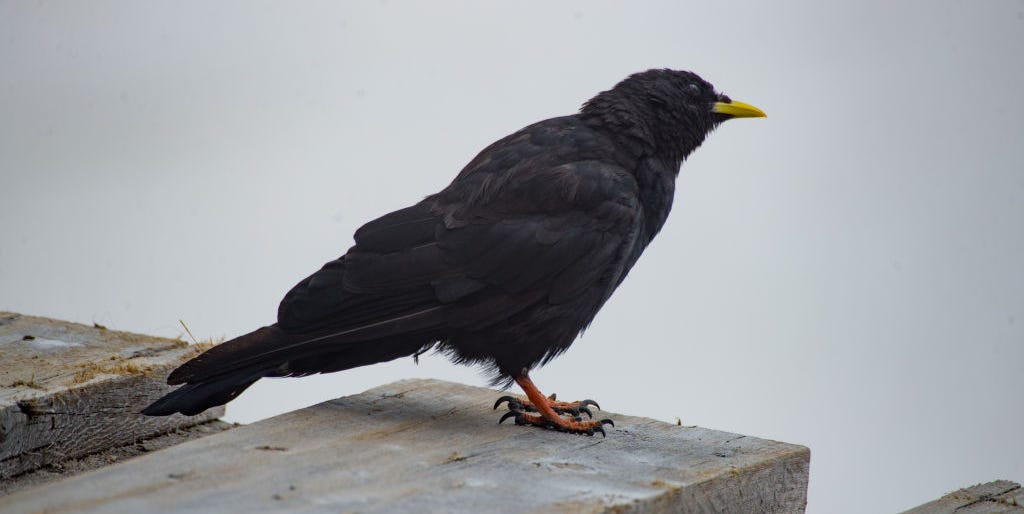
People love to act surprised when crows do something brilliant, as if the birds should apologize for being smarter than half the people in a group project. But the surprise keeps coming anyway. New research on New Caledonian crows suggests that these birds do not just use tools. They appear to value some tools more than others, prefer certain materials, and handle their best equipment with extra care. In other words, they do something wonderfully familiar: they have favorites.
That idea is part of what makes crows so fascinating. Plenty of animals use the world around them in clever ways. Fewer make tools. Fewer still make specialized tools, choose among different designs, and protect the good ones as if they know replacing them would be a hassle. If that sounds suspiciously human, that is because it is. We may keep a favorite chef’s knife, a lucky pen, or the one screwdriver that somehow works better than all the others. New Caledonian crows seem to have their own version of that instinct.
This does not mean crows are tiny feathered engineers sitting around comparing brands. It does mean their behavior hints at something deeper than simple trial and error. These birds appear to recognize that some tools are more efficient, more costly to make, and more worth keeping. That combination of problem-solving, preference, and careful handling helps explain why crows have become stars in the world of animal cognition.
Why New Caledonian Crows Keep Showing Up in Science News
When scientists talk about tool use in birds, one species steals the spotlight again and again: the New Caledonian crow. Native to the South Pacific archipelago of New Caledonia, this crow has built a serious reputation for crafting and using tools in the wild. It probes into logs, tree crevices, and plant material to pull out beetle grubs and other hidden prey. That alone would be impressive. What makes the species extraordinary is the complexity of the tools.
These crows do not settle for whatever random twig life tosses at their feet. They use multiple kinds of foraging tools, including simple non-hooked sticks, hooked stick tools made from carefully chosen plant stems, and even tools cut from the edges of pandanus leaves. Some tools are basic. Some are refined. Some are basically the avian version of upgrading from a paper clip to a premium multitool.
Researchers have also documented that New Caledonian crows can make tools under natural conditions, use tools in sequence, solve multi-step problems, and even construct compound tools by combining separate parts into one longer working instrument. If that were not enough, evidence suggests the shape of their beak may be specially adapted to help them manipulate tools more effectively. This is one reason scientists see them as a model species for understanding intelligence, innovation, and the evolution of technology in animals.
So Do Crows Really Have Favorite Tools?
The short answer is yes, in a meaningful behavioral sense. Scientists found that New Caledonian crows strongly preferred certain hooked stick tools over basic, non-hooked sticks. More specifically, the birds showed a preference for hooked tools made from particular plant materials, especially stems from a shrub called Desmanthus virgatus. That detail matters because these hooked tools are not just prettier. They are more efficient and more costly to obtain or manufacture.
If a crow loses a plain stick, it can often grab another one without too much drama. If it loses a carefully crafted hooked tool made from preferred material, that is a bigger setback. It is the difference between misplacing a free hotel pen and losing the expensive pair of headphones you actually like. The crow is not being sentimental. It is being practical.
That practicality showed up clearly in the birds’ behavior. When crows were using these more valuable hooked tools, they were more likely to keep them safe between bouts of foraging. Instead of dropping them carelessly, they often trapped them under a foot or tucked them into a nearby hole or crevice. Those safekeeping behaviors reduce the risk of losing the tool, especially when the bird needs to free its beak to handle food.
Scientists interpret this pattern as evidence that crows treat different tools differently based on their relative value. That does not prove the birds think exactly as humans do. But it does suggest they behave as though they understand that some tools are worth more effort, more attention, and more protection than others.
Why Hooked Tools Matter More Than Basic Sticks
Hooked tools are not just fancy accessories for a bird with standards. They work better. Studies have shown that complex hooked stick tools can help New Caledonian crows extract prey several times faster than simple non-hooked tools, sometimes by a dramatic margin. In the wild, speed matters. A faster tool means more food, less wasted energy, and less time hanging around while predators or competitors ruin the afternoon.
That helps explain why the birds bother to make them at all. Tool manufacture takes time and effort. The crow has to locate suitable raw material, detach it, shape it, and refine the hook. This is not casual pecking. It is a structured sequence of actions that produces a more effective device. When the result is a tool that can pull prey from difficult spots much more efficiently, the investment pays off.
Scientists have even found that deeper, better-defined hooks can improve performance. In simple terms, crow tools are not all created equal. Some are quick-and-dirty. Some are high-performance. And when the good version helps you pull lunch out of a tree several times faster, it makes perfect sense to treat it like gold.
The Hidden Genius Is Not Just Tool Use, but Tool Management
One of the most interesting parts of the story is that the real insight is not merely that crows use tools. It is that they manage them. Tool use gets the headlines because it looks dramatic and photogenic. Tool management is subtler, but arguably more revealing. To manage a tool well, an animal has to do more than succeed once. It has to think about reuse, risk, efficiency, and future payoff.
Earlier work showed that New Caledonian crows often keep tools safe rather than dropping them after a single use. They may pin a tool underfoot while eating or stash it in a nearby hole. They also show this behavior more often when losing the tool would be especially costly, such as when foraging off the ground or handling prey that takes longer to process. That context-sensitive behavior already hinted that the birds were not being random.
The later finding that they are even more careful with preferred hooked tools strengthens that picture. It suggests the crow is not just following a fixed rule like “never drop stick.” Instead, it behaves more selectively, as though the type of tool changes the strategy. That is a big deal. In animal cognition, flexible behavior usually tells a more interesting story than a rigid habit.
Favorite Materials, Better Designs, and a Bird With Standards
Another reason the “favorite tools” idea rings true is that New Caledonian crows are picky about materials. Researchers have reported strong selectivity in the plant species these birds use when crafting hooked tools, with some populations favoring specific plants. This means the crow is not just making a tool. It is choosing raw material that suits the job.
That selectivity makes ecological sense. Different stems vary in strength, flexibility, branching structure, and how easily they can be shaped into a functional hook. A better material can save time during manufacture and produce a better end product. In human terms, it is the difference between trying to build furniture out of wet cardboard or actual wood. One path leads to success. The other leads to regret.
What is especially intriguing is that material choice can vary by site, suggesting local conditions and perhaps local learning patterns shape what crows use. Some researchers have even asked whether there may be forms of cultural transmission involved in crow technology. That idea remains a lively area of study, but it makes the birds even more fascinating. If crows not only prefer tools but also maintain population-specific tool traditions, then we are looking at something more like technology than mere object use.
Crows Can Plan, Invent, and Improvise
The favorite-tool finding is powerful on its own, but it becomes even more impressive when placed next to the rest of what scientists know about these birds. New Caledonian crows have shown the ability to solve multi-step problems involving tools. In laboratory tasks, they have used one tool to get another tool, then used that second tool to reach food. Researchers have also found evidence that they can plan for future tool use, choosing the right tool for a task they will face later.
Then there is the compound-tool work, which sounds like science fiction until you realize the bird actually did it. In one study, crows combined multiple short pieces into a single longer tool to reach food. One especially talented crow managed to create tools made from three and even four parts. That kind of construction requires the animal to do more than react in the moment. It must recognize what the finished tool needs to accomplish before the tool exists.
Other work suggests crows can manufacture objects from remembered properties, adding another layer to the story. They may be able to form a mental template of a useful design and recreate it later. For a bird, that is a very serious flex.
Built for Tools: Even the Beak Plays a Role
Scientists do not just study crow brains. They also study crow bodies. Research on bill shape suggests that the New Caledonian crow’s beak may be unusually well-suited for handling tools. Compared with the bills of many other crows, its structure appears to support precise manipulation while allowing the bird to keep visual control over the tip of the tool.
That matters because tool use is not only about intelligence. It is also about biomechanics. A brilliant animal still needs the right physical setup to execute complex actions reliably. In these crows, the anatomy and behavior appear to work together. It is a reminder that evolution does not only favor the brainy idea. It also favors the body that can pull it off.
What “Favorite Tools” Really Says About Bird Intelligence
It is tempting to hear a phrase like “crows have favorite tools” and jump straight into full human comparison mode. The better takeaway is both more careful and more interesting. The research does not say crows think exactly like people. It says their behavior reflects selective valuation. They appear to recognize that some tools are superior, more efficient, and worth protecting.
That is impressive because it links several mental skills at once: choice, memory, problem-solving, and future-oriented behavior. A crow that prefers a certain tool, keeps it safe, and reuses it is doing more than acting smart in a viral video. It is navigating costs and benefits in a way that resembles the logic behind good tool management in humans.
And honestly, there is something humbling about that. Humans often like to place tool use on a pedestal, as if making and valuing tools is a private club with a very exclusive membership. Crows keep showing up at the door in black feathers, opening the lock, and asking whether there are snacks inside.
Experiences and Reflections: What It Feels Like to Watch a Crow Work
If you have ever watched a crow closely, especially in a park, on a fence line, or near a patch of trees, you know there is a strange feeling that comes with it. The bird does not move like a machine running on instinct alone. It pauses. It studies. It tests. It often seems to inspect the world with the kind of deliberate curiosity we usually reserve for humans, toddlers, or that one friend who insists on reading the instructions after the furniture is already assembled wrong.
Seeing a crow manipulate an object changes the way you think about everyday wildlife. A stick stops being just a stick. A twig becomes a possible instrument. A crack in bark becomes a hidden puzzle box. The bird is not wandering through the environment; it is interacting with it, evaluating it, and sometimes redesigning it to suit a purpose. That experience can feel oddly personal because it mirrors how people behave when solving physical problems.
Many observers describe a moment of quiet disbelief the first time they see a crow use an object with intention. It is not flashy. In fact, that is part of why it lands so hard. There is no dramatic soundtrack, no glowing sign that says “animal cognition happening here.” There is just a bird doing something so sensible and goal-directed that your brain takes a second to catch up. And during that second, the old idea of a simple “bird brain” starts to collapse.
There is also something deeply relatable in the way crows appear to favor reliable tools. Anyone who has ever cooked with a favorite spatula, written with a preferred pen, or guarded the only charger in the house that actually works knows the feeling. The object is useful, familiar, efficient, and worth keeping close. Watching a crow stash a better tool underfoot or in a bark nook creates a weird little bridge between species. You realize that practical intelligence may look different across animals, but some of its logic feels universal.
For bird lovers, naturalists, and ordinary curious people, that realization can be genuinely thrilling. It turns a crow from background scenery into a character. Not a cartoon genius, not a feathered human, but a real animal with skills, preferences, and a surprisingly sophisticated relationship with the objects around it. Once you start seeing that, crows become very hard to ignore.
And maybe that is the biggest experience this topic offers. It invites people to look again. The next crow on a power line might still just be yelling at traffic. But it might also belong to a family with a serious memory, a knack for solving problems, and a very strong opinion about which tool deserves the VIP treatment. That possibility makes the world feel smarter, wilder, and much more fun.
Conclusion
The phrase “Like Humans, Crows Have Favorite Tools” is catchy, but it is not just a cute headline. It captures something real about how New Caledonian crows interact with their world. These birds use multiple tool types, prefer certain materials and designs, protect higher-value tools between uses, and solve problems with a flexibility that continues to surprise researchers. Their behavior suggests that tool use in animals can involve preference, planning, efficiency, and maybe even the foundations of culture.
So the next time someone calls a person “bird-brained,” it may be worth asking a follow-up question: which bird? Because if the answer is a crow, that insult might need a serious rewrite.