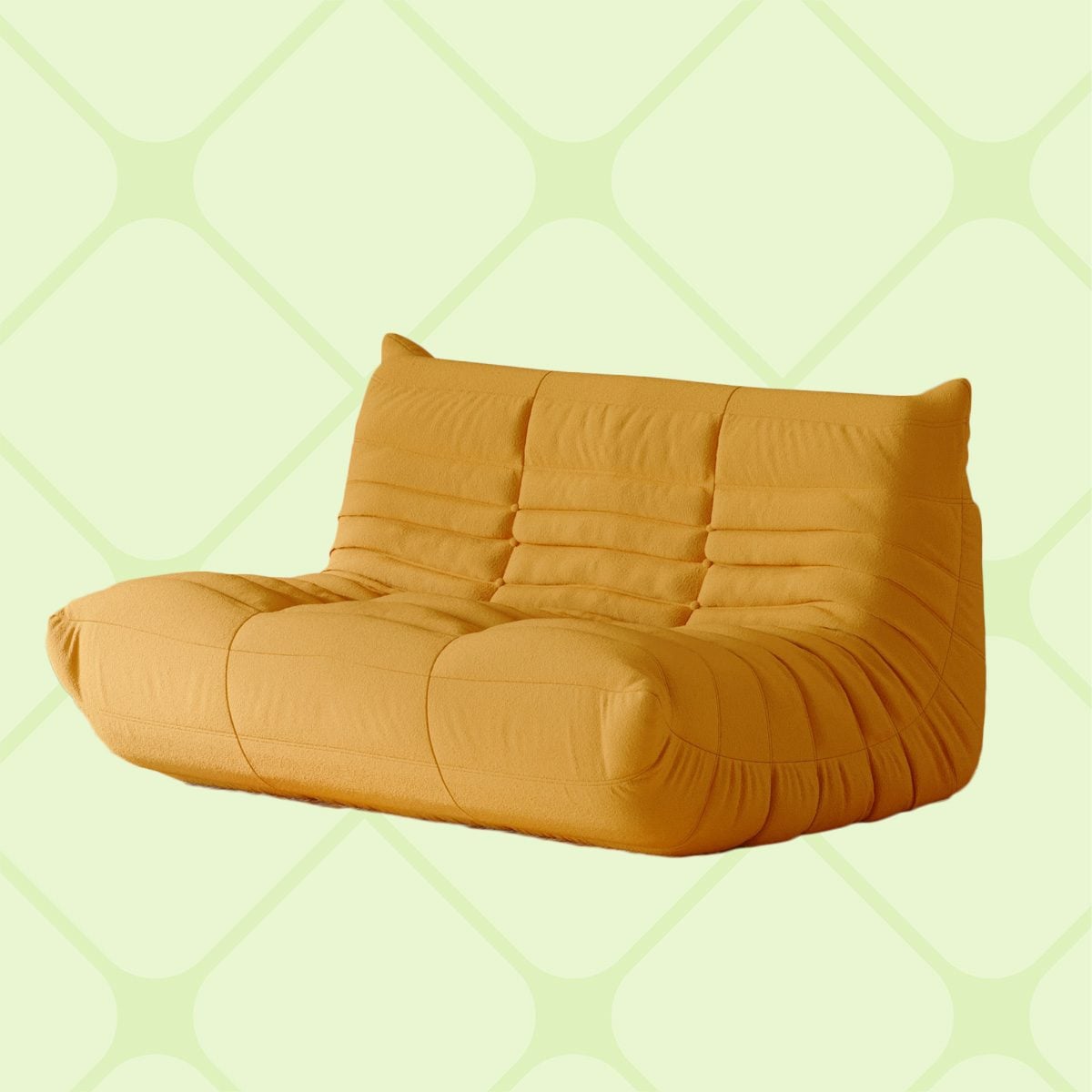
Some furniture names sound elegant. “Mid-century walnut credenza” practically wears loafers. “Performance linen sectional” sounds like it has a LinkedIn profile. Then there is the boneless couch, a phrase that makes a sofa sound like it escaped from a fast-food menu.
But despite the silly name, boneless couches have become one of the most talked-about furniture trends for renters, first-apartment decorators, college students, budget shoppers, and anyone who wants a living room that says “cloud lounge” without a luxury price tag. These low-profile, frameless foam sofas usually arrive compressed in a box or vacuum-sealed bag, expand after unpacking, and rely on dense foam rather than a wood or metal frame.
So, are boneless couches just another viral home trend destined to vanish like inflatable furniture from the 1990s? Or are they a practical, affordable couch option for real homes? The honest answer is: they can be both. A boneless couch can be a smart budget alternative if you understand what you are buying, where it works best, and what trade-offs come with the soft, squishy lifestyle.
What Is a Boneless Couch?
A boneless couch is a frameless sofa made mostly from foam, fiber fill, fabric, and sometimes modular cushion-like sections. Unlike a traditional couch, it does not have a rigid internal frame made of hardwood, plywood, metal, springs, or webbing. Instead, the couch gets its shape from thick foam blocks or layered foam construction.
Think of it as the furniture cousin of a mattress-in-a-box. It ships small, expands after opening, and often needs time to fully regain its shape. Some models are one-piece lounge sofas, while others are modular sectionals that can be rearranged into a chaise, L-shape, floor sofa, daybed, or movie-night nest.
Common Features of Boneless Couches
Most boneless couches share a few familiar traits:
- Low-profile seating close to the floor
- Dense foam or layered foam interiors
- No wood or metal frame
- Compressed shipping in a box or vacuum bag
- Minimal or no assembly
- Soft, rounded, cloud-like silhouettes
- Often lower pricing than traditional sectionals
- Casual, lounge-friendly design
They are popular because they look relaxed, modern, and cozy. They also solve a very real problem: buying a regular couch can be expensive, heavy, and stressful. A boneless couch says, “Relax, I arrived in a box and I do not require three adults, a stairwell strategy, and an emotional support iced coffee.”
Why Boneless Couches Are Trending
The rise of the boneless couch did not happen by accident. It sits at the intersection of several major home trends: small-space living, social media shopping, modular furniture, budget decorating, and the desire for softer, more casual interiors.
1. They Fit the “Soft Home” Aesthetic
Interior design has been moving away from sharp, formal rooms and toward spaces that feel comfortable, tactile, and lived-in. Curved sofas, plush rugs, bouclé fabrics, oversized pillows, and low-slung lounge furniture all fit this mood. Boneless couches slide perfectly into that world.
Instead of looking stiff and showroom-perfect, they look inviting. They are the furniture equivalent of sweatpants that somehow look stylish. In photos, a boneless sofa can make a living room feel relaxed, cozy, and modern without needing a complicated design plan.
2. They Are Social Media Friendly
Boneless couches are made for unboxing videos. The transformation from a flat, vacuum-packed bundle into a full sofa is oddly satisfying. It has the same appeal as watching a mattress expand or a rug flatten after delivery. Viewers love the “before and after,” especially when the final result looks expensive but costs much less than a traditional sectional.
On platforms like TikTok, Instagram, and YouTube Shorts, furniture that ships compactly and changes shape quickly has built-in drama. A regular couch delivery is not exactly thrilling content. A boneless couch puffing into place like a marshmallow with ambition? That gets attention.
3. They Appeal to Renters and Movers
Traditional couches can be a nightmare for renters. They may not fit through tight doorways, narrow staircases, elevators, or awkward apartment halls. Moving them often requires hiring help, borrowing a truck, or having a long argument with gravity.
Boneless couches are lighter, more flexible, and often easier to maneuver. Many arrive in multiple boxes or compressed packages. That makes them attractive for people who move often, live in apartments, or do not want to commit to a massive piece of furniture that might not fit the next place.
4. They Promise a Lower Price
Price is one of the biggest reasons shoppers consider a boneless couch. A traditional sectional can easily cost several thousand dollars, especially when you add performance fabric, delivery, assembly, and extra modules. Boneless couch options often appear in the lower hundreds to around the low-thousand-dollar range, depending on size, brand, materials, and retailer.
That price gap matters. When household budgets are squeezed and furniture prices fluctuate, shoppers look for alternatives. A boneless couch may not have the same lifespan as a high-quality hardwood-frame sofa, but it can make a living room functional nowwithout requiring a payment plan that haunts your dreams.
Boneless Couch vs. Traditional Sofa: What Is the Difference?
The biggest difference is structure. A traditional couch usually has a frame, suspension system, cushions, upholstery, and legs. The frame provides long-term shape and support. The springs or webbing help distribute weight. The cushions add comfort. When built well, this type of couch can last for many years.
A boneless couch skips much of that internal architecture. It uses foam density and shape to provide support. That can feel incredibly comfortable at first, especially for lounging. However, foam can soften, compress, or lose shape over time, especially in high-use areas.
Traditional Sofa Pros
- Usually more supportive for upright sitting
- Often longer lasting when built with quality materials
- More structured appearance
- Better for formal living rooms
- Available in many seat heights and firmness levels
Traditional Sofa Cons
- Often more expensive
- Heavy and difficult to move
- May require delivery fees or assembly
- Can be hard to fit through small spaces
Boneless Couch Pros
- Usually more affordable upfront
- Soft, casual, and cozy
- Often easier to ship and move
- Great for lounging, gaming, reading, and movie nights
- Works well in small apartments, dorms, and casual spaces
Boneless Couch Cons
- May lack firm support
- Can sit too low for some people
- Foam may compress over time
- Not always ideal for guests who prefer upright seating
- Quality varies widely between brands
Is a Boneless Couch Actually Comfortable?
Comfort depends on what you want from a couch. If your dream sofa is a structured seat where you can drink coffee, talk with guests, and sit upright like a responsible adult, a boneless couch may feel too relaxed. If your idea of happiness is sinking into a soft foam island with a blanket, snacks, and a suspiciously long streaming queue, it may feel perfect.
Boneless couches tend to be best for lounging rather than formal sitting. Their low seat height and soft shape create a cozy, sprawled-out experience. That is great for movie nights, kids’ playrooms, gaming setups, reading corners, and casual apartments. It may be less ideal for older adults, people with knee or back concerns, or anyone who has trouble standing up from low furniture.
Foam Density Matters
The most important comfort factor is foam quality. Higher-density foam usually holds shape better and provides more support. Lower-density foam may feel soft at first but can flatten faster. A good boneless couch should feel plush without collapsing completely when you sit on it.
Look for product descriptions that mention high-density foam, layered foam, resilient foam, or supportive foam cores. Be cautious with listings that focus only on “cloud-like softness” but do not explain what is inside. Clouds are lovely in the sky. In a couch, you still need support.
Are Boneless Couches Durable?
This is where the budget conversation gets interesting. A boneless couch can save money upfront, but durability determines whether it is truly a good value.
Because there is no internal frame, the foam does most of the work. Over time, repeated sitting in the same spot can create dips or uneven areas. Fabric can stretch. Seams can weaken. Modular pieces may shift if there are no connectors or grippy bases. Some models bounce back well; others slowly turn into a designer pancake.
Signs of a Better Boneless Couch
- High-density or multi-layer foam construction
- Removable and washable covers
- Reinforced stitching
- Clear dimensions and weight capacity
- Good return policy
- Real customer photos, not only studio images
- Warranty details that explain what is covered
A boneless couch is usually not the best choice if you need a decade-long investment piece for a busy family room. But if you need a comfortable, affordable sofa for a few years, a flexible apartment setup, or a casual lounge area, it can make sense.
Are Boneless Couches Good for Small Spaces?
Yes, boneless couches can be excellent for small spaces, but size still matters. Some look compact online and then arrive with the footprint of a friendly whale. Always measure your room before buying.
Because they are low-profile, boneless couches can make ceilings feel taller and rooms feel more open. Their soft edges also help small rooms feel less crowded. Modular versions are especially useful because you can rearrange pieces depending on the layout.
Small-Space Buying Tips
- Measure wall length, walking paths, and doorway clearance.
- Check the expanded dimensions, not just box size.
- Choose lighter fabrics if you want the room to feel airy.
- Consider armless or low-arm designs for visual openness.
- Use a rug to define the seating area and keep the couch from looking like it melted into the floor.
For studio apartments, dorm rooms, guest rooms, and multipurpose spaces, a boneless couch can be a clever solution. It gives you lounge seating without the visual bulk of a traditional sofa.
What About Cleaning and Maintenance?
Cleaning is one of the most overlooked parts of buying any sofa. A couch is not just furniture. It is where crumbs go to retire.
Many boneless couches come in fabrics like corduroy, chenille, microfiber, faux leather, polyester, or bouclé-style upholstery. Some have removable covers, while others do not. If you have pets, kids, or a strong personal relationship with popcorn, removable washable covers are worth prioritizing.
How to Keep a Boneless Couch Looking Better Longer
- Rotate modular pieces if possible to reduce uneven wear.
- Fluff and reshape cushions regularly.
- Vacuum fabric weekly using an upholstery attachment.
- Clean spills quickly according to the manufacturer’s instructions.
- Keep it out of harsh direct sunlight to reduce fading.
- Use a washable throw blanket in high-traffic spots.
Maintenance will not turn a budget foam couch into a luxury heirloom, but it can help preserve shape, color, and comfort.
Indoor Air Quality and Foam: What Buyers Should Know
Because boneless couches are foam-heavy, shoppers should pay attention to material claims. New foam furniture may have a temporary smell after unpacking. This is often called off-gassing, and it can be more noticeable with compressed products because the materials have been sealed tightly during shipping.
Look for credible foam certifications, low-VOC claims, and clear material disclosures. Certifications do not make a couch magically perfect, but they can help you compare products more confidently. If a sofa arrives with a strong odor, unpack it in a well-ventilated area, open windows when possible, and give it time to air out before heavy use.
Be careful with vague eco-friendly claims, too. Phrases like “green,” “natural,” or “planet-safe” should be backed by specifics. A couch made with some recycled fabric is not automatically sustainable if it cannot be repaired, cleaned, recycled, or used for very long. The most sustainable couch is often the one that stays useful and out of the landfill.
Is a Boneless Couch a True Budget Alternative?
A boneless couch can be a true budget alternative if your expectations match its strengths. It is not simply a cheap version of a traditional sofa. It is a different type of furniture with a different comfort profile, lifespan, and use case.
It makes the most financial sense when you need affordable seating quickly, want a casual style, and do not require long-term structural support. It is especially useful for renters, students, young adults furnishing a first home, people decorating a media room, or families creating a soft play-and-lounge zone.
It makes less sense if you want a formal living room centerpiece, need firm ergonomic support, host guests often, or expect the couch to survive ten years of daily use. In those cases, a well-made traditional sofa, a used high-quality sectional, or a modular couch with a real frame may be a better investment.
Best Uses for Boneless Couches
- First apartments
- Dorm rooms
- Game rooms
- Kids’ lounges
- Movie rooms
- Guest rooms
- Short-term rentals
- Small-space living rooms
When to Skip One
- You prefer firm upright seating.
- You have mobility issues and need higher seat height.
- You want a long-term investment sofa.
- You dislike casual, low-to-the-ground furniture.
- You cannot confirm foam quality or return policies.
How to Shop for a Boneless Couch Without Regret
Buying a boneless couch online can feel like furniture roulette. The photos look dreamy. The reviews sound promising. The price says, “I am responsible.” But before clicking buy, check the details like a detective with a measuring tape.
1. Read the Dimensions Carefully
Do not rely on photos. A couch can look huge in a tiny staged room or tiny in a wide-angle product shot. Check width, depth, seat height, back height, and expanded size. If possible, tape the footprint on your floor before ordering.
2. Check the Return Policy
Compressed furniture can be tricky to return because once it expands, it may not fit back in the original packaging. Read the return policy before buying. Look for restocking fees, pickup requirements, return windows, and whether the company accepts opened items.
3. Look for Real Reviews
Prioritize reviews with photos after several weeks or months of use. First-day impressions can be helpful, but foam furniture needs time to reveal whether it holds up. Search for comments about sagging, odor, fabric pilling, seam quality, and comfort after daily use.
4. Compare Cost Per Year
A $500 couch that lasts two years costs $250 per year. A $1,500 couch that lasts eight years costs $187.50 per year. Upfront price matters, but lifespan matters too. The cheapest couch is not always the best budget choice if it gives up before your streaming subscription renews.
5. Match the Couch to Your Lifestyle
If you host formal gatherings, choose structure. If you nap, lounge, game, and watch movies, boneless may be brilliant. If you have pets, choose durable fabric. If you have kids, washable covers are not optional; they are survival equipment.
Are Boneless Couches a Fad?
The phrase “boneless couch” may be a fad. The furniture idea behind it is not. Frameless, low-slung, foam-based lounge seating has appeared in design history before, especially in modern and Italian-inspired furniture. What is new is the mass-market, budget-friendly, compressed-shipping version that exploded through social media.
Trendy names come and go. The need for affordable, comfortable, flexible furniture does not. As long as people live in apartments, move frequently, shop online, and want cozy living rooms, some version of the boneless couch will remain relevant.
However, the market will likely separate into two groups: cheap novelty couches that fade quickly, and better-designed foam modular sofas that improve in durability, covers, foam quality, and support. The winners will be the models that combine comfort with practical details: washable covers, reliable foam, smart dimensions, and honest warranties.
Personal Experience: Living With the Boneless Couch Idea
The first thing to understand about a boneless couch is that it changes the mood of a room immediately. A traditional sofa says, “Please sit.” A boneless couch says, “Cancel your plans.” It invites lounging in a way that feels less formal and more human. The living room becomes less of a display space and more of a landing pad.
In real life, that can be wonderful. Imagine a small apartment where every inch matters. A bulky sofa with high arms and heavy legs can dominate the room. A low, soft boneless couch can make the same space feel wider and calmer. Add a textured rug, a small coffee table, a floor lamp, and a couple of washable throws, and suddenly the room looks intentional rather than unfinished.
The experience is especially good for casual routines. Reading on a boneless couch feels natural because you can curl up easily. Watching a movie feels better because the seat depth encourages stretching out. Gaming feels more relaxed because you are not perched stiffly on a formal cushion. For families with kids, the soft edges can also feel less intimidating than hard-framed furniture, though parents should still check stability, fabric durability, and cleaning instructions.
There are trade-offs. The low height can surprise people. Guests who prefer firm seating may sit down and wonder whether they have entered a stylish marshmallow. Standing up can take more effort than it would from a higher couch. If you work from your sofa with a laptop, a boneless couch may encourage posture choices your spine will later describe as “creative.”
Another real-world issue is patience. Many compressed foam couches need time to expand. The first few hours may look underwhelming. Corners may seem wrinkled. Cushions may look uneven. This is normal for many foam products, but it can be stressful when you expected instant perfection. Give the couch time, follow the setup instructions, and avoid judging it before it has fully expanded.
The best experience comes when the boneless couch is used honestly. It should not be forced to behave like a luxury formal sofa. Let it be what it is: soft, casual, flexible, and fun. Put it in a media room, apartment lounge, teen hangout space, dorm-style setup, or relaxed family corner. Pair it with practical accessories: a side table, storage basket, washable blanket, and supportive pillows. These small details make it feel less like a temporary purchase and more like a thoughtful budget design choice.
For shoppers on a tight budget, the emotional benefit matters too. Furnishing a home can feel overwhelming when every “good” sofa seems expensive. A boneless couch gives people permission to create comfort now. It may not be forever furniture, but not every piece has to be. Sometimes the right couch is the one that fits your current space, current budget, and current season of life.
That is why boneless couches are not just a joke with a funny name. They represent a shift in how people think about furniture. Younger shoppers especially want flexibility, affordability, comfort, and easy delivery. They do not always want a heavy sofa that requires a long-term commitment. They want a living room that can adapt as life changes.
The smartest approach is to buy with clear eyes. If you expect a boneless couch to perform like a premium hardwood-frame sectional, you may be disappointed. If you expect a cozy, budget-friendly lounge piece that makes your home more comfortable right away, you may be pleasantly surprised. In the end, the boneless couch is neither miracle nor menace. It is a soft, squishy reminder that furniture should serve real lifenot just look good in a product photo.
Conclusion: Fad, Budget Hero, or Both?
Boneless couches are partly a fad because the name, social media hype, and unboxing appeal are all very trend-driven. But they are also a genuine budget alternative for the right buyer. They solve real problems: high furniture prices, small apartments, difficult deliveries, and the demand for casual comfort.
The key is knowing what you are giving up. You may sacrifice firm support, long-term structure, and polished formality. In return, you get affordability, softness, flexibility, and convenience. For renters, students, young families, and relaxed households, that trade-off can be worth it.
Before buying, check the foam quality, dimensions, return policy, fabric care, and real customer feedback. Choose a boneless couch because it fits your lifestyle, not because the internet told you it was the couch of the moment. Trends are loud. Your living room has to be livable.
If you want a forever sofa, invest in structure. If you want a cozy, affordable place to sprawl, snack, scroll, nap, and host low-pressure movie nights, the boneless couch may deserve a spot in your homefunny name and all.