A South Carolina homicide case has become the kind of internet story that makes people stop scrolling, squint at the headline, and then immediately remember that real life is not a comic book. The viral phrase, “I know a Batman villain when I see one,” began circulating after 20-year-old Zaquan Shaquez Jamison turned himself in to authorities while facing serious charges connected to the death of 17-year-old Ja’Mereion “Mari” Deangelo Crawford.
The case is serious. A teenager lost his life. A young man is facing murder, multiple attempted murder counts, and a weapon-related charge. Yet online, much of the conversation quickly swerved toward Jamison’s appearance, his burn injuries, and the strange way modern internet culture can turn a court case into a comment-section carnival before the legal process has even done its job.
This is where the story becomes more than a crime headline. It is also a story about viral judgment, visible trauma, public safety, social media humor, and the uncomfortable fact that people often react faster than they think. In other words: the internet put on a detective hat, a cape, and clown shoes all at once.
The Case: What Authorities Say Happened
According to local reports, Jamison was wanted in connection with an Orangeburg County homicide case and turned himself in to authorities in North Charleston in August 2025. Police said he called Charleston County dispatch, identified himself, and said he wanted to surrender because of outstanding warrants. Officers later detained him after he exited a home on Evanston Boulevard, and reports stated that he complied with police commands.
Jamison was arrested on warrants that included murder, several counts of attempted murder, and possession of a weapon during the commission of a violent crime. He was initially held at the Al Cannon Detention Center before being transferred to the custody of the Santee Police Department.
The charges are tied to the January 13 shooting death of Ja’Mereion “Mari” Deangelo Crawford at a home on Boo Circle in Santee, South Carolina. Later reporting said Crawford was one of 11 people inside the home, which is why Jamison also faced 10 attempted murder charges. A judge later granted Jamison a $75,000 surety bond, while prosecutors, police, the victim’s family, and Jamison’s defense side debated the strength of the evidence.
Why This Story Went Viral
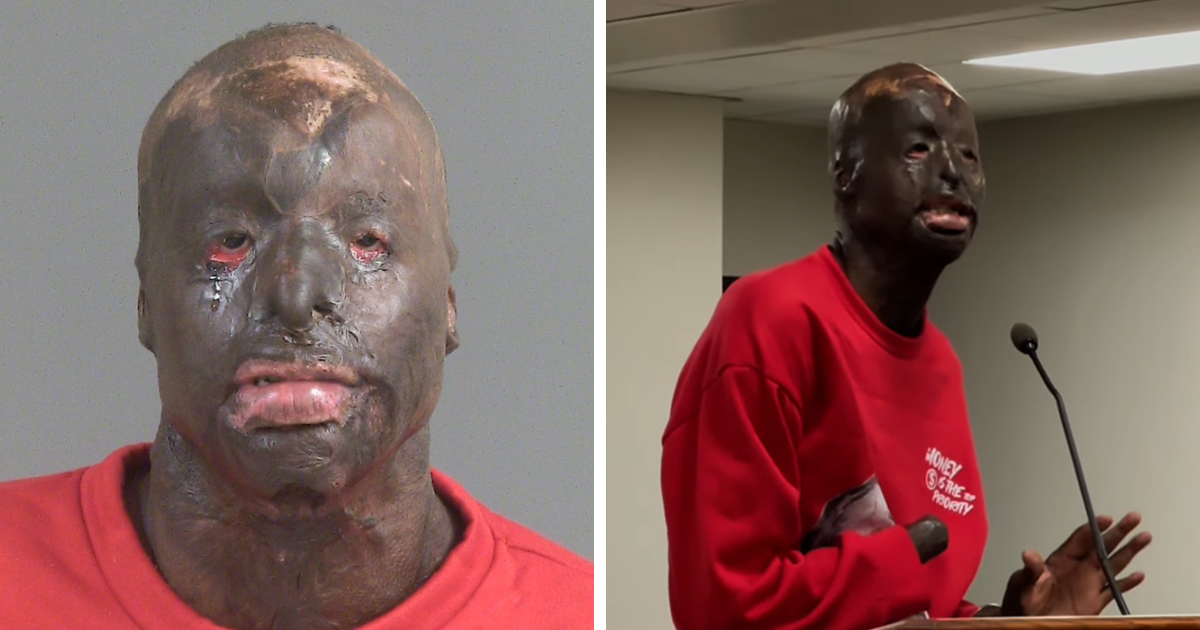
Plenty of criminal cases make local headlines. This one broke through nationally because of the image-based reaction that followed. Social media users focused heavily on Jamison’s visible burn injuries and unusual appearance. Some made superhero and villain comparisons. Others said the jokes were cruel, lazy, and deeply unfair to someone whose injuries appeared to come from a previous traumatic event.
The “Batman villain” line became the quote that traveled farthest because it was sharp, meme-friendly, and instantly recognizable. Batman villains are often visually dramatic characters with tragic backstories, exaggerated features, and a theatrical relationship with crime. That comparison made the comment spread quickly. But it also raised a serious question: when does dark humor become dehumanizing?
It is one thing to react to a bizarre news story. It is another to reduce a real person, a real victim, and a real legal case to a punchline about someone’s face. The internet often treats mugshots like character posters, but criminal justice is not a movie trailer. There are families involved. There are facts still being tested. There is a young victim whose name should not be buried under jokes.
The Burn Injury Claim: Jamison’s Own Words in Court
The story became even more complicated after footage from Jamison’s arraignment circulated online. In court, Jamison said he was a burn victim and claimed his hands could not pull a trigger. He referenced injuries from an October 2023 crash and said his family intended to pursue legal action. He also argued that his hands were injured and could not bend properly.
That claim does not prove innocence by itself, and it does not erase the charges. But it does create a legal and factual issue that investigators, attorneys, and the court may examine closely. In criminal cases, physical ability, identification, video evidence, witness statements, motive, timeline, and forensic evidence can all matter. A viral reaction is not evidence. A meme is not a cross-examination. A comment with 4,000 likes is not a verdict.
At the same time, the prosecution and police have said they believe the evidence points to Jamison. Reports from the bond hearing indicated that authorities discussed video evidence, a possible dispute, and the broader circumstances of the shooting. Jamison’s defense side questioned the strength and clarity of that evidence. That is exactly why courts exist: to separate suspicion from proof.
Presumption of Innocence Still Matters
One of the most important parts of this story is also the least viral: Jamison is accused, not convicted. In the United States, a person charged with a crime is presumed innocent unless and until proven guilty in court. That principle can feel almost too slow for the internet, which prefers instant answers and dramatic villains. But the justice system is designed to move on evidence, not vibes.
The phrase “he looks guilty” is not just unfair; it is dangerous. Appearance can influence public perception, but it should not replace facts. People can look intimidating and be innocent. People can look harmless and be guilty. The history of wrongful assumptions is long, ugly, and definitely not something society should keep feeding with meme fuel.
This does not mean the charges are minor. They are not. Murder and attempted murder allegations are among the most serious charges a person can face. It simply means the public should be careful about turning an accused person into a fictional monster before the evidence is tested.
The Victim Should Stay at the Center
When a case goes viral because of a suspect’s appearance, the victim can become a footnote. That is a problem. Ja’Mereion “Mari” Deangelo Crawford was 17 years old. His family and community are dealing with a loss that cannot be reduced to a trending headline.
In viral crime coverage, the suspect often receives the spotlight because the suspect’s mugshot, statements, or behavior seems unusual. But responsible storytelling should keep the human cost in view. A teenager died. Others inside the home were allegedly placed in danger. Families are waiting for answers. The public can discuss the unusual parts of the case without forgetting why the case exists in the first place.
Why Social Media Turns Crime Stories Into Spectacle
Crime stories already carry emotional force: fear, anger, curiosity, sadness, and the need for explanation. Add an unusual image, a courtroom quote, or a dramatic surrender, and the algorithm practically starts doing jumping jacks. People click because the story feels strange. They share because they want others to react. They joke because humor is easy and empathy takes longer.
That is how a local homicide case can become national internet material. A serious event gets compressed into a single visual hook. Then the comment section turns into a theater where users compete to be the funniest, harshest, or most suspicious person in the room. The result is traffic, engagement, and often very little understanding.
This story also shows how quickly people build backstories without evidence. Some wondered whether Jamison’s burn injuries were connected to the alleged crime. Others speculated about trauma, revenge, disability, or motive. But speculation is not reporting. Unless investigators or court records establish those connections, they remain guesses.
Visible Trauma and Public Judgment
Jamison’s appearance sparked a second conversation about burn survivors and public cruelty. Burn injuries can leave lasting physical, emotional, and social effects. People who live with visible scars often deal with staring, comments, assumptions, and discrimination long after the original injury. When social media users mock someone’s appearance, they are not only speaking to that one person. They are also sending a message to every person with visible scars who is reading quietly from the sidelines.
None of this excuses violence. Trauma does not give anyone permission to harm others. But empathy and accountability can exist in the same sentence. A person can be held responsible if proven guilty while still not being mocked for injuries or disability. That is not “being soft.” That is being accurate, humane, and mature enough not to confuse cruelty with justice.
The Bigger Context: Youth, Violence, and South Carolina
The case also lands inside a broader concern about violence affecting young people. Public health data and law enforcement reports have repeatedly shown that firearm-related harm remains a major issue across the United States, including South Carolina. Johns Hopkins data based on CDC figures reported more than 1,000 gun deaths in South Carolina in 2023, with hundreds classified as gun homicides.
That wider context does not determine what happened in this individual case. But it helps explain why communities react so strongly when a teenager is killed and multiple attempted murder charges are filed. People are not only responding to one headline; they are responding to a pattern of fear, grief, and frustration.
For families, statistics are not abstract. A number in a report is someone’s child, sibling, cousin, teammate, classmate, or friend. That is why the most useful conversations around cases like this should move beyond “What a wild mugshot” and toward harder questions: How do communities interrupt disputes before they become violent? How do young people get support before a conflict escalates? How do courts balance public safety with due process?
What Makes the Surrender So Notable?
Another reason the case gained attention is that Jamison turned himself in. Surrenders can happen for many reasons. Sometimes a person wants to avoid a dangerous arrest. Sometimes family members encourage it. Sometimes legal counsel is involved. Sometimes the person believes surrendering will help them explain their side. In Jamison’s case, reports say he contacted dispatch and identified himself before being detained peacefully.
For law enforcement, a peaceful surrender can reduce risk for officers, the suspect, and the surrounding community. It also prevents the kind of public search that can escalate tension. That said, surrendering does not equal confession. It means a wanted person came into custody. The legal questions remain open.
The Internet’s Favorite Mistake: Treating Real People Like Characters
The Batman comparison spread because it was visually dramatic, but it also reveals one of the internet’s worst habits: turning real people into characters. A suspect becomes a “villain.” A victim becomes a symbol. A judge becomes a clip. A courtroom becomes content. The actual complexity gets trimmed away until the story fits inside a caption.
That may be entertaining for ten seconds, but it creates a distorted public conversation. Real criminal cases are rarely simple. They involve evidence, procedure, rights, grief, trauma, and uncertainty. They are also full of people who will have to live with the consequences long after the internet moves on to the next strange headline.
Experience-Based Reflection: What This Story Teaches About Reading Viral Crime News
Anyone who has spent enough time online has seen this pattern before. A mugshot appears. A shocking headline follows. Within minutes, people are certain they know the entire story. Someone makes a joke. Someone else adds a theory. Another person claims they can “see it in his eyes.” Suddenly, the comment section has become a courtroom where the loudest people are also the least qualified.
The first experience this story brings to mind is how easy it is to confuse reaction with understanding. A headline can make us feel informed when we are actually only emotionally activated. That is especially true with crime stories. They trigger our sense of danger, fairness, and curiosity. We want the world to make sense quickly, so we grab the simplest explanation. But simple is not always true.
The second lesson is that appearance is a terrible shortcut. Many people have visible injuries, scars, disabilities, or features that make strangers stare. Those details may be part of their life story, but they are not proof of character. In this case, the online jokes about Jamison’s appearance became so loud that they nearly competed with the actual charges. That should make readers pause. If a person’s face becomes the main story in a homicide case, the public conversation has probably taken a wrong turn.
The third lesson is that empathy does not weaken accountability. Some people act as if showing basic respect toward an accused person means ignoring the victim. That is false. A responsible reader can care deeply about Crawford’s death, support a thorough investigation, respect the family’s grief, and still reject body-shaming or disability-based mockery. Justice does not need cheap jokes to function.
The fourth lesson is to watch the language. “Charged with” is not the same as “convicted of.” “Police say” is not the same as “a court proved.” “Viral claim” is not the same as “verified fact.” These small phrases matter because they protect accuracy. They also protect readers from becoming part of a misinformation chain. The internet loves confidence, but good judgment often starts with the sentence, “We do not know everything yet.”
The fifth lesson is that victims deserve more attention than spectacle. When a teenager dies, the most important question is not whether a suspect looks like a comic-book villain. The important questions are: What happened? Who is responsible under the law? How can the affected family and community be supported? What can prevent future violence? Those questions are less meme-friendly, but they are far more human.
Finally, this story is a reminder that viral crime news should be read slowly. Pause before sharing. Look for local reporting. Notice whether the headline is built on facts or shock value. Separate the confirmed timeline from online commentary. And remember that every viral case has real people behind it. The internet may move fast, but justice, grief, and truth usually do not.
Conclusion
The story behind “I know a Batman villain when I see one” is not just about a man turning himself in for a homicide case. It is about what happens when a serious criminal allegation collides with meme culture, visible trauma, and public curiosity. Zaquan Shaquez Jamison faces extremely serious charges connected to the death of 17-year-old Ja’Mereion Crawford, and the court process will determine what the evidence proves.
But the public reaction has already revealed something important: people need to be more careful with viral crime stories. Humor can be human, but cruelty is not analysis. Suspicion can be understandable, but it is not evidence. And a headline may be strange enough to grab attention, but the people inside it are still real.
The case deserves careful reporting, not comic-book shortcuts. It deserves concern for the victim, fairness toward the accused, and patience for the legal process. The internet can keep its jokes, but it should not mistake them for justice.