If your whole-house water filter has started acting like a grumpy straw—slow flow, less pep, and maybe a little more sediment than you would like—it may be time to replace the cartridge. The Aqua Pure AP810 is a popular whole-house sediment filter used in large-diameter housings, and the good news is that replacing it is not rocket science. It is more like “careful bucket-and-wrench science.”
This guide walks you through exactly how to replace an Aqua Pure AP810 water filter in six simple steps. You will also learn what the AP810 actually does, how often to change it, what tools help, what mistakes to avoid, and what the replacement experience feels like in real life. Whether you are a first-time homeowner or the unofficial household plumber because you once fixed a leaky faucet in 2019, this article will help you tackle the job with confidence.
The Aqua Pure AP810 is a drop-in whole-house sediment cartridge designed to reduce dirt, rust, and other visible particles. It is commonly used in Aqua-Pure AP800-series housings, including models such as AP801-style systems. Because it is a sediment filter, its job is to catch the gritty stuff before that water heads to your faucets, showerheads, appliances, and water heater. In other words, it is the bouncer at the front door of your plumbing system.
What Is the Aqua Pure AP810 Water Filter?
The Aqua Pure AP810 is a 5-micron nominal sediment filter cartridge. In plain English, that means it is designed to trap common household water debris such as dirt, rust, and sediment before those particles circulate through your home’s plumbing. It is typically used on the cold-water supply line in a whole-house filtration setup, not under a sink and definitely not on a hot-water line.
One reason homeowners like the AP810 is that it is built for high-flow use. That makes it a practical option for bigger households that do not want a filter to make showers feel like a sad mist. It is also sized for large-diameter housings, so it is not the same as a standard skinny cartridge you might swap under the kitchen sink.
Just as important, the AP810 is a sediment filter, not a magic wand. It helps with particles, but it is not meant to solve every water-quality issue. If your water smells like a swimming pool, tastes metallic, or has hardness problems, you may need a different filter type or a more complete treatment setup.
When Should You Replace an Aqua Pure AP810 Filter?
In many homes, replacing the AP810 about every six months is a smart rule of thumb. However, actual filter life depends on your water quality and how much water your household uses. A family on well water with heavy sediment may need to replace it sooner. A smaller household with cleaner municipal water may stretch closer to the recommended interval.
Here are the most common signs it is time for a new cartridge:
- Your water pressure drops noticeably.
- You see more visible sediment in household water.
- The filter has reached its scheduled replacement date.
- Your water-using appliances seem to be working harder than usual.
If you are the kind of person who forgets filter changes until the shower starts feeling “atmospheric,” write the install date on the housing or put a reminder on your phone. Future You will be grateful.
Before You Start: What You Will Need
Before you begin the filter replacement, gather your supplies so you are not sprinting around the utility room with wet hands. Most AP800-series housings use a housing wrench, and that makes the job much easier than attempting the heroic but ineffective “I can open this by hand” method.
Tools and Supplies
- Replacement Aqua Pure AP810 cartridge
- Housing wrench
- Bucket or shallow pan
- Clean rag or towel
- Mild soap and water
- Water-based lubricant for the O-ring
- Replacement O-ring if the current one is cracked, flattened, or damaged
Quick Safety Checks
Before removing the filter housing, shut off the water supply and relieve the pressure. If your system sits near the water heater on the main line, it is also wise to shut off fuel or electrical power to the water heater after shutting off the water, especially if the manufacturer instructions for your housing call for it. That extra minute can help you avoid stress later.
How to Replace an Aqua Pure AP810 Water Filter: 6 Steps
Step 1: Shut Off the Water Supply
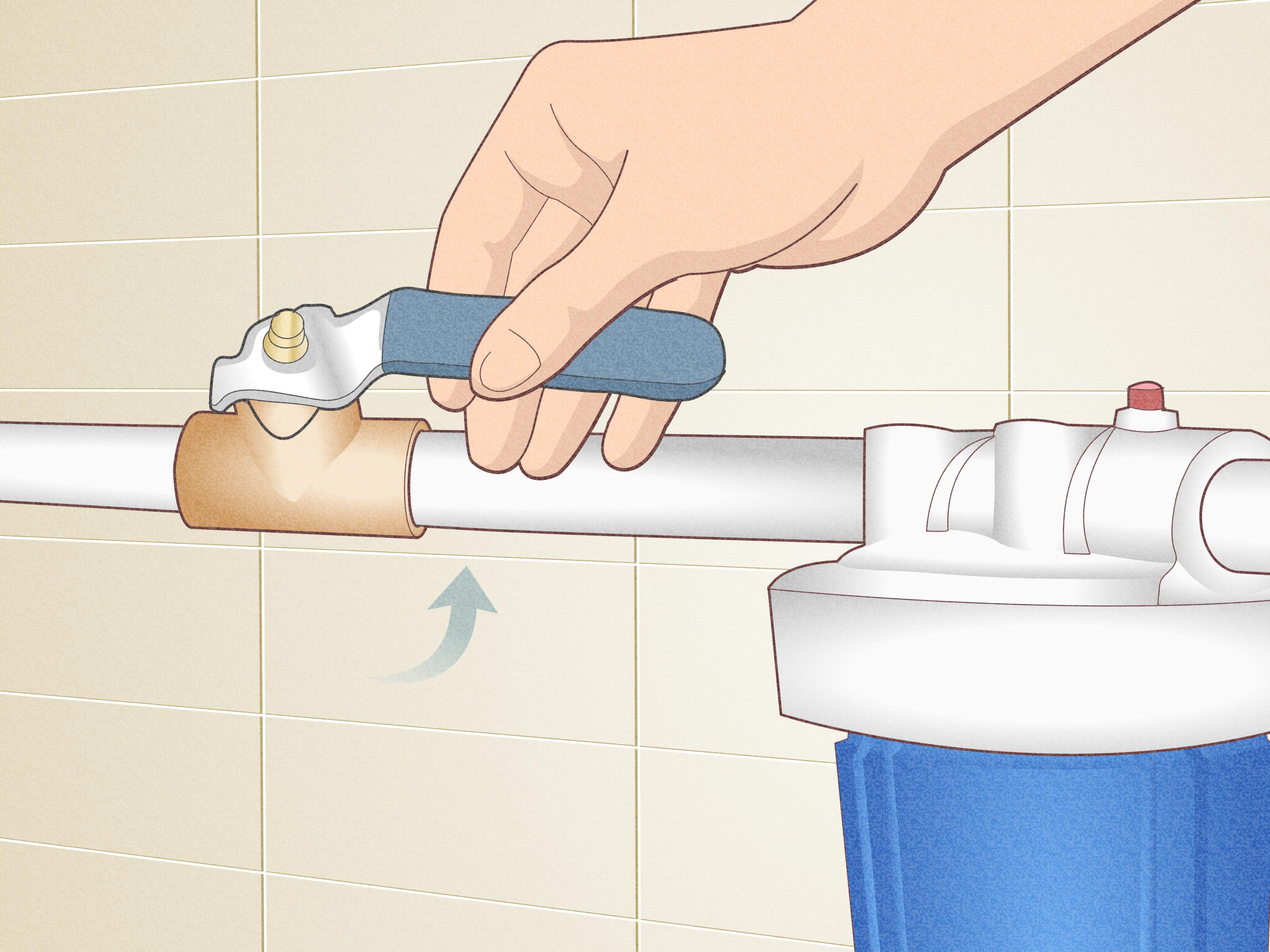
Start by turning off the incoming water supply to the filter housing. If your setup has isolation valves on both sides of the housing, close those. If it does not, shut off the main water supply to the home. Place a bucket under the housing before you touch anything else, because a little leftover water will almost always spill out. Water has a sense of timing like that.
If your filter is installed near a water heater, follow the housing manufacturer’s safety guidance and shut off power or fuel to the heater after the water is off. This is a simple precaution that is easy to skip and annoying to regret.
Step 2: Relieve Pressure in the Housing
Once the water is off, press the red pressure-relief or vent button on top of the filter head. This step matters. It reduces internal pressure so the housing can be removed more easily and with less drama.
If you skip this step, the housing may feel stuck, and you may end up wrestling it like you are auditioning for a plumbing-themed action movie. Press the button, let the pressure release, and give the system a moment to settle.
Step 3: Remove the Housing and Old Filter
Use the housing wrench to loosen the sump by turning it to the left. Once it breaks free, unscrew it the rest of the way carefully. Lower the housing slowly because it will still contain some water.
Remove the old AP810 cartridge and discard it. Take a quick look inside the housing. If the filter is coated in brown or reddish sediment, that is actually useful information: your filter was doing its job. A dirty filter is not necessarily bad news. It is evidence that the cartridge caught debris before it reached your plumbing fixtures.
Step 4: Clean the Housing and Inspect the O-Ring
Wash the empty housing with mild soap and clean water. Wipe it thoroughly so there is no sediment sludge or residue left behind. This is not the glamorous part of the job, but it is one of the most important. A clean housing gives the new filter a better start and helps you spot any cracks or wear.
Next, inspect the O-ring. If it looks cracked, flattened, brittle, or stretched, replace it. If it is still in good condition, clean it and apply a small amount of water-based lubricant before reseating it properly in its groove. The O-ring is a tiny part with a huge personality. If it is not seated correctly, it will absolutely make that your problem.
Step 5: Insert the New Aqua Pure AP810 Cartridge
Place the new AP810 cartridge into the housing. Make sure it sits properly and lines up as intended. Then screw the housing back onto the filter head. Start by hand so you do not cross-thread anything. Once it feels snug, use the housing wrench only as needed to secure it. Do not overtighten. “Tight enough” is the goal; “engine block torque” is not.
This is also a good time to double-check that the O-ring stayed in place during reassembly. A shifted O-ring is one of the most common causes of leaks after a filter change.
Step 6: Turn the Water Back On, Check for Leaks, and Flush
Slowly reopen the water supply. Do this gradually so the housing is not hit with a sudden burst of pressure. If your system has a vent button, use it to help expel trapped air. Then inspect the housing carefully for leaks around the threads and O-ring seal.
After the system looks secure, open a nearby cold-water faucet and flush the system for about five minutes, or until the water runs clean and the air is fully purged. This helps remove loose carbon dust or sediment fines and gets your whole-house filter back to normal operation.
Once everything looks good, restore power or fuel to the water heater if you turned it off. Congratulations—your Aqua Pure AP810 water filter replacement is done.
Common Mistakes to Avoid
Replacing a whole-house water filter is usually straightforward, but a few small mistakes can turn a 15-minute maintenance task into a wet inconvenience. Here are the big ones to avoid:
Forgetting to Relieve Pressure
If you do not press the red relief button first, the housing can be much harder to remove. It can also lead to a messy splash when the seal finally gives way.
Reusing a Damaged O-Ring
A worn O-ring is one of the top leak culprits. If it looks questionable, replace it now instead of hoping for the best later.
Using the Wrong Lubricant
Stick with a water-based lubricant approved for this kind of seal. Random grease from the garage is not a plumbing upgrade.
Overtightening the Housing
Too much force can damage the housing or make the next filter change miserable. Hand-tight plus a little extra if needed is usually enough.
Skipping the Flush
Flushing the system helps clear trapped air and any loose material. Skipping it can leave your faucets sputtering and your water looking briefly cloudy.
Why Replacing the AP810 Matters
A fresh sediment filter helps protect faucets, shower valves, washing machines, water heaters, and other plumbing fixtures from debris circulating through the line. That does not just help water look cleaner. It can also reduce buildup and wear on household systems over time.
Think of it this way: sediment is like sand in your shoes. A little may not ruin your day instantly, but over time it gets uncomfortable, abrasive, and irritating. Replacing the AP810 on schedule helps keep that gritty wear away from the plumbing parts you really do not want to replace.
FAQ: Aqua Pure AP810 Filter Replacement
How often should I replace an Aqua Pure AP810 filter?
For many households, every six months is the safest schedule. If your water contains heavier sediment or you notice reduced flow sooner, replace it earlier.
Can I replace the AP810 myself?
Yes, in many homes this is a manageable DIY task. As long as you can safely shut off water, relieve pressure, remove the housing, and reassemble it correctly, most homeowners can do it without calling a plumber.
Why is my housing leaking after I changed the filter?
The most likely causes are a dirty or damaged O-ring, a misaligned O-ring, cross-threading, or a housing that is not tightened enough. Shut the water back off, relieve pressure, reopen the housing, and inspect the seal.
Does the AP810 improve taste or remove chlorine?
The AP810 is mainly a sediment cartridge. Its primary job is reducing visible particles like dirt and rust, not broad chemical reduction. If chlorine taste and odor are your main issues, you may need a different cartridge type.
Can I wait until the water pressure drops a lot?
You can, but that is not ideal. Waiting too long makes your plumbing system work harder and can reduce water flow throughout the house. Scheduled maintenance is usually easier and cleaner than emergency maintenance.
Real-World Experience: What Replacing an Aqua Pure AP810 Is Actually Like
On paper, replacing an Aqua Pure AP810 sounds wonderfully tidy: shut off water, change cartridge, turn water back on, enjoy cleaner water, go about your day like the organized adult you clearly are. In real life, the experience is still very doable, but it usually comes with a few small surprises that are worth knowing in advance.
The first thing most people notice is that the housing can feel tighter than expected. Even when you know you are turning the wrench the correct way, there is often a moment where nothing happens and you start wondering whether the housing fused itself to the filter head out of spite. Usually it just needs steady pressure, not brute force. Once it breaks loose, there is a satisfying little shift that tells you the job is moving forward.
The second common experience is the amount of water left in the sump. Even after shutting off the supply and relieving pressure, there is almost always enough trapped water to make a bucket essential. Not optional. Essential. New homeowners especially tend to underestimate this part and end up with a wet floor, a soggy rag, and an immediate new respect for gravity.
Then comes the old cartridge reveal, which can be oddly satisfying. If your household uses well water, or if municipal water has kicked up sediment after plumbing work nearby, the used filter may look dramatically dirtier than expected. That moment is actually reassuring. It means the cartridge caught material before it circulated through your showerheads, dishwasher, and washing machine.
Cleaning the housing is the quiet hero of the whole process. People are often tempted to rush through it because the exciting part is installing the new filter, not wiping out the inside of a plastic canister. But taking an extra two minutes here usually leads to a better seal, a cleaner restart, and fewer headaches. It is also the best time to inspect the O-ring, which is the smallest part in the system and somehow the one most capable of ruining your afternoon if ignored.
Another very normal experience is hearing sputtering and spurts of air when the water first comes back on. That can sound alarming if you are not expecting it, but it is usually just trapped air working its way out during the flush. Open a cold-water faucet, let the system run, and the line typically settles down quickly.
What surprises many people most is how good it feels to finish the job. Replacing a whole-house sediment filter is not flashy, and nobody throws a parade for successful utility-room maintenance, but it is one of those small home tasks that makes the whole system run better. The shower pressure improves, the plumbing gets a little more protection, and you get the quiet satisfaction of knowing you handled it yourself without turning the basement into a water feature.
So yes, the AP810 replacement process may include a stubborn housing, a splash of leftover water, and one brief stare at the O-ring like it holds the secrets of the universe. But overall, it is a practical, low-drama project that gets easier every time you do it. By the second or third replacement, most homeowners go from cautious beginner to confident “bucket, wrench, done” status.
Conclusion
Replacing an Aqua Pure AP810 water filter is one of those home maintenance jobs that sounds more intimidating than it really is. With the right cartridge, a housing wrench, a bucket, and a few calm minutes, you can swap the filter, protect your plumbing, and keep sediment from circulating through your house.
The six-step version is simple: shut off the water, relieve pressure, remove the housing, clean and inspect the O-ring, install the new filter, then turn the water back on and flush the system. Do that on schedule, and your whole-house filter system has a much better chance of doing its job properly. No heroics required—just smart, steady maintenance.