Nintendo’s E3 Direct was one of those showcases that felt like a group chat exploding in real time. One second people were politely hoping for a few solid updates. The next, Samus was back, Zelda was in the sky, Wario was causing chaos again, and long-dormant franchises started clawing their way out of the vault like they had been waiting for this exact moment. If you missed the presentation, or if you watched it live and immediately blacked out from excitement, here’s the full recap of everything new from Nintendo’s E3 Direct.
And yes, before we go any further: this was a software-first show. Nintendo made it clear that the presentation would focus on Switch games, mainly releasing in 2021. So if you came looking for dramatic new hardware reveals, the Direct basically patted you on the shoulder, handed you Metroid Dread, and told you to go outside for a minute.
The Headliner That Stole the Show: Metroid Dread
If Nintendo’s E3 Direct had one undeniable star, it was Metroid Dread. Not because it was merely “pretty cool,” but because it was the kind of reveal that makes longtime fans question whether they accidentally manifested it through sheer stubbornness. This was the first brand-new 2D Metroid with a new story in 19 years, and Nintendo treated it like a genuine event.
The game was presented as a direct sequel to Metroid Fusion, which instantly raised the stakes for fans who had been waiting since the Game Boy Advance era for this storyline to continue. Nintendo also emphasized the game’s new mechanical threat: the E.M.M.I. robots, relentless hunters that shift the mood from classic sci-fi action to something much closer to panic with shoulder buttons. The result was a trailer that balanced slick movement, creepy atmosphere, and just enough menace to make everyone think, “Oh good, we’re being chased again.”
What made Metroid Dread such a powerful opener was that it felt both nostalgic and modern. It had the DNA of old-school Metroid exploration, but the visuals, movement, and cinematic presentation made it feel like Nintendo finally gave this series the dramatic comeback entrance it deserved. If you were scoring the Direct like a judge at an Olympic event, this was a very early 9.8.
Zelda Finally Showed Up, and Hyrule Got Much Taller
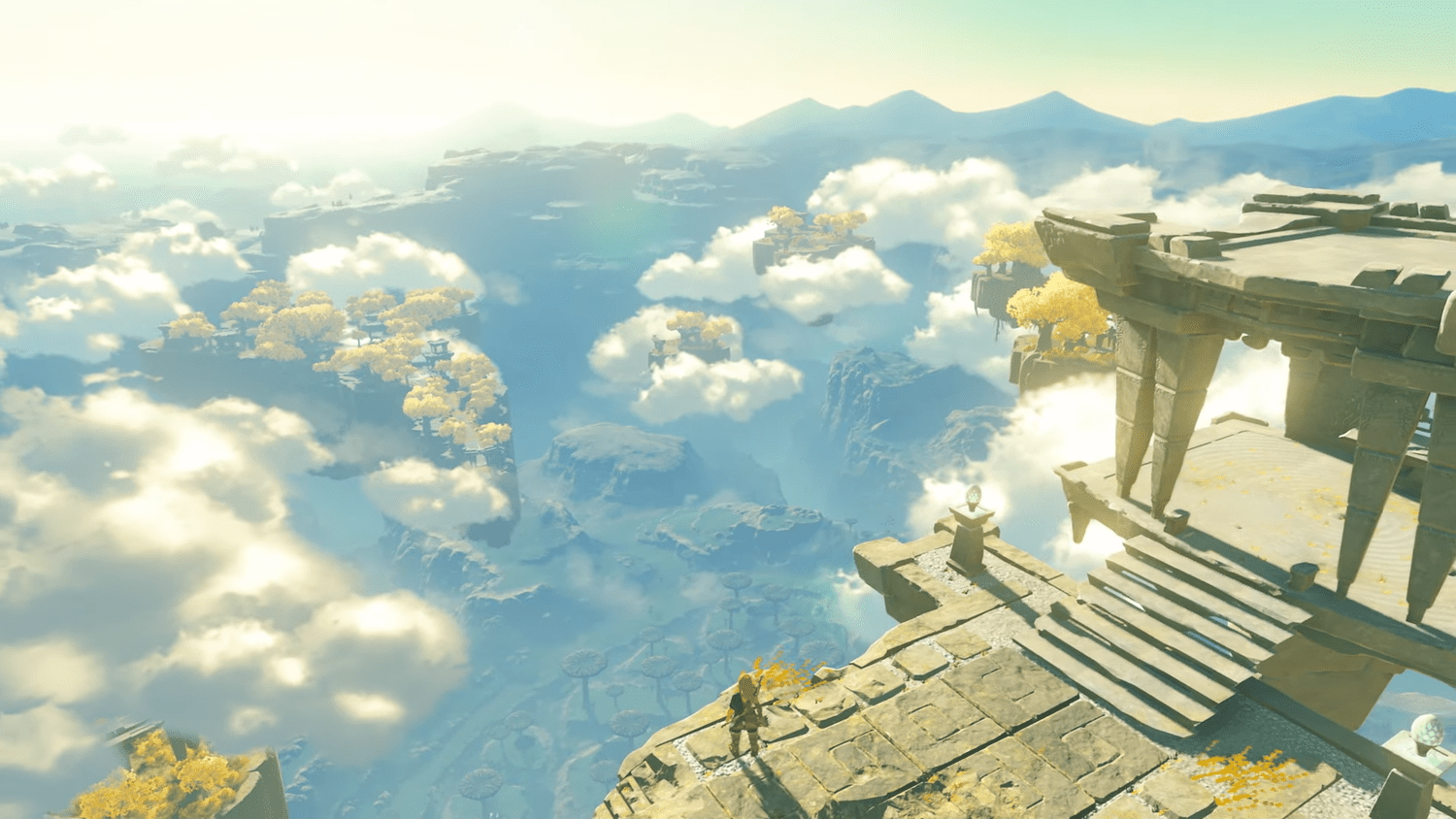
Nintendo also brought out a new teaser for the sequel to The Legend of Zelda: Breath of the Wild, and while the game still didn’t have its final title at the time, it definitely had the room’s full attention. After a long stretch of relative silence, fans were given a fresh look at Link, new environments, new movement ideas, and a striking world above Hyrule’s surface.
The biggest takeaway was simple: this sequel wasn’t just going to revisit the old map and call it a day. Nintendo showed a vertical expansion of Hyrule, with floating islands and aerial traversal that suggested a more layered, ambitious world design. Link’s altered arm and unusual abilities hinted at new mechanics, while the teaser’s tone kept the mystery alive. Nintendo offered a 2022 launch target at the time, which was enough to send fans into full theory-board mode.
There’s a reason Zelda still dominates conversations years later: when Nintendo shows even 90 seconds of a major Zelda project, the internet acts like it has discovered ancient prophecy. This teaser didn’t explain everything, but it absolutely did its job. It said, “Yes, this game is real. Yes, you may begin overanalyzing every frame.”
Smash Bros. Did What Smash Bros. Always Does
No Nintendo Direct feels complete without at least one moment designed to make half the audience cheer and the other half immediately type, “Wait, really?” This time, that moment came with Kazuya Mishima joining Super Smash Bros. Ultimate.
Pulling from Tekken was classic Smash logic: wildly specific, somehow inevitable, and instantly headline-worthy. Kazuya’s reveal trailer leaned hard into the absurd drama that makes Smash reveals so fun. It also reinforced Nintendo’s ongoing mission to turn Super Smash Bros. Ultimate into gaming’s weirdest and most ambitious crossover museum. By this point, the roster already looked like somebody had spilled several decades of gaming history onto one menu screen, and Kazuya fit right in.
The addition mattered not just because of brand recognition, but because it showed Nintendo was still treating Smash DLC as event programming. Even in a Direct packed with announcements, a new fighter reveal still had enough gravitational pull to stop the whole room.
Wario Came Back to Ruin Everyone’s Day, Beautifully
WarioWare: Get It Together! was another major surprise, and honestly, the title sounds less like a game announcement and more like something you yell at a chaotic friend who has had too much sugar. Nintendo’s return to the WarioWare series was a smart move, because the franchise occupies a strange and wonderful corner of the company’s lineup: fast, ridiculous, inventive, and proudly weird.
This new entry added a twist by making multiple characters playable, each with their own abilities. That meant the series’ trademark microgames could be approached differently depending on who you used. It also introduced two-player options, which is just Nintendo’s polite way of saying, “Would you like to ruin a friendship in under ten seconds?”
More than anything, WarioWare: Get It Together! gave the Direct some needed comic energy. Not every reveal needs to be an epic orchestral trailer about destiny and ancient power. Sometimes you also need Wario doing whatever Wario does, which is usually illegal in spirit if not in law.
Mario Party and Advance Wars Returned from the Archive
Nintendo also doubled down on fan service in the best possible way with Mario Party Superstars and Advance Wars 1+2: Re-Boot Camp.
Mario Party Superstars
Mario Party Superstars looked like Nintendo had finally listened to everyone who kept saying, “That’s nice, but can we have the classic chaos back?” The game pulled five boards from the Nintendo 64 era and packed in 100 minigames from across the series. Better yet, Nintendo highlighted online play across modes, which was one of the most practical and welcome upgrades in the entire presentation.
This wasn’t just another party game. It was a nostalgia package with enough modern convenience to make it feel relevant. In other words, a game built for people who want to relive childhood memories while still sabotaging friends over Wi-Fi.
Advance Wars 1+2: Re-Boot Camp
Then came Advance Wars 1+2: Re-Boot Camp, which felt like Nintendo opening a dusty cabinet labeled “for strategy fans who have been extremely patient.” The remake collection brought the first two Advance Wars games back with rebuilt visuals and modernized presentation, while keeping the tactical, turn-based gameplay intact.
This was one of the Direct’s most satisfying reveals because it revived a series that many fans had quietly assumed Nintendo had left behind. In a showcase filled with big franchises, Advance Wars represented something important: Nintendo still knew how to surprise people by reviving a beloved niche instead of only replaying its safest hits.
Partner Games Gave the Showcase More Range
One reason this Nintendo Direct worked so well is that it didn’t rely solely on first-party nostalgia bombs. Nintendo also used partner titles to flesh out the lineup and give the show a broader personality.
Mario + Rabbids Sparks of Hope
Mario + Rabbids Sparks of Hope was one of the buzziest partner announcements tied to the E3 window, and for good reason. The original Mario + Rabbids Kingdom Battle was much better than many people expected, so the sequel already had some goodwill. The new game looked bigger, stranger, and more cosmic, turning a once-unlikely crossover into a surprisingly dependable franchise.
Shin Megami Tensei V
Shin Megami Tensei V also made a strong impression. The Direct gave the game a meaningful spotlight, showing off its demon-filled wasteland, command-based battles, and a release date that helped turn abstract hype into something more solid. For RPG fans, this was one of the most important segments of the show. It signaled that Nintendo’s Switch lineup still had room for darker, more demanding experiences alongside Mario and company.
Life is Strange, Guardians, and More
Nintendo also rolled through a steady stream of third-party updates, including Life is Strange: True Colors, the Life is Strange Remastered Collection, Marvel’s Guardians of the Galaxy: Cloud Version, Fatal Frame: Maiden of Black Water, Super Monkey Ball Banana Mania, Danganronpa Decadence, Cruis’n Blast, Two Point Campus, and more. It was the kind of rapid-fire section where you blink once and accidentally miss three release windows and a remaster.
That variety mattered. It made the Direct feel less like a one-note first-party commercial and more like a genuine software roadmap for the Switch ecosystem. Nintendo wasn’t just selling mascots. It was selling momentum.
Zelda’s 35th Anniversary Got a Smaller, Smarter Celebration
Some fans went into the presentation expecting a giant Zelda anniversary blowout. What they got instead was more restrained, but still meaningful. Nintendo announced Game & Watch: The Legend of Zelda, a retro-style handheld that bundled the original The Legend of Zelda, Zelda II: The Adventure of Link, and Link’s Awakening, plus a special version of Vermin starring Link.
Was it the enormous anniversary celebration some people imagined? No. Was it still a charming collectible and a very Nintendo way to honor the series? Absolutely. Nintendo often prefers these compact, nostalgia-rich gestures over oversized victory laps, and this reveal fit that pattern perfectly.
The Direct also used Zelda-related updates to keep the brand front and center, including reminders about Skyward Sword HD and new Hyrule Warriors: Age of Calamity expansion content. So while the celebration wasn’t as explosive as some fans hoped, Zelda still had a major presence throughout the show.
The Direct’s Real Strategy: Balance the Familiar with the Unexpected
The smartest thing about Nintendo’s E3 Direct was its balance. This wasn’t just a parade of safe sequels, and it wasn’t just a weird experimental showcase either. It blended megaton announcements, long-requested revivals, partner support, and practical near-term releases.
That mix is why the Direct felt stronger than a simple list of games might suggest. Metroid Dread brought genuine shock value. Zelda brought long-term hype. Mario Party Superstars and WarioWare brought nostalgia with fresh hooks. Advance Wars gave older fans something they never expected to see return. Third-party games filled out the calendar and reminded everyone that the Switch wasn’t running on first-party magic alone.
In other words, Nintendo didn’t try to win E3 with one giant reveal. It won by stacking interesting announcement on top of interesting announcement until the whole Direct felt rich, varied, and memorable.
What Was Missing from Nintendo’s E3 Direct?
For all the praise the showcase earned, it’s also worth noting what didn’t appear. There was no new Switch hardware reveal. There was no major Metroid Prime 4 update. There was no Bayonetta 3 segment. If you went in with a bingo card full of every rumor floating around the internet, you probably did not get a blackout.
But in a funny way, that helped the Direct. By focusing on actual software instead of an avalanche of speculation, Nintendo delivered a presentation that felt concrete. There were release dates. There was gameplay. There were real projects with clear identities. In an era when gaming showcases sometimes feel like 90 minutes of cinematic smoke and vague promises, that was refreshing.
Final Verdict: A Direct with Real Substance
Everything new from Nintendo’s E3 Direct added up to more than just a handful of trailers. It painted a picture of a platform entering another strong stretch, powered by a mix of flagship franchises, revived cult favorites, party staples, RPG heavy hitters, and clever partnerships. The showcase gave fans genuine surprises, practical release information, and just enough mystery to keep conversations going long after the stream ended.
If you wanted a single-sentence summary, here it is: Nintendo didn’t bring a new console to E3; it brought confidence. It showed that the Switch pipeline was still alive, still diverse, and still capable of dropping at least one announcement that makes fans scream into the void. In this case, that void was shaped like an E.M.M.I. robot and probably wanted to chase Samus through a ventilation shaft.
So yes, Everything New from Nintendo’s E3 Direct was a lot: a new 2D Metroid, a major Zelda teaser, a new Smash fighter, new Mario party chaos, a Wario comeback, an Advance Wars resurrection, and a pile of partner titles that broadened the whole event. For a show that promised software and mostly delivered software, Nintendo made that promise look pretty great.
What Watching Nintendo’s E3 Direct Actually Felt Like
There’s also an experience side to this story that plain recaps can miss. Watching Nintendo’s E3 Direct in real time felt a lot like standing in line for a roller coaster while pretending to be calm. Fans went in with absurd expectations, internet rumors had been doing cartwheels for weeks, and the mood before the stream was equal parts excitement and emotional self-defense. Everyone wanted something huge, but everybody also knew that Nintendo is the kind of company that can give you one all-timer reveal and then spend the next five minutes showing a surprisingly specific side character in a farming sim.
That tension made the presentation more fun. Every trailer had that “Is this the one?” energy. The moment Metroid Dread appeared, there was a genuine jolt to it. Not the polite kind of excitement where people nod and say, “Very nice.” This was the much messier kind where longtime fans immediately start typing in all caps, newer players scramble to figure out why everyone is losing their minds, and social media transforms into one giant blinking siren.
The Zelda segment had a different feeling. It was less like sudden shock and more like a room inhaling at the same time. People had been waiting for another substantial look at the sequel to Breath of the Wild, and the trailer delivered exactly the kind of mystery Nintendo loves to weaponize. Floating islands, strange powers, a skyward scale increase for Hyrule, and a release window that gave fans just enough information to become detectives. You could practically hear the theory videos being born.
What really stood out, though, was the pace. Nintendo’s E3 Direct moved with confidence. It didn’t linger too long, didn’t drown itself in corporate filler, and mostly avoided the awkward stage-show energy that used to haunt E3 conferences. Because it was pre-produced, every reveal landed cleanly. That format made the whole showcase feel more like a curated highlight reel than a traditional press conference. No dead air. No painful jokes from a live host. No executive wandering onstage to explain “the future of synergy” while the audience silently begs for gameplay.
And then there was the emotional whiplash, which is part of the Nintendo brand at this point. One minute you’re deep in suspense over Samus being hunted by terrifying machines. The next, Wario shows up like a human glitch in a garage sale tuxedo. Then Zelda turns serious again. Then Mario Party reminds you that your friends cannot be trusted. That tonal zigzag is part of why the Direct was so memorable. It felt like Nintendo was saying, “We contain multitudes. Also, we contain chaos.”
In the end, the experience of watching Nintendo’s E3 Direct was bigger than any one reveal. It felt communal, fast, funny, and just unpredictable enough to be satisfying. Even the things that were missing became part of the shared ritual. Fans joked about the absent hardware, mourned the no-shows, and still walked away with plenty to talk about. That’s the mark of a strong showcase. It gives you enough substance to remember, enough surprise to replay, and enough loose ends to argue about for the rest of the week.