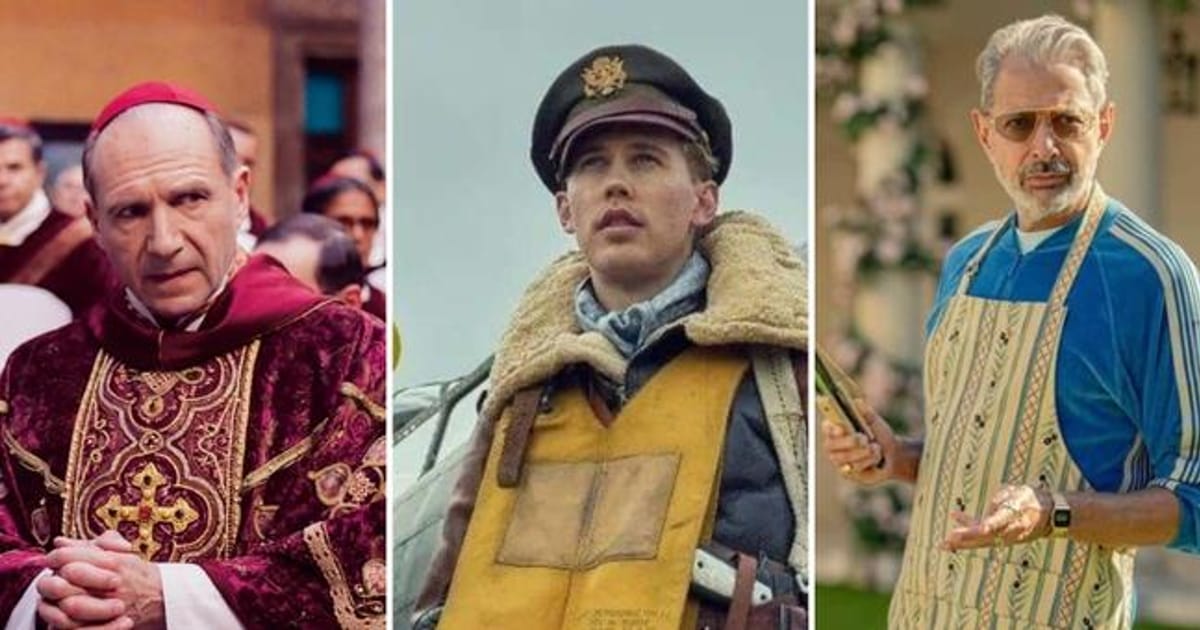
In 2024, movies and television did what great history teachers have always done: they smuggled facts into our brains while we were emotionally distracted. One minute we were watching samurai politics, bomber crews, fashion designers, spies, presidents, swimmers, comedians, and cartel bosses. The next minute we were asking questions like, “Wait, did that really happen?” and “Why did nobody tell me history had this much drama?”
The best historical movies and TV shows of 2024 did not simply recreate old costumes and call it a day. They reopened famous events, complicated familiar myths, and reminded audiences that history is rarely tidy. It is full of ambition, fear, survival, propaganda, luck, power, betrayal, and the occasional suspiciously perfect wig. From Shōgun to Masters of the Air, from Franklin to Saturday Night, 2024 gave viewers a year-long crash course in how the past still argues with the present.
Below are the most fascinating history facts we learned from movies and TV in 2024, with enough real-world context to make your next trivia night mildly intimidating.
1. Shōgun Reminded Us That 1600s Japan Was Not Waiting Around For The West
FX’s Shōgun became one of 2024’s biggest historical conversations because it flipped an old storytelling habit on its head. Instead of treating Japan as an exotic backdrop for a European hero, the series placed Japanese politics, language, religion, and strategy at the center of the story.
The drama is fictional, but it draws from real figures and events. John Blackthorne is inspired by English navigator William Adams, who arrived in Japan in 1600. Lord Toranaga echoes Tokugawa Ieyasu, the warlord who eventually founded the Tokugawa shogunate. Mariko has roots in the life of Hosokawa Gracia, a Christian noblewoman caught in the brutal politics of the age.
The historical fact worth remembering: Japan was not a passive stage for European discovery. It was a highly organized, politically sophisticated society navigating civil war, trade, Christianity, and foreign influence on its own terms. The arrival of Europeans mattered, but it did not magically make them the main characters. History, thankfully, is not obligated to flatter anyone’s passport.
2. Masters of the Air Showed The Terrifying Math Of World War II Bombing Missions
Apple TV+’s Masters of the Air followed the 100th Bomb Group, the American B-17 bomber unit nicknamed the “Bloody Hundredth” because of its heavy losses during World War II. The series made one thing painfully clear: aerial warfare was not glamorous. It was freezing, loud, claustrophobic, and often horrifyingly random.
The fact many viewers learned was how dangerous daylight bombing campaigns over Nazi-occupied Europe were. Crews flew at extreme altitude, facing flak, enemy fighters, mechanical failures, oxygen problems, and brutal cold. The men inside those bombers were not floating through heroic oil paintings. They were young, terrified, and trapped in metal aircraft while the sky tried to kill them from every direction.
The series also highlighted the importance of East Anglia in England, where quiet rural villages became home to thousands of American airmen. Suddenly, fields and farm roads were transformed into launchpads for missions that shaped the air war over Europe. It is one of those facts that makes World War II feel less like a chapter heading and more like a lived human experience.
3. The New Look Turned Fashion Into A Wartime Moral Puzzle
At first glance, The New Look looked like a stylish drama about Christian Dior and Coco Chanel. But underneath the beautiful clothes was a thorny question: what does survival look like under occupation?
The Apple TV+ series explored Nazi-occupied Paris and the complicated wartime lives of major fashion figures. Christian Dior’s sister, Catherine Dior, was involved in the French Resistance and was deported to a concentration camp. Coco Chanel’s wartime conduct, including her relationship with a German officer and allegations of collaboration, remains a subject of serious historical debate.
The fact here is that fashion history is not just about hemlines, perfume, and people dramatically entering rooms. Couture existed inside a world of rationing, fear, compromise, resistance, and opportunism. Dior’s famous postwar “New Look” was not only a fashion moment; it also symbolized a society trying to restore beauty after catastrophe. Clothing, in this case, was not shallow. It was fabric stitched over trauma.
4. Manhunt Made The Lincoln Assassination Feel Bigger Than One Gunshot
Most Americans know the basic schoolbook version: Abraham Lincoln was shot by John Wilkes Booth at Ford’s Theatre. Apple TV+’s Manhunt expanded that memory by focusing on Secretary of War Edwin Stanton and the chase for Booth after the assassination.
The larger historical fact is that Lincoln’s murder was part of a broader conspiracy. Booth and his co-conspirators also targeted Vice President Andrew Johnson and Secretary of State William Seward. Seward survived a vicious attack, Johnson was not attacked, and Booth fled into hiding before being tracked down.
Manhunt also reminded viewers that the assassination happened just days after the Civil War effectively ended. The country was not enjoying a peaceful victory lap. It was unstable, grieving, and uncertain about Reconstruction. Stanton’s pursuit of Booth was not just a criminal investigation; it was a desperate attempt to protect the fragile future of the Union.
5. Franklin Proved The American Revolution Was Also Won In Drawing Rooms
Michael Douglas’s Franklin focused on Benjamin Franklin’s diplomatic mission to France during the American Revolution. That may sound less exciting than battlefield smoke and cannon fire, but diplomacy can be its own form of combat. It simply uses more wigs and passive-aggressive dinners.
Franklin was in his seventies when he went to France to secure support for the American cause. The colonies badly needed money, weapons, ships, and legitimacy. France’s alliance became crucial to the American victory, especially in the final phase of the war.
The series also brought attention to the world of espionage surrounding Franklin. British spies, French informers, double agents, and political schemers swirled around him. The fact to remember is that the American Revolution was not won by muskets alone. It was also won through charm, patience, intelligence networks, and Franklin’s ability to turn himself into a celebrity diplomat before the phrase “personal brand” came along to annoy everyone.
6. Mary & George Showed That Royal Favor Could Be A Political Weapon
Mary & George gave audiences a scandalous look at the Jacobean court of King James I and the rise of George Villiers, 1st Duke of Buckingham. The series leaned into drama, but the central historical reality is fascinating: royal intimacy could create political power.
George Villiers rose from relatively modest status to become one of the most powerful men in England because of his closeness to King James I. His mother, Mary Villiers, played a major role in positioning her son for advancement, at least in the broad historical tradition that inspired the show.
The fact is that early modern courts were not polite government offices with better curtains. They were dangerous ecosystems where access to the monarch could mean wealth, titles, influence, and enemies. A king’s favorite could shape policy, provoke resentment, and become a lightning rod for national frustration. In other words, office politics used to come with more lace and a higher chance of assassination.
7. The Sympathizer Challenged The Usual American Vietnam War Story
HBO’s The Sympathizer, adapted from Viet Thanh Nguyen’s Pulitzer Prize-winning novel, gave viewers a different angle on the Vietnam War and its aftermath. Instead of centering the familiar American soldier’s perspective, it followed a communist spy embedded in South Vietnamese circles who later ends up in the United States.
The series explored the fall of Saigon, refugee displacement, political exile, and the strange ways Hollywood has shaped memory of the Vietnam War. One of its sharpest historical lessons is that wars do not end cleanly when the helicopters leave. They continue in refugee camps, immigrant neighborhoods, family silences, political arguments, and movies that decide who gets to speak.
For many viewers, the show underlined a simple but powerful fact: the Vietnam War was not only an American trauma. It was also a Vietnamese catastrophe, a refugee story, a Cold War battleground, and a conflict whose meaning changes depending on who is holding the microphone.
8. We Were The Lucky Ones Made Holocaust Survival Feel Personal, Not Abstract
Hulu’s We Were the Lucky Ones was inspired by Georgia Hunter’s family history and followed the Kurc family, Polish Jews separated during World War II. The series was a reminder that Holocaust history is not only about the unimaginable scale of death. It is also about individual families trying to survive impossible circumstances.
The fact many viewers absorbed was that Jewish survival during the Holocaust often depended on a terrifying mix of timing, geography, forged papers, hidden identities, forced labor, escape routes, and pure chance. The Kurc family’s story moved through Poland, the Soviet Union, Italy, and beyond, showing how scattered and global the survival experience could become.
It also reinforced the value of family testimony. A story preserved by relatives can become a book, then a series, then a public act of memory. History is not only kept in museums. Sometimes it is kept in old letters, whispered stories, and the question one grandchild finally decides to ask.
9. Griselda Reminded Us Not To Mistake Infamy For Empowerment
Netflix’s Griselda brought Sofía Vergara into the role of Griselda Blanco, the Colombian drug trafficker associated with Miami’s cocaine trade and the violent drug wars of the 1970s and 1980s. The show was slick, tense, and controversial because it walked the thin line between dramatizing power and glamorizing brutality.
The important historical fact is that Blanco was not just a colorful underworld character. She was linked to a violent criminal economy that devastated real communities. Her story belongs to the history of the cocaine trade, organized crime, immigration pressures, law enforcement failures, and the transformation of Miami during a dangerous era.
True crime can be compelling, but Griselda also raised a useful warning: being feared is not the same thing as being admirable. History does not become feminist simply because a woman does terrible things in a tailored outfit.
10. Young Woman And The Sea Rescued Gertrude Ederle From The Footnotes
Disney’s Young Woman and the Sea told the story of Gertrude “Trudy” Ederle, the first woman to swim across the English Channel. In 1926, Ederle completed the swim from France to England in 14 hours and 31 minutes, beating the existing men’s record by nearly two hours.
The fact that stunned many viewers was not just that she did it, but that her achievement faded from popular memory. Ederle had already won medals at the 1924 Paris Olympics, and her Channel swim made her a global celebrity. Yet her name is far less familiar than many male athletes with less impressive endurance credentials.
The film reminded audiences that women’s sports history has often been underreported, minimized, or treated like a charming side note. Ederle’s story deserves better. She did not simply swim across a body of water. She swam through a wall of assumptions about what women could endure.
11. The Ministry Of Ungentlemanly Warfare Revealed The Strange Birth Of Modern Special Operations
Guy Ritchie’s The Ministry of Ungentlemanly Warfare took a loud, comic-book approach to World War II sabotage, but it was rooted in real history. The film was inspired by Operation Postmaster, a British covert mission against Axis ships off the coast of West Africa.
The broader fact is that World War II accelerated the development of unconventional warfare. Secret units, sabotage missions, deception, intelligence work, and irregular tactics became essential parts of Allied strategy. These operations helped shape later ideas about special forces and black-ops missions.
The movie exaggerates for entertainment, as Guy Ritchie movies tend to do with the subtlety of a flying motorcycle. Still, it points to a real historical truth: not every major wartime operation looked like a beach landing. Some looked like a small group of rule-breakers doing something dangerous, deniable, and strategically useful.
12. Saturday Night Turned TV Production Into Cultural History
Jason Reitman’s Saturday Night dramatized the chaotic buildup to the first episode of Saturday Night Live, which aired on October 11, 1975. On the surface, it is a behind-the-scenes comedy about nervous performers, live television, and a show that might collapse before it begins.
But the historical fact is bigger: SNL represented a major shift in American comedy. It brought countercultural energy into network television and helped redefine what late-night entertainment could be. The original cast, including names like Chevy Chase, Gilda Radner, Dan Aykroyd, John Belushi, Jane Curtin, Garrett Morris, and Laraine Newman, became part of a new comedy language.
The movie takes creative liberties, but it captures a real truth about media history. Institutions that later seem inevitable often begin as risky experiments. Before SNL became a cultural machine, it was a weird live show trying to survive its first night.
13. Say Nothing Made The Troubles Feel Painfully Unfinished
FX and Hulu’s Say Nothing adapted Patrick Radden Keefe’s book about the Troubles in Northern Ireland, focusing heavily on the abduction and murder of Jean McConville and the lives of people connected to the Provisional IRA.
The series taught viewers that the Troubles were not a distant, cleanly resolved conflict. They were a long, intimate, community-shattering struggle involving British state power, Irish republicanism, loyalism, imprisonment, hunger strikes, informers, trauma, and unresolved grief.
One crucial fact is that historical memory can remain legally, politically, and emotionally contested for decades. When living people deny involvement, families still seek answers, and communities disagree over who was a hero, villain, victim, or survivor, dramatizing the past becomes extremely sensitive. Say Nothing showed that history is not always “over.” Sometimes it is still in the room, refusing to sit quietly.
14. The Decameron Proved Plague History Is Weirdly Familiar
Netflix’s The Decameron took inspiration from Giovanni Boccaccio’s 14th-century collection of stories, set against the Black Death in Florence. The show was loose, comic, and intentionally modern in tone, but the historical background was real.
The Black Death reached the Italian Peninsula in the late 1340s and devastated Florence. Boccaccio’s original frame story imagined a group of young people fleeing the city to shelter in a countryside villa, where storytelling became a way to pass time, process fear, and avoid thinking too hard about everyone coughing outside the gates.
The fact that resonated in 2024 is that pandemics expose human behavior. People panic, deny, flee, hoard, moralize, party, pray, scheme, and tell stories. Medieval plague society was not identical to the modern world, but it was recognizably human. Apparently, give people a crisis and a nice house, and drama will arrive before the bread does.
Why 2024 Was A Strong Year For Screen History
The historical movies and TV shows of 2024 worked best when they did not pretend drama and accuracy were enemies. The strongest projects used real events as launchpads for deeper questions: Who gets remembered? Who gets blamed? Who gets erased? Who benefits when history is simplified?
They also showed the limits of “based on a true story.” That phrase can mean careful reconstruction, emotional interpretation, loose inspiration, or “we kept the names and bought better lighting.” Smart viewers should enjoy historical drama while keeping one eyebrow raised. The goal is not to treat every streaming series as a textbook. The goal is to let good stories inspire better questions.
Viewing Experiences: What Watching 2024 History Stories Taught Us
One of the best experiences related to History Facts We Learned From Movies And TV In 2024 was the feeling of being pulled into a story and then immediately wanting to research the truth behind it. That is the magic trick of effective historical entertainment. It starts with emotion, then leads to curiosity. A viewer may begin Shōgun for the sword fights and political tension, but by the end, they are reading about Tokugawa Japan, Jesuit missions, trade routes, and the fragile power balance before the Battle of Sekigahara. That is not passive watching. That is accidental learning, the most painless kind.
The same experience happened with Masters of the Air. The show’s aerial combat scenes were intense, but the deeper impact came afterward, when the viewer considered the age of the crews, the number of missions required, the odds of survival, and the psychological burden of returning to base without friends. It made World War II feel less like a distant patriotic mural and more like a series of individual mornings when young men climbed into aircraft knowing the sky might not let them come back.
Historical TV in 2024 also made viewers more aware of moral gray areas. The New Look did not let fashion remain decorative. It pushed audiences to think about collaboration, resistance, survival, and ambition under occupation. Franklin made diplomacy feel risky and theatrical. Manhunt turned a famous assassination into a lesson about conspiracy, national trauma, and the unstable beginning of Reconstruction. These shows made history feel less like memorized dates and more like pressure. People made decisions without knowing how future generations would judge them.
Another memorable experience was seeing how many 2024 stories challenged familiar viewpoints. The Sympathizer questioned the American-centered memory of the Vietnam War. We Were the Lucky Ones transformed Holocaust history from statistics into family separation and survival. Say Nothing showed how political violence leaves behind contested memory long after the headlines fade. These stories did not offer easy comfort, and that was part of their value. They asked audiences to sit with contradiction.
Even lighter or more energetic projects had something useful to offer. Saturday Night turned the birth of a comedy show into a study of cultural change. Young Woman and the Sea restored attention to a female athlete whose achievement should never have been allowed to drift into obscurity. The Ministry of Ungentlemanly Warfare exaggerated its action, but it still opened the door to real stories of covert operations and irregular warfare. In each case, entertainment became a doorway. Viewers did not need to become professional historians; they simply needed to stay curious after the credits rolled.
The biggest lesson from watching historical movies and TV in 2024 is that the past becomes more powerful when it feels alive. Costumes and sets help, but the real spark comes from recognizing human behavior across time: ambition, fear, loyalty, vanity, courage, compromise, and the universal habit of making terrible decisions under pressure. History is not dead. It is just waiting for the next adaptation to remind us how noisy it always was.
Conclusion
History Facts We Learned From Movies And TV In 2024 proved that screen entertainment can be more than a weekend escape. It can be a doorway into samurai Japan, wartime Europe, revolutionary France, 1970s television studios, Olympic-era swimming, Cold War memory, and the painful afterlives of political violence.
The key is to watch with curiosity. Historical dramas are not perfect records, and they are not supposed to replace books, archives, museums, or expert scholarship. But when they are done well, they make the past feel urgent enough for viewers to investigate. That is a victory. Any show that makes someone pause the episode and search “Did that really happen?” has already performed a tiny public service.
In 2024, movies and TV reminded us that history is not a dusty warehouse of dates. It is a living argument about power, memory, survival, and storytelling. Also, it has better plot twists than most fictional universes. The past, as it turns out, did not need a writers’ room. It was already dramatic enough.