Walking into a courtroom can feel a little like stepping onto a stage where everyone else already knows the script. The bailiff has a routine. The attorneys have their files. The clerk knows exactly where everything goes. And you? You may be standing there wondering, “Do I say Judge? Magistrate? Your Honor? Supreme Keeper of the Gavel?”
Good news: addressing a magistrate is much simpler than it seems. In most United States court settings, the safest and most respectful form of direct address is “Your Honor.” When speaking about the magistrate rather than directly to them, “Judge [Last Name]” or “the Court” is usually appropriate, depending on the setting. The key is to be respectful, clear, and calm. A courtroom is not the place to test your stand-up comedy material, even if the fluorescent lighting is already doing half the joke.
This guide explains how to address a magistrate in court, in writing, over the phone, and during virtual hearings. It also gives practical examples, common mistakes to avoid, and real-world experience-based tips to help you sound prepared instead of panicked.
What Is a Magistrate?
A magistrate is a judicial officer who handles specific legal matters assigned by law or by a higher court. In the federal system, the formal title is usually United States Magistrate Judge. Federal magistrate judges often handle pretrial matters, initial appearances, warrants, bail hearings, settlement conferences, discovery disputes, misdemeanor proceedings, and, with consent from the parties, some civil trials.
In state courts, the word “magistrate” can mean different things depending on the state. A magistrate may handle small claims, traffic matters, landlord-tenant issues, criminal preliminary hearings, warrants, family-related proceedings, or other limited-jurisdiction matters. Because titles vary by court, the most practical rule is this: when in doubt, use “Your Honor.” It is respectful, widely accepted, and unlikely to make you sound like you learned courtroom etiquette from a television drama filmed in 1998.
Easy Ways to Address a Magistrate: 8 Steps
Step 1: Use “Your Honor” When Speaking Directly to the Magistrate
The simplest and safest way to address a magistrate in court is:
“Your Honor.”
For example:
- “Yes, Your Honor.”
- “No, Your Honor.”
- “May I explain, Your Honor?”
- “I understand, Your Honor.”
This works whether the judicial officer is a magistrate judge, district judge, municipal judge, or another courtroom authority. “Your Honor” recognizes the office, not the person’s ego. Think of it as the courtroom equivalent of knocking before entering: simple, respectful, and rarely a bad idea.
Step 2: Use “Judge [Last Name]” When Referring to the Magistrate
If you are not speaking directly to the magistrate but referring to them in conversation, “Judge [Last Name]” is usually appropriate. For example:
- “Judge Ramirez asked both parties to return at 2 p.m.”
- “I filed the document requested by Judge Coleman.”
- “The order from Judge Lee explains the next deadline.”
In formal federal settings, the full title may be United States Magistrate Judge [Full Name]. In a state court, the title may be Magistrate [Last Name], Judge [Last Name], or another local variation. If you are unsure, check the court’s website, hearing notice, courtroom door, or case documents. Court paperwork often tells you exactly what title the judicial officer uses.
Step 3: Stand When Speaking, Unless Told Otherwise
Many courts expect people to stand when speaking to the judge or magistrate. This rule can vary, especially in smaller courtrooms, virtual hearings, disability accommodations, or informal procedural settings. If you are physically able and the setting allows it, standing when your case is called shows respect.
A polite opening might sound like this:
“Good morning, Your Honor. My name is Jordan Smith, and I am the plaintiff in this case.”
If the magistrate says, “You may be seated,” sit down. Do not treat it like a test of endurance. The goal is respect, not turning your court appearance into a lower-body workout.
Step 4: Speak Clearly, Briefly, and Only When It Is Your Turn
One of the best ways to address a magistrate properly is to speak in a way the court can actually record and understand. Court proceedings are often recorded by a court reporter or audio system. That means nodding, shrugging, whispering, or saying “uh-huh” may not create a clear record.
Use complete verbal answers:
- Instead of nodding, say: “Yes, Your Honor.”
- Instead of shaking your head, say: “No, Your Honor.”
- Instead of interrupting, say: “May I respond, Your Honor?”
Courts value clarity. You do not need fancy legal language. In fact, plain English is usually better. Say what you mean, answer the question asked, and stop when you have answered it. If you continue talking after the point is clear, you may accidentally wander into information that does not help you. In court, less can be more. Sometimes much more.
Step 5: Stay Respectful Even If You Disagree
Addressing a magistrate respectfully does not mean you agree with everything being said. It means you understand the setting. If the magistrate says something you believe is incorrect, do not blurt out, “That’s wrong!” A better approach is:
“Your Honor, may I clarify one point?”
Or:
“Respectfully, Your Honor, I understood the deadline differently. May I explain?”
The word “respectfully” is useful, but only if your tone matches it. Saying “respectfully” while glaring like a disappointed movie villain does not improve the moment. Keep your voice steady. Do not interrupt the magistrate, the other party, attorneys, witnesses, or court staff. If someone else says something you believe is untrue, write it down and ask for a chance to respond when it is your turn.
Step 6: Address a Magistrate Correctly in Writing
If you need to write to a magistrate, be careful. In many cases, direct letters to the judge or magistrate are not allowed unless they are properly filed with the court and shared with all parties. This is because courts generally avoid private, one-sided communications about active cases.
When written communication is allowed, a formal format may look like this:
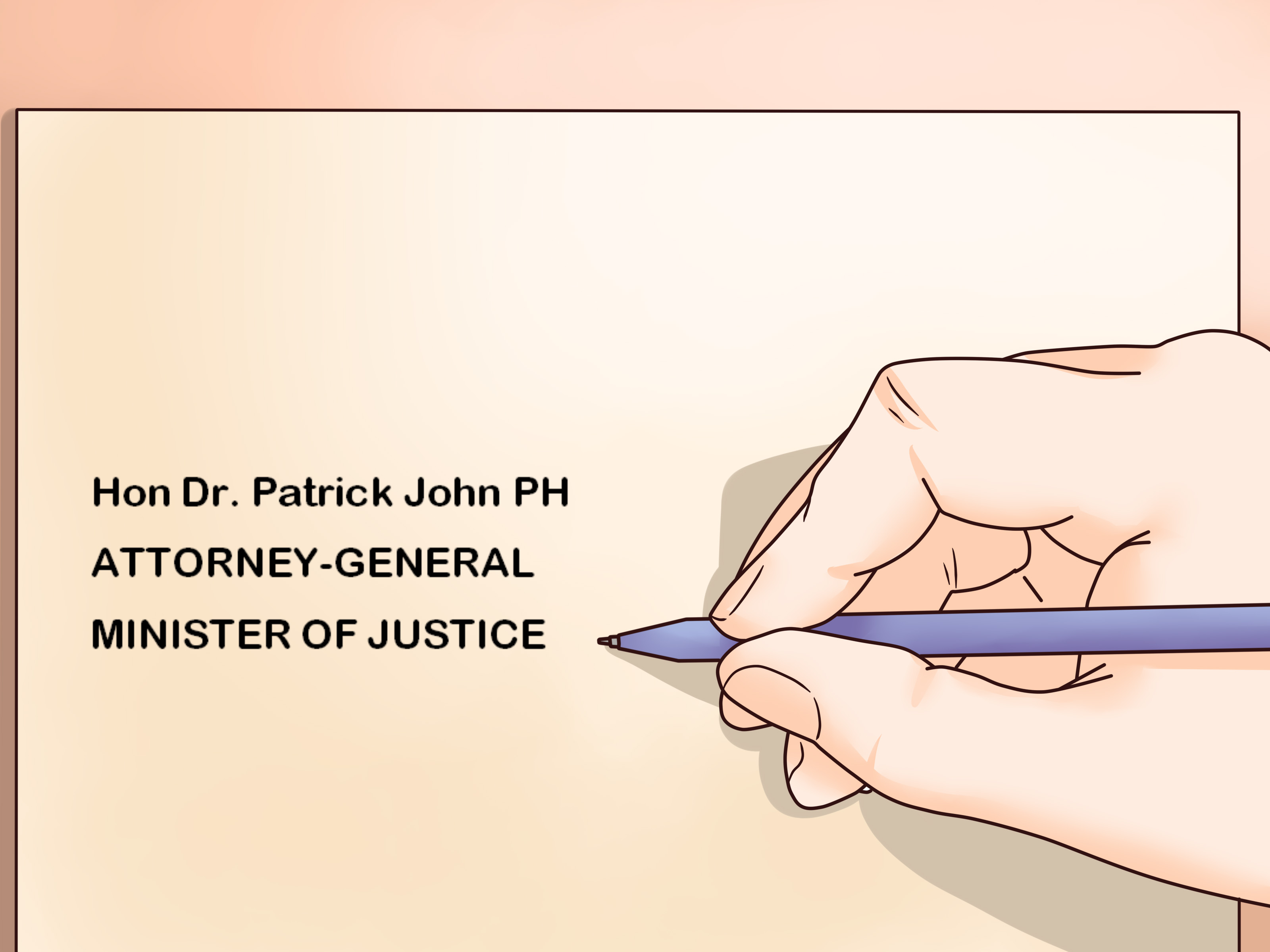
The Honorable Maria A. Johnson
United States Magistrate Judge
United States District Court
For the greeting, use:
Dear Judge Johnson:
Keep the letter professional. Include the case name and case number if applicable. Do not use nicknames, jokes, emotional accusations, or dramatic phrases like “I demand justice by sunset.” The court is not a pirate ship. A clear, respectful sentence is stronger:
“I am writing to request clarification regarding the filing deadline set in the Court’s order dated March 12.”
Step 7: Use the Same Respectful Address in Virtual or Phone Hearings
Virtual hearings are still court hearings. The fact that you are appearing from your kitchen does not make it “court-ish.” It is court. Address the magistrate as “Your Honor,” dress appropriately from head to toe, and choose a quiet location. Yes, even the shoes matter. You may think nobody will see them, but court technology enjoys surprising people at exactly the wrong time.
For video hearings:
- Log in early.
- Use your real name on screen.
- Mute yourself until your case is called.
- Do not interrupt.
- Say “Your Honor” when responding.
- Keep pets, snacks, and background conversations away from the hearing.
For phone hearings, speak slowly and identify yourself before speaking:
“Your Honor, this is Alex Morgan, the defendant.”
This helps the magistrate, clerk, court reporter, and other participants follow the conversation.
Step 8: Recover Gracefully If You Make a Mistake
If you accidentally say the wrong title, do not panic. People make mistakes, especially when they are nervous. Correct yourself and move on:
“I apologize, Your Honor.”
That is enough. Do not spend the next three minutes apologizing for the apology. Courts are busy. A brief correction shows awareness and respect.
Common mistakes include calling the magistrate by first name, using “sir” or “ma’am” repeatedly instead of “Your Honor,” interrupting, arguing with court staff, or treating the hearing like a casual conversation. A courtroom has its own rhythm. When you follow it, you help your own credibility.
What Not to Say to a Magistrate
Knowing what not to say is just as important as knowing the right form of address. Avoid:
- “Hey, Judge.”
- “Listen, buddy.”
- “You people never understand.”
- “Can I just text you the evidence?”
- “No offense, but this court is ridiculous.”
Even if you feel frustrated, keep your language professional. Court is not the place to vent every emotion the case has created. The magistrate is listening for relevant facts, legal issues, procedural needs, and clear answers. Help the court help the process move forward.
Examples of Proper Courtroom Language
When You Need to Ask a Question
“Your Honor, may I ask a question about the next deadline?”
When You Do Not Understand
“Your Honor, I’m sorry, but I do not understand what I need to file next. Could the Court please clarify?”
When You Need More Time
“Your Honor, I respectfully request additional time to submit the required documents.”
When You Disagree
“Respectfully, Your Honor, I would like an opportunity to respond to that statement.”
When the Magistrate Gives an Instruction
“Yes, Your Honor. I understand.”
How to Address Court Staff
Respect should not stop with the magistrate. Clerks, bailiffs, court reporters, interpreters, and other court employees keep the courtroom running. Address them politely as “Mr.,” “Ms.,” “Officer,” “Clerk,” or by the title they provide. Never argue with court staff at the counter or in the courtroom. If they cannot give legal advice, it is not because they are being difficult; court staff are often legally restricted from advising you on strategy.
You can ask procedural questions, such as:
- “Where do I file this form?”
- “Is there a filing fee?”
- “Where is courtroom 4B?”
- “How can I get a copy of the order?”
But avoid asking:
- “What should I say to win?”
- “Do you think the magistrate will believe me?”
- “Should I sue the other person for more money?”
Those are legal advice questions. For legal strategy, speak with an attorney or a qualified legal aid organization.
Why Proper Address Matters
Properly addressing a magistrate is not about empty ceremony. It shows that you understand the seriousness of the process. Respectful language can help you appear organized, credible, and cooperative. It also keeps the hearing focused on the issues instead of your behavior.
Magistrates often deal with crowded calendars, emotional disputes, complex facts, and people who may be representing themselves. A person who speaks clearly, waits their turn, and says “Your Honor” makes the court’s job easier. That does not guarantee a particular result, but it does help create a smoother hearing. In court, credibility is built in small moments. Proper address is one of those moments.
Extra Practical Experiences: What People Learn When Addressing a Magistrate
Many people learn courtroom etiquette the same way they learn airport security rules: suddenly, nervously, and while holding too much paperwork. The first experience that surprises court users is how formal the room feels, even when the matter itself seems small. A traffic issue, small claims dispute, landlord-tenant hearing, or preliminary criminal matter may last only a few minutes, but the setting still requires respect. People who prepare a simple opening sentence often feel more confident. Something as basic as “Good morning, Your Honor. My name is Taylor Davis, and I am here for case number 24-CV-118” can steady your voice and help you begin well.
Another common experience is realizing that the magistrate may ask direct questions. This can feel intimidating, but direct questions are not always a bad sign. The magistrate may simply be trying to understand the timeline, identify the dispute, or clarify what each side wants. When this happens, answer only the question asked. For example, if the magistrate asks, “Did you receive the notice?” the answer should begin with “Yes, Your Honor” or “No, Your Honor,” followed by a brief explanation if needed. This is not the ideal moment to tell the full history of your neighbor’s bad parking habits since 2017.
People also discover that emotions travel faster than facts in a courtroom. If you are angry, hurt, embarrassed, or scared, your tone may become sharper than you intend. A useful habit is to pause before answering. Take one breath, look at your notes, and then respond. The phrase “Your Honor, may I take a moment to review my notes?” is perfectly reasonable in many situations. It is better to pause than to say something dramatic, confusing, or unhelpful.
Written communication brings its own lessons. Some self-represented parties write letters to the magistrate because it feels more personal. However, court communication usually needs to follow filing rules. A letter that is not properly filed or served may be ignored, returned, or create procedural problems. Experienced court users learn to ask the clerk about filing procedures rather than sending private messages to chambers. The respectful title matters, but the correct process matters just as much.
Virtual hearings have created new etiquette lessons too. People have appeared while driving, cooking, lying in bed, or sitting in noisy public places. None of those choices help. A virtual court appearance should be treated like an in-person hearing. Use “Your Honor,” dress neatly, test your microphone, and keep your camera stable. If your child, dog, delivery driver, or blender joins the hearing without permission, apologize briefly and refocus.
The biggest experience-based takeaway is this: you do not need to sound like a lawyer to show respect. You need to be prepared, polite, and clear. “Your Honor” opens the door. Listening carefully keeps you from walking into trouble. If you make a mistake, correct it briefly. If you do not understand, ask respectfully. If you disagree, do so calmly. Courtroom confidence is not about being perfect; it is about showing that you take the process seriously.
Conclusion
Addressing a magistrate does not require a law degree, a memorized courtroom script, or the dramatic confidence of a television attorney. In most U.S. courts, “Your Honor” is the safest direct form of address. “Judge [Last Name]” is usually appropriate when referring to the magistrate, especially in written or formal contexts. The rest comes down to respectful behavior: stand when appropriate, speak clearly, wait your turn, follow court rules, and keep your tone professional even when the situation is stressful.
Before your hearing, check your court notice, local court website, or posted courtroom rules. If you are unsure about procedure, ask the clerk for procedural information. If you need legal strategy, consult an attorney or legal aid service. Proper address will not win a case by itself, but it can help you present yourself as serious, respectful, and ready. And in court, that is a very good place to start.