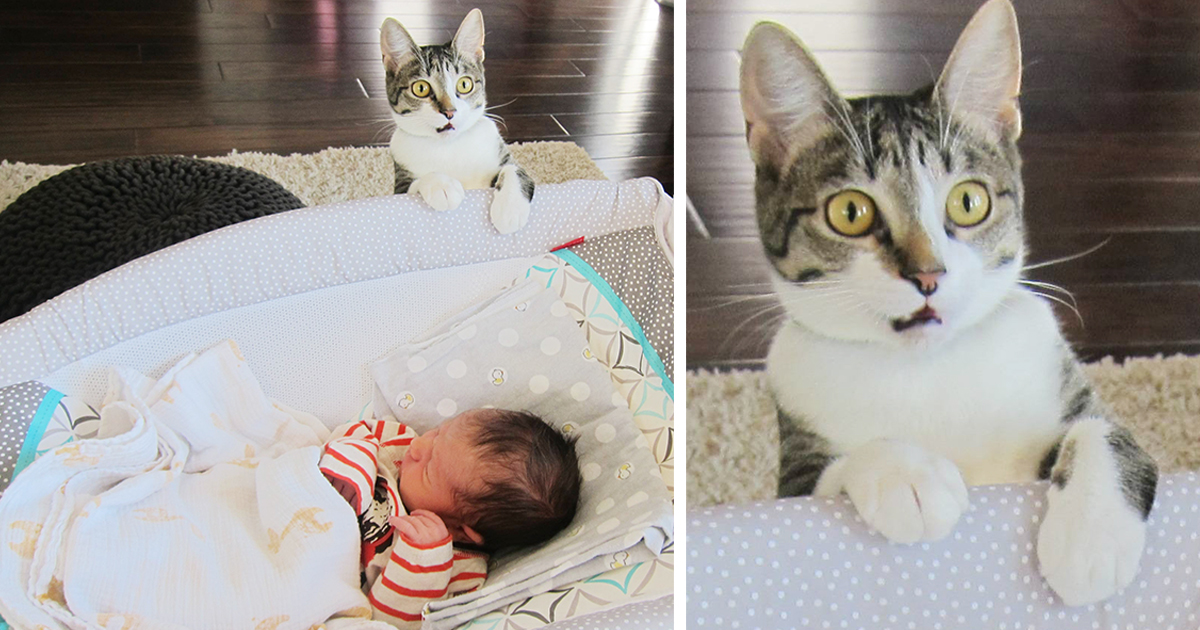
Apparently, one of the great oversights in modern family planning is this: people remember to assemble the crib, sanitize the bottles, install the car seat, and wash the tiny socks that somehow cost more than adult socks. But sometimes they forget the most important briefing of alltelling the cat. So when a newborn suddenly appears in the middle of the living room like a very loud houseguest with no concept of personal space, the family cat often responds with a face that says, “I’m sorry, was there a committee meeting about this?”
That is exactly why the title “Couple Forgot To Tell Their Cat They’d Just Had A Baby” works so well. It sounds like a joke, looks like a meme, and feels instantly relatable to anyone who has ever seen a cat process unexpected news. The phrase became especially memorable thanks to a viral post featuring a cat named Roxy, whose expression made the internet collectively agree that yes, this is precisely what betrayal looks like in whiskered form. But behind the laugh is a very real story about how cats react to change, why babies can throw a household routine into chaos, and how families can help both baby and cat adjust without turning the home into a furry soap opera.
This article takes the funny premise and goes deeper. We will look at why cats often seem shocked by new babies, what experts say about introducing cats to newborns safely, what signs of stress parents should watch for, and why many cats eventually become calm little guardians who supervise nap time as if they were appointed by the household board of directors. Because while the internet loves a dramatic cat face, real life is usually much sweeter, weirder, and more manageable than the headline suggests.
The Viral Cat Reaction That Made Everyone Laugh
The popularity of this headline comes from one deliciously simple truth: cats are masters of expressive disapproval. Dogs may wag, bark, and launch themselves into the center of every emotional event. Cats, on the other hand, specialize in the slow blink, the suspicious stare, and the silent judgment that can make grown adults feel like they failed an invisible exam. When a newborn enters the home, that expression gets even better. Suddenly, the cat is confronted with a tiny human who cries loudly, smells unfamiliar, changes everyone’s schedule, and somehow gets promoted to “most important creature in the house” without filing any paperwork.
That is why the story resonated. It gave a humorous frame to something many pet owners experience: the moment their cat realizes life has changed, and nobody asked for feline approval first. In the now-famous version of the story, the cat’s reaction looked like pure outrage mixed with confusion. But if we translate that expression from Cat into English, it probably reads something like this: “You brought home a tiny screaming roommate, and I had to find out like this?”
The joke lands because it turns a normal family transition into a sitcom scene. At the same time, it reminds us that pets are not furniture. They notice household shifts. They react to new smells, new sounds, new routines, and changes in attention. A baby may be the star of the moment for the adults, but for the cat, it is a complete and sudden reorganization of reality.
Why Cats Seem So Shocked by a New Baby
Cats are creatures of routine
Cats tend to prefer predictability. They like familiar sleeping spots, consistent feeding times, recognizable smells, and a household rhythm that makes sense to them. A newborn has the opposite energy. Babies cry at odd hours, attract visitors, change furniture layouts, add swings and bassinets to the landscape, and instantly rearrange the amount of attention adults can give to everything else. From a cat’s perspective, this is not a minor update. It is a full software reboot.
New scents and sounds are a big deal
Before a cat ever meets the baby, the household starts changing. There are lotions, diapers, wipes, detergent for baby clothes, and nursery furniture that smells new and suspicious. Then come the sounds: crying, cooing, rocking chairs squeaking at 2 a.m., and exhausted adults whisper-shouting about burp cloths. Cats are tuned in to all of it. What looks adorable to you may feel disruptive to your cat until those new patterns become normal.
The cat may feel left out
One of the biggest reasons cats react oddly after a baby arrives is not jealousy in the cartoon-villain sense. It is displacement. The cat’s usual lap time, play schedule, brushing session, or quiet evening routine may suddenly shrink. The cat is not sitting in a dark room plotting revenge against a newborn. More often, the cat is simply noticing that human availability has changed and trying to make sense of it. Some cats become clingier. Some withdraw. Some pretend not to care while caring very much. In other words, they remain cats.
What a Healthy Introduction Looks Like
Contrary to dramatic internet imagination, a good cat-and-baby introduction is not a Disney montage where everyone becomes best friends in six seconds. It is slower, quieter, and much more practical. Experts generally recommend helping the cat adjust before the baby comes home rather than expecting instant acceptance afterward.
Start before the baby arrives
If possible, let your cat get used to the nursery setup early. Bring in the crib, stroller, swing, and blankets well before delivery. Play baby sounds at a low volume from time to time. Introduce baby-related scents, such as lotion or detergent, gradually. This gives your cat a chance to investigate the new items without also dealing with the emotional shock of a brand-new person arriving all at once.
It also helps to make any routine changes ahead of time. If your cat’s feeding area, litter box location, or favorite sleeping room must change, do it gradually. Cats generally handle change better when it arrives in slow motion rather than all at once like a surprise season finale.
The first meeting should be calm, not theatrical
When the baby comes home, the goal is not to force some magical bonding moment. It is to keep the environment calm. Let the cat approach at their own pace. A curious sniff from a safe distance is enough for day one. No one wins points for holding the cat near the baby and saying, “Look! Meet your sibling!” while the cat’s body language screams, “I reject this arrangement.”
Many cats do best when they can observe from a nearby chair, doorway, or strategically superior shelf. That distance gives them control. And if there is one thing cats value almost as much as dinner, it is the illusion that they are in charge.
Keep positive associations going
One of the smartest strategies is to link the baby’s presence with good things for the cat. Treats, praise, playtime, and gentle attention can all help. Over time, the cat learns that the tiny noisy newcomer is not the end of happiness. In fact, the baby may signal snacks, affection, or pleasant calm time with the family. That is a very convincing argument in Cat Logic.
Signs Your Cat Is Adjusting Well
Not every cat reacts dramatically. Some sniff once, decide the baby is boring, and return to more pressing matters like sunbeams and judgment. Others take longer to adapt. In many homes, healthy adjustment looks subtle. The cat may stay nearby without appearing tense, continue eating normally, use the litter box as usual, sleep in familiar spots, and show curiosity without escalating into fear or aggression.
Some cats become quiet companions to new parents. They sit beside the rocking chair during feedings, patrol the hallway during late-night diaper changes, and inspect the baby’s room with the gravity of a security consultant. These moments are charming, but they are also reassuring. They suggest the cat is integrating the baby into the household map rather than treating them like an intruder.
Signs of Stress Parents Should Not Ignore
Even a normally sweet cat can struggle with abrupt change. Watch for hiding that is more intense than usual, reduced appetite, excessive grooming, litter box accidents, hissing, swatting, or fixation on escape routes. Stress does not always look dramatic. Sometimes it looks like a cat who quietly disappears for hours or starts acting “off” in small ways that add up over time.
If these behaviors persist, the solution is usually not punishment. Cats do not become less stressed because someone lectures them. They need environmental support: quiet retreat spaces, predictable feeding, regular play, access to litter boxes, and freedom from forced interactions. If behavior changes are sudden or intense, a veterinarian should rule out medical causes too. A family should never assume every odd behavior is “just jealousy.” Cats can also be sick, uncomfortable, or overstimulated.
Baby Safety Rules That Matter
Never leave a baby and cat unsupervised together
This is the rule nobody should skip, no matter how gentle the cat seems. A cat may be affectionate and still react unpredictably to sudden movement, crying, or accidental grabbing later on. Supervision is not an accusation against the pet. It is standard common sense. Babies are unpredictable. Cats are also unpredictable. Combining two unpredictable creatures without adult oversight is a gamble nobody needs.
Teach clean habits early
As the baby grows into a crawler and then a toddler, hygiene becomes more important. Adults should wash hands after handling pets, litter, food bowls, or toys. Children should not be allowed to kiss cats, put their faces close to them, or roughhouse. Cat scratches and bites can lead to infection, and even friendly cats need respectful handling.
Handle the litter box responsibly
Litter box hygiene matters, especially during pregnancy. Cat feces can be associated with toxoplasmosis risk, so litter boxes should be cleaned daily and handled carefully. In many households, another adult can take over litter duty during pregnancy. If that is not possible, gloves and careful handwashing matter. This is one of those unglamorous but important realities of mixing parenthood and pet care: the cat remains adorable, but the litter box remains very much not adorable.
Keep veterinary care up to date
A healthy cat is a safer cat for the whole family. Regular veterinary care, vaccines, parasite prevention, and attention to behavior changes help reduce problems before they grow. This matters even more when a newborn joins the home, because preventive care is far easier than crisis management with a sleep-deprived family.
Why Many Cats End Up Doing Surprisingly Well With Babies
For all the jokes about feline outrage, plenty of cats adjust beautifully. In fact, many homes discover that once the initial disruption passes, the cat becomes fascinated by the baby’s routine. Some cats enjoy warm blankets, rocking chairs, and the general increase in cozy furniture. Others seem drawn to the calm, repetitive nature of infant care. A baby sleeping on a parent’s chest while the cat curls up nearby is not rare. It is practically a genre.
Part of this success comes down to pace. Cats often do well when they are allowed to observe without pressure. They like information, distance, and choice. Once they learn the baby is not a threatand not a permanent obstacle to meals, naps, and affectionthey frequently settle into a new role. Sometimes that role is “mildly interested observer.” Sometimes it is “soft-bodied nap supervisor.” Sometimes it is “tiny human historian,” sitting in the doorway as if memorizing every milestone for future judgment.
And yes, sometimes the cat still looks offended. But offended and unsafe are not the same thing. A cat can wear the expression of a betrayed Victorian aunt and still adapt perfectly well.
What This Story Really Says About Family Life
The phrase “Couple Forgot To Tell Their Cat They’d Just Had A Baby” works because it captures something true about how family life changes. Babies do not arrive in isolation. They enter a whole ecosystem of routines, relationships, habits, and personalities. In homes with pets, those pets are part of the emotional fabric. They notice when the schedule shifts. They respond when adults become busier. They investigate new sounds, scents, and objects. And sometimes, their reaction gives the entire internet a reason to laugh for ten straight years.
But beneath the humor is a useful reminder: when a family expands, the cat needs support too. Not because the cat outranks the baby, obviously, though many cats may dispute that point. But because good transitions are built on preparation, patience, and respect for how animals experience change. A little planning can prevent stress. A little supervision can protect everyone. And a little empathy can turn a potentially rocky adjustment into one of those sweet family stories people retell for years.
Shared Experiences From Homes Where the Cat “Wasn’t Informed”
In many families, the funniest part is not the first meeting. It is the week after. Parents often describe their cat following them around with the same expression a manager wears after a surprise corporate merger. One minute the cat had a neat routine: breakfast, nap, occasional dramatic hallway sprint, repeat. The next minute there is a bassinet in the bedroom, a mountain of blankets in the laundry, and two adults who look like they have not slept since the invention of electricity. The cat notices everything.
A common experience is the “inspection phase.” The cat does not immediately cuddle the baby or run away. Instead, the cat watches. From the couch. From the doorway. From the top of the dresser, because cats prefer to supervise from a height that suggests authority. Parents often laugh because the cat seems to treat the baby like a strange applianceinteresting, noisy, and possibly defective. The cat will sniff the blanket, listen to one dramatic cry, and then sit down as if waiting for an explanation from management.
Then comes the routine phase. This is where many families are pleasantly surprised. Once the cat realizes the baby is staying, daily life begins to look less shocking. The sound of the bottle warmer becomes normal. The rocking chair becomes part of the scenery. The baby smell becomes just another household scent. Parents often say the cat starts showing up for the quiet moments first: late-night feedings, contact naps, early morning rocking. It is as if the cat decides, “Fine. I accept this tiny person, but only during calm office hours.”
There are also stories of cats becoming unexpectedly protective. Not in an action-movie senseno one is hiring the tabby for security detailbut in a soft, observant way. Some cats sleep near the nursery door. Some sit beside the parent during feeding. Some seem to check in whenever the baby cries, like tiny furry auditors making sure the service standards are being maintained. These moments matter because they show that the relationship often grows naturally over time, without forced photo ops or unrealistic expectations.
Of course, real experience is not always instantly adorable. Some parents report hiding, sulking, or a temporary increase in clingy behavior. That is normal too. A cat may need extra reassurance that favorite spaces still exist and favorite humans are still available. A short play session, a predictable meal schedule, and a quiet retreat can go a long way. Families who do well usually say the same thing afterward: the smoother transition happened when they stopped trying to script the relationship and simply let the cat adapt at a safe, steady pace.
And perhaps that is the real charm of the whole story. The cat does not need a formal announcement, a gender reveal, or a tiny printed memo saying, “Dear Feline, please be advised that an infant has joined the household.” What the cat needs is time, safety, consistency, and the chance to figure things out without pressure. Once that happens, the dramatic expression fades, the baby becomes part of the household, and the cat settles into the family mythology forever. Years later, parents may barely remember the sleep deprivation, but they will absolutely remember the look on the cat’s face when it first realized nobody had told it a baby was coming.
Conclusion
“Couple Forgot To Tell Their Cat They’d Just Had A Baby” is a funny headline because it captures a real emotional truth: cats notice change, and babies change everything. What starts as a hilarious reaction shot often becomes a sweet long-term relationship built on patience, routine, and careful introductions. When parents prepare the home, supervise interactions, protect hygiene, and give the cat room to adjust, the result is usually not chaos. It is a new family rhythmone that includes diapers, lullabies, and a cat who still acts like the house belongs to them, because frankly, in their mind, it always did.