Retail was supposed to be the tired old uncle of the market: useful, predictable, and usually found standing near the buffet explaining margins. Yet here we are, watching parts of the retail sector sprint ahead while investors, economists, and shoppers all try to figure out why the supposedly exhausted American consumer keeps showing up with a cart, a coupon code, and suspiciously strong stamina.
The phrase “animal spirits” comes from economics, but it sounds like something you would see on a limited-edition energy drink. In plain English, it means confidence, momentum, and the human urge to act before every spreadsheet gives permission. In markets, animal spirits can turn caution into risk-taking. In retail, they can turn “I’m just browsing” into a checkout total that requires a moment of silence.
So why is retail outperforming? The answer is not simply “people are spending like there is no tomorrow.” The better answer is more layered: consumers are selective but resilient, value retailers are winning trade-down traffic, e-commerce keeps expanding, affluent shoppers are still spending, and the best retailers have become operational athletes. They are faster, leaner, more digital, and better at turning nervous shoppers into loyal customers.
The Consumer Is Cautious, Not Gone
For the last few years, the American consumer has been declared “tapped out” with the regularity of a weather forecast. And yet retail sales have continued to show resilience. Recent U.S. retail data has shown year-over-year growth, with consumers still spending across stores, food services, online channels, beauty, apparel, electronics, and value-focused formats.
This does not mean every household feels wonderful. Many shoppers are dealing with higher prices, expensive borrowing costs, elevated rents, and gasoline shocks. Consumer confidence has been uneven, and survey data shows that people are often more gloomy when asked about the economy than their spending behavior would suggest. In other words, Americans may complain about prices on the way to the store, then still buy the thing they came forjust after checking three apps, two discount codes, and one TikTok review.
Retail Outperformance Starts With Selective Spending
The modern consumer is not blindly splurging. They are editing. They might skip the full-price sofa but still buy fragrance, skincare, sneakers, groceries, home basics, pet supplies, or a discounted gadget. That distinction matters. Retail outperformance is not evenly spread across the entire sector; it favors companies that understand how people shop when they want both comfort and control.
Retailers that offer value, convenience, flexible payments, loyalty rewards, private labels, fast delivery, and “small luxuries” are in a better position than retailers asking shoppers to pay premium prices for undifferentiated merchandise. The winners are not simply selling products. They are selling permission: permission to save money, permission to indulge a little, permission to feel smart.
Value Retailers Are Catching the Trade-Down Wave
One of the biggest reasons retail has held up is the trade-down effect. When shoppers feel squeezed, they do not stop buying toothpaste, snacks, school supplies, detergent, and dinner ingredients. They look for cheaper places to buy them. That is why warehouse clubs, big-box chains, off-price stores, dollar stores, and private-label-heavy retailers can outperform during uncertain periods.
Trade-down shopping is not just a lower-income phenomenon anymore. Middle- and higher-income consumers have also become more willing to hunt for deals. A shopper who used to buy everything at a premium grocery store may now split the trip: bulk paper towels from a warehouse club, snacks from a discount store, dinner ingredients from a supermarket, and a random patio umbrella from an online sale that somehow feels financially responsible.
Cheap Thrills Are Still Thrills
Retailers have also benefited from the “cheap thrill” economy. When big-ticket purchases feel stressful, shoppers often pivot toward smaller rewards. A $12 lip gloss, a $35 hoodie, a discounted air fryer, or a seasonal candle can feel like a manageable treat. These purchases are not huge individually, but multiplied across millions of consumers, they become a powerful retail engine.
This helps explain why beauty, personal care, small home upgrades, affordable apparel, and impulse categories can remain strong even when consumers say they are cutting back. A $2,500 vacation may be postponed, but the $19 body mist? That little bottle has a fighting chance.
E-Commerce Keeps Raising the Floor
Online shopping is no longer a separate retail category. It is the plumbing of modern retail. Consumers compare prices online before buying in-store. They order groceries for delivery. They buy shoes from a phone during lunch. They expect returns to be simple, inventory to be visible, and shipping to move faster than a teenager hiding a report card.
U.S. online holiday spending recently reached record levels, driven by mobile shopping, buy-now-pay-later tools, discounts, and AI-powered product discovery. That digital momentum supports retail outperformance because it gives retailers more selling moments. The store is no longer limited to store hours. The consumer can shop at 11:47 p.m. while watching a show and pretending not to be influenced by an ad they saw twelve seconds ago.
Omnichannel Retail Is the New Survival Skill
The strongest retailers are not choosing between physical stores and digital channels. They are combining them. Stores now function as showrooms, pickup hubs, return centers, local warehouses, brand billboards, and customer-service stations. A store with strong digital integration can make online delivery faster and returns easier, while also giving shoppers the confidence to touch, try, and compare products in person.
This is one reason large retailers with strong logistics networks have an advantage. They can use scale to offer speed, price, and reliability. Smaller retailers can still win, but they need sharper brand identity, better service, or niche expertise. In today’s market, “we sell stuff” is not a strategy. Everyone sells stuff. The question is why customers should buy it from you.
Affluent Consumers Are Still Spending
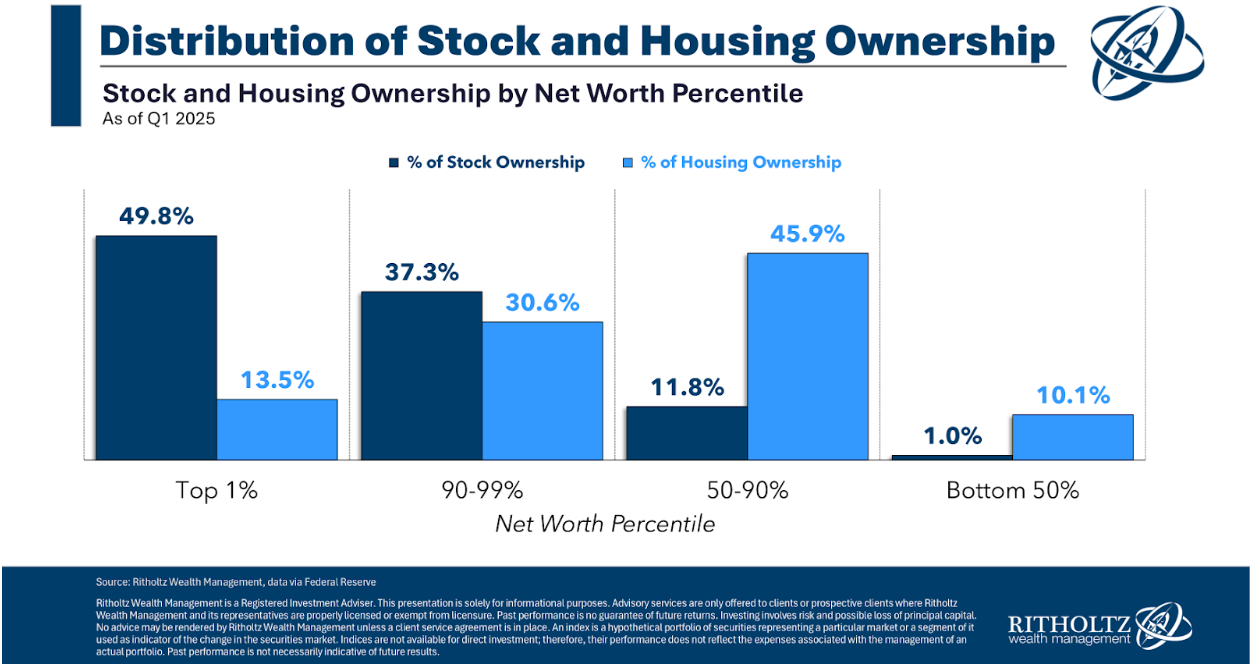
Another key reason retail is outperforming is the strength of upper-income households. Wealthier consumers have benefited from strong asset prices, home equity, wage gains in certain sectors, and investment-market momentum. That does not make them immune to inflation, but it gives them more room to keep spending.
This helps explain why some luxury-adjacent and premium retailers have posted strong results. Department stores with better luxury exposure, beauty chains, jewelry sellers, upscale apparel brands, and specialty retailers can outperform when higher-income customers continue buying. Retail is not one consumer story. It is a split-screen movie: one household is trading down to save money; another is buying designer fragrance because “it was basically self-care.”
The K-Shaped Consumer Economy
The phrase “K-shaped” gets used a lot because it is useful. Some consumers are moving upward, supported by wealth, income, and job security. Others are under pressure from housing, food, energy, and debt payments. Retailers that serve both groups wellor clearly dominate one sideare better positioned.
For example, a warehouse club can attract budget-conscious families and affluent bargain hunters at the same time. A beauty retailer can sell prestige products to high-income customers while offering minis, rewards, and promotions to more price-sensitive shoppers. A strong off-price chain can make customers feel like treasure hunters rather than budget cutters. That emotional framing matters. Nobody wants to feel broke. Everyone enjoys feeling clever.
Inventory Discipline Has Improved
Retailers have also learned painful lessons from the post-pandemic inventory mess. After supply-chain chaos, shipping delays, over-ordering, and discount avalanches, many companies became more disciplined. Better inventory management means fewer unwanted piles of merchandise, fewer desperate markdowns, and healthier margins.
When retailers manage inventory well, they can perform better even if sales growth is not explosive. A company does not need shoppers to buy everything in sight if it stocks the right products, controls costs, and avoids turning every aisle into a clearance bin. Retail outperformance often comes from margin improvement, not just revenue growth.
Less Bloat, More Precision
Modern retail is increasingly about precision. What products should be in which stores? Which customers should receive which offers? Which items deserve shelf space? Which returns are eating profit? Which promotions create loyalty, and which merely train shoppers to wait for discounts?
The best retailers are using data to answer those questions faster. They are not perfectretail forecasting still occasionally looks like astrology with spreadsheetsbut they are better than they used to be. Better data, tighter supply chains, smarter pricing, and improved loyalty programs all help retailers defend profits.
AI and Personalization Are Becoming Real Retail Tools
Artificial intelligence is not just a stock-market buzzword floating around in a shiny vest. In retail, AI is increasingly practical. It helps with demand forecasting, search results, customer service, personalized recommendations, fraud detection, inventory allocation, pricing, and marketing campaigns.
Shoppers are also using AI and search tools to compare products, summarize reviews, find deals, and make faster decisions. This creates a strange new retail world where the shopper may arrive better informed than the salesperson and still ask, “Do you have this in blue?” Retailers that make discovery easier and reduce decision fatigue can win more conversions.
The Convenience Premium
Consumers will pay for convenience, but only when the value is obvious. Fast delivery, easy returns, accurate inventory, simple checkout, and personalized offers all reduce friction. Retailers that remove friction capture spending. Retailers that create friction lose shoppers to a competitor with a cleaner app and a less dramatic return policy.
Convenience is not glamorous, but it is powerful. No one writes love poems about curbside pickup. Still, when it works, customers come back.
Why Retail Stocks Can Outperform Even When Consumers Complain
Investors sometimes make the mistake of treating consumer mood and retail performance as the same thing. They are related, but not identical. A consumer can feel annoyed about inflation and still spend. A retailer can grow earnings by cutting costs, improving margins, gaining share, and optimizing inventory even in a slow-growth environment.
Retail stocks can outperform when expectations are too low. If investors assume the consumer is finished and retailers merely prove they are alive, share prices can rally. Markets do not reward perfection; they reward better-than-feared outcomes. In retail, “not as bad as expected” can be surprisingly profitable.
Expectations Matter
Retail is a sentiment-sensitive sector. When investors are pessimistic, valuations can fall. If sales remain stable, margins improve, or management raises guidance, stocks can bounce quickly. This is animal spirits in action: confidence returns, short sellers retreat, analysts update models, and suddenly the boring retailer looks like the life of the party.
That does not mean every retail rally is durable. Some are short squeezes. Some are seasonal. Some are driven by temporary boosts like tax refunds or promotional calendars. But when stronger fundamentals meet low expectations, outperformance becomes easier to understand.
Risks: The Retail Rally Is Not Bulletproof
Retail may be outperforming, but it is not invincible. Higher gasoline prices can squeeze household budgets. Credit card balances and interest costs can weigh on discretionary purchases. Tariffs and supply-chain disruptions can pressure margins. A weaker job market would hurt consumer confidence. And if inflation stays sticky, shoppers may become even more selective.
There is also a difference between nominal growth and real growth. Retail sales can rise partly because prices are higher, not because consumers are buying more units. That matters for investors and business owners. A retailer that grows revenue but loses traffic or margin strength may not be as healthy as the headline suggests.
Not All Retailers Are Winning
The retail sector is full of winners and laggards. Strong operators with clear value propositions are doing well. Weak brands, confused assortments, poor digital experiences, and overleveraged balance sheets are still vulnerable. Consumers may still be spending, but they are not handing out participation trophies.
This is why the phrase “retail is outperforming” needs nuance. Retail is not outperforming as one giant block. The best retailers are outperforming because they are adapting faster than the weaker ones.
What Business Owners Can Learn From Retail Outperformance
The lessons from retail apply beyond big-box stores and public companies. Any business selling to consumers can learn from this moment. First, value matters. That does not always mean the lowest price; it means customers must understand what they are getting and why it is worth paying for.
Second, convenience compounds. A business that is easier to buy from, easier to contact, easier to return to, and easier to trust has an advantage. Third, customer segmentation is essential. Not every shopper wants the same thing. Some want premium quality. Some want discounts. Some want speed. Some want reassurance. The best retailers know which customer they are serving before they start shouting into the marketing void.
The Retail Playbook for 2026
For retailers, the winning playbook includes disciplined inventory, sharper pricing, loyalty programs that actually feel rewarding, better digital tools, and a brand promise that can be explained in one sentence. If a retailer cannot explain why it deserves customer attention, the customer will explain it for them by shopping somewhere else.
The most important lesson is that consumer resilience is not automatic. Retailers have to earn it. Shoppers are still spending, but they are making retailers compete harder for every dollar. That competition is exactly why the strongest players are becoming stronger.
Experience Notes: What Retail Outperformance Feels Like in Real Life
The easiest way to understand retail outperformance is to stop looking only at charts and walk through an ordinary shopping week. You will see the whole economy in miniature. On Monday, someone compares grocery prices across three apps before choosing curbside pickup. On Tuesday, a parent buys school supplies at a discount chain because the same notebook costs more somewhere else for no obvious reason except perhaps “vibes.” On Wednesday, a professional who complains about inflation buys a premium moisturizer because a stressful week apparently requires hydration with branding.
That is the retail story: pressure and spending living side by side. People are not behaving like carefree lottery winners. They are behaving like practical optimists. They still want birthdays, holidays, clean homes, decent shoes, good coffee, working electronics, pet food, and a tiny treat at checkout. They just want to feel smarter about how they buy those things.
In real shopping behavior, value is emotional. A warehouse-club receipt can feel like a victory parade. A clearance rack can feel like archaeology. A loyalty reward can make a customer feel personally chosen by the retail gods, even if the algorithm simply noticed they buy socks every six months. Retailers that create that feeling are not just moving inventory; they are creating small moments of confidence.
E-commerce adds another layer. Many shoppers now begin with research, not browsing. They read reviews, compare prices, watch short videos, check delivery windows, and look for promo codes. The purchase decision happens before the cart is filled. That means retailers win earlier than they used to. A clear product page, honest reviews, fast shipping, and easy returns can close the sale before a customer ever sees a physical shelf.
Physical stores still matter, though. In fact, they may matter more when used correctly. A good store gives shoppers certainty. They can try the jacket, smell the candle, test the chair, inspect the fruit, or ask whether the gadget requires a subscription. Stores also solve impatience. Sometimes the strongest consumer preference is not luxury or value. It is “I need this today, and I do not want a delivery window with commitment issues.”
From an investor’s perspective, the experience is equally revealing. Retailers that once looked boring suddenly look disciplined. The best ones are not relying on magic. They are improving supply chains, cutting weak locations, investing in apps, using stores as fulfillment hubs, and giving customers more reasons to return. That is not glamorous, but it works.
For everyday shoppers, the retail outperformance story may feel less like a boom and more like adaptation. People are still buying, but they are buying with sharper elbows. They want better prices, better service, better speed, and better proof. Retailers that meet those demands can outperform even when the economic mood is cloudy. That is the secret hiding in plain sight: animal spirits do not always roar. Sometimes they whisper, “Add to cart, but only if shipping is free.”
Conclusion: Retail Is Outperforming Because It Adapted to the New Consumer
Retail is outperforming because the best retailers have adjusted to a consumer who is resilient, skeptical, value-hungry, digitally fluent, and still willing to spend when the offer feels right. This is not a simple story of reckless consumption. It is a story of selective spending, trade-down behavior, e-commerce growth, affluent strength, operational discipline, and smarter retail execution.
Animal spirits are back in retail, but they are wearing comfortable shoes and carrying a coupon. The winners are the retailers that understand the mood: shoppers want value without embarrassment, convenience without chaos, and small joys without financial regret. In that environment, the strongest retail brands are not just surviving. They are outperforming because they have learned how to sell to the modern consumer as they actually arenot as economists wish they would be.