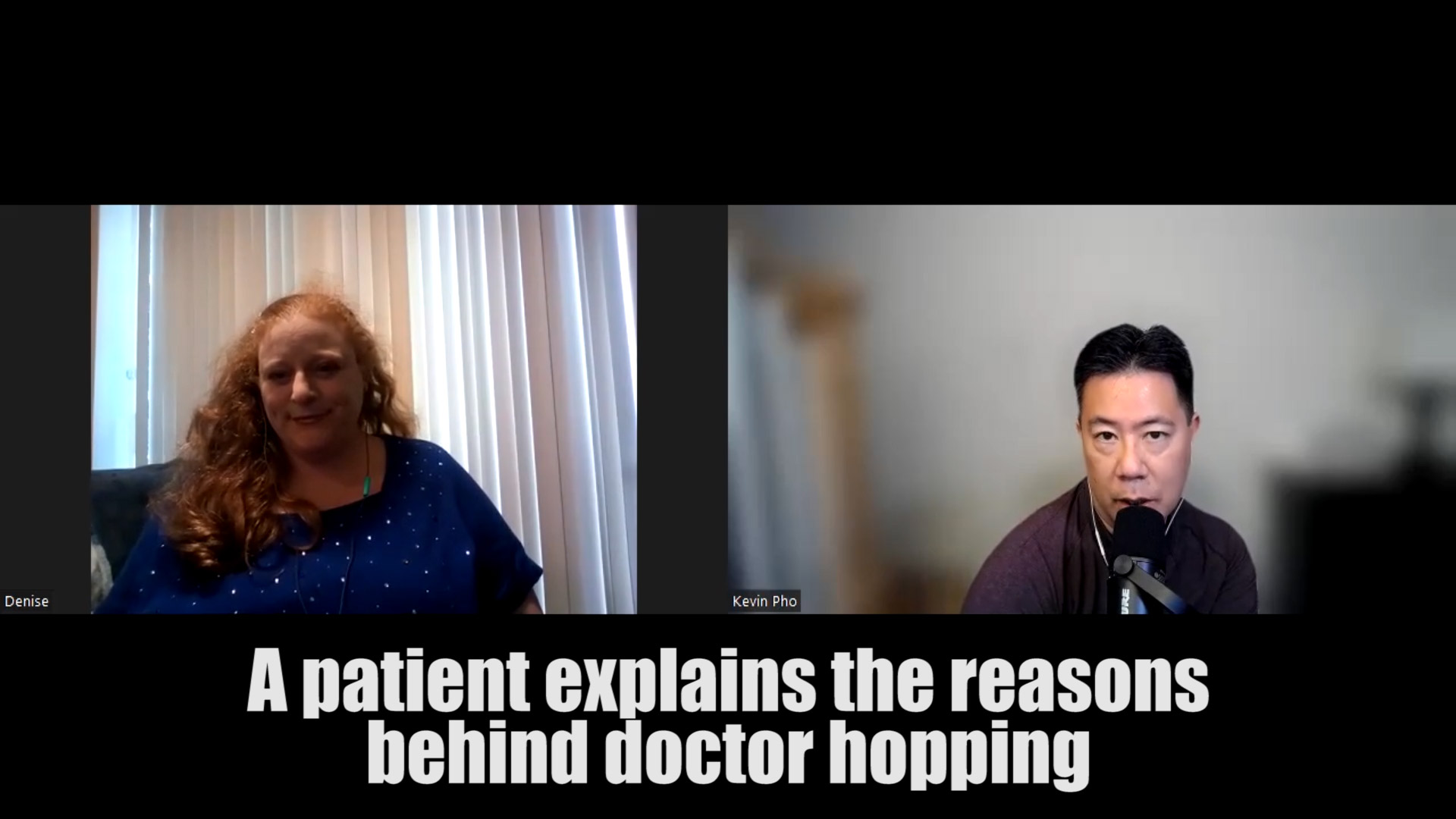
Let’s start with a confession: patients do not usually wake up one morning, stretch dramatically, and say, “You know what would really spice up my week? Explaining my medical history to a brand-new doctor for the fifth time.” Doctor hopping is rarely a hobby. It is usually a reaction. Sometimes it is a practical response to insurance, long wait times, or a move across town. Sometimes it is a survival response to feeling dismissed, misunderstood, or stuck in a treatment plan that is going nowhere fast.
In healthcare, the phrase doctor hopping can sound reckless, almost like a patient is shopping for agreeable opinions the way someone shops for sneakers. But from the patient side of the exam table, it often feels very different. It can feel like searching for clarity. Searching for respect. Searching for someone who will connect the dots instead of handing you another referral, another shrug, or another “Let’s just wait and see” when you have already been waiting long enough to memorize the ceiling tiles.
This is the part many people miss: doctor hopping is not always about distrust in medicine. Sometimes it is the opposite. Sometimes it is what people do because they still believe good care exists, and they are trying hard to find it.
What Doctor Hopping Really Means
Doctor hopping can describe switching primary care physicians, moving from one specialist to another, collecting multiple opinions, or bouncing between urgent care, telehealth, and in-person clinics because consistent care is hard to access. The phrase covers a lot of situations, which is why it is easy to judge and easy to misunderstand.
For one patient, doctor hopping means seeking a second opinion after a scary diagnosis. For another, it means leaving a provider who kept interrupting after the first 12 seconds. For someone with chronic symptoms, it can mean a months-long tour through primary care, gastroenterology, neurology, rheumatology, and maybe a side trip into “Have you tried reducing stress?” territory. That last one is not always malicious, but it can be maddening when your body is clearly filing a complaint.
The truth is that patients switch doctors for both emotional and structural reasons. Some are deeply personal. Some are built into the healthcare system. Most are a messy blend of both.
Reason No. 1: “I Don’t Feel Heard”
This is the big one, and it shows up in countless patient stories. A person may tolerate an inconvenient parking garage, a confusing portal, and the paper gown that somehow never covers what it claims to cover. But not feeling heard? That is the deal-breaker.
When patients say they were not heard, they usually mean one or more of the following: the doctor rushed through the visit, focused more on the computer than the conversation, dismissed symptoms too quickly, failed to explain the reasoning behind a diagnosis, or treated questions like interruptions instead of part of the job. A patient might leave the appointment with a prescription in hand and still feel medically homeless.
Listening is not a fluffy bonus feature in healthcare. It shapes diagnosis, trust, treatment adherence, and whether a patient will even come back. If a person believes their symptoms are minimized or their lived experience is being translated into “probably nothing,” they may start looking elsewhere. Not because they are difficult, but because they are trying to be safe.
Reason No. 2: The Diagnosis Does Not Fit, or the Treatment Is Not Helping
Another major driver of doctor hopping is the sinking feeling that the current explanation does not match the actual experience. Maybe the lab work is normal, but the patient is still exhausted, losing weight, fainting, or living with pain that makes daily life smaller and smaller. Maybe the diagnosis changes three times in six months. Maybe the treatment technically exists, but it is doing about as much good as a motivational poster in a flooded basement.
When that happens, patients often seek another clinician not to collect gold stars, but to answer a serious question: Am I missing something?
That question matters. Medicine is skilled, but it is also human. Uncertainty is real. Complex cases are real. Overlapping symptoms are real. And second opinions are not some scandalous act of betrayal. They are a normal part of responsible care, especially when the diagnosis is life-changing, treatment is invasive, symptoms persist, or confidence in the plan is low.
A patient with autoimmune-like symptoms, for example, may hear one doctor say anxiety, another say irritable bowel syndrome, another suspect a thyroid issue, and eventually find a clinician who orders the right tests and pieces the puzzle together. From the outside, that path can look like doctor hopping. From the inside, it feels like detective work performed while tired, scared, and trying not to miss work.
Reason No. 3: Access Problems Push Patients Around
Not all doctor hopping begins with a bad clinical relationship. Sometimes the system does the hopping for you.
A doctor retires. An insurance plan changes. A specialist is suddenly out of network. The earliest appointment is three months away, which is a charming timeline if you are ordering patio furniture, less so if you cannot breathe properly. A patient moves. A clinic closes. A referral gets delayed. A portal message vanishes into the mysterious void where questions go to be “escalated.”
When people cannot get timely appointments or find in-network physicians who meet their needs, they often piece together care from wherever they can get it: urgent care on Saturday, telehealth on Tuesday, a new PCP in two months, and a specialist in another city if the insurance gods are smiling.
This kind of fragmented care is not always the patient’s choice. It is often the byproduct of cost, logistics, and network design. In those situations, doctor hopping is less a personality trait and more a map of barriers.
Reason No. 4: Chronic Illness Makes the Search Harder
People with chronic illness, rare disease, chronic pain, mental health conditions, or symptoms that do not fit neatly into a ten-minute visit often become accidental experts in their own bodies. They also become unusually familiar with the emotional weather of healthcare: hope before the appointment, vigilance during the appointment, and post-appointment analysis that would impress a trial attorney.
Chronic illness raises the stakes of the doctor-patient relationship because continuity matters. Good ongoing care means someone knows your baseline, your medication history, what has already failed, what side effects wreck your week, and which new symptom is actually new. But when continuity breaks down, patients may feel forced to rebuild from scratch again and again.
That is exhausting. It can also make patients look “complicated” when, in reality, the system has simply never let them stay in one place long enough to become understandable.
Reason No. 5: Bias, Dismissal, and the “Maybe It’s Just Stress” Problem
Some patients hop because they do not just feel unheard; they feel flattened into a stereotype. Women may feel their pain is brushed off. People of color may feel less trust and less recognition of what they are trying to describe. Larger-bodied patients may feel every concern gets rerouted into a lecture, even when the issue is not primarily about weight. Disabled patients may feel talked around instead of talked with. People with anxiety or prior trauma may discover that once one label enters the chart, everything else gets viewed through it.
This does not mean every uncomfortable appointment is proof of bad faith. But it does mean patients are often paying attention to something deeper than bedside manner: whether the doctor sees them as a full person or a convenient category.
When that trust cracks, switching doctors can feel less like disloyalty and more like self-respect.
Reason No. 6: Patients Want Partnership, Not a Monologue
Modern patients are often more informed, more digitally connected, and more involved in decision-making than past generations. That is not because everyone wants to become their own specialist after reading three articles and a message board at 1:17 a.m. It is because people want to understand what is happening to their bodies and why one option is better than another.
If a doctor explains choices clearly, welcomes questions, and respects patient preferences, many people will stay even through uncertainty. But if the encounter feels one-sided, patients may leave feeling like the treatment plan happened to them rather than with them.
That is where doctor hopping can begin. Not with a dramatic fight, but with a quiet thought on the drive home: I need someone who will work with me.
Why Doctor Hopping Sometimes Makes Perfect Sense
From a patient perspective, switching doctors can be smart, reasonable, and even medically responsible. It makes sense when symptoms are worsening and no one is connecting the dots. It makes sense when there is a serious diagnosis and the treatment has major consequences. It makes sense when a patient is repeatedly dismissed, rushed, shamed, or pressured into a plan they do not understand. It makes sense when access issues make continuity nearly impossible. It makes sense when a person simply has no confidence in the current fit.
Patients are allowed to want confidence. They are allowed to want explanations. They are allowed to want a clinician who remembers that medicine involves science, yes, but also interpretation, communication, and human beings who are not lab values in sweatpants.
The Problem With Too Much Hopping
At the same time, constant switching can come with real downsides. Repeating your story over and over increases the chance something important gets lost. Records do not always transfer cleanly. Medication lists drift out of date. Duplicate tests happen. Follow-up becomes fuzzy. One doctor assumes another is handling something, while the patient becomes the unpaid project manager of their own body.
There is also the emotional cost. Every new appointment requires fresh hope, fresh paperwork, fresh explaining, and fresh vulnerability. Patients may start to question themselves: Am I being too picky? Am I overreacting? Why can’t I just stay put?
Sometimes the answer is that staying put would be better if the relationship were repairable. Sometimes the answer is that staying put would be worse. The challenge is learning the difference.
How Patients Decide Whether to Stay, Speak Up, or Switch
Most patients do not switch at the first awkward visit. Many try to make it work first. They send portal messages. They ask more questions. They bring notes. They ask for clarification. They request referrals. They tell the doctor, as politely as humanly possible, that they do not feel better and do not understand the plan.
If the response improves, the relationship may recover. Good doctors are not mind readers, and a frank conversation can reset a shaky start. But if the pattern remains the same, switching becomes more than understandable.
Staying may make sense when:
- The doctor listens, explains, and adjusts the plan even if the diagnosis is still uncertain.
- The relationship feels respectful, and there is a clear path for follow-up.
- You understand the reasoning behind watchful waiting or gradual treatment changes.
Switching may make sense when:
- You consistently feel dismissed, mocked, or rushed.
- Your symptoms are changing, but no one is reassessing the plan.
- You cannot get reasonable access to care, records, or follow-up.
- You no longer trust the clinician’s judgment or communication.
In other words, doctor hopping becomes a problem when it is reactive chaos. It becomes wise when it is a deliberate move toward better care.
A Better Way to Talk About Doctor Hopping
Maybe the phrase itself is part of the problem. It sounds impulsive, almost frivolous, when what patients are often doing is navigating a complicated system while trying not to get sicker. A better phrase might be “searching for fit,” “seeking continuity,” or “trying to find a clinician I can trust before I lose my mind in a waiting room with daytime TV playing too loudly.” Admittedly, that last one needs work.
Still, language matters. When patients are framed as difficult for leaving, the conversation misses the obvious follow-up: Why did they feel they had to? That question is more useful than judgment. It points toward better communication, better access, better continuity, and better respect.
Because in the end, most patients are not chasing perfection. They are chasing stability. They want a doctor who is competent, curious, honest, and willing to say, “I don’t know yet, but I’m staying with you while we figure it out.” For many people, that sentence would end the hopping immediately.
Extended Patient Experience: What Doctor Hopping Feels Like From the Inside
I did not think of myself as someone who bounced from doctor to doctor. I thought of myself as someone trying very hard to stay put. Every time I changed clinicians, I told myself it would be the last time. I wanted one office, one portal, one person who recognized my name without needing my date of birth, zip code, and a small sample of my soul.
But the first doctor felt rushed. The second was kind, but impossible to reach. The third talked to the screen more than to me, which would have been less awkward if the screen had also offered eye contact. The fourth focused on one symptom so intensely that the rest of my body seemed to become a rumor. By then, I had become excellent at retelling my medical history in under two minutes, which is not a skill anyone puts on a vision board.
What pushed me from frustration into full doctor-hopping mode was not one dramatic moment. It was accumulation. The normal test followed by abnormal symptoms. The medication that caused side effects worse than the original problem. The “let’s monitor it” plan that somehow required me to do all the monitoring while nobody called back. The vague reassurance that I was “probably fine,” delivered in a tone that suggested fine was a technical term I was too emotional to understand.
So I started over. Again. And every new appointment came with the same strange mix of hope and dread. Hope that this person would finally connect the dots. Dread that I would once again have to compress months of symptoms into a neat little summary that sounded reasonable, organized, and not at all like I had cried in my car after the last visit. I brought notes. I highlighted timelines. I made medication lists. At one point, I had color coding. It was less “patient” and more “middle manager of a deeply uncooperative body.”
What surprised me most was how much of doctor hopping was emotional labor. Not just scheduling and records and insurance calls, though there was plenty of that. It was the constant recalibration of trust. Every new doctor had the power to make me feel either safer or smaller within the first few minutes. If they listened all the way through, I relaxed. If they interrupted with a premature conclusion, my shoulders went straight to my ears.
Eventually, I found a clinician who did something radically simple: she paid attention. She asked what had changed, what had already been tried, what I feared most, and what I needed from the visit. She did not promise instant answers. She did not perform miracle medicine. She just made it clear that I was not a nuisance, not a mystery to be shrugged off, and not a problem to be moved along.
That was the moment I understood the real reason behind my doctor hopping. I had not been searching for endless opinions. I had been searching for a relationship where good medicine could actually happen. The difference was enormous. Once I felt heard, I became more patient. I could tolerate uncertainty better. I could stick with a step-by-step plan because it finally felt like a shared plan.
So when people hear “doctor hopping” and picture a flaky patient who is impossible to satisfy, I want to gently hand them my stack of old after-visit summaries and say: this was not indecision. This was persistence. Sometimes patients leave because they are unrealistic. But often, they leave because they are trying to find the first doctor who treats them like a person worth figuring out.
Conclusion
A patient explains the reasons behind doctor hopping in plain terms: people switch doctors when trust breaks, communication fails, treatment is not working, access becomes impossible, or the relationship simply does not feel safe enough to support good care. Sometimes that search becomes exhausting and fragmented. Sometimes it is the smartest move a patient can make. The goal is not endless switching. The goal is finding the right clinician, at the right time, with enough partnership and continuity to actually move health forward.