Some kitchen trends arrive like a marching band and leave like a bad houseguest. Black and white, though? That duo has the manners to stay. It is crisp without being cold, dramatic without requiring a velvet rope, and flexible enough to look equally at home in a tiny apartment galley or a sprawling family kitchen with room for three bar stools, two dogs, and one person pretending to “just supervise” dinner.
A black and white kitchen works because it gives you instant contrast, built-in structure, and a clean visual rhythm. White opens the room up. Black anchors it. Together, they create a design language that feels deliberate even when the countertop is hosting mail, lemons, and a rogue school permission slip. The best versions are not flat or severe. They use texture, wood, stone, metal, and lighting to make the palette feel layered, welcoming, and alive.
This roundup looks at why black and white kitchens still dominate inspiration boards, how designers keep them from feeling predictable, and which details make the biggest difference if you want the look in real life. Think of it as a style guide for people who love timeless design but would still like their kitchen to have a pulse.
Why Black and White Kitchens Never Really Go Out of Style
Black and white remains one of the most dependable kitchen color schemes because it is visually balanced. One color reflects light, the other absorbs it. One feels airy, the other feels grounded. When those forces meet, the room gains shape and clarity. Even a simple kitchen instantly looks more considered when the contrast is intentional.
That is also why this palette works across so many design styles. In a traditional kitchen, black-and-white cabinetry can feel polished and tailored. In a farmhouse space, it reads warm and nostalgic when paired with wood shelves, apron-front sinks, and aged metals. In a modern kitchen, it becomes clean-lined and sculptural, especially when the materials are pared down and the hardware is minimal.
The trick is understanding that black and white is not a single look. It is a framework. You can make it classic, rustic, glamorous, industrial, Scandinavian, cottage-inspired, or contemporary depending on the materials surrounding it. The palette is the skeleton. Texture and detail are the personality.
The Best Black and White Kitchen Ideas in This Roundup
1. The Tuxedo Kitchen
If black and white kitchens had a celebrity phase, the tuxedo kitchen would still be on the red carpet. This look typically features black lower cabinets or a black island paired with white upper cabinets and walls. It is smart, flattering, and excellent at making a kitchen feel organized. Dark bases hide scuffs better than white ones, while lighter uppers keep the room from feeling top-heavy.
This approach is especially effective in smaller kitchens. The black on the lower half visually grounds the room, while white above helps bounce light around. It is one of the simplest ways to get contrast without turning the entire kitchen into a dramatic monologue.
2. White Cabinets, Black Hardware, Big Results
Not ready to commit to black cabinets? That is fine. White cabinets with black hardware are the kitchen equivalent of adding eyeliner: not strictly necessary, but wow, does it define things. Matte black knobs, bin pulls, and faucet finishes create enough contrast to sharpen the entire room without requiring a full renovation.
This look works especially well with shaker cabinets because the clean lines already have a timeless shape. Add black pulls, a black pendant light or two, and maybe a dark faucet, and suddenly the kitchen looks updated, intentional, and just a little more expensive than it was five minutes ago.
3. Black Counters Against White Cabinetry
Few combinations feel as classic as white cabinets and black countertops. It is graphic, practical, and easy to style. Soapstone, honed granite, leathered stone, and even some quartz options can give the room a darker surface that reads rich rather than harsh. If you want contrast without fully dark cabinetry, this is one of the strongest routes.
Black counters also have a way of outlining the working surfaces of the kitchen, making the room feel more architectural. Pair them with white subway tile, deep grout, or a slab backsplash, and the overall effect becomes clean but not sterile.
4. Marble That Does the Talking
In some kitchens, black and white show up less through paint and more through stone. White marble with dramatic dark veining can pull the entire palette together in one sweep. A waterfall island, full-height backsplash, or veined range wall brings movement to the room and keeps all that contrast from feeling flat.
This is the glamorous side of the black and white kitchen. It is not subtle, and it does not need to be. If you love a little drama with your coffee, heavily veined stone is the move. Just keep surrounding materials quieter so the marble gets to be the main character.
5. Black and White with Warm Wood
Here is where the best kitchens separate themselves from the merely photogenic ones: warmth. Wood shelving, butcher-block accents, white oak floors, walnut stools, or even a timber vent hood can soften a black and white kitchen instantly. The contrast still feels sharp, but the space becomes friendlier and more lived-in.
This combination is especially appealing right now because homeowners want kitchens that feel warm, not clinical. A room with black cabinets, white walls, and natural wood accents feels far more forgiving than one composed only of glossy black, bright white, and zero soul. The wood adds texture, history, and a sense that actual humans eat here.
6. Checkerboard and Patterned Floors
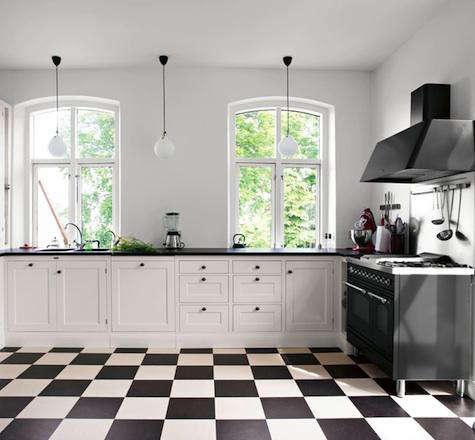
Yes, checkerboard floors are back. Or maybe they never left and were simply waiting for the rest of us to catch up. Either way, black-and-white flooring gives the kitchen instant personality. It can lean retro, Parisian, farmhouse, or sleek depending on the scale of the pattern and the material you choose.
What makes this floor idea so useful is that it carries the palette downward. That means cabinets can stay simpler. A kitchen with white cabinetry, dark counters, and a patterned floor already has plenty to say. It does not need twelve other dramatic moments fighting for attention like contestants on a reality show.
7. Brass, Copper, and Mixed Metals
Black and white is powerful, but it can feel a little stern if every finish is equally cold. That is where metals come in. Brass adds glow. Copper adds energy. Stainless steel keeps the room practical and familiar. Mixed metals, when done thoughtfully, can make the space feel layered rather than too matched.
A brass range hood, aged gold sconces, or warm-toned cabinet pulls can keep a monochrome kitchen from looking flat. Even one metal finish used consistently on lighting and hardware can shift the whole mood from “gallery wall” to “please stay for dessert.”
8. Black Accents Instead of Full Commitment
Not every kitchen needs black cabinetry to join the club. Sometimes black works best as a supporting actor: a painted island, open shelves, window trim, stools, pendants, or a range. If your kitchen gets limited natural light, this can be the ideal balance. You still get the edge and structure of black, but the room stays bright and breezy.
One of the smartest black-and-white strategies is restraint. A white kitchen with carefully placed black accents often looks more modern than a room that swings too hard into contrast. A little black can go a long way. Kitchen design occasionally rewards self-control, which feels rude but true.
How to Keep a Black and White Kitchen From Feeling Stark
Layer Texture, Not More Colors
When people say a black and white kitchen feels cold, they are usually blaming the wrong thing. The problem is rarely the palette itself. It is usually a lack of texture. Glossy cabinets, flat walls, shiny counters, and hard lighting can make the room feel severe. Introduce texture and the mood changes fast.
Think zellige tile, fluted wood, rattan stools, woven runners, leathered stone, linen café curtains, or a plaster-style range hood. The room stays monochrome, but it gains softness and complexity.
Use Lighting Like a Design Tool
Lighting matters more in black and white kitchens because contrast exaggerates shadows. Good pendants, under-cabinet lighting, and soft overhead illumination prevent dark areas from looking gloomy. If the palette is strong, the lighting should be generous. Nobody wants to chop onions in a room that feels like a stylish cave.
Bring in Something Natural
Plants, fruit bowls, flowers, wood boards, and ceramic pieces all help relax the scheme. Black and white creates a crisp backdrop that makes simple everyday items look even better. A bowl of green pears, a stack of cutting boards, or a branch in a vase can do more work here than in a kitchen already packed with color.
Common Mistakes to Avoid
Going too high contrast without enough softness. If every single element is either jet black or bright white, the room can feel hard-edged. Add warm whites, charcoal tones, or wood to create a smoother transition.
Ignoring undertones. Not all whites play nicely together. A creamy white next to a blue-white can look accidental fast. The same goes for black, which can lean soft charcoal, brown-black, or true ink. Test finishes together before committing.
Forgetting function. Black cabinets can show dust, fingerprints, and flour more than people expect. White grout can be a maintenance diva. Choose finishes with your real life in mind, not just your saved photos.
Overdecorating the room. Black and white already creates visual energy. You do not need ten competing backsplash ideas, busy counters, and three statement lights in one sightline. Let the contrast breathe.
Who Should Choose a Black and White Kitchen?
This palette is ideal for homeowners who want a kitchen that will still make sense five or ten years from now. It suits people who like a clean look but do not want the room to feel bland. It is also great for anyone who changes accessories seasonally. Black and white takes new decor in stride, whether that means copper cookware in the fall, greenery in spring, or holiday chaos in December.
It is particularly smart for remodelers who want resale-friendly design without ending up with a kitchen that looks like it came from a template generator. The palette is familiar, but details such as flooring, hardware, lighting, and natural materials can still make it feel personal.
Real-Life Experience: Living With a Black and White Kitchen
Living with a black and white kitchen is different from admiring one in photos, and honestly, that is where the palette gets even better. In everyday life, it has a calming effect. Morning light hits the white surfaces first, so the room wakes up quickly. Even before the coffee is ready, the space feels alert. The black elements, whether it is an island, lower cabinets, stools, or pendant lights, keep the room from floating away into blandness. There is structure to it. You can feel it when you walk in half asleep looking for breakfast and your dignity.
One of the biggest surprises is how seasonal the room feels without actually changing the bones. In spring, a bowl of lemons or a vase of tulips looks bright and cheerful. In summer, woven stools and wood boards feel breezy and casual. In fall, copper pans, amber glass, and darker linens make the space feel richer. During the holidays, the palette becomes a dream backdrop for greenery, candles, and metallic accents. The kitchen never fights the decor. It just nods politely and says, “Yes, I can work with that.”
There is also a practical side to the experience. White surfaces make it easier to see crumbs, spills, and the suspicious jam situation developing near the toaster. Black surfaces can hide some wear while also making lighter messes more obvious. In a strange way, the palette encourages better habits. You wipe things down more often because the room is so crisp when it is clean. That sounds annoying until you realize the space rewards even small efforts. Five minutes of tidying makes the kitchen look dramatically better, which is the interior design version of positive reinforcement.
Cooking in a black and white kitchen can feel surprisingly focused. Because the palette is simple, ingredients stand out more. Bright herbs, colorful produce, golden pastries, and even a humble carton of eggs look better against a monochrome backdrop. The food becomes part of the design. If you enjoy hosting, that matters. A charcuterie board or casual pasta dinner somehow looks more intentional when the room around it is edited and calm.
Families often worry that a black and white kitchen will feel too formal, but in practice it can go either way. If the room includes wood, open shelves, textured rugs, and warm lighting, it feels inviting rather than precious. Kids can do homework at the island. Friends can hover near the stove. Someone can absolutely leave a backpack on the floor and ruin the vibe for ten minutes, but the room itself still feels welcoming. That balance is what makes the palette so durable. It can look polished in photos and still survive normal life.
There are lessons, of course. Matte black finishes show fingerprints. White grout needs commitment. Highly polished surfaces can feel more glamorous than forgiving. But those are material issues, not color-scheme failures. Once you choose practical finishes and embrace a few softer elements, a black and white kitchen becomes one of the easiest spaces to live with. It is stylish without being needy, classic without being boring, and dramatic without demanding daily applause. In kitchen terms, that is close to a perfect roommate.
Final Thoughts
A great black and white kitchen is not just about contrast. It is about balance. The strongest spaces use black to ground the room, white to open it up, and texture to keep everything human. Wood tones, patterned floors, statement stone, dark hardware, warm metals, and layered lighting all help shape the mood.
If you want a kitchen that feels timeless but not tired, bold but not chaotic, black and white remains one of the smartest choices you can make. It is classic for a reason. More importantly, it still has room for personality. And in a world full of trend reports trying to convince us that our cabinets must express a complicated emotional backstory, that kind of clarity feels refreshing.