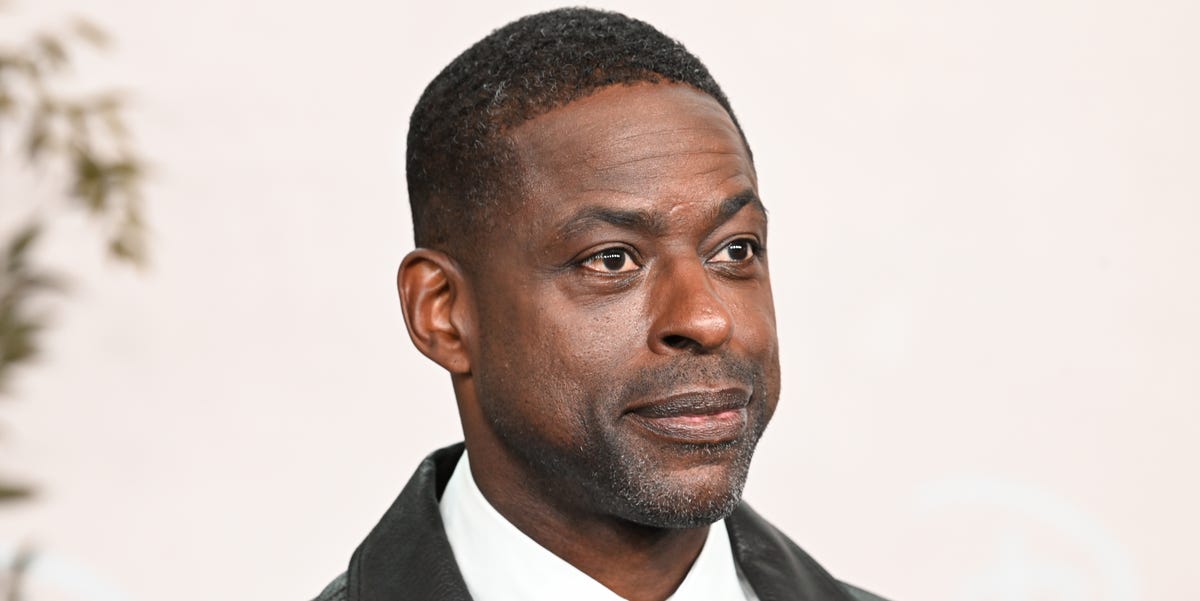
If Paradise taught television fans anything, it is this: when Sterling K. Brown walks into a mystery, you clear your calendar, silence your phone, and accept that your snacks may go uneaten because you are too busy squinting suspiciously at every character on screen. The Hulu thriller gave viewers Brown as Xavier Collins, a Secret Service agent trapped in a sleek nightmare of politics, grief, secrets, and bunker-sized anxiety. Now, with Washington Black, Brown is inviting fans into a completely different kind of storyone with historical sweep, scientific wonder, emotional bruises, and enough adventure to make your streaming queue sit up straighter.
The headline sounds dramatic, but it is accurate: Paradise fans may not be ready for Sterling K. Brown’s new show because Washington Black is not merely “another Hulu drama.” It is a bold, literary, globe-spanning limited series based on Esi Edugyan’s acclaimed novel. It follows George Washington “Wash” Black, a brilliant young boy born into slavery on a Barbados sugar plantation, whose scientific imagination becomes both a survival tool and a doorway to a larger life. Brown stars as Medwin Harris, a community leader and father figure, while also serving as an executive producer. Translation: this is not a casual side quest. This is a Sterling K. Brown prestige-drama expedition with emotional luggage, gorgeous scenery, and probably several moments that require pausing the episode to stare at a wall.
From Paradise Panic to Washington Black Wonder
Paradise arrived as a polished, twist-heavy political thriller created by Dan Fogelman, the same storytelling mind behind This Is Us. The show stars Brown as Xavier Collins, a Secret Service agent investigating the murder of President Cal Bradford, played by James Marsden. But the hook goes far beyond “Who killed the president?” The series unfolds inside a protected community after a catastrophic event, making every hallway feel like a clue and every calm conversation feel like it should come with a fire extinguisher.
That setup gave Brown exactly the kind of role he performs with frightening precision: a man whose face says, “I am fine,” while his eyes are quietly filing thirteen emotional lawsuits. Xavier is controlled, wounded, protective, and morally alert. Fans who loved him in This Is Us recognized the emotional intelligence; fans who loved him in American Fiction recognized the dry authority; and fans discovering him through Paradise quickly learned that Brown can make silence feel like a plot twist.
Washington Black uses that same emotional power, but it changes the setting completely. Instead of a sealed-off bunker filled with political secrets, the new series opens toward the world: Barbados, Nova Scotia, the Arctic, Europe, North Africa, and the imaginative territory between fear and freedom. It is historical drama with adventure in its bones. Where Paradise asks, “What happens when the world collapses?” Washington Black asks, “What happens when someone refuses to let the world define the size of his dreams?”
What Is Washington Black About?
Washington Black centers on George Washington “Wash” Black, introduced as an 11-year-old boy on a Barbados sugar plantation in the 1830s. Wash is not simply clever; he is a born observer, artist, scientist, and inventor. His mind is restless in the best way, the kind of mind that looks at the sky and thinks, “Yes, but what if we could go there?” That imagination catches the attention of Christopher “Titch” Wilde, an inventor and abolitionist played by Tom Ellis, who brings Wash into his experiments involving a strange flying machine.
Then the story expands. A traumatic incident forces Wash to flee, and what begins as a desperate escape becomes a sweeping journey across continents and climates. The series moves between young Wash and an older Wash, played by Ernest Kingsley Jr., now living with a new identity and trying to reconcile freedom with memory. That is a powerful dramatic engine because freedom in Washington Black is not treated as a neat finish line. It is complicated, fragile, joyful, haunted, and constantly renegotiated.
Brown’s Medwin Harris enters as a stabilizing force in Nova Scotia. He is a boarding-house owner, a respected community leader, and a mentor figure whose warmth does not erase the seriousness of what he has survived. Medwin is not Xavier Collins in a waistcoat. He is softer around the edges, more openly paternal, and rooted in community rather than suspicion. But he still carries the unmistakable Sterling K. Brown signature: moral weight, emotional clarity, and the ability to make a simple glance feel like a paragraph.
Why Paradise Fans Should Pay Attention
1. Sterling K. Brown Is Still the Emotional Anchor
The easiest reason for Paradise fans to watch Washington Black is Brown himself. His screen presence has become a kind of promise: the story may be complicated, the world may be cruel, and the supporting characters may be making decisions that deserve a strongly worded group text, but Brown will give the audience someone emotionally reliable to follow.
In Paradise, he grounds the suspense. In Washington Black, he grounds the wonder. Medwin Harris is not the central mystery solver; he is the person who helps the central character understand what survival can become after the running stops. That distinction matters. Brown does not repeat his Paradise performance. He stretches into another register: mentor, protector, community builder, and quiet believer in another person’s future.
2. The New Show Has Big “Book Club Meets Adventure Movie” Energy
Some period dramas arrive wearing a powdered wig and politely asking viewers to admire the wallpaper. Washington Black has wallpaper, yes, but it also has flying machines, ocean voyages, scientific obsession, bounty hunters, romance, danger, and the kind of historical scope that makes a couch feel too small. It blends literary adaptation with adventure storytelling, creating a tone that feels both grand and intimate.
That mix is important for SEO and for viewers. People searching for “Sterling K. Brown new show,” “Washington Black Hulu,” “Paradise Sterling K. Brown,” or “shows like Paradise” are often looking for the same thing: emotionally rich drama with a hook strong enough to justify one more episode. Washington Black offers that hook, but it does not copy Paradise. It trades conspiracy for odyssey, surveillance for exploration, and bunker tension for historical imagination.
3. The Cast Is Built for Prestige TV
The ensemble around Brown is another reason the series stands out. Eddie Karanja plays young Wash, while Ernest Kingsley Jr. plays the older version of the character. Tom Ellis brings charisma to Titch Wilde, a complicated inventor whose help does not erase the moral problems of his world. Iola Evans appears as Tanna Goff, a scientist navigating identity and expectation. The cast also includes Rupert Graves, Edward Bluemel, Sharon Duncan-Brewster, Billy Boyd, Shaunette Renée Wilson, and Charles Dance.
That lineup gives the show texture. It is not a one-man vehicle, even if Brown’s name naturally attracts attention. The series depends on relationships: Wash and Titch, Wash and Medwin, Wash and Tanna, Wash and the past he cannot outrun. Every major connection asks a version of the same question: Who helps us become ourselves, and what do we owe the people who saw our potential before we could safely claim it?
The Themes: Freedom, Imagination, and the Right to Dream Bigger
At the heart of Washington Black is the idea that imagination can be an act of resistance. Wash is born into a society designed to reduce him, control him, and deny his personhood. Yet his mind keeps reaching outward. He draws. He studies. He invents. He dreams. The series does not treat dreaming as soft or decorative. It treats it as dangerous, necessary, and alive.
That is where Washington Black becomes more than a historical adventure drama. It is about the courage to imagine a future when the present has given you every reason not to. It also explores found family, diaspora, scientific curiosity, trauma, belonging, and the uneven path from survival to self-definition. These are heavy themes, but the show uses movement and spectacle to keep the story from becoming static.
For Paradise viewers, this emotional architecture may feel familiar. Xavier Collins is also a man shaped by loss and responsibility. He moves through danger because he has people to protect and truths to uncover. Wash moves through danger because his life and imagination are bigger than the cage built around him. Different centuries, different genres, same core Sterling K. Brown neighborhood: grief, dignity, love, and the stubborn refusal to give up.
How Washington Black Compares to Paradise
The biggest difference is rhythm. Paradise thrives on pressure. It is tight, secretive, and built around revelations. The pleasure comes from watching information leak out one dangerous drop at a time. Washington Black is more expansive. It wants viewers to travel, absorb, feel, and follow a character through years of transformation.
The second difference is visual identity. Paradise uses controlled spaces to create paranoia. Rooms, corridors, official residences, and hidden systems become part of the suspense. Washington Black uses landscapes to create awe: seas, ice, ports, plantations, workshops, and communities. If Paradise feels like a locked box, Washington Black feels like a map unfolding on a windy table.
The third difference is Brown’s function in the story. Xavier is the protagonist carrying the central investigation. Medwin is a supporting character, but an emotionally significant one. That may surprise fans expecting Brown to dominate every scene. The reward is different: instead of watching him solve the puzzle, viewers watch him shape the emotional world around Wash. In a drama about mentorship and self-creation, that role has real power.
Why the Timing Is Perfect for Sterling K. Brown
Brown’s career has moved through a remarkable range: family drama, crime anthology, superhero blockbuster, satire, political thriller, and now historical adventure. What connects the roles is not genre; it is emotional credibility. He has a gift for playing men who are principled without being boring, vulnerable without being weak, and intense without behaving as if every scene is a monologue competition.
That makes Washington Black especially well timed. Audiences who came to Brown through This Is Us may appreciate the tenderness. Viewers who admired American Fiction may appreciate the intelligence. Paradise fans may appreciate the moral steadiness. The new show gives all of those audiences something recognizable while placing Brown in a fresh narrative environment.
It also shows his growing influence behind the camera. As an executive producer, Brown is not simply showing up, hitting marks, and delivering eyebrow tremors of emotional devastation. He is helping choose and shape stories. That matters because Washington Black is a story about Black imagination, global history, and possibility. Brown’s involvement signals a commitment to projects that entertain while expanding what prestige television can look like.
Critical Reaction and Viewer Expectations
Critics generally responded positively to Washington Black, especially its ensemble, production design, ambition, and the way it blends difficult history with adventure. Some reviewers felt the adaptation softened the darker edges of the novel or leaned into sentimentality. That split is worth noting because it helps set realistic expectations. This is not a grim historical lecture disguised as television, nor is it a weightless fantasy that forgets the violence of its context. It sits somewhere in between, aiming for hope without pretending pain does not exist.
That balance will work beautifully for some viewers and imperfectly for others. Fans who want a brutal, unsparing adaptation may wish the show cut deeper. Fans who want a visually rich, emotionally accessible adventure may find exactly what they came for. The best way to approach Washington Black is not to ask it to be Paradise in period costume. It is doing something else entirely, and that “something else” is the point.
A Viewer’s Experience: Watching After Paradise
Watching Washington Black after Paradise feels a little like leaving a windowless strategy room and stepping onto the deck of a ship. At first, the change in air is almost startling. Paradise trains viewers to distrust every smile, every locked door, every official explanation, and possibly every decorative plant. Washington Black asks for a different kind of attention. It wants viewers to notice wonder, not just danger. It wants us to care about sketches, machines, glances, landscapes, and the fragile moment when a young person realizes his mind may carry him farther than anyone intended.
For fans, that shift can be refreshing. After the claustrophobic tension of Paradise, there is pleasure in a story that physically opens up. The camera has room to breathe. The characters travel. The stakes remain high, but the feeling is less “someone is lying in this bunker” and more “the world is enormous, beautiful, violent, and waiting.” That contrast makes Brown’s presence even more interesting. In Paradise, his stillness can feel defensive, as if Xavier is holding himself together because one crack might flood the room. In Washington Black, Medwin’s stillness feels sheltering. He becomes a place of steadiness for Wash, a human harbor in a story full of storms.
There is also a strong emotional experience in seeing a show about historical trauma choose imagination as one of its central languages. Many viewers are accustomed to stories about slavery that focus almost exclusively on suffering. Washington Black does not ignore suffering, but it also insists on curiosity, invention, romance, humor, community, and ambition. That can feel surprisingly healing. It is not escapism in the cheap sense. It is a reminder that oppressed people have always had inner lives larger than the systems trying to contain them.
The show may also hit differently depending on how viewers come to it. Book lovers may watch with the usual adaptation checklist, carefully tracking what changed and preparing a polite but firm speech for the group chat. History fans may focus on the Black communities of Nova Scotia, abolitionist contradictions, and the broader Atlantic world. Sterling K. Brown fans may arrive for Medwin and leave impressed by Eddie Karanja and Ernest Kingsley Jr. Families may find it a conversation starter about dreams, education, resilience, and why “dream smaller” is often terrible advice. Seriously, dream smaller? Who put that on a motivational poster, a tax auditor?
The best experience is probably to watch slowly enough to let the emotional beats land. This is not a show that should be reduced to background noise while folding laundry, unless your laundry also includes a 19th-century flying machine and unresolved generational trauma. Give it attention. Let the adventure elements entertain you, but do not miss the quieter moments: Medwin’s guidance, Wash’s observations, Tanna’s conflicts, and the way the series treats knowledge as a form of liberation.
By the end, Washington Black feels less like a replacement for Paradise and more like proof that Brown’s current television run is unusually rich. He can lead a conspiracy thriller, support a historical epic, and make both feel emotionally urgent. For Paradise fans, the surprise is not that his new show is good. The surprise is that it reaches for a completely different emotional horizon and still feels unmistakably connected to what makes his work so compelling.
Conclusion: Sterling K. Brown’s New Show Deserves the Hype
Paradise fans may arrive at Washington Black expecting another twisty thriller, but they will find something more adventurous, literary, and emotionally expansive. The new Hulu series gives Sterling K. Brown a different kind of power on screen: not the pressure-cooker intensity of Xavier Collins, but the warmth and wisdom of Medwin Harris. Around him, the story of Wash Black unfolds as a moving portrait of imagination under pressure, freedom in progress, and the people who help protect a dream before it can fly on its own.
Is Washington Black the same kind of show as Paradise? Not at all. That is exactly why it is worth watching. It proves that Brown’s appeal is not tied to one genre, one mood, or one type of hero. Whether he is navigating a bunker full of secrets or guiding a young scientist toward a larger future, he brings the same rare combination of intelligence, warmth, and emotional force. Fans are ready for more Sterling K. Brown. They just may not be ready for how far Washington Black is willing to take them.
Note: This article is original editorial content written in standard American English for web publication, based on verified public information about the shows and without embedded source links or citation placeholders in the article body.