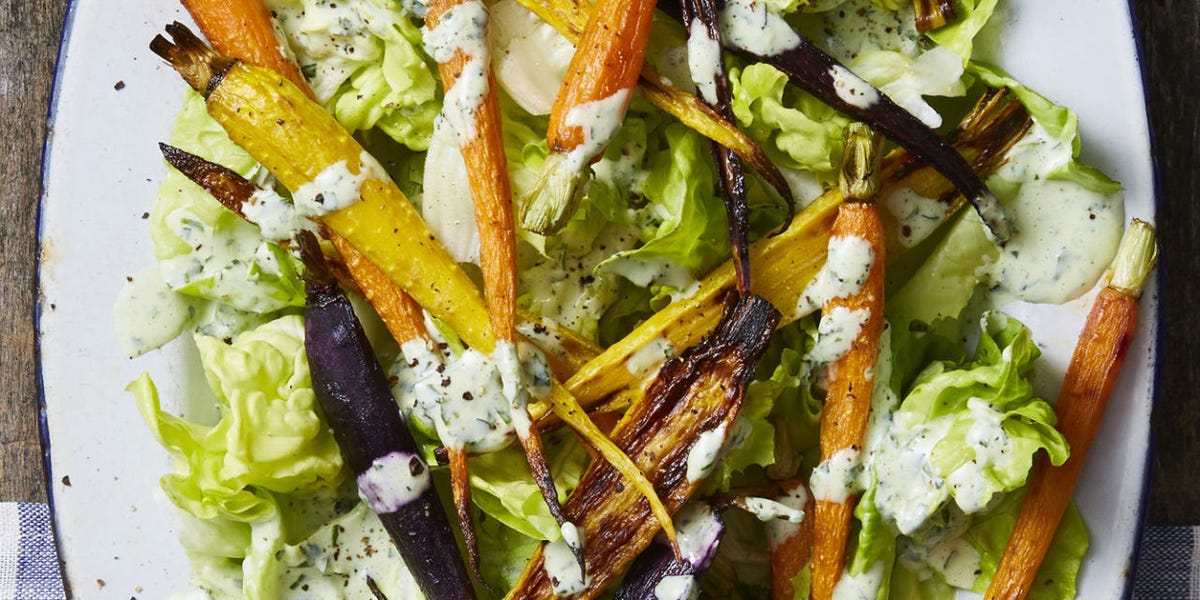
If carrots had a publicist, this Green Goddess Carrot Salad would be the glossy magazine cover story: fresh, bright, wildly photogenic, and surprisingly easy to put together on a Tuesday when your fridge is giving “three lonely vegetables and a dream.” This recipe takes crisp carrots, cuts them into ribbons or thin shreds, and tosses them with a creamy herb-packed Green Goddess dressing that tastes like spring got invited to dinner and brought good gossip.
The magic is contrast. Carrots are naturally sweet and crunchy, while Green Goddess dressing is tangy, garlicky, lemony, and loaded with soft herbs. Together, they make a carrot salad that works as a side dish, a light lunch, a picnic bowl, or the crunchy thing your grilled chicken, salmon, chickpeas, or sandwiches have been begging for.
This version keeps the spirit of classic Green Goddess dressingfresh herbs, lemon, garlic, creamy body, and a savory backbonewhile making it practical for modern home kitchens. No culinary degree required. No mysterious restaurant-only equipment. Just carrots, herbs, a blender, and the courage to turn your cutting board slightly orange.
Why This Green Goddess Carrot Salad Works
A great carrot salad needs more than grated carrots dumped into a bowl with dressing and a motivational speech. The best version balances texture, acidity, creaminess, and seasoning. Thin carrots absorb flavor quickly, lemon keeps the salad lively, and herbs give the dressing its signature green color and fresh aroma.
Traditional Green Goddess dressing often includes mayonnaise, sour cream, anchovies, parsley, chives, and tarragon. Modern versions may use Greek yogurt, avocado, capers, basil, dill, mint, cilantro, or buttermilk. For this recipe, Greek yogurt and a small amount of mayonnaise create a creamy but not heavy base. Capers or anchovy paste add savory depth, and a mix of parsley, chives, basil, and tarragon gives the dressing that unmistakable “I definitely did not come from a bottle” personality.
Green Goddess Carrot Salad Ingredients
For the Carrot Salad
- 1 1/2 pounds carrots, peeled
- 1/2 cup thinly sliced scallions or green onions
- 1/3 cup toasted pumpkin seeds, sunflower seeds, or chopped pistachios
- 1/4 cup crumbled feta, goat cheese, or shaved Parmesan, optional
- 1 tablespoon fresh lemon juice
- 1/4 teaspoon kosher salt, plus more to taste
- Freshly ground black pepper, to taste
For the Green Goddess Dressing
- 3/4 cup plain Greek yogurt
- 2 tablespoons mayonnaise
- 1 packed cup fresh parsley leaves
- 1/2 cup fresh basil, dill, cilantro, or a mix
- 2 tablespoons chopped chives
- 1 tablespoon fresh tarragon leaves, optional but highly recommended
- 2 tablespoons fresh lemon juice
- 1 teaspoon lemon zest
- 1 small garlic clove, grated or minced
- 2 teaspoons capers or 1 teaspoon anchovy paste
- 1 tablespoon extra-virgin olive oil
- 1 teaspoon Dijon mustard
- 1/2 teaspoon kosher salt
- 2 to 4 tablespoons cold water, as needed
- Freshly ground black pepper, to taste
How to Make Green Goddess Carrot Salad
Step 1: Cut the Carrots
Use a vegetable peeler to shave the carrots into long ribbons, or use a box grater or food processor to shred them. For the prettiest salad, carrot ribbons win the beauty contest. For the fastest salad, shredded carrots are the dependable friend who shows up on time and brings snacks.
If your carrots are very thick, rotate them as you peel so the ribbons stay wide and even. When the carrot becomes too small to safely hold, chop the remaining piece finely and add it to the bowl. Waste not, crunch more.
Step 2: Season the Carrots First
Place the carrots in a large bowl. Add lemon juice, salt, and a few grinds of black pepper. Toss and let them sit for 5 to 10 minutes. This quick rest lightly seasons the carrots and helps soften their raw edge without taking away their crunch.
Step 3: Blend the Green Goddess Dressing
In a blender or food processor, combine Greek yogurt, mayonnaise, parsley, basil or dill, chives, tarragon, lemon juice, lemon zest, garlic, capers or anchovy paste, olive oil, Dijon mustard, salt, and pepper. Blend until smooth and bright green. Add cold water, 1 tablespoon at a time, until the dressing is pourable but still creamy.
Taste the dressing. It should be tangy, herby, lightly salty, and bold enough to flavor the carrots. If it tastes flat, add another squeeze of lemon. If it tastes too sharp, add a spoonful of yogurt. If it tastes so good you want to dip chips into it immediately, congratulationsyou are on the right path.
Step 4: Toss the Salad
Add about two-thirds of the dressing to the carrots and toss gently until coated. Add scallions and toasted seeds, then toss again. Add more dressing only if needed. Carrots should look glossy and creamy, not like they fell into a green swimming pool.
Step 5: Finish and Serve
Top with extra herbs, more toasted seeds, and optional cheese. Serve right away for maximum crunch, or refrigerate for 20 to 30 minutes if you prefer a more marinated carrot salad. Both versions are excellent; one is crisp and lively, the other is a little softer and more deeply flavored.
Recipe Card: Best Green Goddess Carrot Salad
Prep Time
20 minutes
Total Time
20 minutes
Servings
4 to 6 servings
Flavor Profile
Fresh, creamy, tangy, sweet, crunchy, herbaceous
Best Served With
Grilled chicken, roasted salmon, chickpea patties, turkey sandwiches, veggie burgers, grain bowls, or a picnic spread.
Tips for the Best Texture
The biggest secret to a great Green Goddess Carrot Salad is the cut. Thick carrot chunks are fine for stew, but in a raw salad they can taste a little too much like something a rabbit packed for lunch. Thin ribbons, julienned strips, or fine shreds create more surface area, which means every bite gets coated in dressing.
Toast your seeds or nuts before adding them. This one small step makes them nuttier, crunchier, and more flavorful. A dry skillet over medium heat for a few minutes is enough. Shake the pan often, because seeds can go from “golden and charming” to “campfire incident” very quickly.
Do not drown the salad. Green Goddess dressing is rich, so start with less than you think you need. You can always add more. You cannot politely ask excess dressing to leave the bowl once it has moved in and signed a lease.
Ingredient Swaps and Variations
Make It Vegetarian
Use capers instead of anchovy paste. They bring a salty, briny flavor that keeps the dressing interesting without using fish.
Make It Dairy-Free
Replace Greek yogurt and mayonnaise with a ripe avocado, a splash of olive oil, and a little cold water. The dressing will be thicker and silkier, with a mild avocado flavor.
Add Protein
Turn this side dish into lunch with chickpeas, grilled chicken, tuna, shrimp, boiled eggs, or baked tofu. The creamy dressing pairs especially well with smoky or charred proteins.
Add Fruit
For a sweet-tart twist, toss in thin apple slices, golden raisins, chopped dates, or orange segments. Carrots love fruit. They just try to act humble about it.
Make It Spicy
Add a pinch of red pepper flakes, a small jalapeño, or a dash of hot sauce to the dressing. The heat cuts through the creaminess and makes the carrots taste even sweeter.
What Makes Green Goddess Dressing Special?
Green Goddess dressing has been part of American cooking for more than a century, and it still feels fresh because it is built around herbs. While ranch leans cozy and familiar, Green Goddess tastes brighter and more garden-forward. It can be creamy without feeling heavy, especially when Greek yogurt, lemon juice, and fresh herbs are used generously.
Tarragon is the sneaky hero. It has a delicate anise-like flavor that gives the dressing depth. Parsley brings clean freshness, chives add mild onion flavor, basil adds sweetness, and dill or cilantro can make the whole thing taste extra lively. The dressing is flexible, but the goal is always the same: a creamy green sauce that tastes bold enough to wake up simple vegetables.
How to Store Green Goddess Carrot Salad
Store leftovers in an airtight container in the refrigerator. The salad is best within 2 days, although the dressing may stay tasty longer when stored separately. If you are making this recipe ahead for a party, keep the carrots and dressing separate until 30 minutes before serving. That way, the carrots stay crisp and the dressing stays bright.
Because this is a creamy refrigerated salad, do not leave it sitting at room temperature for long periods. For outdoor meals, place the serving bowl over ice or bring out smaller portions as needed. Food safety may not be glamorous, but neither is explaining to guests that the salad had “a questionable afternoon.”
Common Mistakes to Avoid
Using Old, Dry Carrots
Fresh carrots should feel firm and crisp. Limp carrots can sometimes be revived in cold water, but very soft, slimy, or unpleasant-smelling carrots should be discarded.
Skipping the Acid
Lemon juice is not just decoration. It brightens the dressing, balances the sweetness of the carrots, and keeps the salad from tasting heavy.
Using Only One Herb
Parsley alone will work in an emergency, but Green Goddess dressing shines when several herbs work together. Think of it like a tiny herb choir. Parsley sings lead, but chives, basil, dill, and tarragon bring the harmony.
Over-Blending with Too Much Water
Add water slowly. The dressing should coat the carrots, not slide off them like it is late for a meeting.
Serving Ideas
This Green Goddess Carrot Salad is wonderful beside grilled meats, roasted fish, or crispy potatoes. It also belongs in grain bowls with quinoa, farro, brown rice, or couscous. For a vegetarian meal, pair it with chickpeas, lentils, avocado toast, or a jammy egg.
It also makes a terrific sandwich topping. Add it to turkey, chicken salad, hummus wraps, or veggie sandwiches for crunch and creaminess. If coleslaw and herb dip had a very stylish cousin, this would be it.
Kitchen Experience: What I Learned Making Green Goddess Carrot Salad
The first time I made a Green Goddess Carrot Salad, I treated the carrots like they were just a vehicle for dressing. That was a mistake. Carrots are not background actors here; they are the main character. When they are cut thinly, seasoned first, and tossed gently, they become sweet, crisp, and surprisingly elegant. When they are chopped into thick pieces and buried under dressing, they become orange homework.
Carrot ribbons are my favorite for dinner parties because they look dramatic with very little effort. A vegetable peeler turns ordinary carrots into long curls that catch dressing beautifully. The only trick is patience. If you rush, the ribbons become uneven and short. If you rotate the carrot slowly, you get wide, flexible strips that look like they came from a fancy cafe where the water costs seven dollars.
For weekday lunches, shredded carrots are more practical. They are faster, easier to pack, and less fussy. I like making the dressing on Sunday and storing it separately in a jar. During the week, I toss a handful of shredded carrots with a spoonful of dressing, some chickpeas, and toasted seeds. It becomes a five-minute lunch that tastes like I tried harder than I did, which is one of the great joys of home cooking.
The herb mix matters more than I expected. Parsley gives the dressing its clean green base, but tarragon makes people pause and ask, “What is that flavor?” Basil makes it sweeter, dill makes it brighter, and chives add a gentle onion note without taking over. If your herb drawer is chaotic, that is fine. Green Goddess dressing is forgiving. Just avoid woody herbs like rosemary unless you want the salad to taste like it was dressed by a Christmas tree.
I also learned not to add all the dressing at once. Carrots release a little moisture as they sit, so a salad that looks perfectly dressed at first can become too loose later. Start with two-thirds of the dressing, toss, wait a minute, then decide. This tiny pause makes the difference between a crisp salad and a creamy carrot puddle, which is not a phrase anyone wants on a dinner menu.
My favorite version includes toasted pistachios and a little crumbled feta. The pistachios add crunch and richness, while feta brings salty tang. For a lighter version, sunflower seeds and extra herbs are enough. For a heartier bowl, I add chickpeas or grilled chicken. The salad adapts easily, which is why it has become one of those recipes I make when I want something fresh but do not want to negotiate with a complicated ingredient list.
Most importantly, this salad tastes best when it is not overthought. Use good carrots, blend a bold dressing, add crunch, and serve it cold. That is the whole happy little formula. It is colorful, fast, flexible, and just fancy enough to make people think you had a plan all along.
Conclusion
The best Green Goddess Carrot Salad is simple, fresh, and full of texture. Thin carrots bring sweetness and crunch, while the creamy herb dressing adds tang, brightness, and savory depth. It is quick enough for lunch, pretty enough for company, and flexible enough to handle whatever herbs are currently surviving in your refrigerator.
Use carrot ribbons for a showy salad, shredded carrots for speed, and julienned carrots for a crisp bistro-style texture. Keep the dressing bold, add it gradually, and finish with toasted seeds or nuts. In return, you get a colorful side dish that tastes like sunshine, gardens, and the satisfying feeling of making vegetables exciting without requiring a parade.
Note: This article is original, web-ready content written in standard American English. It synthesizes real culinary guidance and food-safety practices without inserting source-link blocks, plagiarism, AI-style placeholders, or content reference tags.