Some technologies announce themselves with flashing screens, launch events, dramatic music, and at least one executive wearing unusually clean sneakers. Others sit quietly in a kitchen drawer beside expired coupons, a rubber band, and a battery nobody can identify. The ballpoint pen belongs to the second group. It is cheap, common, frequently borrowed, rarely returned, and secretly brilliant.
At first glance, a ballpoint pen looks almost too ordinary to deserve admiration. It has a plastic barrel, a cap or click mechanism, a tube of ink, and a tiny metal tip. That is it. No battery. No firmware update. No monthly subscription. Yet inside that tiny writing point is a compact engineering system that solves a surprisingly difficult problem: how to deliver ink smoothly, cleanly, affordably, and reliably onto paper with one hand, in a pocket-sized tool, millions of times per day.
The main keyword here is simple: ballpoint pen technology. But the story is bigger than stationery. It is a lesson in materials science, precision manufacturing, industrial design, user experience, global commerce, and the strange human habit of ignoring the smartest objects we use most often.
The Ballpoint Pen Is Not “Just a Pen”
Before the ballpoint pen became the default writing tool of classrooms, offices, banks, delivery drivers, nurses, waiters, mechanics, and people pretending to take notes during meetings, writing was messier. Dip pens needed inkwells. Fountain pens were elegant but could leak, smear, and complain dramatically if treated with less than royal respect. Pencil marks were easy to erase but not ideal for signatures, forms, or documents that needed permanence.
The ballpoint pen changed the daily experience of writing because it made ink portable, quick-drying, and low-maintenance. You could toss it into a bag, use it on a clipboard, sign a receipt, write a phone number on an envelope, or sketch a world-changing idea on a napkin. It was not glamorous, but neither is a paperclip, and civilization would wobble without both.
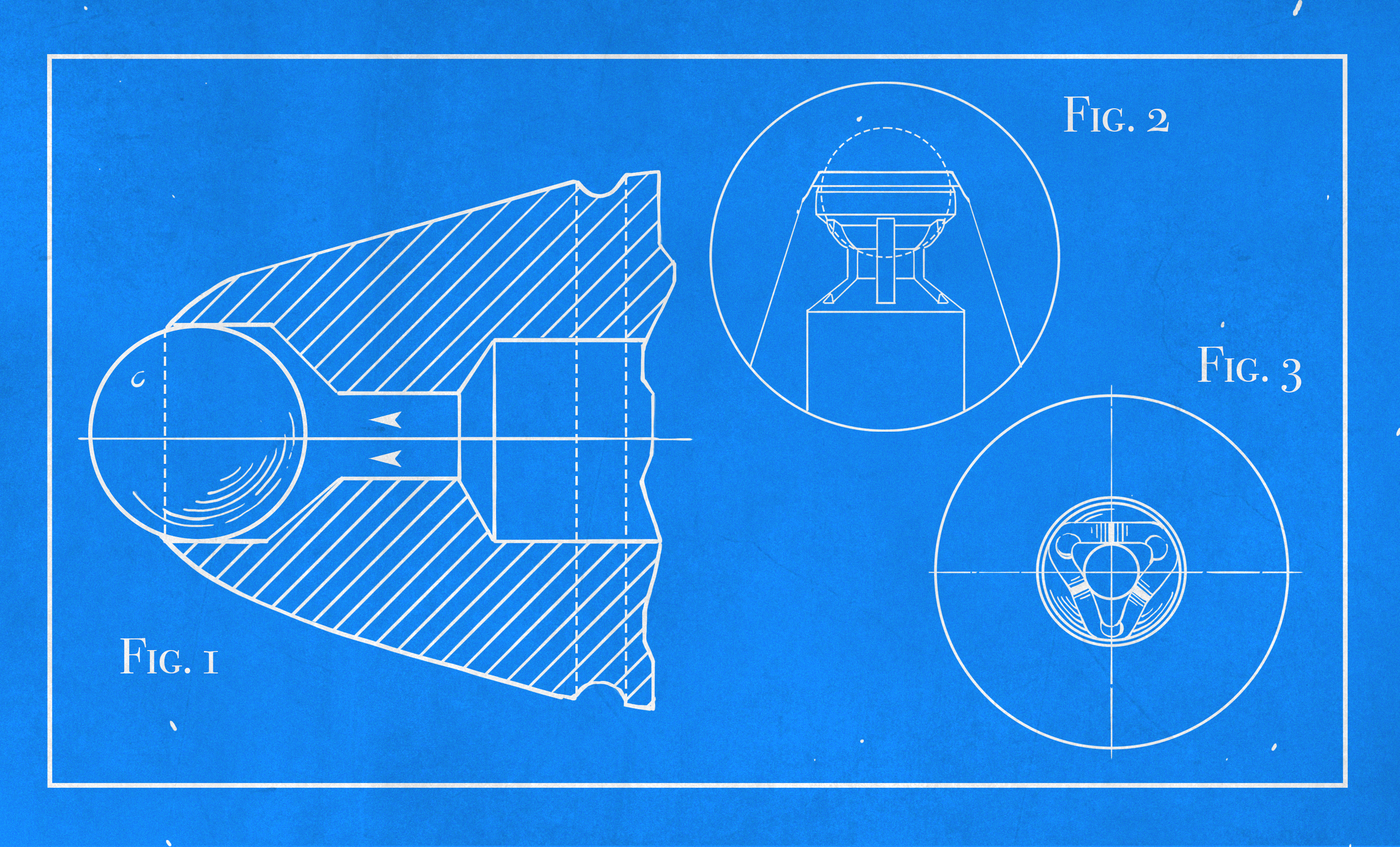
Its genius comes from solving three practical challenges at once: storing ink without leaking, delivering ink without flooding the page, and keeping the writing tip from drying out too quickly. The solution is a small rotating ball held in a socket. As the ball rolls across paper, it picks up ink from inside the pen and transfers a thin line to the writing surface. The ball also acts like a seal, helping keep the rest of the ink inside the cartridge. That is not a pen tip. That is a tiny valve with excellent penmanship.
A Short History of the Ballpoint Pen
John J. Loud and the First Rolling Idea
The earliest ballpoint concept is often credited to American inventor John J. Loud, who received a patent in 1888 for a rolling-point writing instrument. Loud wanted something that could mark rough surfaces such as leather, which traditional pens struggled to handle. His idea was clever, but it was not yet the smooth paper-writing tool we know today. The ink and mechanism were not refined enough for everyday writing on paper.
This is a common pattern in technology: the first version proves the concept, while a later version makes it lovable. The first pancake is rarely the prettiest pancake. The first ballpoint pen was more like a useful workshop tool than the universal office companion it would become.
The Bíró Brothers Make It Practical
The modern ballpoint pen is closely associated with László Bíró, a Hungarian journalist, and his brother György Bíró, a chemist. László noticed that newspaper ink dried quickly and resisted smudging better than fountain pen ink. The problem was that this thicker ink would not flow through a traditional nib. The brothers worked on a new design that used a small ball to pick up and distribute the ink.
Their design combined mechanical precision with chemistry. The ball had to rotate freely, but not so loosely that ink leaked everywhere. The ink had to be thick enough to stay controlled, yet fluid enough to move when the ball rolled. In other words, it needed to behave well under pressure, like a polite guest at Thanksgiving dinner.
By the 1940s, the Bíró design began attracting attention beyond ordinary desks. Aviation helped push the ballpoint pen into wider use because fountain pens could leak or perform poorly under changes in pressure and position. A pen that could write more reliably in demanding conditions was not just convenient; it was useful technology.
The American Ballpoint Boom
In the United States, the modern ballpoint pen became a sensation after World War II. Milton Reynolds introduced a commercial ballpoint pen to the U.S. market in 1945, and early buyers treated it like a futuristic gadget. That may sound funny now, because today a ballpoint pen is the thing you accidentally steal from a bank, not something you line up to buy. But in its early commercial life, the ballpoint pen promised freedom from smears, leaks, and inkwells.
Early commercial pens were not perfect. Some leaked. Some skipped. Some were expensive. Some performed like tiny ink volcanoes with marketing budgets. But the basic idea was too good to disappear. Manufacturers kept improving the ink, the ball, the socket, and the production process until the ballpoint pen became reliable enough and cheap enough for nearly everyone.
How Ballpoint Pen Technology Works
The Tiny Ball and Socket
The heart of a ballpoint pen is the ball-and-socket system at the tip. The ball is usually made from hard, wear-resistant material such as tungsten carbide or steel. It sits inside a precisely shaped metal socket. When you write, friction between the paper and the ball makes the ball rotate. One side of the ball touches the ink inside the reservoir, while the other side touches the paper.
That rolling motion transfers ink in a controlled line. The engineering challenge is microscopic but serious. If the ball is too tight, it will not roll smoothly. If it is too loose, the pen may leak. If the ink is too thin, it may blob. If the ink is too thick, it may skip. The humble pen tip is a tiny traffic controller managing flow, friction, pressure, and surface contact at the same time.
The Ink Is the Real Magic Sauce
Ballpoint ink is usually thicker than fountain pen ink. Traditional ballpoint ink is commonly oil-based, using dyes or pigments suspended or dissolved in solvents and mixed with resins and lubricants. This thicker formula helps the ink stay inside the cartridge until the rolling ball pulls it onto the page. It also dries relatively quickly, which is a blessing for left-handed writers who have spent a lifetime dragging their hands across fresh words like a windshield wiper of regret.
Ink chemistry affects nearly everything about how a pen feels. Smoothness, drying time, line darkness, skipping, smearing, shelf life, and even that occasional mysterious ink blob all come back to formulation. Add too much flow and the pen becomes messy. Reduce flow too much and the pen scratches like it is writing a complaint letter to the paper.
Modern pen makers constantly adjust viscosity, pigment concentration, solvent balance, and lubricating ingredients to create a better writing experience. This is why two cheap pens can feel completely different. One glides like a figure skater. Another writes like it has unpaid parking tickets.
Gravity, Pressure, and the Space Pen Myth
Standard ballpoint pens rely partly on gravity and contact pressure to feed ink toward the ball. That is why some pens do not write well upside down or in unusual conditions. The famous space pen story often gets simplified into a joke about NASA spending huge amounts of money while others used pencils. The real story is more practical: ordinary pencils create graphite dust and broken tips, which are not ideal inside spacecraft, and pressurized pens were developed privately to write in microgravity and difficult environments.
The pressurized space pen uses a sealed cartridge that pushes ink toward the ball. Its ink is designed to remain thick until the writing action makes it flow. That is a nice reminder that even the “ordinary” ballpoint pen has relatives in aerospace engineering. Somewhere between your desk drawer and orbit, the same basic idea learned to write upside down.
Why the BIC Cristal Became a Design Icon
No discussion of ballpoint pen design is complete without the BIC Cristal. Introduced in 1950, it became one of the most recognizable and widely used disposable pens in the world. Its design is so familiar that people barely see it anymore: a clear hexagonal barrel, a simple cap, a visible ink level, and a lightweight body that feels like it has always existed.
The BIC Cristal is brilliant because it solves problems without showing off. The clear barrel lets users see how much ink remains. The hexagonal shape helps prevent rolling, much like a pencil. The cap protects the tip. The small hole in many pen caps can help reduce choking risk by allowing air passage if swallowed. The overall form is cheap to manufacture, easy to hold, and simple to recognize.
This is industrial design at its most disciplined. Nothing screams for attention. Nothing needs a tutorial. It is not trying to become a lifestyle brand, although it has probably been in more pockets than most luxury products ever will. Its success comes from useful invisibility: it works so well that users stop thinking about it.
Manufacturing Precision at Massive Scale
The ballpoint pen became world-changing not only because it worked, but because it could be made cheaply and consistently. A pen is a mass-production puzzle. The ball must be nearly perfect. The socket must be shaped with fine tolerances. The ink must behave the same in summer heat, winter cold, storage, shipping, and the bottom of a backpack next to cracker crumbs.
Plastic injection molding made affordable barrels and caps possible. Metal-forming and machining created reliable tips. Automated assembly allowed companies to produce huge quantities while keeping the unit cost low. The final product may sell for pocket change, but behind it is a supply chain full of machinery, quality control, materials testing, and design decisions.
That is the hidden lesson of the ballpoint pen: low cost does not mean low technology. Sometimes low cost is the result of very advanced technology becoming mature enough to disappear into everyday life.
Ballpoint Pens vs. Gel Pens vs. Rollerball Pens
Ballpoint pens are often compared with gel pens and rollerball pens. All three may use a rolling ball at the tip, but their inks behave differently. Traditional ballpoints use thicker oil-based ink. Rollerball pens often use water-based liquid ink, which can feel smoother and darker but may take longer to dry. Gel pens use pigment suspended in a gel-like medium, offering bold colors and smooth writing, though they may run out faster.
The ballpoint pen wins when durability, convenience, and low maintenance matter most. It may not always create the boldest line, but it can survive backpacks, glove compartments, warehouse counters, restaurant aprons, and the mysterious climate inside a junk drawer. It is the pickup truck of writing tools: maybe not the fanciest ride, but very hard to replace.
Everyday Examples of Hidden Pen Technology
Signing Receipts and Legal Forms
The ballpoint pen became essential because it produces relatively permanent marks with minimal drying time. That made it ideal for signatures, forms, checks, invoices, and receipts. Even in a digital world, there are moments when someone still slides paper across a counter and says, “Sign here.” Magically, a ballpoint pen appears from nowhere, as if summoned by bureaucracy.
Writing on the Go
Clipboards, notebooks, shipping labels, field reports, scorecards, and travel journals all benefit from the ballpoint pen’s portability. It does not need charging. It does not ask for Wi-Fi. It does not autocorrect “meeting notes” into “meatball goats.” It simply writes.
Art, Sketching, and Crosshatching
Artists have also embraced ballpoint pens for sketching and detailed shading. A ballpoint line can be light or dark depending on pressure, layering, and speed. Since the ink flow is controlled, artists can build tone gradually through crosshatching and repeated strokes. The same tool used to fill out a tax form can produce surprisingly rich drawings. That range is part of its charm.
The User Experience Is Quietly Excellent
Good technology reduces friction. The ballpoint pen does exactly that. You pick it up and immediately know how to use it. It fits most hands. It writes on common paper. It is portable, cheap, and socially acceptable in almost every setting. It has no learning curve unless you count clicking it repeatedly during a tense conversation, which is less a learning curve and more a public nuisance.
The best ballpoint pens also provide feedback. You feel the rolling tip. You sense the paper texture. You can control line pressure. Unlike typing, handwriting slows the mind just enough to make ideas feel physical. That is why many people still draft lists, plans, poems, and weird business ideas with a pen before moving to a screen.
Environmental Questions: Disposable Convenience Has a Cost
The ballpoint pen’s affordability helped democratize writing, but disposable plastic pens also raise environmental concerns. Billions of pens have been manufactured, used, lost, discarded, or abandoned in conference rooms with suspicious efficiency. A single pen is small; the global mountain of pens is not.
More sustainable approaches include refillable pens, metal-bodied pens, recycled plastic barrels, take-back programs, and simply using a pen until it is actually empty. That last one sounds easy until a pen disappears into the same alternate dimension that stores missing socks and USB adapters.
The future of pen design may focus less on reinventing the writing point and more on reducing waste while keeping the convenience people love. A better ballpoint pen may be refillable, recyclable, longer-lasting, or built from more responsible materials. The goal is not to shame the humble pen. It is to make a great tool less disposable.
Why the Ballpoint Pen Still Matters in a Digital World
We live in an age of tablets, styluses, cloud documents, voice notes, and artificial intelligence. Yet the ballpoint pen persists. It persists because it is immediate. It works during power outages. It works when your phone battery is at 1 percent and your charger is “somewhere.” It works in classrooms, hospitals, warehouses, kitchens, courtrooms, workshops, and front desks.
There is also something psychologically satisfying about ink on paper. A handwritten note feels deliberate. A checklist feels more real when you physically cross off a task. A sketch made in the margin can capture a thought before it escapes. The ballpoint pen remains relevant because human beings still think with their hands.
Experience Section: Living With the Ballpoint Pen
My experience with ballpoint pens is probably like many people’s: I rarely notice them until I desperately need one. That is part of their cultural role. A laptop is something you pack carefully. A phone is something you protect like a newborn dragon egg. A ballpoint pen is something you assume will be nearby, even if you have done nothing to deserve such confidence.
There is a particular panic that happens when someone hands you a form and there is no pen in sight. Suddenly, the most ordinary object in the world becomes treasure. You pat your pockets. You check your bag. You shake a notebook and hope stationery falls out. When a working pen appears, it feels less like a tool and more like rescue equipment.
Ballpoint pens also have personality. Some are loyal. They write the first time, every time, with a clean line and no drama. Some are moody. They require a few circles in the corner of the page, as if warming up before a concert. Some start strong and then fade in the middle of an important sentence, leaving you to carve ghost letters into the paper while whispering encouragement. Then there are the pens that leak in a pocket, which is not a writing instrument so much as a betrayal with a cap.
Students know the ballpoint pen as both tool and survival object. It writes notes, fills test answers, doodles in margins, labels folders, and becomes a temporary drumstick when concentration collapses. Office workers know the strange economy of pens: the good ones vanish, the bad ones multiply, and every shared desk contains at least one pen that has not worked since the previous administration.
The ballpoint pen also teaches small lessons about preference. Some people like a fine point because it feels precise and controlled. Others prefer medium or bold tips because the line looks darker and smoother. Some want a lightweight disposable pen. Others want a refillable metal pen with enough heft to make signing a grocery list feel like approving a treaty. These preferences seem tiny, but they show how personal everyday technology can become.
One of the underrated joys of the ballpoint pen is its readiness. A digital device invites setup: unlock the screen, open the app, wait for updates, avoid notifications, remember why you opened it in the first place. A pen skips all that. It turns thought into mark instantly. For brainstorming, that speed matters. For journaling, it feels private. For sketching, it feels loose and forgiving. For writing a quick label on a freezer bag, it is civilization itself.
There is also nostalgia in the sound and feel of a ballpoint pen. The click of a retractable pen before a meeting. The scratch of ink across cheap notebook paper. The blue smudge on the side of a finger. The cap chewed beyond recognition by someone who claims they do not chew caps. These are tiny human details attached to a technology so common we forget it has a history.
That is why the ballpoint pen is the perfect example of tech hidden in plain sight. It does not need to be smart to be intelligent. It does not need a screen to be useful. It does not need luxury pricing to show design excellence. It is a small machine that turns motion into language, chemistry into memory, and a rolling metal ball into one of the most successful tools ever made.
Conclusion: Small Ball, Big Idea
The ballpoint pen is one of those inventions that proves technology does not have to look futuristic to be revolutionary. Its brilliance is packed into a tiny ball, a carefully shaped socket, thick fast-drying ink, and a body designed for mass use. It solved old problems, created new habits, traveled from aviation logs to school desks, and became so normal that we barely remember to admire it.
Next time you pick up a ballpoint pen, pause for one second before writing. Inside that cheap little cylinder is more engineering than it gets credit for: fluid dynamics, friction control, material science, industrial design, and manufacturing precision. Then go ahead and write your grocery list. Great technology does not mind doing humble work.