Note: This article is for educational purposes only and should not replace medical advice. If you notice a new, changing, bleeding, painful, or unusual spot anywhere on your body, schedule an appointment with a board-certified dermatologist or qualified healthcare provider.
When most people think of melanoma, they picture a suspicious mole on the back, shoulder, arm, or face after too many “I don’t need sunscreen” summers. That image is not wrong, but it is incomplete. Melanoma, the most serious form of skin cancer, can appear in places that rarely see sunlight, places you probably do not inspect, and places that make you say, “Wait, melanoma can happen there?”
Yes, it can. Melanoma begins in melanocytes, the pigment-producing cells that help give color to the skin, hair, eyes, and some internal tissues. Because melanocytes exist in more than just your beach-exposed skin, melanoma can develop in surprising areas: under nails, on soles, inside the mouth, in the eyes, and around genital or anal tissue. These hidden melanomas are less common, but they matter because they are often discovered later. And when melanoma is late to the party, it tends to bring worse news.
The goal here is not to make you suspicious of every freckle, toenail, and sandwich bite. The goal is smarter awareness. A monthly skin check should not stop at the easy-to-see spots. Your body has corners, creases, and “I forgot that existed” zones, and melanoma is rude enough to show up in them.
What Makes Melanoma Different From Other Skin Cancers?
Melanoma is less common than basal cell carcinoma and squamous cell carcinoma, but it is more dangerous because it can spread more quickly to lymph nodes and internal organs. Many melanomas are linked to ultraviolet radiation from the sun or tanning beds, but not all melanomas follow that script. Some types, especially acral melanoma and mucosal melanoma, may develop in areas with little or no sun exposure.
That is why the “I’m safe because this part never sees daylight” argument does not work. Your feet are not filing a sunscreen report with your dermatologist. Your nails are not magically protected by polish. Your mouth and eyes are not exempt from pigment-cell problems simply because they are not part of your tanning routine.
The Classic Melanoma Warning Signs Still Matter
Before we tour the strange places melanoma can appear, remember the ABCDE rule. It is still one of the easiest ways to spot a suspicious mole or patch:
- A Asymmetry: One half does not match the other.
- B Border: The edges look uneven, ragged, blurred, or notched.
- C Color: The spot has several colors, such as brown, black, red, white, blue, or gray.
- D Diameter: It is larger than a pencil eraser, though melanoma can be smaller.
- E Evolving: It changes in size, shape, color, texture, sensation, or behavior.
For hidden melanoma, the “E” is especially important. A dark streak that widens under a nail, a sore in the mouth that does not heal, a new spot on the sole, or blurry vision in one eye deserves attention. Your body is not being dramatic; it may be sending a memo.
1. Under Your Fingernails or Toenails
Melanoma under the nail is called subungual melanoma, and it is often part of a subtype called acral lentiginous melanoma. It may appear as a brown or black vertical line running from the cuticle toward the tip of the nail. Sometimes it looks like a bruise that never grows out. Other times, the nail may split, lift, bleed, become painful, or develop dark pigment that spreads onto the surrounding skin.
This is one of the easiest melanomas to dismiss. People blame a stubbed toe, tight shoes, a manicure mishap, or that one time the grocery cart attacked their foot. A true bruise should usually move outward as the nail grows. A suspicious streak that stays in place, gets wider, darkens, or involves the cuticle should be checked.
What to Look For
- A new dark brown or black streak under one nail
- A streak that widens over time
- Pigment spreading onto the skin around the nail
- A nail that cracks, lifts, bleeds, or changes shape
- A “bruise” that does not grow out with the nail
Subungual melanoma can affect fingernails or toenails, but the thumb and big toe are common sites. It can occur in people of any skin tone. In fact, acral melanoma is especially important to know about because it represents a higher proportion of melanomas in people with darker skin, who may be less likely to expect skin cancer in the first place.
2. On the Soles of Your Feet
Your soles do a lot for you. They carry you to work, to the refrigerator, to questionable online purchases, and occasionally to the gym when motivation wins. But most people do not examine them closely unless something hurts. That makes the soles a sneaky place for melanoma to hide.
Acral lentiginous melanoma can develop on the soles of the feet and may appear as a flat, dark, irregular patch. It can be mistaken for a callus, wart, blister, blood spot, or stain. Some people assume it is from shoe friction. Others think they stepped on something. The problem is that melanoma does not care whether your explanation sounds reasonable.
Why Foot Melanoma Is Often Missed
Foot melanoma is easy to overlook because the sole is not part of the average mirror check. It may also be hidden by thickened skin, pressure points, or everyday wear and tear. If a dark spot on the sole changes, grows, bleeds, becomes tender, or refuses to heal, it is time for a professional look.
Do not rely on pain as your alarm system. Early melanoma may not hurt. The absence of pain does not mean the absence of danger. That tiny dark mark on your foot might be harmless, but “might” is not a diagnosis.
3. On the Palms of Your Hands
The palms are another unusual melanoma location. Like the soles, they are considered acral skin. A melanoma on the palm may appear as a dark patch, an uneven spot, a changing mole-like mark, or a lesion that looks more like a stain than a classic mole.
Because palms are busy surfaces, people often blame marks on ink, dirt, friction, minor trauma, or “I probably grabbed something weird.” Fair enough. Life is messy. But a mark that stays, grows, develops uneven color, or looks different from everything else on your skin should not be ignored.
Specific Example
Imagine noticing a small gray-brown patch near the base of your thumb. It does not wash off. It does not fade. Over several weeks, the edges become less even and the color deepens in one corner. That is exactly the kind of change worth showing to a dermatologist. It may be benign, but it deserves a real exam rather than a motivational speech from your inner procrastinator.
When checking your palms, open your hands fully, inspect the lines and creases, and look between the fingers. Skin cancer self-exams should include both the front and back of the hands, the fingernails, and the spaces between fingers.
4. Inside the Mouth, Nose, or Throat
Melanoma can also develop on mucous membranes, the moist tissues lining certain internal body areas. This is called mucosal melanoma. It is rare, but it can occur in the mouth, nasal passages, sinuses, throat, anus, vagina, vulva, urinary tract, or digestive tract.
In the mouth, melanoma may appear as a dark spot, patch, lump, or sore that does not heal. It may occur on the gums, palate, inner cheeks, lips, or other oral tissues. In the nose or sinuses, symptoms may be less obvious and can include nosebleeds, congestion on one side, a mass, pain, or changes that seem like stubborn sinus trouble.
Why Mucosal Melanoma Is Tricky
Mucosal melanoma is difficult to detect early because it grows where people do not casually inspect themselves. Most of us do not wake up, sip coffee, and think, “Time to examine my nasal cavity.” Even dentists and doctors may need special tools or a careful exam to see suspicious areas.
Pay attention to sores that do not heal, unexplained bleeding, persistent lumps, unusual dark patches, or symptoms that continue despite routine treatment. A canker sore should not move in permanently and start paying rent.
5. In the Eye
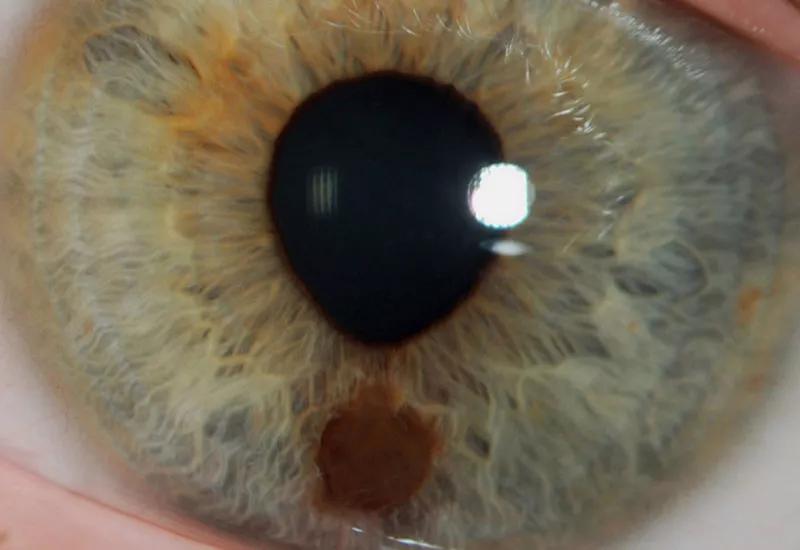
Melanoma in the eye is known as ocular melanoma or uveal melanoma, depending on where it develops. It can affect pigment cells inside the eye, including the uvea, which includes the iris, ciliary body, and choroid. Some eye melanomas cause visible changes, but many begin in areas you cannot see in a bathroom mirror.
Possible symptoms include blurry vision, flashes of light, floaters, a growing dark spot on the iris, a change in pupil shape, loss of peripheral vision, or a shadow in the visual field. However, ocular melanoma may not cause symptoms early. That is one reason routine dilated eye exams are important, especially for adults with risk factors or unexplained vision changes.
Do Not Self-Diagnose Eye Spots
Not every freckle in the eye is melanoma. Many eye spots are benign. But if you notice a new or changing dark spot in the eye, sudden visual changes, or persistent floaters or flashes, get evaluated by an eye care professional. The eye is not a place for “let’s see what happens” medicine.
Other Hidden Areas Worth Checking
The five places above are some of the strangest, but they are not the only ones. Melanoma can also appear on the scalp, behind the ears, between the toes, under breasts, around the buttocks, and in skin folds. Hair, clothing, jewelry, body shape, and simple awkwardness can all hide suspicious spots.
Use a full-length mirror, a hand mirror, and good lighting. Check your scalp with a comb or ask a hairstylist, partner, or friend to help. Look between toes. Lift skin folds. Inspect the back of your neck and ears. This is not vanity; it is maintenance. Cars get oil changes. Teeth get cleanings. Skin gets checked.
Who Is at Risk for Melanoma?
Anyone can get melanoma, but certain factors raise risk. These include a history of sunburns, tanning bed use, fair skin, many moles, atypical moles, a family or personal history of melanoma, weakened immune system, older age, and heavy lifetime UV exposure. People with darker skin can also develop melanoma and may be more likely to have melanoma in less sun-exposed areas such as the palms, soles, and nails.
The dangerous myth is that only pale people who burn easily need to worry. That belief can delay diagnosis in people with brown or Black skin. Melanin offers some natural UV protection, but it does not make anyone immune to skin cancer. Melanoma does not check your complexion before making bad decisions.
How to Do a Better Self-Check
A useful self-check takes about 10 minutes once a month. Choose a regular date, such as the first Sunday of the month or the day you pay bills, because nothing says “adult life” like combining finances with mole surveillance.
Simple Monthly Checklist
- Check your face, lips, ears, neck, and scalp.
- Look at the front and back of your torso.
- Raise your arms and inspect both sides of your body.
- Check arms, elbows, palms, fingernails, and between fingers.
- Inspect legs, ankles, soles, toenails, and between toes.
- Use a mirror to check the buttocks, genital area, lower back, and back of thighs.
- Take photos of spots you want to monitor for change.
Look for anything new, changing, bleeding, itching, painful, crusting, non-healing, unusually dark, or simply different from your other spots. Dermatologists sometimes call this the “ugly duckling” sign: one spot looks unlike the rest of your skin markings.
When to See a Doctor
Make an appointment if you notice a spot that changes, a nail streak that widens, a sore that does not heal, a dark patch inside the mouth, unexplained bleeding from a hidden area, or vision changes that persist. You do not need to be certain it is melanoma before calling. That is the doctor’s job. Your job is to notice the weird thing and not pretend it is part of your personality now.
A dermatologist may use a dermatoscope to examine suspicious skin or nail changes. If needed, they may perform a biopsy, which means removing a sample of tissue for lab testing. For eye symptoms, an ophthalmologist can examine the inside of the eye using specialized tools. For oral, nasal, genital, or anal symptoms, your primary care doctor may refer you to the appropriate specialist.
Prevention Still Matters, Even for Hidden Melanoma
Not every melanoma is caused by UV exposure, but sun safety remains one of the most important ways to lower overall skin cancer risk. Use broad-spectrum sunscreen with SPF 30 or higher, wear protective clothing, seek shade, avoid tanning beds, and protect your eyes with UV-blocking sunglasses. Sunscreen is not a force field, but it is a lot better than hoping your skin “understands the assignment.”
For hidden melanoma, prevention also means awareness. Check areas you usually skip. Mention nail, mouth, foot, genital, or eye changes to a professional. Keep routine dental, eye, gynecologic, and dermatology appointments when appropriate. Hidden places are less scary when they are not ignored.
Real-Life Experiences and Practical Lessons From Hidden Melanoma Awareness
Many people who discover suspicious melanoma signs in strange places describe the same first reaction: disbelief. A dark line under a toenail seems more like a bruise than cancer. A spot on the sole feels like a wart. A shadow in vision sounds like aging eyes, screen fatigue, or too much late-night scrolling. A sore in the mouth is easy to blame on spicy chips, dental irritation, or one heroic bite of pizza that was clearly too hot.
One common experience is the “I waited because it didn’t hurt” story. Hidden melanoma often does not announce itself with dramatic pain. A person may notice a nail streak for months and keep covering it with polish. Someone else may see a dark patch on the bottom of the foot and assume it is from running shoes. Another may mention floaters or blurry vision only after the symptom starts interfering with reading or driving. The lesson is simple: painless does not always mean harmless.
Another experience involves embarrassment. People may hesitate to report spots near the genitals, buttocks, anus, or under the breasts. That hesitation is understandable, but doctors have seen more body parts than a medical textbook convention. A professional exam is not a social event; it is healthcare. If a spot is changing, bleeding, or not healing, embarrassment should not get the deciding vote.
Dental visits and eye exams can also become unexpected safety nets. Dentists may notice unusual pigmented patches in the mouth. Eye doctors may detect suspicious internal eye changes during a dilated exam before symptoms are obvious. Hairstylists may spot scalp lesions. Nail technicians may notice a dark streak that does not look like ordinary trauma. These experiences show why routine care matters. Sometimes the person who catches the clue is not the person you expected.
Families also play a role. A partner may notice a changing mole on the back. A parent may see a dark spot on a child’s foot. An adult child may encourage an older relative to get a nail streak checked. Skin checks can feel awkward at first, but they quickly become normal. Think of it as teamwork with better lighting.
The most useful habit is taking photos. A clear, dated photo of a spot, nail streak, or patch can help you see whether it is changing. Memory is unreliable. Photos are less dramatic. They do not say, “Maybe it was always like that.” They say, “Here is what it looked like three weeks ago.”
The biggest takeaway from these experiences is not panic. It is respect. Respect strange symptoms. Respect your intuition when something looks different. Respect the fact that melanoma does not always follow the rules people expect. And most of all, respect early action. A quick appointment may bring reassurance, and if it does reveal something serious, early detection can make a major difference.
Conclusion
Melanoma is famous for showing up as a changing mole on sun-exposed skin, but it has a sneaky side. It can develop under nails, on soles and palms, inside the mouth or nose, around mucosal tissues, and even in the eye. These strange places are easy to miss because they are not part of the usual “check my arms and face” routine.
The good news is that awareness gives you an advantage. Look at the places you normally skip. Use the ABCDE rule, but also pay attention to non-healing sores, nail streaks, unusual dark patches, unexplained bleeding, and vision changes. When in doubt, let a medical professional decide. Your skin, nails, mouth, feet, and eyes all deserve a little attention. Melanoma may be sneaky, but you can be sneakier.