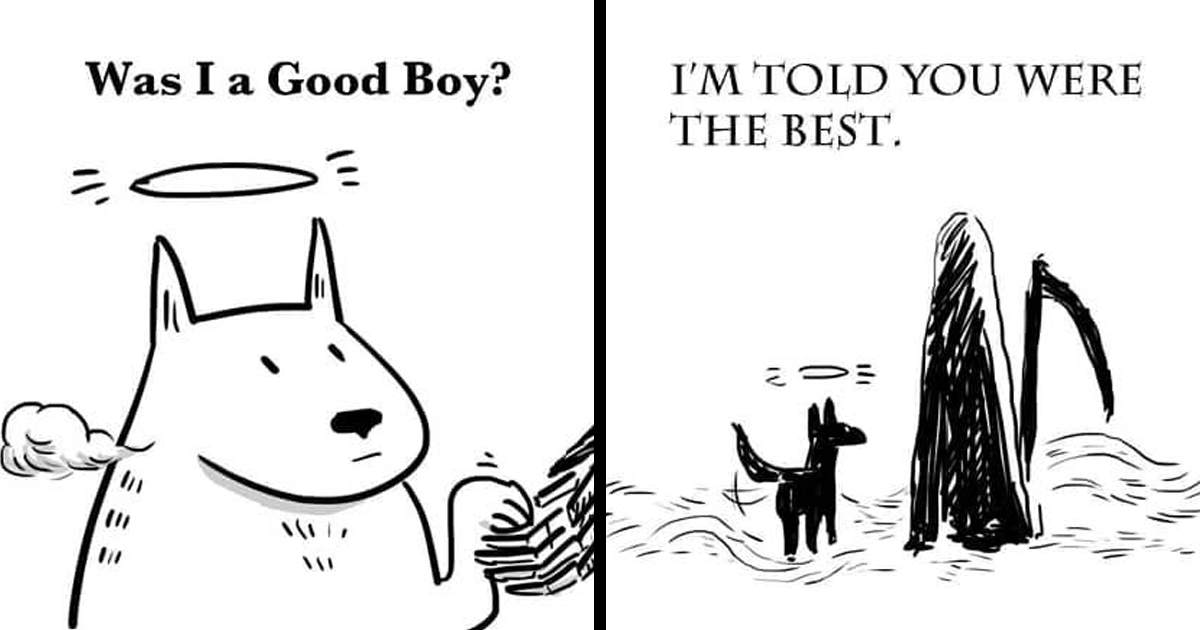
Living with a dog is not so much “owning a pet” as it is sharing your home with a four-legged roommate who has no concept of personal space, zero financial responsibilities, and the emotional range of a Shakespearean actor trapped inside a tennis-ball factory. That is exactly why Xibang’s dog comics hit so hard. They are funny, sweet, slightly chaotic, and painfully accurate in the way only dog people truly understand.
The collection often known as “30 Comics That Show What Living With A Dog Is Really Like, By Xibang” captures the daily reality of dog life: the dramatic greetings, the snack negotiations, the couch invasions, the suspicious silence from the next room, and the deep, wordless loyalty that makes every chewed slipper feel a little less tragic. Xibang, also known online as Seebangnow, is a Singapore-based cartoonist whose clean visual style and gentle humor make ordinary pet moments feel universal.
What makes these dog owner comics more than simple jokes is their emotional honesty. They understand that a dog can be ridiculous one second and heartbreakingly sincere the next. A dog may stare at you like you are the moon, the sun, and the entire buffet line at once. Then, five minutes later, that same dog may eat something from the sidewalk with the confidence of a food critic. Xibang’s work lives in that space between comedy and devotion.
Why Xibang’s Dog Comics Feel So Real
Many pet comics get laughs by turning animals into tiny humans. Xibang does something more charming: he imagines what dogs might be thinking while still letting them remain completely dog-like. Their logic is simple, dramatic, and often hilariously pure. Food is important. Humans are important. Walks are sacred. The forbidden object on the floor must be investigated immediately, preferably with the mouth.
The humor works because it reflects real dog behavior. Dogs communicate through posture, facial expression, movement, sound, and routine. A wagging tail does not always mean the same thing in every situation, but every dog owner has seen that full-body wiggle that says, “You came back from the mailbox, and I have decided this is a national holiday.” Xibang’s comics exaggerate these moments without losing the truth behind them.
The Magic of Small Domestic Moments
The best slice-of-life comics do not need dragons, superheroes, or exploding planets. Sometimes the most dramatic story in the universe is a dog hearing the word “bath.” Xibang’s dog illustrations take small household scenes and make them feel epic. A human leaving for work becomes an emotional disaster. A treat bag opening becomes a religious experience. A dog lying across the bed becomes a real estate dispute.
This is why the comics connect with readers across cultures. You do not need to know a specific breed, city, or household to understand the comedy. Anyone who has lived with a dog knows that the simplest parts of the day become rituals. Morning walks. Dinner time. The zoomies. The mysterious barking at absolutely nothing. The way dogs supervise bathroom trips like unpaid security consultants.
What Living With A Dog Is Really Like
Living with a dog is a constant exchange: you give food, shelter, care, and roughly 80 percent of your camera roll; your dog gives affection, entertainment, companionship, and occasional property damage. Xibang’s comics show that the experience is not polished or perfect. It is messy, loud, funny, and emotionally generous.
Dog ownership is also built around routine. Dogs learn the rhythm of a household. They know when shoes mean “walk,” when keys mean “panic,” and when the refrigerator door means “perhaps destiny has arrived.” A dog can sleep through a thunderstorm but wake instantly when cheese is touched in another room. Scientists may study canine cognition for years, but dog owners already know the truth: dogs hear snacks in a different dimension.
1. Dogs Turn Ordinary Greetings Into Major Events
One of the most recognizable themes in dog comics is the over-the-top welcome. You can leave for eight hours or eight minutes; either way, your return may be treated like a heroic comeback from a dangerous expedition. Xibang’s comics lean into this beautiful absurdity. The dog does not care whether you were at work, outside taking out the trash, or standing on the porch checking the weather. You left. You returned. The emotional fireworks must begin.
This is one of the reasons dogs are so beloved. Their affection is immediate and physical. They wag, jump, circle, bark, lean, and look at you with the wild sincerity of someone who has just rediscovered joy. In a world full of unread emails and suspicious calendar invites, that kind of welcome is powerful medicine.
2. Food Is Never Just Food
In dog logic, every meal is potentially shared. Your breakfast is “our breakfast.” Your sandwich is “a family sandwich.” Your snack is “a community event.” Xibang’s comics often tap into this soft manipulation: the soulful stare, the careful paw placement, the tragic expression of a creature who has apparently never eaten in its life despite finishing dinner 11 minutes ago.
Dog owners know this performance well. The dog will sit politely, then less politely, then with the emotional weight of a Victorian orphan. You may tell yourself you are strong. You may say, “No table scraps.” Then the eyes arrive. Suddenly you are negotiating with a furry lawyer who accepts payment in chicken.
3. Personal Space Becomes A Myth
Before living with a dog, people imagine peaceful companionship. After living with a dog, they discover that companionship often means being followed into every room, watched during every meal, and pinned under a sleeping animal who somehow weighs three times more when relaxed. Xibang’s humor understands that dogs are experts in closeness. They do not simply sit near you; they melt into you like emotional furniture.
This lack of personal space can be hilarious, inconvenient, and deeply comforting. A dog leaning against your leg while you work is a reminder that, to them, your presence matters more than your productivity. Of course, the same dog may also step on your stomach at 6 a.m. with the delicacy of a falling bookshelf. Love has many forms.
The Emotional Side Of Xibang’s Dog Comics
Xibang’s work is not only funny. It is also tender. His comics often carry a quiet awareness that pets make time feel sharper. Dogs live intensely in the present. They do not save joy for later. They do not pretend not to care. They do not hide excitement because it might seem uncool. If they love you, they show it with their whole body.
That emotional clarity is part of why dog comics resonate so strongly. They remind readers that pets are not accessories. They are companions with routines, preferences, fears, habits, and bonds. They become part of the furniture, the schedule, the budget, the family vocabulary, and eventually the heart’s permanent architecture.
The Funny-Sad Balance
The best comics about dogs often live near the border of laughter and tears. One panel may show a dog misunderstanding a human phrase in the funniest possible way. Another may show the quiet loyalty of a pet waiting, watching, or simply being present. Xibang’s style is especially good at this balance. His work can make readers chuckle, then suddenly remember every dog they have ever loved.
This is not accidental. Dog ownership itself is a funny-sad arrangement. Dogs give us years of chaos and comfort, but never enough years. That reality sits beneath many beloved pet stories. Even when the joke is about barking at the vacuum cleaner, the emotional foundation is love.
Why Dog People See Themselves In These Comics
Dog people are easy to identify. They talk to dogs in public. They have strong opinions about harnesses. They know the personality of every neighborhood dog but may not know the names of the humans holding the leashes. Their phones contain hundreds of nearly identical photos of their dog sleeping in slightly different positions. Xibang’s comics speak directly to this audience.
The comics also appeal to readers who do not own dogs but understand the emotional fantasy of dog companionship. A dog represents enthusiasm, loyalty, mischief, comfort, and a kind of social honesty that humans rarely manage. Dogs do not fake indifference. They do not pretend the walk was “fine.” If the walk was great, the tail says so. If the bath was betrayal, the eyes say that too.
Dog Body Language Becomes A Household Language
After living with a dog, people become translators of tiny signals. A certain whine means “outside.” A certain stare means “food.” A certain suspicious silence means “please investigate immediately.” Dogs teach their humans to pay attention. Their ears, tails, posture, eyes, and movement become part of daily conversation.
Xibang’s comics exaggerate these signals in a way that feels instantly readable. The wide-eyed dog, the confused dog, the overjoyed dog, the guilty-but-not-really-sorry dogthese are familiar characters in real homes. The art style may be simple, but the emotional vocabulary is rich.
The Comedy Of Dog Chaos
Every dog owner eventually learns that silence is not always peace. Sometimes silence means the dog is asleep. Sometimes it means the dog has discovered a roll of toilet paper and is creating indoor weather. Dog chaos is not random; it has themes. Shoes. Socks. unattended food. Mud. Squirrels. Doorbells. Plastic bags blowing suspiciously in the wind.
Xibang’s comics are funny because they treat dog chaos with affection rather than annoyance. The dog is not a villain. The dog is simply operating with dog priorities. Why should a shoe not be chewed? It smells like the favorite human and fits conveniently in the mouth. Why should a squirrel not be pursued? It is clearly a tiny criminal wearing a tail cape.
The Zoomies: A Classic Dog Owner Experience
No realistic comic about living with dogs would be complete without the zoomies. One moment the dog is calm. The next, it becomes a furry comet bouncing off furniture with no visible plan and tremendous confidence. Dog owners understand this as a normal release of energy. Non-dog people may mistake it for a minor indoor rodeo.
The zoomies are one of those behaviors that reveal the pure comedy of dog life. They are joyful, ridiculous, and often poorly timed. Xibang’s style is perfect for this kind of energy because his clean panels can make one sudden movement feel like a complete dramatic event.
What These Comics Say About The Human-Dog Bond
At their heart, Xibang’s dog comics are about attachment. Dogs attach themselves to human routines, and humans attach themselves to dog rituals. Over time, a dog changes the shape of a home. Walks happen because the dog needs them. Furniture arrangements change because the dog has a favorite sunny spot. Vacations, budgets, and weekend plans begin to include a creature who contributes no rent but somehow has veto power.
This is why dog ownership can feel so meaningful. It creates structure. It encourages movement. It can reduce loneliness. It gives people a reason to go outside, talk to neighbors, and notice the weather. It turns daily responsibility into companionship. Yes, it also turns clean clothing into fur storage, but life is about balance.
Dogs Make Us More Present
Dogs are masters of the current moment. They do not worry about next Thursday’s spreadsheet. They care about the smell near the tree, the hand reaching down for a scratch, the possibility of a dropped crumb, and whether the human seems sad. Living with a dog can pull people back into the present, sometimes gently and sometimes by dropping a slobbery toy directly onto a laptop keyboard.
Xibang’s comics capture this beautifully. They remind readers that dogs make life funnier because they make life more immediate. The joke is not only that dogs are silly. The joke is that they invite humans to become a little sillier too.
Why The “30 Comics” Format Works So Well
A collection of 30 comics is perfect for this subject because dog life is not one big story. It is a series of small episodes. The morning stare. The leash excitement. The forbidden snack. The dramatic nap. The suspicious bath. The heroic protection from delivery trucks. The emotional reunion after a brief separation. Each comic becomes a snapshot of a familiar truth.
This format also matches how people experience pet ownership online. Dog lovers enjoy quick, relatable moments they can send to friends with the message, “This is literally our dog.” Xibang’s comics are shareable because they are specific enough to feel true but broad enough to feel universal.
Experiences Related To Living With A Dog, Inspired By Xibang’s Comics
Anyone who has lived with a dog has a private archive of moments that would make perfect comic panels. There is the first week, when you confidently buy a bed, a bowl, a leash, and a few toys, believing you are prepared. Then the dog arrives and teaches you that preparation is adorable. The bed is ignored in favor of the laundry pile. The expensive toy is rejected for the cardboard tag it came with. The leash becomes exciting, terrifying, or delicious depending on the dog’s mood.
There is also the comedy of naming. You choose a dignified name like Winston, Luna, Daisy, or Apollo. Within three months, the dog is being called Bean, Noodle, Sir Flops, Potato, Tiny Sheriff, or “Please Drop That Right Now.” Xibang’s comics understand this kind of domestic evolution. Dogs do not merely enter a household; they create a new language inside it.
Then there are the walks. A walk sounds simple until you realize it includes athletic negotiation, neighborhood diplomacy, and forensic sniffing. The dog must inspect one pole for 47 seconds because apparently it contains breaking news. Another dog appears across the street, and suddenly your sweet companion becomes a tiny ambassador, opera singer, or sled team. Leaves move suspiciously. Squirrels commit emotional crimes. A puddle becomes either disgusting or irresistible, depending on whether you recently cleaned the floor.
At home, dogs become experts in routine enforcement. Try sleeping late past breakfast time and you may receive a cold nose to the face. Try working through the usual walk hour and you may get the stare: silent, intense, morally devastating. Dogs may not understand clocks, but they understand patterns with frightening accuracy. They know when the laptop closes. They know when shoes go on. They know the difference between “I am getting a snack” and “I am getting the leash,” even when both involve standing up from the same chair.
There is also the strange tenderness of caring for a dog through ordinary needs. Filling the water bowl. Checking paws after a walk. Making space on the couch. Learning which thunder sounds are scary. Remembering that the dog likes one blanket more than another for reasons known only to the dog and possibly ancient spirits. These small acts may not look dramatic, but they build the emotional core of pet ownership.
Dogs also make humans ridiculous in the best possible way. People who once considered themselves serious adults will sing custom songs about dinner. They will apologize to a dog for moving it slightly. They will celebrate a successful bath like an Olympic event. They will speak in full sentences to an animal who responds by tilting its head and sneezing. And somehow, none of this feels embarrassing inside the home. It feels normal. It feels like love wearing fur.
The hardest part is that dogs make time visible. A puppy becomes an adult. The wild zoomies become slower strolls. The face turns gray. The old dog sleeps more but still lifts its head when the favorite person enters the room. This is where comics like Xibang’s become more than entertainment. They preserve the small moments people wish they could keep forever: the eager eyes, the silly habits, the loyal shadow following from room to room.
That is the real beauty of 30 Comics That Show What Living With A Dog Is Really Like, By Xibang. The comics are not only about dogs being cute or chaotic. They are about the way dogs turn daily life into a series of stories worth remembering. They remind us that love is often found in tiny routines: a walk around the block, a head resting on your knee, a tail thumping against the floor, a dog looking at you as if you are the best thing that ever happened to the universe.
Conclusion
Xibang’s dog comics succeed because they are funny without being shallow and sentimental without becoming heavy-handed. They show the truth of living with a dog: the mess, the noise, the loyalty, the confusion, the comedy, and the quiet emotional depth. Dogs make homes more chaotic, schedules less flexible, and floors significantly furrier. They also make life warmer, more active, more social, and often much funnier.
For dog owners, these comics feel like a mirror. For future dog owners, they are a charming warning label. And for everyone else, they are a reminder that the best stories are often waiting near the front door, wagging their tails, hoping you brought snacks.
Note: This article is written as an original, SEO-friendly commentary and analysis based on publicly available information about Xibang’s dog comics and widely accepted pet-care knowledge. It does not reproduce the original comics or copy source text.