Some tattoo studios specialize in ink. Monolith Studio specializes in the kind of ink that makes people stop mid-sentence and say, “Wait, hold oncan I see that again?” That reaction is not an accident. Based in Brooklyn, Monolith Studio has built a reputation around contemporary tattoo artistry, especially in styles like fine line, micro realism, realism, geometric work, minimalist designs, lettering, black and grey, and ornamental tattoos. In other words, this is not a “pick a dolphin from the flash wall and hope for the best” kind of place.
What makes the studio especially interesting is its artist mix. Co-founders Okan Uckun and Oscar Akermo helped shape a studio identity that leans modern, precise, and visually sharp. Around them is a roster of artists whose specialties range from delicate fine-line tattoos and miniature realism to abstract compositions, geometric structure, and high-contrast blackwork. The result is a studio language that feels cohesive without becoming repetitivelike a playlist where every song is good, but none of them sound like lazy remixes of each other.
This article takes a closer look at 17 incredible tattoos by Monolith Studio artists through the lens of style, composition, technique, and tattoo culture. Rather than copying portfolio captions, it analyzes the kinds of standout tattoo approaches reflected in the artists’ published specialties and studio aesthetic. If you love fine line tattoos, micro realism tattoos, geometric tattoos, minimalist tattoos, or simply want to understand why some body art feels elevated and memorable, you are in the right place.
Why Monolith Studio’s Tattoo Work Stands Out
The studio’s appeal comes down to a few things. First, style specialization matters. Fine-line and micro-realism tattoos may look effortless on social media, but they are not beginner-friendly forms. Thin lines, controlled shading, spatial balance, and long-term readability all depend on technical discipline. That is why serious collectors do not just search for “good tattoo artist near me” and call it a day. They look for portfolios with consistency, healed results, and a clear command of a style.
Second, Monolith Studio sits at the intersection of trend and timelessness. Fine line, micro realism, minimal blackwork, and geometric compositions have all surged in popularity because they feel modern and personal. But the best versions of these tattoos are not trendy in the disposable sense. They are designed with enough structure to age well and enough artistic personality to avoid feeling like a copy-paste mood board situation.
17 Incredible Tattoo Directions By Monolith Studio Artists
1. The ultra-clean fine-line botanical
A fine-line botanical tattoo sounds simple until you realize how much discipline it takes to make a stem look graceful instead of wobbly, or a petal look airy instead of apologetic. This style thrives on restraint. The magic is in the confidence of each line and the amount of visual breathing room around the design. Monolith artists who specialize in fine line make these pieces feel elegant rather than overly precious.
2. The tiny micro-realism portrait that somehow has a soul
Micro realism is where tattooing starts showing off a littleand honestly, fair enough. A small portrait done well can carry expression, contrast, and mood in a very limited space. It is not just about making something look like a photo. It is about choosing what details matter most so the tattoo remains readable at a miniature scale. That balance between realism and editing is what makes the best pieces incredible.
3. The geometric tattoo that feels architectural
Geometric tattoos can easily become cold if they are all precision and no poetry. The strongest examples avoid that trap. They use symmetry, spacing, repetition, and form to create rhythm on the body. At Monolith, geometric specialists bring structure without draining the life out of the design. Think patterns that feel intentional, not roboticmore “sacred design language,” less “my printer had a spiritual awakening.”
4. The minimalist symbol that says more with less
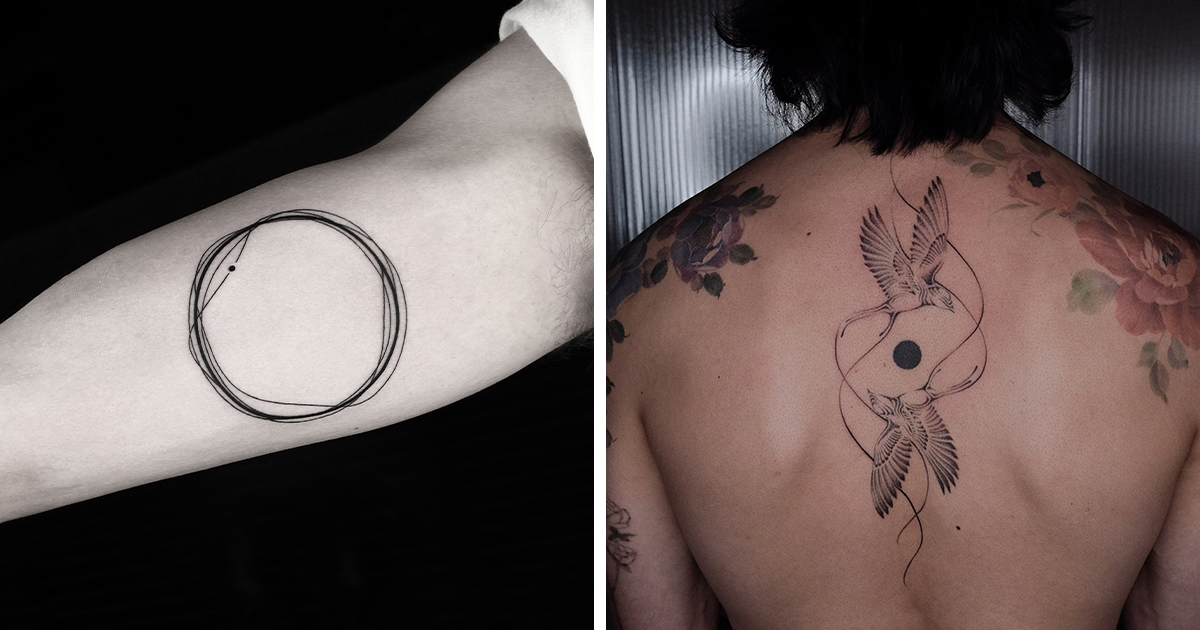
Minimalist tattoos are often underestimated because they look easy. They are not. A tiny symbol, mark, or abstract sign has nowhere to hide. If the proportions are off, everyone can tell. If the placement is wrong, the tattoo feels awkward forever. When done well, though, a minimalist piece can be more striking than a full sleeve because it carries clarity, confidence, and silence all at once.
5. The black-and-grey realism piece with cinematic depth
Black-and-grey realism is one of the most dramatic forms of tattooing because it relies on contrast, shadow, and tonal patience. The incredible versions do not just recreate a subject; they create atmosphere. Whether the subject is a face, an animal, or an object, the tattoo feels dimensional because the artist understands light, texture, and how skin changes the final image.
6. The ornamental tattoo that flatters the body
Ornamental tattoos are not just about decoration; they are about flow. A great ornamental design enhances anatomy. It follows movement, frames negative space, and creates visual balance across the body. That is why these tattoos can feel so satisfying to look at. They are not merely placed on skin. They are designed with the skin in mind.
7. The lettering tattoo that avoids cliché
Lettering is deceptively difficult. It has to read clearly, match the mood of the phrase, and sit naturally on the chosen body part. Strong lettering artists understand not just typography, but emotion. The best Monolith-style lettering tattoos feel deliberate, whether they are sharp and modern, soft and intimate, or bold enough to feel like a visual anchor in a larger composition.
8. The single-line concept that feels like a visual whisper
Single-line tattoos have a special kind of charm because they look almost impossible. One uninterrupted movement creates an image that feels airy and intelligent. The effect is subtle, but subtle does not mean forgettable. In the right hands, single-line work feels sophisticated, almost like the tattoo equivalent of a knowing smile.
9. The abstract tattoo that resists easy explanation
Not every tattoo needs to announce its meaning like a motivational poster wearing sunglasses. Abstract tattoos work because they leave room for interpretation. Texture, motion, fragmentation, and tension do the storytelling. These designs are especially powerful for collectors who want their tattoo to feel personal without being literal.
10. The fine-line portrait of an animal or pet
Pet tattoos often go wrong when they aim only for likeness and forget feeling. The strongest versions capture personality through expression, softness, gaze, or a tiny gesture that only the owner immediately recognizes. Fine-line approaches can make these tattoos feel intimate rather than heavy, especially when combined with subtle shading.
11. The micro-realism object tattoo with emotional punch
One reason micro realism is so popular is that it turns ordinary things into memory containers. A lighter, a flower, a key, a childhood toy, a camerasuddenly the tattoo is not about the object itself, but about the story attached to it. The incredible part is the compression: a full emotional narrative condensed into a small, detailed image.
12. The geometric-meets-organic hybrid
Some of the most memorable tattoos combine opposing languages: geometry with florals, a realistic eye with patterned framing, or an animal form sliced by abstract structure. Hybrids work because they create tension. The design feels alive because it balances control and freedom in the same piece.
13. The blackwork piece that uses negative space like a pro
Blackwork can be brutally effective when the artist knows how to handle negative space. Instead of filling everything in, the design uses absence as part of the image. This creates clarity, contrast, and visual snap. A strong blackwork tattoo can feel louder than color without ever raising its voice.
14. The hand or forearm tattoo designed for visibility
Visible placements demand smarter design. Hands and forearms move constantly and get noticed constantly. That means the tattoo has to be bold enough to hold attention but refined enough not to look chaotic. The best artists understand how lines curve with tendons, how spacing reads at a glance, and how certain motifs age in high-use areas.
15. The realism piece built around texture
Texture is where realism tattoos separate the serious artists from the merely enthusiastic. Skin, fur, fabric, glass, metal, smokeeach requires a different shading logic. A tattoo becomes incredible when the viewer can almost feel the surface through the ink. That illusion is technical, yes, but it is also deeply artistic.
16. The custom sleeve concept with narrative flow
A sleeve is not one tattoo. It is a visual ecosystem. Good sleeves require transitions, pacing, focal points, and enough thematic unity to feel intentional. Monolith’s multi-style expertise makes this especially interesting because a sleeve can blend realism, fine line, geometric accents, and black-and-grey atmosphere without becoming a cluttered scrapbook.
17. The tattoo that still feels personal after the trend fades
This is the real benchmark. An incredible tattoo is not just one that photographs well on day one. It is one that still feels like you after trends shift, apps update, and everyone stops pretending their body is a Pinterest board. The strongest Monolith-style tattoos succeed because they are technically sharp, visually contemporary, and emotionally grounded.
How Style, Placement, and Healing Shape the Final Result
Even the most talented tattoo artist cannot out-design bad decision-making forever. Style, placement, skin type, scale, and aftercare all affect how a tattoo heals and how it will look months or years later. Fine-line tattoos, for example, can be beautiful and refined, but they demand careful execution and realistic expectations. Tiny details packed too tightly may soften over time. That does not mean the style is flawed. It means precision and planning matter.
Placement is equally important. A micro-realism piece on the inner forearm may read differently than the same design on the hand. Areas with more movement, friction, or sun exposure can behave differently over time. This is why strong studios guide clients through both design and logistics. It is not gatekeeping. It is quality control with better lighting.
Healing also deserves more respect than people usually give it. Clean aftercare habits, protecting the tattoo from unnecessary irritation, and watching for signs of infection are part of preserving the art. In tattoo culture, everyone wants to talk about the design phase. Fewer people want to talk about being patient while their skin flakes like a croissant with commitment issues. But healing is part of the artistry story too.
What These Tattoos Say About Modern Tattoo Culture
The popularity of fine line, minimalism, lettering, ornament, and micro realism says a lot about where tattoo culture is now. People still love bold traditional work and large-scale statement pieces, of course, but there is growing appetite for tattoos that feel tailored, intimate, and visually precise. Collectors want tattoos that reflect identity without screaming over their outfit. They want craft, but also subtlety. Precision, but also personality.
That shift helps explain why a studio like Monolith resonates. Its artists work across multiple modern styles while still treating tattooing like serious visual art. The tattoos do not feel random. They feel composed. Whether the piece is a geometric pattern, a soft botanical, an abstract form, or a micro-realism keepsake, the common thread is intentionality.
Extra Reflection: The Experience of Seeing and Collecting This Kind of Tattoo Art
There is a particular feeling that comes with seeing a truly well-made tattoo in person, especially one built on fine detail. Photos help, sure, but they flatten a lot of what makes tattoo art special. In real life, you notice how the piece moves with the body, how the negative space gives it room to breathe, and how the line weight changes the mood. A geometric tattoo on a still arm can look disciplined and meditative; the same tattoo in motion suddenly feels alive. A fine-line floral can look almost fragile from afar and then reveal surprising structure up close. That shift is part of the experience.
Collectors are often drawn to this kind of work because it feels both intimate and deliberate. You are not just choosing an image. You are choosing scale, skin location, visual temperature, and how much of your story you want the world to read at first glance. A micro-realism tattoo of an object may look tiny to everyone else, while carrying an entire personal history for the wearer. That is one of the coolest things about contemporary tattoo culture: the design can be aesthetically impressive and emotionally private at the same time.
There is also an interesting psychological side to highly refined tattoos. The cleaner and more intentional a piece looks, the more viewers assume there must be a deeper meaning behind it. Sometimes that is true. Sometimes the meaning is simply, “I loved the composition and wanted excellent art on my body.” And honestly, that is valid. Not every tattoo has to be a coded autobiography. Sometimes the joy is in craftsmanship itselfrecognizing that a single elegant line or a carefully shaded tiny portrait can be worth wearing for the same reason someone hangs art on a wall.
The studio experience matters, too. Contemporary tattoo clients are usually more informed than they used to be. They compare portfolios, study healed work, think about placement longevity, and ask sharper questions about design translation. That changes the relationship between artist and client. The best sessions feel collaborative rather than transactional. You come in with ideas, references, emotions, and maybe a few wildly unrealistic expectations courtesy of social media. The artist then helps shape all of that into something that will actually work on skin. That momentwhen taste meets techniqueis where the strongest tattoos are born.
And then there is the long game. A tattoo does not stay frozen in its fresh, glossy debut state forever. It settles, softens, and becomes part of your visual identity. The best tattoos age with dignity because they were designed with space, placement, and skin behavior in mind from the start. That is why “incredible” should never mean just trendy or hyper-detailed. It should mean thoughtful, lasting, and visually convincing over time. When people admire standout tattoos by Monolith Studio artists, they are often responding not just to the image itself, but to the intelligence behind it.
In the end, the appeal of this kind of tattoo work is simple: it respects the body as a canvas and the tattoo as art. It does not rely on gimmicks. It relies on composition, discipline, aesthetic clarity, and a real understanding of how a design lives on skin. That is why these tattoos feel memorable. They are not chasing attention. They are earning it.
Conclusion
17 incredible tattoos by Monolith Studio artists is more than a catchy titleit is a window into what contemporary tattooing can look like when precision, style, and artistic identity all show up to do their jobs. From fine-line botanicals and minimalist symbols to geometric structures, black-and-grey realism, ornamental flow, and micro-realism storytelling, the studio’s aesthetic proves that modern tattoos can be delicate without being weak, trendy without being shallow, and highly detailed without losing emotional impact.
If there is one takeaway here, it is this: the best tattoos are not just visually cool. They are intelligently designed, technically sound, and personally resonant. That is the difference between body art you glance at once and body art you remember. Monolith Studio’s artist lineup, style range, and contemporary approach make it a compelling example of where tattoo culture is heading nextand why collectors are paying closer attention to artistry, healing, and long-term design than ever before.