Look up on a clear day and you may see something that seems suspiciously un-birdlike, un-plane-like, and very committed to drifting: a balloon. Not the birthday-party kind tangled in a tree, although those have their own dramatic career path. We’re talking about high-altitude balloons, weather balloons, research balloons, hobby balloons, commercial balloons, andoccasionallythe kind that makes defense officials use very serious microphones.
So, why are we suddenly noticing so many balloons in the sky? The short answer is not that the atmosphere recently opened a balloon outlet store. The better answer is that several forces collided: the 2023 Chinese surveillance balloon incident, improved radar attention, more public awareness, routine weather-balloon launches, expanding scientific and commercial balloon programs, and a human brain that is extremely good at spotting things once someone says, “Hey, watch for that.”
In other words, there may not be dramatically more balloons overhead. We are simply paying attention in a way we didn’t before. The sky has always been busy. We just upgraded from “pretty clouds” mode to “what exactly is that dot?” mode.
The Balloon Moment That Changed Everything
For many Americans, balloons became a national conversation in February 2023, when a large Chinese high-altitude balloon crossed North American airspace and was later shot down by a U.S. fighter jet off the coast of South Carolina. Before that event, most people associated balloons with weather reports, science fairs, county fairs, and clowns with suspiciously strong wrists. Suddenly, “balloon” became a word that could sit comfortably beside “surveillance,” “NORAD,” “airspace,” and “geopolitical tension.”
The incident did two things at once. First, it reminded the public that objects can float at altitudes far above everyday life and still matter. Second, it made officials, journalists, aviation watchers, amateur radio groups, and ordinary sky-gazers much more interested in slow-moving aerial objects. Once the story went national, the sky itself became part of the news cycle.
That attention created a classic visibility effect. When a certain type of object becomes newsworthy, people start seeing it everywhere. It is the same reason you suddenly notice one model of car after buying it, or why learning a new word makes it appear in every podcast, article, and coffee-shop conversation for the next two weeks. Balloons were not born in 2023. Our collective balloon radar was.
There Are More Ordinary Balloons Up There Than Most People Realize
One reason balloons seem common is that they actually are commonjust not always dramatic. The National Weather Service has long used radiosondes, small instrument packages carried by balloons, to measure temperature, humidity, pressure, wind speed, and wind direction in the upper atmosphere. These weather balloons are typically launched twice a day from dozens of stations across the United States and from many more locations around the world.
These launches are routine, scientific, and wonderfully unglamorous. A balloon rises, the attached instrument sends back data, the balloon expands as air pressure drops, and eventually it bursts. The radiosonde then returns by parachute. It is not a Hollywood plot. It is more like the atmosphere getting a regular checkup, except the thermometer is dangling from a balloon at roughly the height where commercial jets look tiny.
Weather Balloons: The Workhorses of Forecasting
Weather balloons help meteorologists understand what is happening above the ground, where storms grow muscles and jet streams steer weather systems like invisible traffic cops. Satellites are powerful, but radiosondes provide direct measurements from inside the atmosphere. Forecast models depend on this data to predict severe storms, hurricanes, winter weather, aviation turbulence, and sudden temperature changes.
A typical weather balloon flight may last around two hours and climb well above 100,000 feet before bursting. During that journey, it can drift many miles from its launch site. That means a small white object spotted high overhead may be less “international thriller” and more “Tuesday morning forecast support.” Not every dot in the sky is a spy. Some are just doing humidity homework.
Radar Got Better at Seeing Slow, Weird Things
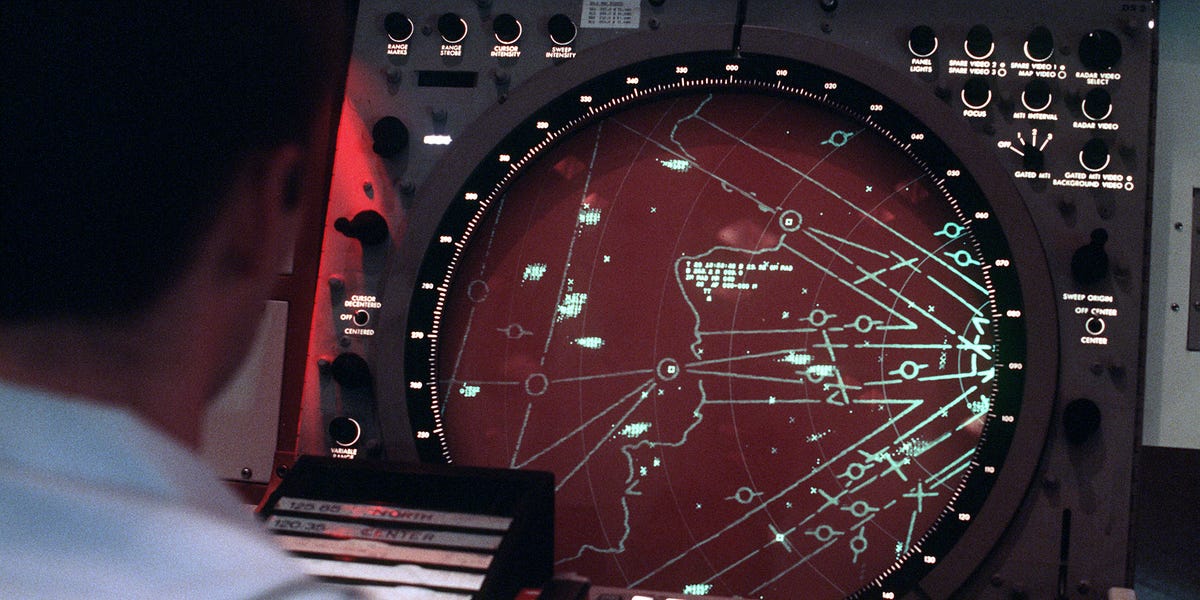
Another reason balloons became more noticeable is that detection systems were adjusted after the 2023 incident. Air-defense radar is designed primarily to identify obvious threats, such as aircraft and missiles. Slow, drifting, low-signature objects can be easy to filter out because the sky is full of clutter: birds, weather, balloons, drones, and other harmless returns that nobody wants mistaken for an invasion.
After the Chinese balloon episode, officials paid closer attention to objects that moved slowly or appeared at unusual altitudes. That does not necessarily mean more objects appeared. It means systems became more sensitive to objects that had previously been ignored, filtered, or treated as low priority. Imagine cleaning your glasses and suddenly noticing every speck of dust on the bookshelf. The dust did not hold a meeting and multiply. Your vision changed.
This is why the phrase “we’re seeing more of them” matters. The increase is partly about detection and classification, not necessarily a massive boom in balloon launches. When radar filters are narrowed, operators can catch more odditiesbut they also have to sort through more harmless objects. Better awareness comes with more homework.
Science Loves Balloons Because Balloons Are Cheap Near-Space Elevators
High-altitude balloons are not just for weather forecasting. NASA, universities, research teams, and private companies use scientific balloons to carry instruments into the stratosphere. These balloons can support astronomy, atmospheric chemistry, climate research, solar studies, cosmic-ray experiments, technology demonstrations, and space-biology investigations.
Why use a balloon instead of a satellite? Cost and flexibility. Launching a satellite is expensive, complicated, and not exactly a “let’s try this next weekend” activity. A balloon can carry instruments above much of the atmosphere at a fraction of the cost and can often be recovered, studied, upgraded, and flown again in a later campaign. It is not as permanent as a satellite, but it is far cheaper than putting your science project on a rocket and hoping accounting does not faint.
NASA’s Scientific Balloon Program supports multiple campaigns each year, including flights from places such as New Mexico, Texas, Antarctica, and other launch regions depending on mission needs. Some research balloons can be enormouslarge enough to make a backyard party balloon look like a raisin with ambition. These missions can reach altitudes near 120,000 feet and carry sophisticated payloads for science that would be difficult or costly to perform from the ground.
Commercial Balloon Technology Is Growing, Too
Private companies are also developing long-duration balloon systems for weather data, communications, remote sensing, and atmospheric research. Some modern balloons are designed to remain aloft for weeks, adjust altitude, collect repeated vertical profiles, and transmit data by satellite. This is especially valuable over oceans and remote regions where conventional weather observations are sparse.
That matters because weather does not politely form only near instrumented airports. Storms develop over water, mountains, deserts, and remote terrain. Commercial balloon systems can help fill observational gaps, especially as artificial intelligence and advanced forecast models demand more high-quality atmospheric data. The better the measurements, the better the forecast. The atmosphere is a tricky roommate; it helps to check on it frequently.
At the same time, more balloon activity creates more need for coordination. The Federal Aviation Administration regulates certain unmanned free balloons under airspace rules, including requirements for equipment, tracking, and notification. Serious balloon operators do not simply whisper “good luck” and release a scientific payload into the sky. They must consider aviation safety, tracking, communications, and recovery.
Hobby Balloons and Amateur Radio Add to the Sky Traffic
Not every high-altitude balloon comes from a government agency or research lab. Hobbyists, schools, amateur radio clubs, and STEM programs launch balloons for education and experimentation. These may carry small cameras, GPS trackers, sensors, or tiny radio transmitters. For students, launching a balloon can turn abstract science into a real adventure: one minute they are learning about pressure and temperature, and the next they are chasing a payload through a field like very polite storm chasers.
Some hobby balloons are extremely small compared with major scientific or surveillance balloons. “Pico balloons,” for example, can carry lightweight transmitters and travel long distances if conditions are favorable. These projects are usually benign, but after high-profile security incidents, even harmless hobby balloons can attract attention if they appear in unexpected places or at unusual altitudes.
That is one of the odd lessons of the balloon era: context matters. A small floating object that once might have been ignored can now trigger questions. Who owns it? What is it carrying? Is it tracked? Is it in controlled airspace? Is it a research device, a weather instrument, a hobby project, or something less innocent? The object may be simple, but the questions around it can get complicated fast.
Why Balloons Are Hard to Interpret From the Ground
From the ground, high-altitude balloons can be surprisingly deceptive. They may look like stars, dots, jellyfish, reflective spheres, slow-moving aircraft, or mysterious white blobs. Their apparent motion depends on wind, altitude, sunlight, and the observer’s perspective. A balloon can seem stationary because it is very far away, or it can appear to move strangely because winds at different altitudes are doing different things.
Sunlight adds another layer of confusion. A balloon high in the atmosphere may remain lit after the ground below is in twilight, making it stand out dramatically against a darker sky. Cameras can exaggerate brightness, blur shape, or compress distance. A tiny object may look huge when zoomed in, while a huge object can look tiny when viewed from miles away. The sky is basically a natural optical-illusion factory with excellent ventilation.
This is why officials and aviation experts avoid jumping to conclusions based only on a video clip or a blurry phone photo. Identification requires altitude, path, speed, radar data, flight notices, weather conditions, and sometimes recovery of the payload. A balloon that looks suspicious may be boring. A balloon that looks boring may be important. The difference is often data, not drama.
The Role of Social Media: The Sky Now Has an Audience
Another major reason we notice balloons more often is that every unusual sight now has an instant publishing platform. Twenty years ago, someone might have seen a strange object, mentioned it at dinner, and moved on. Today, the same person posts a shaky video with the caption, “Anyone know what this is?” Within minutes, the replies include weather balloon, spy balloon, aliens, swamp gas, drone, secret aircraft, and someone’s uncle who “used to work near a base.”
Social media accelerates attention. One sighting becomes a regional curiosity. A regional curiosity becomes a national headline. A national headline becomes a thousand people looking up during lunch. Then more sightings appear, some related and many not. The result is a feedback loop: more attention produces more reports, and more reports produce more attention.
This does not mean every report is silly. Public observations can be useful, especially when people share location, time, direction, and photographs. But viral attention can also make ordinary objects feel extraordinary. A balloon drifting quietly at 90,000 feet does not care whether it is trending. It has no publicist. Unfortunately for the balloon, the internet does.
Are Balloons Dangerous?
Most balloons are not dangerous to people on the ground. Weather balloons and many research balloons are designed to burst, descend by parachute, and be recovered or safely disposed of. Operators often label radiosondes with return instructions. In many cases, finding one is less like discovering secret technology and more like finding a lost science lunchbox.
However, balloons can raise safety concerns. Large payloads, long-duration flights, and objects drifting near aviation routes require careful coordination. Aviation authorities take these issues seriously because aircraft operate in the same atmosphere. Even a relatively lightweight object can become a concern at high speed or high altitude. That is why regulations, tracking, flight planning, and communication with aviation officials matter.
Security concerns are separate but real. High-altitude platforms can be used for surveillance because they can linger, carry sensors, and operate below orbital satellite paths. Balloons have been used for military observation for centuries, and modern payloads can be far more advanced than anything carried by early balloonists. Still, it is important not to treat every balloon as a hostile device. The sky contains science, commerce, education, weather tools, and yes, occasionally, geopolitical weirdness.
Why Balloons Still Matter in the Age of Satellites and Drones
It is tempting to assume balloons are outdated because we have satellites, drones, aircraft, and powerful computer models. But balloons remain useful precisely because they are simple, efficient, and capable. They can reach high altitudes without engines. They can carry instruments above most of the atmosphere. They can collect direct measurements that remote sensors cannot always provide. And compared with rockets or satellites, they are relatively affordable.
For weather forecasting, balloons offer vertical profiles of the atmospherelayer-by-layer information that helps models understand what is happening from the surface into the upper air. For science, they provide access to near-space conditions without the full cost of orbital missions. For education, they turn physics into an unforgettable field trip. For commercial weather companies, they may help fill global data gaps.
The balloon is old technology, but old does not mean obsolete. The wheel is old, too, and nobody is mocking luggage for using it. Balloons endure because floating is still a clever way to go up.
Why We’re Noticing Them Now: The Big Picture
The sudden balloon boom in public awareness is really a mix of five trends. First, the 2023 surveillance balloon incident made balloons newsworthy. Second, defense systems and officials began paying closer attention to slow-moving aerial objects. Third, weather balloons continued their routine work, which many people had never known about. Fourth, scientific and commercial balloon programs kept expanding. Fifth, social media turned individual sightings into shared events.
Put together, these forces create the feeling that the sky has changed. In some ways, it has: technology, monitoring, and commercial activity are evolving. But in another sense, what changed most is us. We are looking up more carefully. We are asking better questions. We are comparing photos, checking flight paths, and learning that the air above us is not empty space but a layered, moving, instrument-filled environment.
That awareness can be healthy when it leads to curiosity instead of panic. The correct response to every balloon is not “duck and cover.” Sometimes it is “check the weather service.” Sometimes it is “that might be a research mission.” Sometimes it is “call the proper authorities if it appears unsafe or unusual.” And sometimes it is simply “wow, the atmosphere is busy today.”
Real-Life Experiences: What It Feels Like to Notice Balloons Everywhere
The first time you truly notice a high-altitude balloon, it can feel like your brain has found a typo in the sky. There is the blue background, the normal clouds, the occasional airplane trailand then one bright dot that does not behave like the rest. It moves slowly, or maybe it does not seem to move at all. You stare at it longer than you planned. Suddenly you are not walking to the mailbox; you are conducting an unpaid aerospace investigation in slippers.
Many people describe the same pattern. At first, they think the object is a star visible in daylight, which is usually a clue that something strange is happening. Then they wonder if it is a plane, but it has no obvious wings or contrail. A drone? Too high. A planet? Wrong time. A balloon? Maybe. The mystery is part of the attraction. Balloons occupy that awkward space between ordinary and uncanny. They are simple objects doing extraordinary-looking things.
For families, a balloon sighting can become an accidental science lesson. A parent points upward, a child asks why it is floating, and suddenly everyone is discussing helium, air pressure, wind layers, GPS tracking, and why weather forecasts need measurements from way up there. The balloon becomes a floating classroom. It may be the rare educational moment that does not require telling anyone to put away a tablet.
For photographers and sky watchers, balloons are a reminder that scale is hard. A tiny dot at 100,000 feet may be large enough to carry instruments. A reflective balloon can look like a pearl against the blue sky. At sunset, it may glow gold or white long after the ground has dimmed. Through binoculars, it might show a dangling payload. Through a phone camera, it might look like a pixel that has made questionable life choices.
People who live near weather offices, research ranges, military corridors, or balloon launch regions may have more frequent experiences. They may see balloons rise in the morning or evening, drifting upward until they become almost invisible. Others encounter the ending rather than the beginning: a radiosonde landing in a field, a small parachute caught in a tree, or a labeled instrument package asking to be returned. There is something charming about finding a piece of the forecast in your pasture.
Of course, recent headlines have changed the emotional tone. A sighting that once felt whimsical may now feel suspicious. That is understandable. Public awareness grew through a security story, not a children’s science museum exhibit. But experience helps restore balance. The more people learn about weather balloons, research flights, and airspace rules, the easier it becomes to separate reasonable concern from sky-based imagination.
A good habit is to observe before concluding. Note the time, location, direction, apparent movement, weather conditions, and whether the object is near airports or restricted areas. Check local National Weather Service information, aviation notices, or reputable local reports. If something appears to pose a safety risk, report it through appropriate channels. If it is simply drifting far above you, enjoy the moment. The sky is doing one of its quieter magic tricks.
In the end, noticing balloons can make the world feel larger. It reminds us that above the familiar rooflines and streetlights, there is an active atmospheric highway carrying instruments, experiments, winds, data, and occasionally mystery. Some balloons help predict tomorrow’s storm. Some test technology for future missions. Some belong to hobbyists chasing radio signals across continents. A very small number become international incidents. The trick is learning which is which without assuming every floating dot is auditioning for a spy movie.
Conclusion
We are suddenly noticing so many balloons in the sky because balloons moved from the background of modern life into the foreground of public attention. Weather balloons have been launching for decades. NASA and researchers have long used high-altitude balloons for science. Hobbyists and companies continue to experiment with lightweight platforms. What changed is the level of awareness, detection, and concern after a major surveillance incident put balloons on every front page.
The sky is not empty, and it never was. It is a working space filled with aircraft, satellites far above, drones lower down, weather tools, research platforms, and drifting objects that ride the winds. Balloons are part of that system because they remain surprisingly useful: affordable, adaptable, and capable of reaching altitudes where the air is thin and the data is valuable.
So the next time you see a pale dot floating high above, do not panicbut do not dismiss curiosity either. It might be measuring the atmosphere, carrying a telescope, testing new technology, transmitting amateur radio data, or simply reminding us that the sky has layers we rarely think about. Balloons are not suddenly everywhere. We are simply, finally, looking up.
Note: This article is an original synthesis based on publicly available information from reputable U.S. government, aviation, science, and major news sources, including NOAA, the National Weather Service, the FAA, NASA, the U.S. Department of Defense, AP, Reuters, Smithsonian Magazine, Scientific American, and Popular Science. No source links are inserted in the body per publishing requirements.