Note: This article is based on publicly reported information from major news organizations and official updates. It discusses a violent attack and survivor accounts with care, avoiding unsupported claims while preserving the emotional truth of the story.
There are moments in life when time stops being time. Seconds stretch like rubber bands. Noise becomes a blur. A parent’s brain, usually busy with snacks, sunscreen, and whether someone has lost a shoe, suddenly narrows to one question: Where is my child?
That was the terrifying reality for Wayne and Vanessa Miller during the Bondi Beach attack in Sydney, Australia, when a joyful Hanukkah celebration turned into chaos. Their 3-year-old daughter, Gigi, vanished from sight as gunfire erupted around families gathered near one of the world’s most famous beaches. In the confusion, panic, and unimaginable fear, the little girl was protected by a stranger, Jessica Rozen, who used her own body to shield the child from danger.
The story has traveled far beyond Australia because it contains two emotions that every parent understands instantly: the horror of losing sight of a child in danger, and the overwhelming gratitude of finding that child alive because another person chose courage over self-preservation.
The Bondi Beach Attack: A Celebration Shattered
The attack took place on December 14, 2025, during a public Hanukkah event often described as “Chanukah by the Sea.” Families had gathered at Bondi Beach for music, food, children’s activities, and the kind of community atmosphere that usually produces sticky fingers, happy photos, and at least one child demanding another donut.
Then gunfire broke out.
Authorities later described the attack as a terrorist incident targeting the Jewish community. Public reports identified the alleged attackers as a father and son. One was killed at the scene, while the other survived and later faced numerous charges, including murder and terrorism-related offenses. The attack killed 15 victims and wounded dozens more, making it one of Australia’s deadliest modern mass shootings.
For the families on the ground, however, the first minutes were not about national security, legal charges, or political fallout. They were about survival. Parents grabbed children. Strangers pulled one another down. People ran, crawled, hid, and searched. The beach, normally a postcard of blue water and summer ease, became a place of terror.
Wayne And Vanessa Miller’s Panic: “Where’s My Little Girl?”
Wayne and Vanessa Miller had gone to the event with their children. Like many parents at a crowded family celebration, they were not all standing in one neat little family formation. That is normal. Children drift toward music, face painting, snacks, friends, and anything that sparkles. Parents divide and conquer. One watches this child, the other follows that child. Family outings are basically small logistics operations with juice boxes.
But when shots rang out, normal disappeared.
Wayne was with one of the children when he heard what he initially thought might be fireworks. Then came the unmistakable realization: it was gunfire. Vanessa, separated in the chaos, called him and asked whether he had Gigi. He did not.
That was the moment every parent dreads: the child was not with mom, not with dad, and not visible.
Vanessa later described seeing Gigi dancing one moment and gone the next. As bullets flew, she screamed for her little girl. Wayne began searching after the gunfire stopped, moving through a scene no parent should ever have to enter. He was looking for a pink skirt, a tiny body, any sign that his daughter had survived.
Then he found her.
The Stranger Who Protected Gigi
Gigi was underneath Jessica Rozen, a pregnant mother who had attended the same event with her own family. Jessica had reportedly been searching for her own young child when she saw Gigi alone and crying. Rather than run past, freeze, or look away, she went to the little girl and covered her with her body.
In video and survivor accounts, Jessica can be heard comforting the child, repeating words meant to steady a terrified 3-year-old in a situation no child could possibly understand. She told Gigi she had her. She told her they would be safe. In the middle of gunfire, Jessica became a human shield, a calm voice, and a temporary mother to a stranger’s child.
Some headlines described Jessica as having “taken a bullet” for Gigi. More careful public reporting described her as injured and bloodied while shielding the child, with photos showing her covered in blood and accounts noting cuts and grazes. What is not in dispute is the central act: Jessica placed herself between a child and danger. That decision helped save Gigi’s life.
When Wayne found them, Jessica reportedly reassured him that the blood he saw was not Gigi’s. Imagine that moment: a father seeing blood, bracing for the worst, and then hearing the words that pull him back from the edge. His daughter was alive. Petrified, yes. Forever changed, perhaps. But alive.
Why Jessica Rozen’s Act Hit So Hard
People often ask what they would do in a crisis. The honest answer is: nobody truly knows until the crisis arrives wearing steel-toed boots and kicking down the door. Fear is not a moral failure. Freezing is human. Running is human. Searching for your own child first is human.
That is what makes Jessica’s actions so extraordinary. She was not a trained tactical officer. She was not there as security. She was a mother at a family event, pregnant, frightened, and looking for her own child. Yet when she saw another child exposed and crying, she acted.
Jessica later rejected the “hero” label, reportedly saying she was just a mother. That humility is part of why the story resonates. The best people rarely enter a crisis saying, “Please stand back, I am about to become inspirational.” They simply do the next right thing. Sometimes the next right thing is small. Sometimes it is enormous. Sometimes it is lying over a child on the ground while bullets move through the air.
Heroism Was Everywhere At Bondi Beach
Jessica’s story became one of the most widely shared accounts from the Bondi Beach attack, but it was not the only act of courage. Reports described bystanders helping the injured, people guiding children to safety, first responders moving toward danger, and a man named Ahmed al-Ahmed tackling and disarming one of the shooters despite being seriously injured.
Those details matter because mass violence often reduces people to numbers: 15 dead, dozens injured, one suspect charged, one suspect killed. Numbers are necessary, but they are not enough. They do not tell us about the people who pulled strangers behind barriers. They do not describe the grandmother who protected a child, the police officers who responded under fire, or the civilians who refused to let terror have the final word.
In the Bondi Beach attack, the horror was real. So was the humanity.
The Human Cost Behind The Headlines
The victims of the Bondi Beach attack included children, elders, community leaders, and ordinary people who had come to celebrate a holiday centered on light. Among those publicly remembered were a 10-year-old girl, rabbis, a photographer, a Holocaust survivor, and members of families who had built lives in Australia across generations.
That context is essential. This was not merely an “incident.” It was an attack on people gathered for a religious celebration. It struck at a community already concerned about rising antisemitism. It also shook a nation known for strict gun laws and a relatively low rate of mass shootings compared with the United States.
After the attack, Australian officials discussed gun law reforms, counterterrorism reviews, public event security, and stronger responses to antisemitism. Legal proceedings against the surviving accused attacker continued into 2026, with additional charges reported months after the attack. A broader inquiry into antisemitism and social cohesion was also launched.
Policy matters. Security matters. Intelligence failures, firearm access, and public safety planning deserve serious scrutiny. But for Wayne and Vanessa, the center of the story will always be simpler and more personal: their little girl came home because someone they did not know protected her.
Why The Story Of Gigi And Jessica Spread Around The World
The internet is not always famous for compassion. Some days it feels like a giant machine designed to turn minor disagreements into Olympic events. Yet stories like this cut through the noise because they remind people what courage looks like without a cape, a spotlight, or a press conference.
Jessica did not know Gigi. Gigi was not her daughter. She had every reason to focus only on her own family. But in that moment, the boundary between “my child” and “someone else’s child” disappeared. There was simply a child in danger.
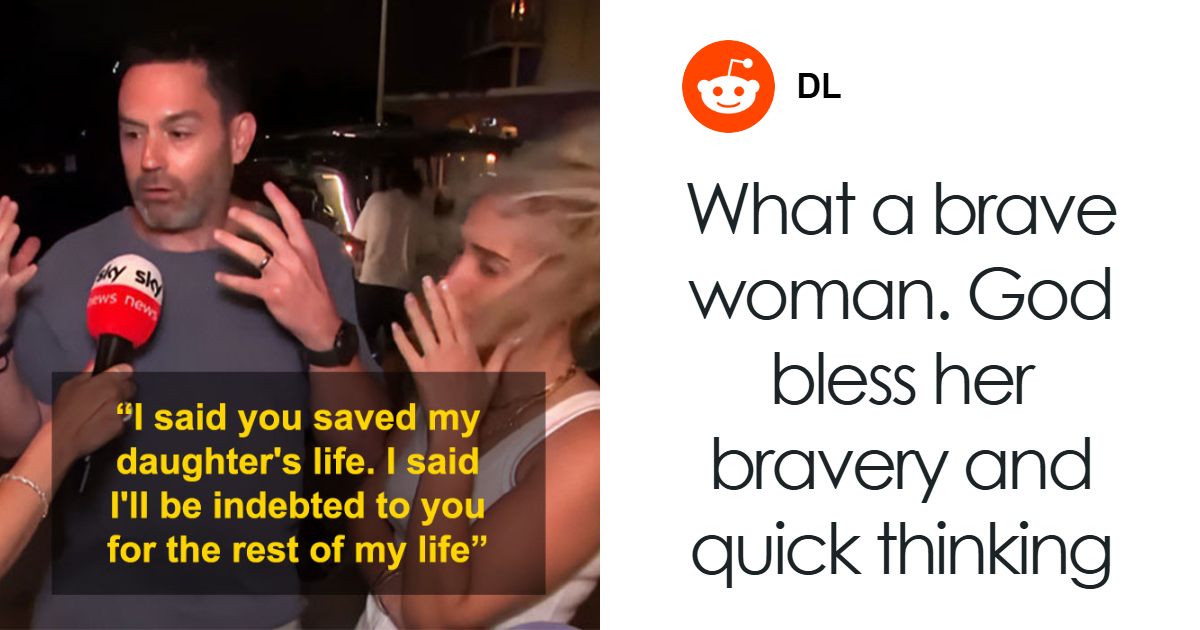
That is why Wayne’s gratitude carries so much emotional weight. To say “you saved my daughter’s life” is not a polite thank-you note. It is a lifetime sentence of gratitude. It is the kind of debt that cannot be repaid with flowers, a card, or even the world’s most sincere fruit basket. It can only be honored.
And perhaps that is why the story matters beyond the news cycle. It asks a question that is uncomfortable but important: in moments of fear, can ordinary people still choose one another?
What Parents Can Learn From The Bondi Beach Attack
No article should turn a tragedy into a tidy checklist. Real life is messier than that, and emergencies do not politely follow bullet points. Still, parents and caregivers can take practical lessons from events like Bondi Beach without living in fear.
Have A Family Meeting Point
At large public events, parents can choose a visible meeting point before everyone scatters. It might be a lifeguard tower, entrance gate, information booth, or statue. Children old enough to understand should know where to go if separated. For younger kids, even repeating “find someone in a uniform” can help.
Take A Quick Photo Before Entering Crowds
A simple photo of your child at the start of an event can help if you need to describe clothing quickly. It sounds overly cautious until the moment you cannot remember whether your child wore the blue shirt or the green one because your brain has turned into scrambled eggs.
Teach Children Names, Not Just “Mom” And “Dad”
Small children often know parents only as “Mommy” and “Daddy.” Teaching a child a parent’s real first name, phone number, or even a simple emergency card can make reunification easier. It does not have to be scary. Turn it into a game. Kids remember songs better than lectures, because children are tiny chaos creatures with excellent music storage.
Look For Helpers, But Also Be One
Fred Rogers famously advised children to look for helpers in frightening times. Bondi Beach showed the adult version: be the helper when you can. That might mean guiding someone out, comforting a child, applying pressure to a wound, sharing information calmly, or simply not blocking emergency responders while filming. Yes, the phone camera can sit this one out.
Experience-Based Reflection: What This Story Teaches Us About Fear, Courage, And Community
Stories like Wayne, Gigi, and Jessica’s stay with people because they feel painfully close to ordinary life. Most parents have experienced a miniature version of that panic: a child disappearing behind a supermarket aisle, vanishing for five seconds at a playground, or slipping out of sight in a mall. Usually, the child is found near the cereal, the swings, or a toy display, completely unaware that an adult’s soul has just left their body and returned wearing a tiny emergency helmet.
That everyday parental panic is why the Bondi Beach story lands so hard. It magnifies a familiar fear into a nightmare. The difference is that Wayne and Vanessa were not searching in a store or park. They were searching during an armed attack. Their voices, their panic, and their gratitude represent something universal: the love that makes parents run toward danger even when every instinct screams to run away.
For communities, the lesson is equally powerful. Public spaces are built on trust. We attend festivals, beach gatherings, concerts, school events, and holiday celebrations because we believe strangers around us are mostly safe. When violence breaks that trust, it does more than injure bodies. It injures the shared assumption that people can gather peacefully.
But the response at Bondi Beach also shows how trust can be rebuilt. It is rebuilt by strangers protecting children. It is rebuilt by first responders entering danger. It is rebuilt by neighbors opening doors, families comforting one another, and communities refusing to let hatred define them. Courage does not erase grief, but it gives grief somewhere to stand.
There is also an important emotional lesson in Jessica’s humility. Many people who act bravely do not feel brave. They feel scared, shaken, and confused. Later, when people call them heroes, they often resist the word because they remember the fear more clearly than the courage. That does not make the courage less real. In fact, courage without fear is not courage at all. It is just a very unusual nervous system.
For readers, the most useful takeaway may be this: heroism is not always dramatic in the way movies sell it. Sometimes it is quiet. Sometimes it is a person saying, “I got you,” to a child who is not theirs. Sometimes it is a father continuing to search when the scene in front of him is unbearable. Sometimes it is a mother screaming for her daughter because love refuses to be polite in an emergency.
The Bondi Beach attack will be remembered for its horror, its victims, and the questions it raised about security, extremism, antisemitism, and gun access. But within that darkness, the story of Gigi and Jessica offers a different kind of memory: a child shielded, a father reunited, and a stranger whose split-second decision became a family’s forever gratitude.
Conclusion
The question “Where’s my little girl?” is not just a quote from a terrifying day. It is the sound of parenthood under unbearable pressure. For Wayne and Vanessa Miller, the answer came through Jessica Rozen, a stranger who saw a frightened 3-year-old and chose to protect her as if she were her own.
The Bondi Beach attack remains a tragedy marked by loss, grief, and serious public questions. Yet amid the violence, stories of courage emerged with remarkable force. Jessica’s protection of Gigi, Ahmed al-Ahmed’s reported confrontation with a gunman, and the actions of first responders and ordinary bystanders remind us that even in the worst moments, humanity can still move faster than fear.
That does not make the tragedy less painful. It makes the bravery more necessary to remember.