Jimmy Buffett built a career around sunshine, salt air, and the appealing theory that a frozen drink could solve at least several of life’s administrative problems. That bright public image made the news of his death from a rare skin cancer especially jarring.
Buffett died on September 1, 2023, at age 76 after living with Merkel cell carcinoma for four years. His family said he continued performing during that period, but they did not publicly disclose the location of his tumor, the cancer’s stage, or the treatments he received.
Merkel cell carcinoma, commonly shortened to MCC, is uncommon enough that many people had never heard its name before Buffett’s death. Doctors, however, take it extremely seriously. It can begin as an innocent-looking, painless bump, grow rapidly, move into nearby lymph nodes, and spread to distant organs.
The encouraging news is that earlier diagnosis improves the chances of controlling the disease, while newer immunotherapy drugs have expanded the options available for advanced MCC. Here is what patients, families, and sun-loving humans should knowwithout turning every freckle into a five-alarm emergency.
What Cancer Did Jimmy Buffett Have?
Jimmy Buffett had Merkel cell carcinoma, a rare and aggressive form of skin cancer sometimes called neuroendocrine carcinoma of the skin. His official announcement, as reported by the Associated Press, stated that he had been fighting the disease for four years. He died at his home in Sag Harbor, New York, surrounded by family, friends, music, and his dogs.
It is important not to decorate the public record with guesses. No reliable public statement identified where Buffett’s cancer first appeared, whether it had spread when diagnosed, which therapies he received, or how the disease progressed. Those details remain part of his private medical history.
What his diagnosis can do is open a useful conversation about a cancer that is visually subtle, biologically aggressive, and easy to overlook.
What Is Merkel Cell Carcinoma?
Merkel cell carcinoma is a cancer that develops in the skin and has neuroendocrine characteristics. That means its tumor cells share certain features with cells involved in nerve signaling and hormone-like communication.
Researchers are still refining exactly which normal skin cell gives rise to MCC. Although the disease was named after Merkel cellstouch-sensitive cells located near nerve endingsthe explanation that every tumor simply begins in a mature Merkel cell may be too tidy for the actual biology.
MCC is dramatically less common than basal cell carcinoma, squamous cell carcinoma, or melanoma. The Skin Cancer Foundation estimates that approximately 3,000 new cases are diagnosed annually in the United States. Most patients are older adults, and American Cancer Society statistics indicate that the disease is most often diagnosed after age 70.
Rare does not mean harmless. Merkel cell carcinoma has a strong tendency to recur and metastasize. It may spread first to nearby lymph nodes and later to organs such as the lungs, liver, bones, or brain. That combinationuncommon, easy to mistake for something minor, and medically speedyis why specialists recommend prompt evaluation.
What Does Merkel Cell Carcinoma Look Like?
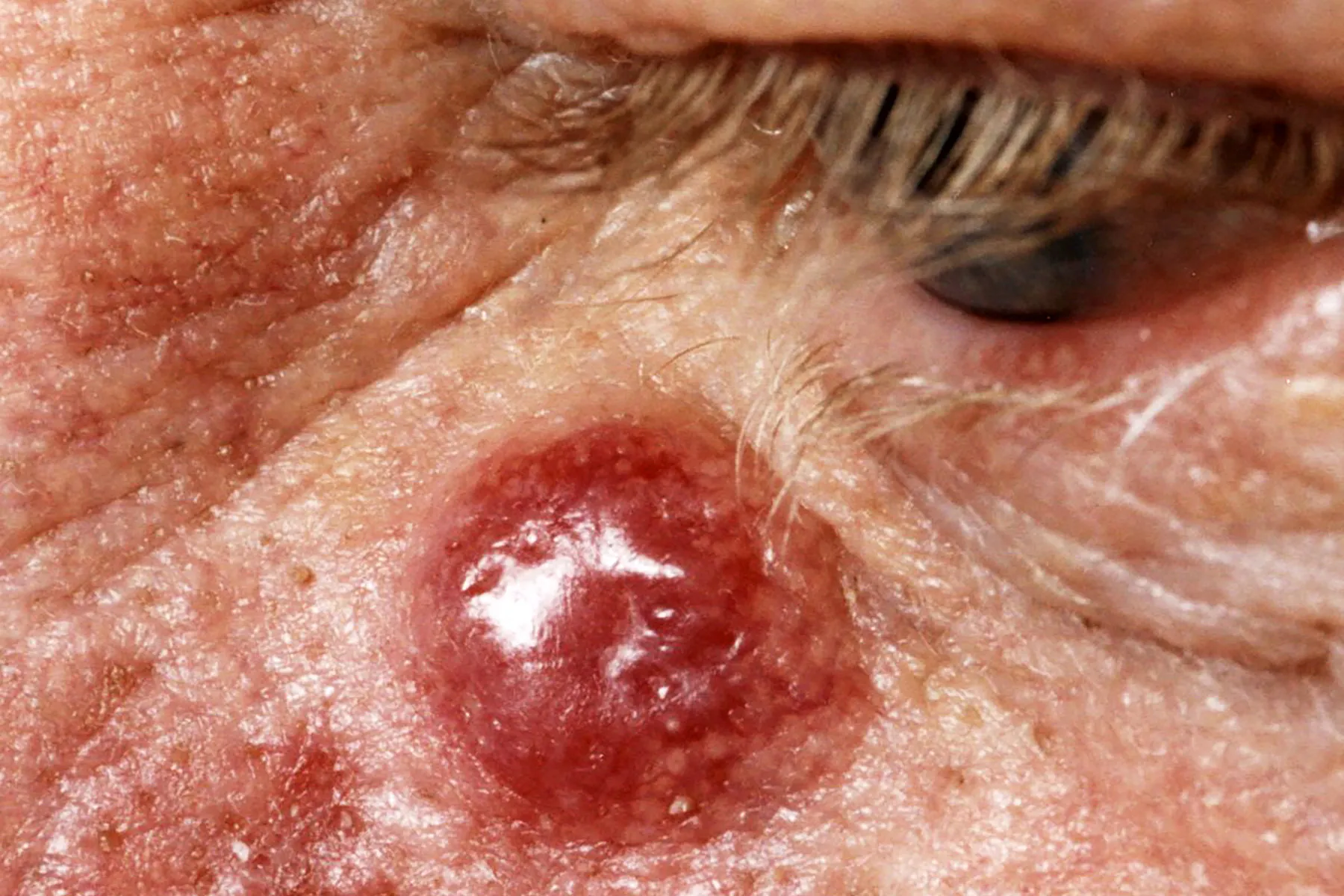
The classic warning sign is a new skin growth that is painless and enlarges quickly. It may be firm, shiny, dome-shaped, or slightly raised. Its color can be pink, red, purple, reddish brown, or similar to the surrounding skin.
The head and neck are frequent locations, but MCC can also occur on the arms, legs, trunk, and areas that do not receive obvious sun exposure. It does not always resemble a dark mole, which is one reason people may initially dismiss it as a cyst, insect bite, blemish, or other harmless bump.
The AEIOU Warning Guide
Clinicians sometimes use the mnemonic “AEIOU” to summarize common clues:
- A Asymptomatic: The growth is usually not painful or tender.
- E Expanding rapidly: It grows noticeably over weeks or months.
- I Immune suppression: Risk is higher when immune defenses are weakened.
- O Older than 50: Most cases develop later in life.
- U UV-exposed, fair skin: Ultraviolet exposure and lighter skin are frequent risk factors.
A lesion does not need to check every box. Relying too rigidly on a checklist could delay care. The practical rule is simpler: a new bump that grows rapidly deserves a professional examination, especially in an older adult or someone with a weakened immune system.
What Causes Merkel Cell Carcinoma?
MCC generally develops through one of two major biological pathways. In many tumors, genetic material from Merkel cell polyomavirus becomes integrated into the cancer cells and helps interfere with normal growth controls.
The virus itself is common, and most people exposed to it never develop cancer. MCC appears to require a rare combination of viral changes, cellular mistakes, aging, and immune vulnerability. It is therefore misleading to think of the virus as something that routinely causes cancer.
Other MCC tumors are driven largely by extensive ultraviolet damage. UV radiation can produce numerous mutations in skin-cell DNA, eventually disabling systems that ordinarily prevent uncontrolled growth. These pathways help explain why both viral biology and years of sun exposure can be important without making either one a simple, single cause.
Major Merkel Cell Carcinoma Risk Factors
Factors associated with a higher risk include:
- Being older than 50, particularly older than 70
- Having fair or easily sunburned skin
- Experiencing extensive lifetime ultraviolet exposure
- Using indoor tanning beds
- Having a history of another skin cancer
- Having a weakened immune system
- Being male, according to U.S. diagnosis patterns
Immune suppression may result from an organ transplant, HIV infection, certain blood cancers, or medications used to control autoimmune diseases. Risk factors describe population patterns, not destiny. Someone may develop MCC without an obvious risk factor, while another person with decades of sun exposure may never develop it. Biology is rude that way: it does not always read the brochure.
How Merkel Cell Carcinoma Is Diagnosed
Diagnosis begins with a skin examination and biopsy. A dermatologist or surgeon removes all or part of the suspicious growth, and a pathologist studies the tissue under a microscope.
Special laboratory stains help distinguish MCC from melanoma, lymphoma, small-cell lung cancer that has spread to the skin, and other tumors that can look similar under routine examination. Because MCC is rare, an expert pathology review may be valuable when the diagnosis is uncertain.
Sentinel Lymph Node Biopsy
MCC may reach the lymph nodes before those nodes feel enlarged. For that reason, many patients with apparently localized disease undergo a sentinel lymph node biopsy.
During this procedure, doctors identify and remove the first lymph nodeor small group of nodesmost likely to receive drainage from the tumor area. Finding microscopic cancer in a sentinel node can change both the stage and treatment plan. Memorial Sloan Kettering reports that lymph-node spread is detected in more than one-third of patients evaluated with this method.
Imaging and Staging
PET/CT, CT, MRI, or other imaging may be recommended depending on the tumor’s size, location, symptoms, lymph-node findings, and the patient’s overall circumstances.
Doctors broadly describe the cancer as:
- Localized: The cancer remains at the original skin site.
- Regional: It has reached nearby lymph nodes or surrounding tissues.
- Distant: It has spread to another part of the body.
Formal staging is more detailed and considers tumor size, whether lymph-node involvement was found clinically or microscopically, and whether distant metastases are present.
How Is Merkel Cell Carcinoma Treated?
Treatment should be individualized, ideally by a multidisciplinary team familiar with this rare disease. Dermatologists, surgical oncologists, radiation oncologists, medical oncologists, pathologists, and radiologists may all participate.
For a cancer this uncommon, seeking a second opinion at a center that regularly treats MCC can be practical rather than dramatic. The right treatment depends on the cancer’s stage, location, surgical accessibility, previous therapies, immune status, and the patient’s health and preferences.
Surgery
For many localized tumors, doctors remove the cancer along with a margin of normal-looking tissue. The objective is to eliminate microscopic disease while preserving function and appearance whenever possible.
Some carefully selected tumors may be treated with Mohs surgery, a technique in which tissue margins are examined in stages. The best surgical approach depends on the tumor’s anatomy and whether radiation therapy will also be used.
Radiation Therapy
Merkel cell carcinoma is sensitive to radiation. Radiation may be delivered to the original tumor site, the nearby lymph-node region, or both. It is frequently considered after surgery when the risk of recurrence is significant.
Radiation can also serve as the main local treatment when surgery would be difficult or medically inappropriate. In advanced disease, it may be used to shrink tumors, relieve pain, control bleeding, or address other symptoms.
Immunotherapy
Immune checkpoint inhibitors have transformed treatment for unresectable, recurrent, or metastatic MCC. These medicines remove molecular “brakes” that cancer cells use to avoid an immune attack.
FDA-approved options for advanced Merkel cell carcinoma include avelumab, pembrolizumab, and retifanlimab. Some patients experience long-lasting tumor control, although the medicines do not work for everyone.
Immunotherapy can also cause the immune system to attack healthy organs. Possible immune-related reactions may involve the thyroid, lungs, liver, intestines, skin, kidneys, joints, or other tissues. Patients should report new or worsening symptoms promptly rather than assuming they are ordinary treatment fatigue.
Chemotherapy and Clinical Trials
Traditional chemotherapy can shrink MCC, but responses are often less durable than successful responses to checkpoint immunotherapy. Chemotherapy may still be appropriate in selected situations.
Clinical trials are particularly important for patients whose cancer does not respond to immunotherapy or returns after treatment. Researchers are studying new drug combinations, radiation schedules, cellular therapies, virus-directed treatments, and strategies designed to overcome resistance.
What Is the Merkel Cell Carcinoma Survival Rate?
Prognosis depends heavily on the cancer’s stage at diagnosis, tumor characteristics, lymph-node involvement, immune status, treatment response, age, and overall health.
Using data from U.S. patients diagnosed between 2015 and 2021, the American Cancer Society reports the following five-year relative survival rates:
- Localized MCC: Approximately 79%
- Regional MCC: Approximately 66%
- Distant MCC: Approximately 31%
- All stages combined: Approximately 69%
These figures describe large groups, not a countdown clock for an individual. They also include patients treated over several years, while therapies continue to improve. A specialist can provide a more meaningful assessment using the patient’s current pathology, stage, scans, immune health, and response to treatment.
Follow-up is essential because recurrence is especially likely during the first few years after diagnosis. Surveillance may include frequent skin and lymph-node examinations, imaging for higher-risk patients, and specialized blood testing at certain treatment centers.
Can Merkel Cell Carcinoma Be Prevented?
No prevention plan can eliminate MCC risk, particularly because viral and immune factors are involved. Still, reducing UV exposure is a sensible defense against MCC and several more common forms of skin cancer.
Protective measures include:
- Using broad-spectrum, water-resistant sunscreen with an SPF of at least 30
- Reapplying sunscreen during prolonged outdoor activity
- Seeking shade when sunlight is strongest
- Wearing protective clothing, sunglasses, and a wide-brimmed hat
- Avoiding tanning beds and sunlamps
- Scheduling regular skin exams when risk is elevated
Perform Regular Skin Self-Exams
Once a month, examine the face, scalp, neck, torso, arms, legs, hands, feet, and less visible areas using mirrors or help from a partner. Do not limit the search to dark or irregular moles. MCC often looks nothing like the textbook melanoma people have been trained to fear.
When to Contact a Doctor
Schedule an appointment for a new growth that expands quickly, a changing bump, a persistent unexplained lesion, or an area that bleeds, crusts, or refuses to heal.
People with immune suppression or a previous skin cancer may need routine dermatologist examinations even when nothing seems wrong. Skin rarely sends a calendar invitation before misbehaving.
The Patient and Family Experience: What the Medical Bullet Points Leave Out
A Merkel cell carcinoma diagnosis can feel especially disorienting because many patients hear the name for the first time while sitting in an examination room. With common illnesses, people often arrive with a rough mental map. With MCC, the first reaction may be, “A Merkel what?”
That unfamiliarity can magnify fear. Patients may need the medical team to repeat the basics: where the cancer started, how certain the diagnosis is, what tests come next, and why a small skin lesion can require a large treatment conversation.
The first few weeks may move quickly. A biopsy can lead to pathology review, scans, lymph-node mapping, surgery consultations, and radiation planning. This pace may be medically appropriate for an aggressive cancer, but emotionally it can feel as though someone pressed fast-forward without handing over the remote.
Keeping one notebook or shared digital document for pathology terms, appointment dates, medication lists, test results, and questions can restore some order. Bringing another person to important appointments can also help, since even excellent listeners may miss information when they are frightened.
Living Through Treatment
Treatment experiences vary widely. Surgery may be relatively straightforward for a small lesion or more complicated when the tumor is near the eye, nose, ear, scalp, hand, or another sensitive area.
Patients may worry about scarring, wound care, movement, speech, vision, or appearance. These concerns are not superficial and should be discussed openly. Reconstructive options, rehabilitation, and supportive care can be meaningful parts of cancer treatment.
Radiation appointments may become a weekday routine for several weeks, potentially bringing fatigue, tenderness, and skin irritation. Immunotherapy may feel easier than conventional chemotherapy for some patients, but it still requires close monitoring.
New diarrhea, cough, shortness of breath, severe fatigue, rash, weakness, confusion, or hormonal symptoms should be reported promptly. With immune-related side effects, calling early can be far more useful than attempting to win a private contest in toughness.
The Emotional Weight of Surveillance
Surveillance can become its own psychological chapter. A clear scan brings relief, but the days before the next scan may produce “scanxiety”an unofficial but extremely real feeling of dread while waiting for results.
Families sometimes try to banish that anxiety with relentless optimism. A more helpful response may be honest companionship: “We do not know the result yet, but you will not face it alone.” Professional counseling, cancer support groups, spiritual care, and patient communities can also provide a place to discuss fears without having to protect everyone else from them.
How Caregivers Can Help
Caregivers often manage both emotional and practical responsibilities. They may coordinate transportation, absorb complicated explanations, monitor symptoms, collect prescriptions, prepare meals, handle insurance calls, and somehow still remember that the dog needs dinner.
Assigning specific jobs can prevent one person from becoming the entire emergency department. One relative might manage medical notes, another meals, another transportation, and another updates for friends and extended family.
Useful questions for the medical team include:
- Has the pathology been reviewed by a specialist experienced in MCC?
- Do I need a sentinel lymph node biopsy or additional imaging?
- What is the exact stage of my cancer?
- Is the treatment goal cure, long-term control, or symptom relief?
- Should radiation therapy be part of the plan?
- Am I eligible for immunotherapy or a clinical trial?
- Which side effects require an urgent phone call?
- How often will I need skin examinations and scans?
Finally, patients remain people rather than projects. Music, meals, work, jokes, grandchildren, ocean walks, and ordinary Tuesday plans still matter.
Jimmy Buffett’s public story does not reveal the medical details of his journey, but the statement that he continued performing during much of his four-year illness offers a powerful reminder: serious cancer and meaningful living can occupy the same calendar.
Conclusion
Jimmy Buffett’s death brought Merkel cell carcinoma into public view, but awareness is most valuable when it changes behavior. MCC is rare, fast-growing, and potentially dangerous, yet it can be treatableparticularly when discovered before it spreads.
The practical takeaway is not panic. It is attention. Protect your skin from excessive UV exposure, learn what is normal for your body, and show a rapidly growing or unusual lesion to a dermatologist.
For anyone facing an MCC diagnosis, specialized care matters. Surgery and radiation remain central treatments, while checkpoint immunotherapy has produced durable control for some patients with advanced disease. The medical story has continued evolving since Buffett’s death in 2023: research is active, treatments are expanding, and every patient’s outlook is individual.