Every Christmas, brands put on their shiniest emotional sweaters and try to convince us that buying a coat, a soda, or a bag of frozen peas is basically the same thing as hugging our grandmother beside a fireplace. Most years, we accept the deal. We want the music, the snow, the glowing windows, the sentimental dog, the perfectly wrapped present, and the annual reminder that capitalism has learned how to play sleigh bells.
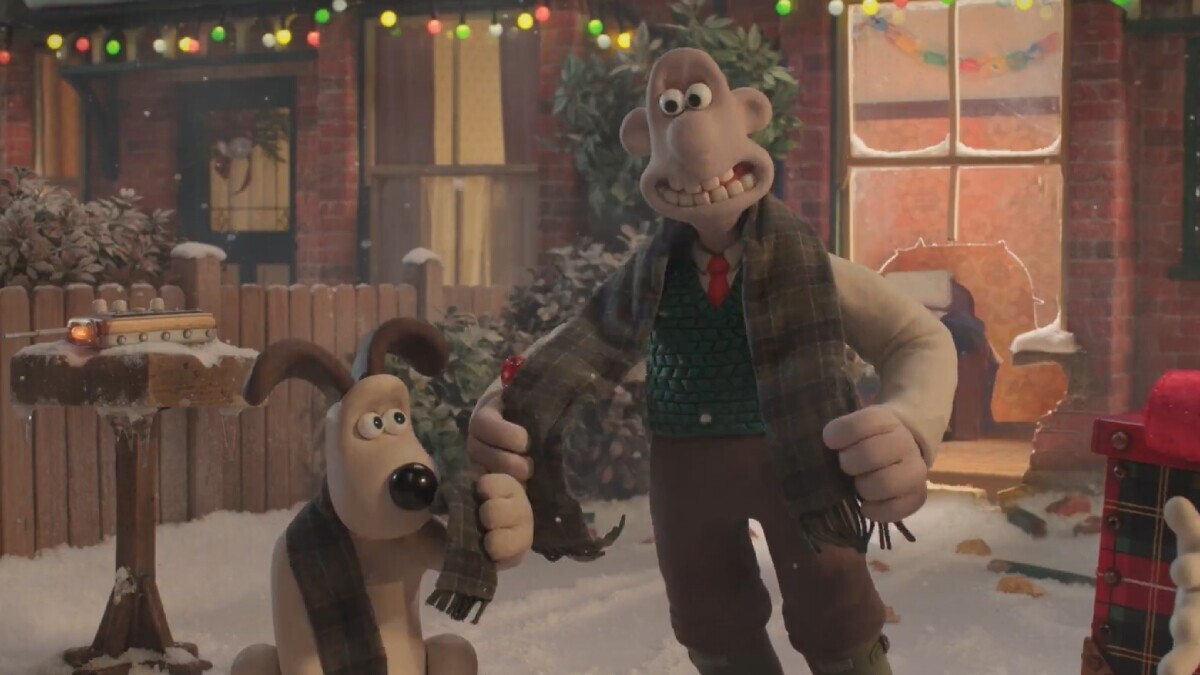
But the 2025 battle of the Christmas ads gave viewers something more interesting than another soft-focus shot of a family dinner. It offered a surprisingly sharp lesson in modern creativity. On one side was Coca-Cola, one of the most famous holiday advertisers in the world, charging into the season with another A.I.-generated version of its iconic “Holidays Are Coming” campaign. On the other side were Wallace and Gromit, the lovingly lumpy stop-motion legends from Aardman, starring in Barbour’s Christmas spot with a tartan-wrapped invention called the Gift-o-matic.
The result? Coca-Cola had the budget, the brand heritage, the red trucks, the polar bears, and the technological buzzwords. Wallace and Gromit had clay, comic timing, a nervous dog, and the emotional advantage of looking as if actual humans had touched every frame. In the contest between “A.I. holiday spectacle” and “handmade festive charm,” the old-school cheese enthusiast and his long-suffering beagle won the room.
Why This Christmas Ad Clash Mattered
Christmas advertising is not ordinary advertising. A summer commercial can shout about discounts and survive. A holiday commercial has to feel like a tiny movie. It must create warmth quickly, avoid cynicism, and make people believe the brand understands the season instead of merely renting it for six weeks.
That is why Coca-Cola’s A.I. Christmas ads received so much scrutiny. Coca-Cola is not just another brand making festive content; it helped shape the visual language of modern Christmas marketing. Its Santa imagery, red trucks, snowy towns, and “Holidays Are Coming” soundtrack have become part of the season’s commercial folklore. When that kind of brand uses generative A.I. to refresh a beloved tradition, viewers do not judge it like a tech demo. They judge it like someone remodeling a family heirloom with a glue gun and a suspicious amount of confidence.
Meanwhile, Wallace and Gromit arrived with the opposite energy. The Barbour ad did not scream “future of content.” It did not behave like a keynote presentation wearing a Santa hat. It offered a simple story: Wallace invents a festive machine to make gift-giving easier, the machine misbehaves, and Gromit quietly saves the day, as he has been doing since the late 1980s while receiving none of the dental benefits he deserves.
Coca-Cola’s A.I. Problem: The Magic Looked Too Manufactured
Coca-Cola’s 2025 holiday campaign continued the brand’s push into generative A.I. storytelling. The ads leaned on the classic “Holidays Are Coming” setup: wintry landscapes, glowing trucks, animals watching in wonder, and that familiar sense that Christmas begins when a convoy of carbonated beverages appears over the hill.
On paper, the strategy made sense. Generative A.I. promised speed, scale, and a way to remix familiar Coca-Cola imagery for modern platforms. Reports noted that the campaign involved A.I. studios and thousands upon thousands of generated clips, with human teams refining the output. Coca-Cola’s defenders framed the work as a blend of human creativity and cutting-edge tools, not a cold replacement of artists.
But advertising lives in the eyes and stomach, not in the production deck. Viewers noticed oddities. Trucks seemed to change shape. Wheels appeared inconsistent. Animal characters drifted between styles. Some shots had the shiny, slippery look of A.I. video: technically impressive for a machine, emotionally awkward for a Christmas ad. Instead of “real magic,” some viewers saw what felt like a festive screensaver that had been left alone in a corporate innovation lab.
The Uncanny Valley Wore a Santa Hat
The trouble with A.I.-generated holiday advertising is not simply that people dislike technology. Audiences accept digital effects all the time. They cheer computer-generated dragons, superheroes, spaceships, and entire fantasy worlds. The problem begins when a brand asks viewers to feel tenderness toward imagery that feels procedurally assembled rather than emotionally observed.
Christmas ads depend on small human signals: the pause before opening a gift, the softness of a lamp-lit room, the weight of a scarf, the imperfect expression on a face. A.I. video can imitate these details, but imitation is not always persuasion. If the viewer notices the machinery before the feeling, the spell breaks. Suddenly, the ad is not a warm story; it is a guessing game called “What Is Wrong With That Truck?”
That is especially dangerous for Coca-Cola because its holiday advertising is built on nostalgia. Nostalgia is picky. It does not want “approximately the same emotional texture.” It wants recognition. It wants continuity. It wants the past to come back with enough polish to feel fresh, but not so much synthetic gloss that it starts asking for your data permissions.
Wallace & Gromit’s Secret Weapon: Imperfection
The Barbour Christmas ad starring Wallace and Gromit did something clever: it made craft visible. The Gift-o-matic, wrapped in Barbour’s festive tartan, is classic Wallace engineering. It is overdesigned, optimistic, and obviously doomed. It can wrap, unwrap, gift, and pull a cracker, which is exactly the kind of function list that makes Gromit stare into the middle distance as if contemplating a career in accounting.
That plot works because Wallace and Gromit are built for tactile comedy. Their world has weight. Scarves feel like scarves. Machines clunk. Eyebrows move with surgical precision. Gromit’s silent reactions communicate more than many prestige-drama monologues. The humor comes from timing, character, and the audience’s trust that every tiny movement was planned by someone who knows exactly how funny a raised dog eyebrow can be.
In a media environment flooded with glossy generated imagery, stop-motion suddenly looks rebellious. The fingerprints, textures, and physical sets do not feel old-fashioned; they feel luxurious. Aardman’s handmade style tells viewers, “Someone spent time here.” That message is powerful during Christmas, a season when effort itself carries emotional value.
Cheese Beats Chatbot Because Character Beats Capability
The obvious joke is that Wallace and Gromit embarrassed Coca-Cola because claymation beat A.I. But the deeper lesson is that character beat capability. Coca-Cola’s campaign demonstrated technological ambition. Barbour’s ad demonstrated emotional fluency.
Wallace and Gromit do not need to prove they are advanced. Their appeal comes from consistency. Wallace is forever one invention away from domestic disaster. Gromit is forever one patient glance away from saving him. The audience understands the rhythm before the plot even begins. That familiarity gives the ad permission to be small, sweet, and funny without explaining itself.
Coca-Cola, by contrast, carried the burden of proving that A.I. could handle a cherished brand tradition. The conversation around the campaign quickly became about process: Was it A.I.? How much was A.I.? Were artists replaced? Why do the trucks look strange? Once viewers are debating the production method more than the story, the ad is already skating uphill in novelty reindeer shoes.
The Battle Was Not Anti-Tech. It Was Pro-Taste.
It would be too easy to frame the reaction as “people hate A.I.” That is not accurate. Many people use A.I. tools daily. Marketers use them for drafts, concepts, localization, editing, storyboards, and analysis. The issue is not whether technology belongs in advertising. The issue is whether technology is being used in service of a strong idea or being mistaken for the idea itself.
Aardman is not allergic to technology. Modern stop-motion uses digital tools, compositing, advanced cameras, 3D printing, and sophisticated production workflows. The difference is that the technology supports the performance rather than becoming the headline. When viewers watch Wallace and Gromit, they are not thinking about the camera rig. They are watching Gromit endure another catastrophe with the heroic patience of a dog who has seen too much.
Coca-Cola’s A.I. campaign, fairly or not, invited viewers to examine the tool. That can be useful for an innovation showcase, but Christmas ads are not product demos for production pipelines. They are mood machines. If the mood is “holiday warmth,” the audience should not leave thinking about temporal drift, prompt refinement, or whether a sloth has been rendered with the haunted enthusiasm of a tax software mascot.
What Marketers Can Learn From the Christmas Ad Showdown
The Wallace and Gromit vs. Coca-Cola comparison offers several lessons for brands, especially those tempted to sprinkle A.I. over every campaign like digital powdered sugar.
1. Nostalgia Requires Respect, Not Just Replication
Coca-Cola’s “Holidays Are Coming” is valuable because people remember how it made them feel. Recreating the shapes of the old ad is not enough. The trucks, snow, lights, and animals are ingredients. The recipe is emotional credibility. If the remake feels hollow, audiences will not praise the brand for efficiency. They will ask why the old magic was replaced with something colder.
2. Viewers Reward Evidence of Care
Barbour’s Wallace and Gromit ad works because it feels cared for. The tartan detail, the physical comedy, the gift-giving premise, and the gentle chaos all point to human judgment. Even people who do not know animation can sense when a piece of work has been shaped by taste.
3. A.I. Should Solve a Creative Problem, Not Create a Trust Problem
A.I. can be useful when it expands possibilities, reduces repetitive labor, or helps personalize content without damaging quality. But if the main thing audiences notice is the use of A.I., the brand has created a second campaign: one about its own judgment. That is risky, especially when the emotional stakes are high.
4. Funny Still Beats Flashy
Wallace and Gromit remind marketers that humor is not a decoration. It is a trust-builder. A well-timed gag can make a brand feel generous. The Gift-o-matic’s malfunction is funny because it comes from character, not chaos. Wallace would absolutely build a machine to simplify Christmas and accidentally complicate it. That is not random; that is storytelling.
Why Handmade Animation Feels More Modern Than Ever
There is a delicious irony in the fact that stop-motion, one of the oldest animation techniques still widely used, can feel fresher than A.I. video. The reason is scarcity. We now live in a world where polished images can be generated in seconds. Smoothness is cheap. Texture is rare. Evidence of labor has become premium.
That does not mean every brand needs clay puppets. Please do not force an insurance mascot into stop-motion unless someone has checked on the legal department. But brands do need to understand why handmade work resonates. It communicates patience, specificity, and risk. A stop-motion character cannot be endlessly regenerated until it becomes “close enough.” Someone has to decide. Someone has to move the model. Someone has to commit.
That commitment shows. It is why Gromit’s face, despite having no spoken dialogue, can feel more alive than an A.I.-generated crowd of smiling holiday villagers. Expression is not merely visual. It is intention made visible.
Coca-Cola Is Still Powerful, But the Backlash Is a Warning
To be fair, Coca-Cola’s A.I. campaign was not a total failure by every measure. Some ad-testing data reportedly gave the new “Holidays Are Coming” work strong marks for emotional impact and brand recognition. That matters. Coca-Cola’s visual assets are so distinctive that even a controversial execution can trigger memory, attention, and discussion.
But brand strength can hide creative weakness. If people remember an ad because they already love the brand, that does not automatically mean the ad deepened the relationship. Sometimes a campaign succeeds on recognition while still weakening affection. The danger is not that one A.I. Christmas ad destroys Coca-Cola’s holiday empire. The danger is that repeated synthetic-feeling campaigns teach audiences to expect less warmth from a brand that once specialized in it.
In other words, Coca-Cola can probably survive a weird-looking truck. But it should not ignore why so many people cared enough to complain. The criticism was not only about pixels. It was about stewardship. When a brand owns a cherished seasonal ritual, audiences expect it to treat that ritual with care.
The Real Winner: Human Taste
The best Christmas ads do not win because they use the newest tools. They win because they understand what the season asks of them. Christmas advertising can be funny, sad, grand, tiny, modern, retro, animated, live-action, digital, or handmade. But it must feel sincere on its own terms.
Wallace and Gromit’s Barbour ad understood its assignment. It did not try to conquer the future of advertising. It told a charming little story about gifts, mishaps, and devotion. It gave viewers something tactile to enjoy and something emotionally familiar to trust. It had jokes. It had scarves. It had Gromit silently doing all the real work, as usual.
Coca-Cola’s A.I. ad, meanwhile, became a symbol of a broader anxiety: that brands may become so fascinated by production efficiency that they forget why audiences watched their ads voluntarily in the first place. Nobody gathers around the laptop at Christmas to celebrate reduced turnaround time. Nobody tears up because a campaign scaled across markets with programmatic flexibility. People respond to feeling.
Experiences and Reflections: Watching the Christmas Ad Battle as a Viewer
There is a particular kind of disappointment that happens when a Christmas ad looks expensive but feels empty. You sit there ready to be manipulated in the nicest possible way. You have already agreed to the contract. You know the music will swell. You know the snow will fall. You know someone will learn that love matters more than a perfectly cooked turkey. You are not resisting. You are practically holding the door open for the emotional ambush.
That is why the A.I. Coca-Cola debate felt so revealing. The ads were not judged in a neutral environment. They were judged against decades of seasonal memory. For many viewers, the Coca-Cola truck is not just a vehicle; it is a Pavlovian jingle on wheels. When the new version looked slightly off, people reacted the way they might react if a beloved ornament suddenly started blinking with Bluetooth connectivity. Technically impressive? Perhaps. Spiritually concerning? Absolutely.
By contrast, watching Wallace and Gromit in a Christmas ad feels like finding an old mug at the back of the cupboard. It may not be sleek, but it fits your hand. Their humor is not loud. It is precise. Wallace’s optimism is funny because it is sincere. Gromit’s exhaustion is funny because it is earned. The Gift-o-matic gag works because everyone knows a person who tries to make the holidays easier and somehow creates nine new problems, three extension cords, and a suspicious burning smell.
The experience also shows how audiences have become more visually literate. A decade ago, many viewers might not have had the vocabulary to describe why generated imagery felt strange. Now people casually discuss A.I. artifacts, uncanny faces, temporal inconsistency, and synthetic style. That does not mean every viewer is an animation expert. It means the public has developed a nose for digital shortcuts, especially when those shortcuts appear in emotional storytelling.
For content creators, agencies, and brands, the takeaway is practical. Audiences do not reject innovation automatically. They reject work that seems to use innovation as an excuse to care less. If A.I. helps a team explore concepts faster, wonderful. If it helps localize a campaign responsibly, useful. If it frees artists from repetitive tasks so they can spend more time on story, character, and detail, bring it a sensible Christmas biscuit. But if A.I. becomes a way to imitate the surface of feeling without earning the feeling, viewers will notice.
The Wallace and Gromit ad feels like a reminder that small stories can beat giant systems. A scarf can outshine a truck convoy. A raised eyebrow can do more than a thousand generated clips. A handmade wobble can feel warmer than perfect artificial snow. In a season obsessed with magic, the winning trick was not technological wizardry. It was care, craft, and a dog who, despite being unpaid and overqualified, once again saved Christmas.
Conclusion
The battle between Wallace and Gromit and Coca-Cola’s A.I.-driven Christmas campaign was not merely a cute advertising feud. It was a snapshot of where modern marketing is struggling. Brands want speed, scale, and innovation. Audiences want warmth, wit, and proof that someone human is still steering the sleigh.
Coca-Cola remains one of the strongest holiday brands on Earth, but its A.I. ads exposed the risk of confusing technological novelty with emotional renewal. Wallace and Gromit, with their handmade charm and comic sincerity, showed that Christmas advertising does not need to be futuristic to feel alive. Sometimes the most modern thing a brand can do is slow down, tell a better story, and let the fingerprints show.