Note: This article is an editorial synthesis based on real materials-science research and is written in standard American English for web publication. It discusses the topic at a high level and is not a DIY laboratory procedure for consumer microwave use.
FDM printing is a little like making a loaf of bread with a glue stick. You lay down one warm strand, then another, and hope the whole thing becomes one happy, unified structure. Sometimes it does. Sometimes it becomes a very convincing model of strength right up until you pull on it and it snaps along a layer line like a dramatic plot twist. That weak spot between layers is one of the oldest headaches in fused deposition modeling, and it is exactly why researchers keep chasing smarter post-processing methods.
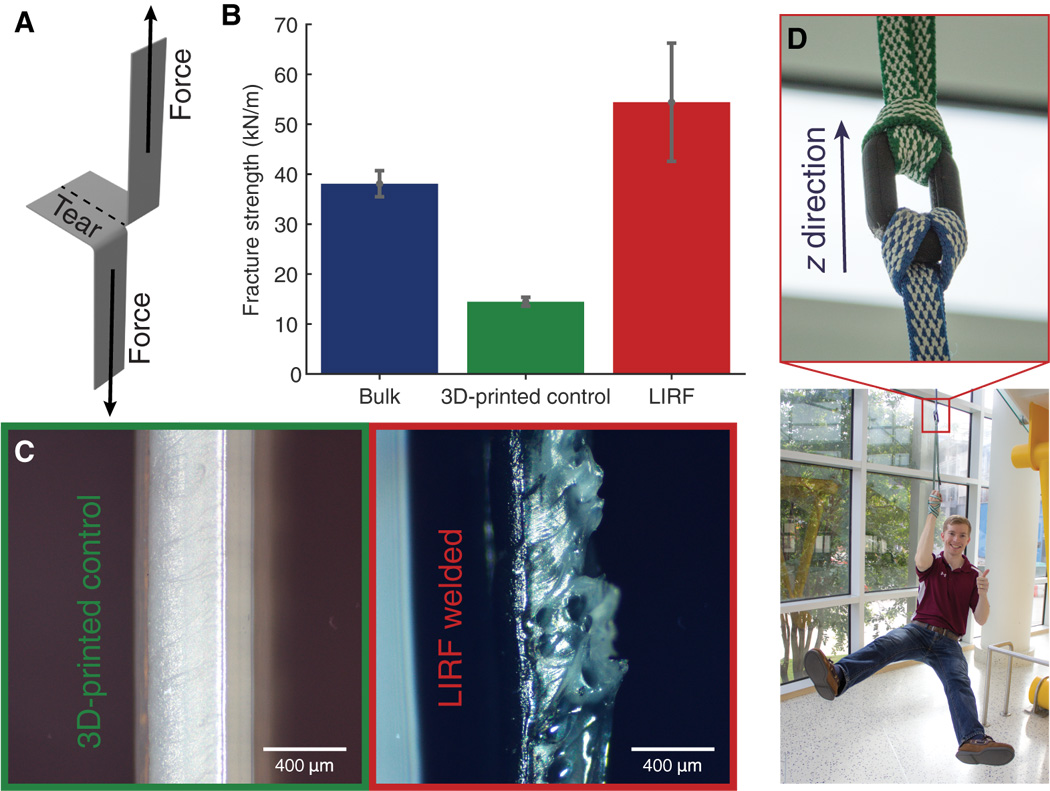
One of the most interesting ideas on the table is local annealing using microwave heating on CNT-coated FDM prints. In plain English, the strategy is simple but clever: instead of heating the entire printed part in an oven and hoping it behaves, engineers use a carbon nanotube coating that can absorb electromagnetic energy and turn it into heat exactly where extra bonding is needed. The goal is to relax stresses, improve polymer chain mobility, strengthen weld lines, and do it all without cooking the entire part into a warped plastic potato chip.
This approach sits at the crossroads of additive manufacturing, polymer science, and nanomaterials engineering. It matters because FDM remains popular for prototypes, tooling, custom fixtures, and increasingly for end-use parts. Yet its biggest Achilles’ heel is still interlayer performance. If microwave-local annealing can reinforce interfaces without the collateral damage of full-part heat treatment, it could move FDM from “good enough for the demo table” closer to “ready for real mechanical work.” That is not a small upgrade. That is the difference between decorative gadget and functional engineering part.
Why FDM Prints Need Local Annealing in the First Place
The weak spot lives between the layers
When a thermoplastic filament is extruded in FDM, it leaves the nozzle hot, soft, and ready to bond. But it does not stay that way for long. As the material cools, viscosity rises, polymer chains lose mobility, and the “neck” that forms between neighboring roads and layers stops growing. The result is a printed part that can look terrific on the outside while hiding weak interlaminar regions and microscopic voids inside.
That is why FDM anisotropy is such a big deal. A printed part may perform reasonably well along the filament direction but fail much sooner when loaded across layers. In other words, your print may be brave in one direction and emotionally fragile in another. For engineers, that mismatch is not just annoying. It limits design freedom, material confidence, and qualification for real-world applications.
Why conventional annealing helps but also causes trouble
Traditional thermal annealing of 3D printed parts tries to solve the bonding problem by reheating the polymer after printing. If the part is held at the right temperature long enough, residual stress can relax and polymer chains can diffuse more effectively across interfaces. That can improve tensile behavior, ductility, dimensional stability in some cases, and overall part integrity.
But there is a catch the size of a warped bracket. Whole-part annealing does not ask nicely which region actually needs the heat. It warms everything. That means thin walls, unsupported spans, corners, and dimensional features may all distort at once. Semi-crystalline polymers can change crystallinity during heating and cooling, which can improve some properties while also increasing shrinkage risk. Amorphous polymers can soften enough to lose geometric fidelity. So yes, the part may get stronger. It may also become stronger in the wrong shape.
This is why local annealing is so appealing. It promises the benefits of post-print thermal treatment while reducing the “well, that used to be square” problem.
Why Carbon Nanotube Coatings Change the Microwave Story
CNTs are excellent energy absorbers
Carbon nanotubes are famous for their electrical, thermal, and structural properties. They are tiny, conductive, and unusually responsive to electromagnetic energy. In the context of microwave heating, that matters because CNTs can act as local susceptors, meaning they preferentially absorb energy and convert it into heat. This is where the magic becomes engineering: if the nanotubes are placed at or near critical interfaces, the heat can be generated where the bond needs help rather than throughout the entire printed body.
That is fundamentally different from tossing a part into an oven. Oven heating is broad and blunt. CNT-assisted microwave heating is selective and targeted. It is the difference between using a floodlight and using a spotlight. One lights the whole stage. The other finds the actor who forgot their lines.
Why coating the print can be smarter than loading the whole filament
There are several ways to combine CNTs with printed polymers. One option is to blend nanotubes into the bulk filament. Another is to apply them as a surface or interfacial coating. For local annealing, coatings are especially attractive because they place the microwave-responsive material precisely where it can do the most good: at the boundaries between printed layers or roads.
That targeted placement matters for both performance and process control. Bulk-loaded nanocomposites may change viscosity, printability, conductivity, or even nozzle wear across the entire print. A coating, by contrast, can create a conductive or microwave-active network at the interface without forcing the whole polymer volume to behave like a nanocomposite. In many designs, that makes the process easier to tune and potentially more economical in CNT usage.
There is also a percolation angle. CNT networks often show dramatic changes in behavior once a conductive pathway forms. When a coating is well dispersed and sufficiently connected, it can create the kind of energy absorption profile needed for rapid local heating. When dispersion is poor, however, you do not get elegant local annealing. You get inconsistent hotspots, dead zones, and a process engineer quietly staring into the middle distance.
What “Local Annealing” Really Means for CNT-Coated FDM Prints
It is not melting the whole part again
Local annealing is best understood as a controlled thermal intervention. The goal is to raise temperature near targeted interfaces enough to promote stress relaxation, chain mobility, and stronger weld formation without fully remelting the entire component. In practical terms, that means giving the polymer a second chance to improve bonding in the exact spots that matter most.
For many thermoplastics used in FDM, the sweet spot is narrow. Too little heat and nothing meaningful happens. Too much heat and geometry suffers, the coating overheats, the polymer degrades, or the process loses repeatability. This is why the concept sounds simple but the execution belongs in research labs and professionally engineered manufacturing systems, not next to a kitchen microwave and a can-do attitude.
Microwave heating can be fast, selective, and surprisingly effective
The attraction of microwave-assisted annealing is speed. Because electromagnetic energy can couple directly to a CNT network, the heating event can be rapid and localized. In the best-case scenario, the interface becomes the hottest region, the surrounding polymer sees less thermal insult, and the part gains stronger interlayer fusion with less global distortion.
This is one of the most important ideas in the field: a smarter thermal profile can change mechanical performance without changing the printed geometry or the base polymer chemistry. In other words, instead of asking the material to be something entirely different, researchers are teaching the structure to bond better after it is printed.
The Biggest Benefits of Using Microwave Heating to Locally Anneal CNT-Coated Prints
1. Better interlayer bonding
The headline benefit is improved bonding at printed interfaces. Since those interfaces are often where cracks start, strengthening them can increase tensile performance, fracture resistance, and practical durability. This does not automatically make a printed part equal to every injection-molded part on Earth, but it can significantly narrow the gap.
2. Reduced thermal collateral damage
Because the heating is localized, the bulk of the print may remain closer to safe temperatures. That can help preserve sharp features, reduce warpage, and protect unsupported geometry that would otherwise suffer during oven annealing. For parts with mixed wall thickness or delicate dimensions, that is a major advantage.
3. Faster process windows
Microwave-local annealing has the potential to shorten processing times. Engineers are always interested in anything that improves throughput without wrecking quality. A method that strengthens interfaces in minutes or seconds rather than lengthy whole-part heating cycles is inherently attractive for scaled manufacturing.
4. More targeted post-processing
Not every region of a print needs the same treatment. A mounting boss, snap-fit, living hinge region, or load-bearing joint may need extra reinforcement while a decorative shell does not. In principle, CNT coatings and localized microwave response create the opportunity for zone-specific strengthening. That opens the door to more intelligent part design, where thermal treatment follows stress maps rather than brute-force tradition.
The Engineering Challenges Nobody Should Ignore
CNT dispersion and coating quality
A brilliant concept can still fail if the coating is uneven. CNT-coated FDM prints depend on consistent nanotube distribution, proper adhesion to the substrate, and a stable conductive network. Agglomerated CNTs can produce uneven absorption and temperature spikes. Sparse regions may barely respond at all. If you want repeatable local annealing, coating quality is not a side note. It is the whole concert.
Polymer type matters a lot
PLA, ABS, PETG, nylon, polypropylene, and high-performance thermoplastics do not respond to heat the same way. Each material brings a different glass transition temperature, crystallization behavior, and tolerance for repeated thermal exposure. A process window that helps one polymer may overcook another. Semi-crystalline materials add another layer of complexity because annealing can shift crystallinity and shrinkage behavior along with mechanical performance.
Hotspots, measurement, and process control
Microwave heating sounds elegant, but the temperature field can be tricky. Localized heating is wonderful when it is controlled and maddening when it is not. Engineers need reliable ways to track temperature, assess interfacial change, and correlate heating conditions with mechanical outcomes. Infrared imaging, dielectric characterization, microscopy, and careful mechanical testing all become part of the story. Without that data, “local annealing” is just a very expensive way to guess.
Safety and scale-up
Any discussion of microwave processing of CNT-coated polymers needs a serious safety footnote. This is not a consumer-level experiment. Microwave-material interactions, nanomaterial handling, arcing risk, shielding, fumes, and thermal runaway all demand professional controls. For commercial adoption, scale-up also requires repeatable applicator design, energy uniformity, integration with print workflows, and manufacturing economics that make sense outside the lab.
Where This Technology Makes the Most Sense
The best applications are the ones where interlayer weakness truly limits performance. Functional brackets, aerospace interior parts, customized medical fixtures, robotic components, lightweight tooling, and electrically functional polymer structures all stand out. Parts with localized stress concentrations are especially promising because they do not need universal strengthening everywhere. They need smart strengthening where failure is most likely.
That is the beauty of this idea. It fits the larger trend in additive manufacturing toward property-by-design. Instead of printing a shape and accepting the material as-is, engineers increasingly want to print the shape, then tune the local structure, interface quality, conductivity, or stress state afterward. Microwave-local annealing with CNT coatings belongs in that family of advanced post-processing concepts.
Practical Experiences and Real-World Lessons Around This Topic
One of the most consistent experiences reported around using microwave heating to locally anneal CNT-coated FDM prints is that success rarely comes from the microwave alone. The real story is usually about the entire system: coating formulation, print orientation, polymer selection, interface placement, and temperature monitoring all matter at once. Teams often begin with the assumption that if CNTs absorb microwaves well, the rest will sort itself out. It does not. The learning curve is usually about realizing how unforgiving interfaces can be when the coating is patchy or the geometry funnels heat into one stubborn spot.
Another common lesson is that stronger parts do not always look dramatically different from untreated ones. That can be both exciting and dangerous. Exciting, because a print may keep its shape and still gain much better interlayer performance. Dangerous, because visual inspection alone can be misleading. Researchers and prototyping teams repeatedly discover that a part that looks perfect can hide poor bonding, while a part that looks identical after local annealing can behave very differently under tension or bending. Mechanical testing, microscopy, and thermal analysis tend to become non-negotiable once the novelty wears off.
There is also a practical design lesson: geometry decides whether the process feels elegant or chaotic. Simple coupon specimens behave one way. Real parts with corners, holes, ribs, and mixed wall thickness behave another. What seems uniform on a dog-bone sample may become a hotspot festival on a complex functional component. That experience pushes many teams toward more careful placement of CNT-active regions instead of blanket coverage. In other words, the more engineers work with this concept, the more they treat local annealing as a design strategy rather than a generic afterthought.
Material choice creates another set of experiences that often humble even confident researchers. A polymer that seems cooperative in standard FDM may respond unpredictably once a microwave-active coating enters the picture. Some materials show better interface healing. Others reveal new warpage paths, shrinkage effects, or surface changes. Semi-crystalline systems are especially memorable because the thermal history can become a plotline all its own. A team may celebrate improved bonding one week and spend the next week explaining why a dimension moved just enough to ruin a fit-up test.
Then there is the human side of the work, which is less glamorous but very real. People working on this topic quickly learn that “localized heating” sounds neat in presentations and feels messy in practice until instrumentation catches up. The turning point often comes when the team stops treating the process like a magic materials trick and starts treating it like a tightly controlled manufacturing operation. Once thermal imaging, repeatable coating methods, and process windows are established, confidence grows fast. Until then, the experience can feel like trying to teach a very smart but extremely moody machine to behave.
That is also why this topic remains so compelling. The underlying idea is strong, the early results are genuinely promising, and the engineering lessons are exactly the kind that move a technology from clever paper to useful platform. The people who work in this area tend to come away with the same conclusion: local microwave annealing of CNT-coated prints is not a gimmick, but it absolutely demands disciplined process design. When it is handled well, it offers a glimpse of a future where printed parts are not just shaped precisely, but strengthened precisely too.
Final Thoughts
Using microwave heating to locally anneal CNT-coated FDM prints is one of the more exciting ideas in advanced polymer additive manufacturing because it attacks the real weakness of FDM at the interface level. It combines the selective energy response of carbon nanotubes with the practical need to improve interlayer bonding, reduce residual stress, and avoid the blunt-force drawbacks of conventional oven annealing.
It is not a shortcut, and it is definitely not a casual maker hack. But as a research-backed manufacturing strategy, it has serious promise. The biggest opportunity is not just making printed parts stronger. It is making them stronger where it counts. That shift from global treatment to local property control is exactly the kind of progress additive manufacturing needs if it wants to keep graduating from prototype machine to serious production tool.