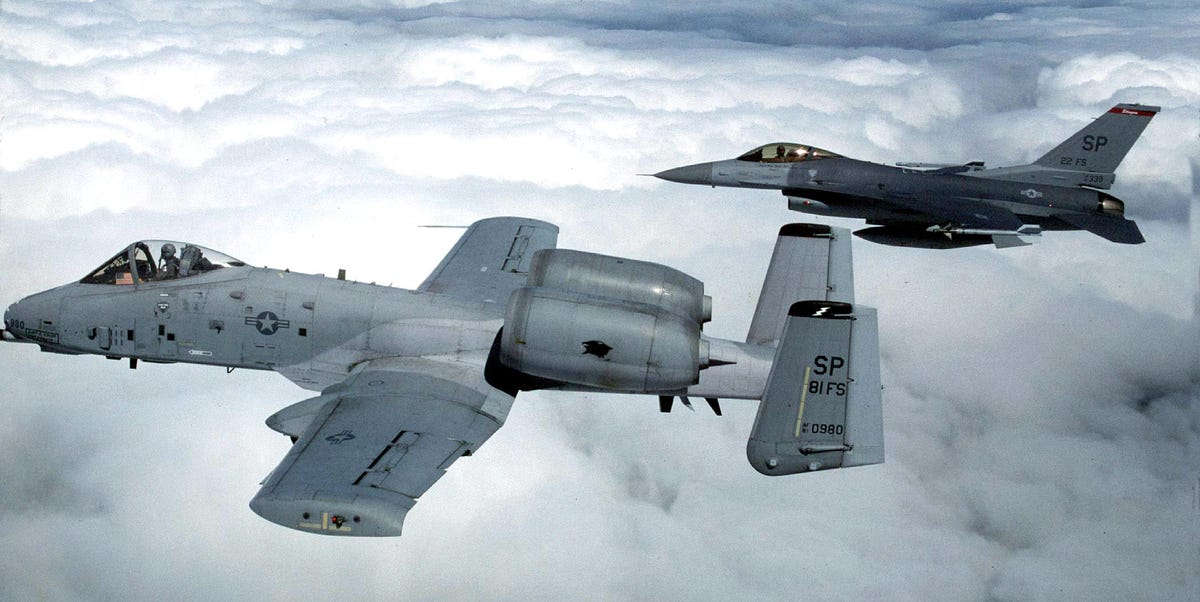
For years, Ukraine’s pilots fought one of the world’s most dangerous air wars with a mix of Soviet-era aircraft, battlefield improvisation, and the kind of courage that makes maintenance crews age five years before breakfast. Now, the story has entered a new chapter: Ukraine’s Air Force is moving deeper into the world of U.S.-made fighter jets, especially the F-16 Fighting Falcon.
The headline “Ukraine’s Air Force Could Soon Fly U.S. Fighter Jets” once sounded like a bold prediction. Today, it reads more like a turning point already in motion. Ukrainian pilots have begun flying F-16s in combat, Western partners continue training pilots and maintainers, and allied countries have pledged additional aircraft, weapons, and technical support. The result is not an instant “Top Gun” sequel over Eastern Europe, but it is a major shift in Ukraine’s long-term military future.
These American-designed fighter jets will not magically erase Russia’s air defenses or end the war overnight. Real life, sadly, does not come with cinematic background music and unlimited missile reloads. But F-16s can strengthen Ukraine’s air defense, improve its ability to intercept missiles and drones, and gradually move its Air Force away from aging Soviet platforms toward NATO-compatible aviation.
Why U.S. Fighter Jets Matter for Ukraine
Ukraine’s Air Force entered Russia’s full-scale invasion with aircraft such as MiG-29s and Su-27s. These jets were fast, familiar, and valuable, but they were built around Soviet design philosophy and supply chains. That created a long-term problem: spare parts, upgrades, radar systems, weapons compatibility, and maintenance all became harder as the war dragged on.
The F-16 changes that equation. It is a compact, highly maneuverable, multi-role fighter used by many U.S. allies. More importantly, it is compatible with a wide range of Western weapons, sensors, and support systems. For Ukraine, that means the aircraft is not just a jet; it is an entry ticket into a broader Western airpower ecosystem.
The F-16 Is Not New, But It Is Still Useful
The F-16 Fighting Falcon first flew decades ago, but calling it “old” is a bit like calling a Swiss Army knife outdated because it was invented before TikTok. The platform has been upgraded repeatedly and remains one of the most widely used fighter jets in the world. Its strength lies in flexibility: it can perform air-to-air missions, strike ground targets, support air defense, and carry precision-guided weapons depending on configuration.
For Ukraine, the most immediate benefit is not dramatic dogfighting. It is practical survival. F-16s can help intercept cruise missiles and drones, support layered air defense, and give Ukrainian commanders more options when Russian aircraft launch glide bombs or missiles from safer distances.
How Ukraine Got Closer to Flying U.S.-Made Jets
Ukraine spent months urging Western partners to provide modern fighter jets. At first, many governments hesitated. Fighter aircraft are not like shipping a box of spare helmets. They require pilot training, maintenance pipelines, secure airbases, spare parts, weapons, software support, and careful political approval.
The breakthrough came when the United States approved the transfer of F-16s from European allies, including Denmark and the Netherlands. Because the F-16 is a U.S.-made aircraft, Washington’s approval was necessary before other countries could send their jets to Ukraine. Once that door opened, the international “fighter coalition” began taking shape.
Training Pilots Is Only Half the Job
When people imagine fighter jet aid, they often picture pilots climbing into cockpits and roaring into the sky. That is the glamorous part. The less glamorous part involves maintainers, spare engines, ground crews, radar technicians, weapons specialists, fuel systems, software updates, and enough paperwork to make a bureaucrat blush.
Ukrainian pilots trained in the United States, including at Morris Air National Guard Base in Tucson, Arizona. Others trained in Europe. These programs were designed not only to teach pilots how to fly the F-16, but also how to operate in a Western-style air combat environment. That includes English-language aviation terms, NATO procedures, new cockpit displays, new weapons systems, and new emergency protocols.
In modern airpower, a fighter jet is only as effective as the system around it. A trained pilot without enough maintainers is a problem. A jet without missiles is a very expensive weather-checking device. A squadron without secure bases is a target. Ukraine has had to build all of this while still fighting a war.
What F-16s Can Do for Ukraine’s Air Force
The F-16 gives Ukraine several important capabilities, but each comes with limits. Understanding both sides is essential. Otherwise, the conversation turns into either hype or doom, and neither one flies very well.
Better Air Defense Against Missiles and Drones
One of the most useful roles for Ukrainian F-16s is air defense. Russia has repeatedly attacked Ukrainian cities, power plants, and military targets with cruise missiles, ballistic missiles, and long-range drones. Ground-based air defense systems such as Patriot, NASAMS, IRIS-T, and older Soviet systems remain essential, but they are under constant pressure.
F-16s can help by chasing and shooting down certain airborne threats, especially cruise missiles and drones. This matters because every intercepted missile can mean a power station saved, a hospital protected, or a neighborhood spared. It also helps conserve some ground-based interceptors, which are expensive and often in short supply.
Western Weapons Compatibility
Another major advantage is weapons compatibility. The F-16 can use Western air-to-air missiles, precision bombs, targeting pods, and electronic systems. Depending on what partners provide and integrate, that can give Ukraine better reach and accuracy than many Soviet-era platforms can offer.
This does not mean every F-16 arriving in Ukraine becomes a flying arsenal on day one. Integration takes time. Different aircraft versions support different systems. Weapons must be supplied consistently. Pilots must train for each mission type. Still, the long-term direction is clear: Ukraine’s Air Force is becoming more Western, more flexible, and more sustainable.
Pressure on Russian Air Operations
Russia has often relied on stand-off weapons, including glide bombs launched from aircraft at distances that reduce risk to Russian pilots. Ukraine wants aircraft that can push Russian aviation farther back, complicate enemy planning, and make every sortie more dangerous.
F-16s can contribute to that pressure, especially when paired with strong radar coverage, electronic warfare, and long-range missiles. But they must operate carefully. Russia still has powerful surface-to-air missile systems, long-range sensors, and fighter aircraft. Ukrainian F-16 pilots are not entering an empty sky; they are entering one of the most contested airspaces on Earth.
Why F-16s Are Not a Magic Bullet
The phrase “not a magic bullet” appears often in military analysis, mostly because actual magic remains tragically absent from defense budgets. F-16s are valuable, but they cannot solve every problem facing Ukraine.
First, numbers matter. A small fleet cannot cover the entire country, escort every mission, defend every city, and challenge Russia’s entire Aerospace Forces at once. Second, airbases are vulnerable. Russia has repeatedly targeted Ukrainian aviation infrastructure, so dispersal, camouflage, decoys, and rapid repair are essential. Third, missile supply is critical. Without a steady flow of air-to-air missiles and precision weapons, F-16s cannot perform at full potential.
Finally, pilot experience takes time. Ukrainian pilots are highly motivated and combat-tested, but switching to a new aircraft during wartime is brutally difficult. It is like learning to drive a race car while someone is actively throwing bricks at the windshield.
The Logistics Behind the Fighter Jet Shift
Modern fighter jets depend on logistics. For Ukraine, this may be the least flashy but most important part of the transition. Every F-16 requires maintenance schedules, spare parts, trained ground crews, secure fuel supplies, software support, replacement components, and specialized equipment.
Ukraine’s allies are not simply handing over aircraft and waving goodbye. The real work is building a pipeline that keeps jets flying month after month. That includes training maintainers, supporting repair hubs, managing spare parts, and ensuring Ukraine has compatible weapons. In air warfare, “available aircraft” and “combat-ready aircraft” are not the same thing. A jet parked on a runway may look impressive, but if it lacks a working radar part or the right missile, it is just an expensive lawn ornament.
Why Maintenance Crews Deserve More Attention
Pilots get the headlines, but maintainers keep the headlines possible. A fighter jet is a machine of terrifying complexity. It needs constant inspection, careful servicing, and rapid troubleshooting. Ukrainian crews have already shown remarkable adaptability with Soviet-era aircraft and Western weapons. The F-16 era demands another level of technical transformation.
This is why training ground crews is as important as training pilots. A strong maintenance system can increase sortie rates, reduce accidents, and keep aircraft ready during intense Russian attacks. In a long war, the side that repairs faster often survives longer.
How U.S.-Made Fighter Jets Fit Into Ukraine’s Future
Ukraine’s future Air Force will likely be mixed for some time. F-16s are joined by other Western aircraft, including French Mirage jets, while Ukraine has discussed additional European platforms such as Sweden’s Gripen and France’s Rafale. This does not mean Ukraine will suddenly operate a showroom of every fighter jet with wings and attitude. It means Kyiv is searching for a sustainable path away from Soviet-era dependency.
The F-16 is especially important because so many countries operate it. That creates a larger support community, more spare-part pathways, more experienced trainers, and more upgrade options. For a country at war, commonality is not boring; it is survival.
NATO Compatibility Is a Strategic Goal
Ukraine’s adoption of U.S.-made fighter jets is not only about the current war. It is also about long-term deterrence. A NATO-compatible Air Force would make Ukraine harder to attack in the future. It would also make cooperation with Western allies easier, from training exercises to intelligence sharing and weapons integration.
In that sense, the F-16 is both a battlefield tool and a strategic bridge. It connects Ukraine’s immediate defensive needs with its long-term goal of becoming a modern European military power.
What Could Happen Next?
The next phase will depend on several moving parts: how many aircraft arrive, how quickly pilots graduate, how many maintainers are trained, how secure Ukrainian airbases remain, and whether partners can provide enough missiles and spare parts. The aircraft themselves are only one piece of the puzzle.
If Ukraine receives a steady flow of F-16s and weapons, the jets could become a stronger part of its air defense network. They may also support precision strike missions, help push Russian aircraft farther from the front, and improve Ukraine’s ability to respond to missile and drone attacks.
However, if deliveries slow, missiles run short, or airbases come under heavy attack, the impact will be more limited. Ukraine’s F-16 program is a marathon with afterburners, not a quick sprint.
Experiences and Real-World Lessons From Ukraine’s Move Toward U.S. Fighter Jets
The experience of Ukraine’s Air Force shows that modern warfare rewards adaptability. Before the arrival of Western fighter jets, Ukraine’s pilots flew older aircraft in a sky filled with advanced threats. They survived by flying low, moving quickly, using dispersed airfields, and relying on ground crews who performed miracles with limited resources. That experience matters because it shapes how Ukraine will use F-16s.
One key lesson is that technology is powerful, but people make it work. A fighter jet does not win missions by sitting proudly on a runway. It needs a pilot who understands the aircraft, a crew that can maintain it, commanders who know when to risk it, and partners who can keep it supplied. Ukraine’s transition to F-16s is really a human story wrapped in aluminum, radar, and jet fuel.
Another experience is the importance of patience. Public debate often treats weapons deliveries like online shopping: click, ship, arrive, victory. Fighter jets are not that simple. Training takes months. Maintenance systems take longer. Weapons integration can be complicated. Airbase protection must be planned carefully. The F-16 program teaches a hard truth: military modernization during wartime is possible, but it is never tidy.
Ukraine’s experience also highlights the value of layered defense. F-16s do not replace Patriot batteries, NASAMS systems, mobile air defense teams, electronic warfare units, or interceptor drones. They add another layer. When Russia launches missiles and drones, Ukraine needs many tools working together. Think of it less like one superhero arriving and more like a very stressed orchestra trying to play in tune while the concert hall is on fire.
There is also a morale factor. For Ukrainian citizens, the sight of U.S.-made fighter jets in national service symbolizes that the country is not isolated. For pilots, it represents a future beyond aging Soviet cockpits. For Russia, it signals that Ukraine’s partners are willing to invest in long-term defense, not just short-term emergency aid.
The most important experience may be this: airpower is not only about aircraft. It is about systems. Ukraine’s F-16 journey involves diplomacy, training, logistics, engineering, intelligence, air defense, and industrial supply chains. Every successful sortie reflects thousands of decisions made far from the cockpit. That is why the arrival of U.S. fighter jets is so significant. It is not simply a new machine entering the war. It is a new model of warfare entering Ukraine’s future.
Conclusion
Ukraine’s Air Force could soon fly more U.S. fighter jets, and in some ways, that future has already begun. The F-16 has entered Ukrainian service, allied training pipelines are active, and Western aircraft are becoming central to Ukraine’s defense strategy. Still, the impact will depend on scale, supply, training, maintenance, and smart integration with ground-based air defenses.
The F-16 will not win the war by itself. No single weapon can. But it can help Ukraine defend its skies, modernize its Air Force, and build a stronger deterrent for the future. In a war where every layer of defense matters, U.S.-made fighter jets are not a miracle cure. They are something more realistic and more useful: a serious upgrade with long-term consequences.