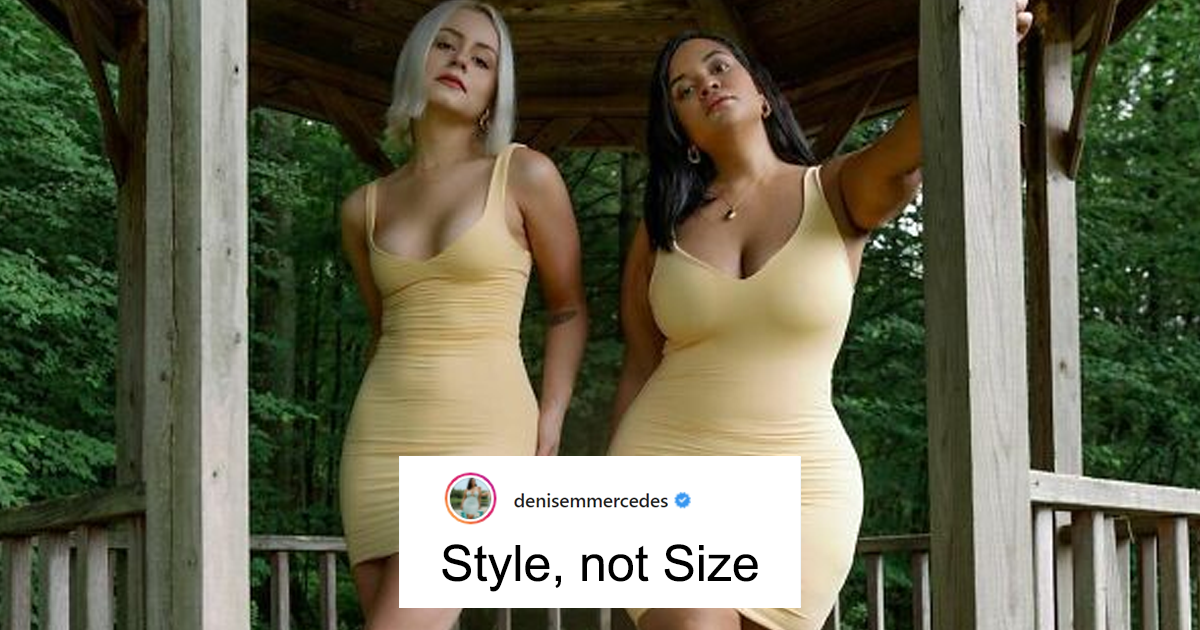
Put two women in the exact same outfit and the internet will instantly turn into a courtroom of opinions. One person will say the dress is “made” for one body. Another will insist the jeans “only work” on a certain shape. Meanwhile, the outfit itself is somewhere in the corner quietly wondering why it has become a character witness.
That reaction is exactly why side-by-side outfit content keeps going viral. It is not just fun to look at. It also exposes one of fashion’s oldest myths: that clothes have a single correct body to live on. In reality, the same blazer, slip dress, matching set, or pair of jeans can look completely different on two people and still look equally stylish. Different does not mean better. Different just means human.
This is what makes the “same outfit, different body types” trend so powerful. It takes fashion out of the land of rules and returns it to real life, where people have different proportions, heights, shoulders, waists, inseams, comfort levels, and style personalities. The lesson is refreshingly simple: clothing is supposed to work for your body, not the other way around.
Why This Trend Resonates So Much
When two friends wear the same look side by side, they are doing more than creating scroll-stopping content. They are showing what shoppers already know but rarely see reflected clearly in product photos: fit changes everything. A dress that looks sleek and column-like on one person may feel soft and romantic on another. A boxy button-down may read polished on one frame and relaxed on another. The outfit is the same, but the proportions, drape, and energy shift.
That visual honesty matters. For years, fashion advice leaned heavily on rigid “dress for your shape” rules, often reducing women to fruit categories and outdated ideas about what should be hidden, balanced, minimized, or emphasized. The newer wave of style content pushes back on that. Instead of asking, “Is this allowed for my body type?” the better question is, “How do I want this to feel, fit, and function on me?”
That shift is more than trendy language. It is practical. When people see the same outfit on different bodies, they become better shoppers. They stop assuming a garment is wrong just because it does not look identical to the model photo. They start noticing construction details, fabric behavior, length, rise, tailoring potential, and styling choices. In other words, they start shopping like pros instead of emotionally negotiating with a pair of pants under fluorescent lighting.
Why The Same Outfit Looks Different On Different Body Types
1. Fit Is The First Plot Twist
Two people can wear the same size on the label and still get two completely different results. That is because size is only one piece of the puzzle. Shoulder width, torso length, hip placement, bust proportion, leg length, and posture all affect how a garment sits. This is why a matching set can look long and sleek on one person, while the same set feels more sculpted or more relaxed on someone else.
Even within the same general size range, brand sizing is famously inconsistent. That means shoppers are not imagining things when one medium feels generous and another medium feels like it was designed during a personal vendetta. A garment that technically “fits” may still pull at the bust, twist at the hip, gap at the waist, or crop at an awkward point depending on the wearer’s proportions.
2. Fabric Has Opinions
Fabric is not neutral. Stretch jersey clings differently than crisp cotton. Satin reflects light and highlights movement. Ribbed knits hug the body more obviously than brushed ponte. Linen relaxes. Denim softens. A structured blazer can create shape where a drapey cardigan simply follows the body’s lines. So when two women wear the same outfit, the fabric is not just covering them. It is collaborating.
This is why one slip dress may look liquid and minimal on one frame and more curved and dynamic on another. Neither outcome is wrong. It is just physics meeting personal proportions.
3. Proportion Changes The Entire Mood
Fashion is basically geometry with better accessories. Where a hemline hits, where a waistband lands, and where a sleeve ends can completely change the visual effect of an outfit. A mid-rise jean may feel balanced and easy on one person, while someone else may prefer a higher rise to create a more comfortable line through the waist and hip. A cropped jacket may sharpen one outfit and shorten another. A longer blazer may read effortlessly cool on one body and slightly overwhelming on another.
This does not mean one person “can” wear something and another person “cannot.” It means proportion is a styling tool. Once you understand that, fashion gets a lot more interesting and a lot less judgmental.
4. Styling Choices Matter As Much As The Garment
The same outfit is rarely truly the same once real people get involved. One person rolls the sleeves. Another adds a belt. One chooses sneakers, the other a strappy sandal. One tucks the shirt fully, the other does a half-tuck and calls it effortless. Suddenly the outfit develops personality.
This is where style separates itself from sizing. Clothing may come off the rack, but a look becomes personal through choices. Jewelry, layers, posture, hairstyle, confidence, and even whether someone is comfortable enough to stop tugging at their waistband all change the final result.
What “Same Outfit, Different Bodies” Really Teaches Us
The biggest takeaway is not that every trend works on every body in exactly the same way. That would be unrealistic. The real takeaway is that fashion does not need to look identical to be successful. In fact, the beauty of great style is that it looks personal.
This trend also challenges the idea that clothes are only fashionable when they create one very specific silhouette. That mindset has long excluded people whose bodies are underrepresented in mainstream imagery. Seeing the same look on multiple body types expands the visual conversation. It makes style feel less like a private club and more like what it should be: creative, wearable, and available to more people.
It also encourages a healthier mindset. Instead of comparing your body to the model, you start evaluating the actual garment. Does the fabric have structure? Does the waist hit in the right place? Would hemming improve it? Would a different bra, shoe, or jacket change the balance? That is a far more useful exercise than spiraling because a website model and your body are not carbon copies. Of course they are not. One of you lives inside your phone.
Four Outfit Examples That Prove The Point
The Blazer And Straight-Leg Jeans Combo
This look is the reigning champion of “I have my life together,” even when your group chat proves otherwise. On one person, an oversized blazer with straight-leg jeans may look sharp and editorial. On another, the same combo may feel softer, cooler, or more laid-back. The trick is often in the shoulder fit, jean rise, and shoe choice. Swap loafers for sneakers or add a fitted tank under the blazer, and the whole silhouette changes.
The Slip Dress
A slip dress is a master class in how fabric reacts to different bodies. On one person it may skim smoothly. On another it may emphasize movement and curves. Add a cropped cardigan, boots, or a leather jacket and the mood shifts from minimalist to romantic to downtown drama in seconds. The point is not to make the dress look the same on everyone. The point is to make it feel intentional.
The Matching Knit Set
Matching sets work so well in side-by-side outfit content because they create a clean line and instantly look pulled together. They also reveal how cut and knit weight affect the body. A fine ribbed set may feel sleek on one wearer and more body-conscious on another. A softer, heavier knit may drape beautifully on a range of frames but land at different points. That is not a flaw. That is why trying things on matters.
The White Tee And Wide-Leg Trousers
This outfit seems simple, which is exactly why it is so revealing. A basic white tee can be cropped, boxy, fitted, tucked, French-tucked, or knotted. Wide-leg trousers can elongate, puddle, skim, or overwhelm depending on length, rise, and fabric. Two women in the same pieces might create completely different visual stories. One reads classic. The other reads fashion-forward. Both can work.
How To Apply This Trend To Your Own Closet
Start by retiring the phrase “my body is wrong for this.” Usually, the real issue is more specific and more fixable. Maybe the rise is off. Maybe the armhole is tight. Maybe the fabric is too clingy. Maybe the hem needs two inches taken up. Maybe the color is perfect but the cut is not. That is useful information, not a personal failure.
Next, measure yourself accurately. Knowing your bust, waist, hip, and inseam measurements is more helpful than emotionally identifying as “usually a medium.” Online shopping becomes much easier when you compare actual numbers and read fabric notes.
Then think in terms of proportion, not punishment. If a trend feels off, experiment before giving up. Try a different shoe. Change the rise. Add structure on top of a drapey base, or soften a structured piece with a relaxed layer. Tailoring is also wildly underrated. A basic hem or waist adjustment can turn a pretty good item into a piece you wear on repeat.
Most of all, choose comfort without confusing it with invisibility. Clothing does not have to squeeze, pinch, flatten, or “fix” you to be stylish. The best outfits usually strike a balance: they feel good on the body, make sense for real life, and reflect something about the person wearing them.
Why This Conversation Matters Beyond Fashion
At its best, fashion is a form of self-expression. At its worst, it becomes a ranking system disguised as advice. The “same outfit, different body types” movement pushes against that ranking instinct. It reminds people that representation matters, personal taste matters, and bodies do not need to earn the right to participate in trends.
That message lands because it is both visual and practical. It tells viewers that there is no single “correct” way for a dress to hang or a pair of jeans to fit as long as the wearer feels good in them. It also opens the door to a more body-neutral approach to style, where clothing becomes less about chasing an ideal and more about supporting daily life, confidence, movement, and joy.
And honestly, that is a much better use of fashion than spending another decade arguing about whether a skirt is “allowed.” It is a skirt, not a security clearance.
Experiences Related To “Two Girls Show How The Same Outfit Looks On Different Body Types”
One of the most interesting parts of this trend is the emotional reaction people have when they try it themselves. At first, many expect the experiment to confirm their insecurities. They assume the side-by-side photo will reveal who “wears it better.” But what often happens is the opposite. Once the two images are placed next to each other, the conversation changes. Instead of seeing a winner and a loser, people start noticing details. One friend gives the dress a sleek, streamlined vibe. The other makes it feel playful and fuller of movement. The same jeans that looked basic on a hanger suddenly prove they can lean polished on one person and relaxed on another.
That shift is powerful because it moves attention away from body criticism and toward styling literacy. People begin to understand that what they have been calling “good” or “bad” on their body is often just a question of proportion, fabric, or finishing details. A tucked shirt changes the line. A shorter hem opens up the silhouette. A different neckline makes the entire outfit feel more balanced. Once people see those details, they become less likely to blame themselves for every awkward fit issue.
There is also something deeply reassuring about seeing two friends enjoy fashion without treating it like a competition. So much traditional style advice has implied that getting dressed is about correcting flaws or chasing a narrow ideal. But these side-by-side outfit moments show a friendlier reality. One person can love the drama of an oversized blazer, while another prefers the same blazer with the sleeves pushed up and the waist lightly defined. Both approaches are valid because personal style is not a standardized test.
For many viewers, the biggest impact is practical. They become more confident about trying trends they previously wrote off. A woman who thought she could never wear a slip skirt might realize she simply needed a different fabric weight or a better hem length. Someone who hated matching sets may discover that the problem was not the concept, but the cut. Another person may finally accept that the jeans were never “motivation jeans.” They were just badly suited to her proportions and should have been replaced three shopping trips ago.
This kind of content also changes the shopping mindset. Instead of asking whether their body deserves the outfit, people begin asking whether the outfit deserves closet space. That is a much healthier standard. It encourages curiosity, experimentation, and a little more grace in the fitting room. It also makes shopping less dramatic, which is good news for everyone involved, including innocent zippers everywhere.
In the end, the experience is not really about two girls wearing the same outfit. It is about what viewers learn from the comparison. Clothes are flexible. Bodies are varied. Style is personal. And once that clicks, getting dressed becomes less about passing a visual test and more about building a wardrobe that feels like your own.
Conclusion
The reason “Two Girls Show How The Same Outfit Looks On Different Body Types” keeps capturing attention is simple: it tells the truth. The same outfit will not look identical on everybody, and it does not need to. Great style is not about forcing different people into one visual formula. It is about understanding fit, working with fabric, adjusting proportion, and letting personality lead.
When two women wear the same outfit side by side, the result is not a fashion duel. It is a reminder that style becomes more interesting the moment real bodies enter the picture. That is not a problem to solve. It is the whole point.