Note: This article is written in standard American English, based on real reporting and reputable health/media-literacy sources, and designed for web publishing without external source links in the body content.
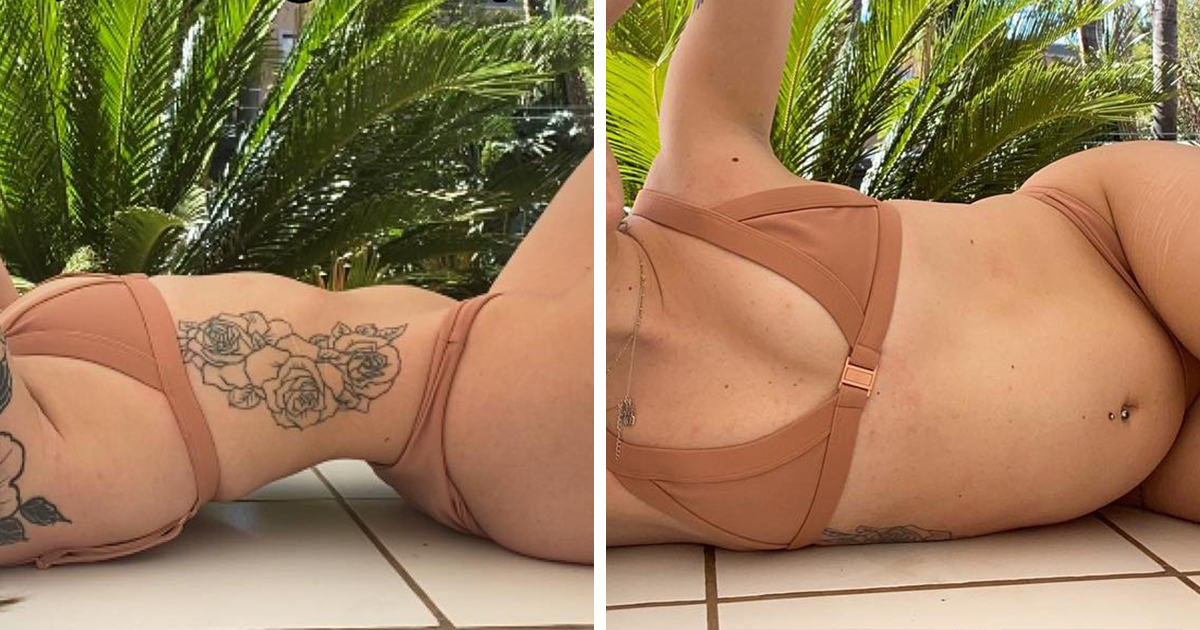
Every once in a while, the internet does something surprisingly healthy. Between the filtered selfies, “I woke up like this” posts that clearly involved three lights and a ring lamp, and fitness photos staged with the precision of a NASA launch, someone comes along and says, “Actually, here is what a normal body looks like when it is not performing for a camera.” That is why creator Bree Lenehan’s side-by-side pictures have connected with so many people online.
Her viral “Real Me Monday” style of posting is simple but powerful: one image shows a posed version of her body, while the other shows a more relaxed, unposed, everyday version. The difference is often not dramatic, and that is exactly the point. A body can look different within seconds because of posture, lighting, clothing, angle, breathing, food, movement, and mood. In other words, the body did not “change.” The presentation did.
That message lands hard in a culture where social media often turns human bodies into personal branding projects. Many people scroll through Instagram, TikTok, or Pinterest and compare their ordinary Tuesday morning body to someone else’s polished, edited, best-of-the-month highlight reel. That is not a fair fight. It is like entering a potato in a beauty contest against a French fry commercial. Same vegetable family, completely different production budget.
Why These Side-By-Side Pictures Went Viral
The reason these photos travel so far online is not just because they are relatable. They work because they reveal the trick without shaming anyone for using the trick. Posing is not evil. Good lighting is not a crime. Wanting to look nice in a picture is completely normal. The problem begins when curated images are mistaken for everyday reality.
Bree Lenehan’s photos show the space between “camera-ready” and “human.” In one frame, she may stand tall, angle her body, tighten her core, lift her chin, or use flattering light. In the next, she relaxes. The result is a visual reminder that bodies fold, soften, curve, bloat, stretch, lean, slouch, recover, and change throughout the day. None of those things need fixing. They are signs of being alive, not software bugs.
For many viewers, the side-by-side format feels like a small mental reset. It says: the image you envy may not be fake, but it is incomplete. It may be real for one second, one angle, one pose, and one lighting setup. It is not the full story.
The Problem With “Social Media vs. Reality”
The phrase “social media vs. reality” has become popular because people are tired of pretending that every online image is casual. A lot of social media content is staged, selected, edited, filtered, cropped, brightened, smoothed, and posted only after twenty-three near-identical versions are rejected. We have all been there: “No, not that one. My left eyebrow looks like it just received bad news.”
But the deeper issue is not photography. It is comparison. When people compare themselves to highly curated images, they may start to believe their normal features are unusual. A relaxed stomach, textured skin, cellulite, stretch marks, body hair, scars, uneven posture, or tired face can feel “wrong” only because people rarely see those features represented honestly in mainstream beauty content.
That is why side-by-side pictures matter. They interrupt the illusion. They show that the same person can look “Instagram perfect” and completely ordinary moments apart. This does not make the posed photo bad. It simply restores context.
What Real Bodies Actually Look Like
Real bodies do not stay frozen in one flattering position. They respond to meals, sleep, hormones, stress, heat, movement, digestion, hydration, clothing, and posture. A body at 8 a.m. can look different from the same body at 8 p.m. A body after a big lunch may look different from a body before breakfast. A body sitting down often looks different from a body standing up. None of this is a scandal. It is biology doing its daily administrative work.
One of the most useful messages in Bree’s content is that normal does not always look polished. Normal can look like bloating after eating. Normal can look like skin texture in sunlight. Normal can look like a stomach fold while sitting. Normal can look like tired eyes, casual clothes, and a posture that says, “I have emails to answer and zero interest in pretending I live inside a perfume ad.”
When people see real-body content, they often feel relief. Not because another person’s body is being judged, but because their own body suddenly feels less mysterious. The thought shifts from “What is wrong with me?” to “Oh, this is just what bodies do.” That is a huge difference.
Body Positivity, Body Neutrality, and Why Both Matter
Body positivity encourages people to value and respect bodies of all sizes, shapes, abilities, ages, and appearances. It challenges the idea that only one narrow version of beauty deserves visibility. That is important, especially when media has historically celebrated a very limited set of bodies while treating everyone else like they accidentally wandered into the frame.
But body positivity can sometimes feel like a big emotional leap. Not everyone wakes up ready to look in the mirror and deliver a motivational speech. Some days, “I love every inch of myself” may feel honest. Other days, “This is my body, and I am going to treat it with basic decency” is the more realistic win.
That is where body neutrality helps. Body neutrality focuses less on loving how the body looks and more on respecting what the body does. Your body lets you walk to class, hug a friend, laugh until your stomach hurts, dance badly in the kitchen, heal from a cold, carry groceries, breathe through stress, and survive group projects. Honestly, surviving group projects alone deserves a trophy.
Together, body positivity and body neutrality create a healthier middle ground. You do not have to adore every photo of yourself. You also do not have to turn your body into an enemy. You can simply choose not to measure your worth by a camera angle.
How Posing, Lighting, and Editing Change Everything
A photo is not a full truth. It is a tiny slice of a moment. Lighting can smooth or sharpen shadows. Angles can lengthen or shorten proportions. Posing can change how clothing sits. A hand on the waist, a tilted hip, a lifted chin, or a stretched leg can make a person look noticeably different. Add filters, retouching apps, and beauty tools, and the final image may become more like digital art than documentation.
This does not mean every influencer is lying. It means the audience needs media literacy. A professional-looking image probably has professional-looking effort behind it. Even casual content may involve multiple takes, strategic cropping, and a quick editing pass. The phone may say “camera,” but sometimes it behaves like a tiny public relations department.
Bree’s side-by-side photos teach viewers to pause before comparing. Instead of asking, “Why don’t I look like that?” a healthier question is, “What might be happening outside this frame?” Maybe the photo is posed. Maybe it is edited. Maybe the person is standing under perfect lighting. Maybe they took 75 versions and chose the one where their hair behaved like it had signed a cooperation agreement.
Why Young People Especially Need These Reminders
Teens and young adults spend a large part of their social lives online, where appearance-based content can show up constantly. Social platforms can offer creativity, community, humor, and support, but they can also create pressure to look polished, popular, and effortlessly attractive at all times.
That pressure can be exhausting. When a young person sees endless images of “perfect” bodies, it can become easy to forget that many of those bodies are posed, filtered, edited, or shown only at their most camera-ready. Over time, comparison can affect confidence, mood, and self-esteem.
This is why real-body content can be protective. It helps viewers understand that an online image is not a measurement of their value. It also gives language to something many people feel but rarely say out loud: “I thought I was the only one whose body looked different throughout the day.” Spoiler alert: almost everyone’s does.
The Internet Needs More Context, Not More Perfection
The popularity of these side-by-side pictures reveals a bigger cultural hunger. People are not necessarily asking influencers to stop posting beautiful photos. They are asking for context. They want reminders that beauty can be styled without pretending styling is reality. They want more honesty around what bodies look like when they are relaxed, moving, sitting, eating, resting, aging, healing, or just existing.
Context makes social media less toxic. A posed photo with honest context can be inspiring. A posed photo presented as effortless reality can be discouraging. The difference is not the image itself; it is the story attached to it.
That is why creators like Bree Lenehan are effective. They are not saying, “Never pose.” They are saying, “Do not confuse posing with proof that your natural body is wrong.” That distinction is small enough to fit in a caption and big enough to change how someone sees themselves.
What Viewers Can Learn From the 30 Side-By-Side Pictures
1. A Body Is Not Supposed to Look the Same All Day
Daily changes are normal. Food, water, digestion, sleep, stress, and movement can all affect how a body looks and feels. A relaxed body is not a failed posed body. It is just a body at rest.
2. Camera Angles Are Powerful
A low angle, high angle, twist, lean, or carefully placed arm can change the entire mood of a photo. This is not magic. It is geometry wearing lip gloss.
3. Confidence Is Not the Same as Perfection
Confidence does not mean believing every picture of yourself belongs in a museum. It means not letting one unflattering photo ruin your day, your mood, or your sense of worth.
4. Unposed Does Not Mean Unbeautiful
Unposed bodies are not “before” pictures. They are not warnings. They are not mistakes. They are part of the complete human experience.
5. The Best Feed Is One That Lets You Breathe
If certain accounts leave you feeling smaller, less valuable, or constantly behind, it may be time to unfollow, mute, or rebalance your feed. Your attention is not a donation box for content that makes you dislike yourself.
How to Build a Healthier Relationship With Body Image Online
A healthier social media experience starts with small choices. Follow people who show variety, honesty, and context. Look for creators who discuss confidence without selling insecurity first. Be careful with accounts that promote “fixing” normal bodies, especially when every solution leads suspiciously to a discount code.
It also helps to notice how your body feels rather than only how it looks. Did you sleep enough? Did you eat something satisfying? Did you move in a way that felt good? Did you laugh today? Did you drink water, or did your bloodstream become iced coffee with ambition? These questions are more useful than asking whether your stomach looked flat in one photo.
Another helpful habit is to practice the pause. Before comparing yourself to an image, pause and name what you do not know. You do not know how many photos were taken. You do not know what editing tools were used. You do not know how the person felt that day. You do not know whether the image reflects five seconds or everyday life. That pause can stop comparison from becoming a runaway train.
Why This Viral Moment Feels So Refreshing
Bree Lenehan’s viral side-by-side pictures are refreshing because they do not lecture people into confidence. They simply show evidence. Here is the same person. Here is the same body. Here is how different it can look depending on pose and presentation. The message is clear without being heavy-handed: your body is not failing because it looks human.
In a digital world full of filters, the truth can feel oddly rebellious. A relaxed photo becomes a tiny protest against impossible standards. A visible stomach fold becomes a reminder that sitting is not a moral failure. A makeup-free face becomes proof that skin has texture because skin is not manufactured in a phone factory.
The best part is that this kind of content does not require anyone to hate polished photos. It simply asks viewers to stop treating polished photos as the only acceptable version of reality.
Experiences and Real-World Lessons Related to Real-Body Content
Many people who discover real-body side-by-side pictures describe the same experience: first surprise, then relief, then a tiny bit of frustration. Surprise because they did not realize how much posing could change an image. Relief because their own bodies suddenly feel more normal. Frustration because they wonder how many years they spent comparing themselves to photos that were never meant to represent daily life.
Imagine someone getting ready for a beach day. They try on a swimsuit, look in the mirror, and immediately think of all the online images they have seen: flat stomachs, smooth skin, effortless poses, perfect lighting, and not one person squinting into the sun like a confused raccoon. Then they see a side-by-side post showing that even the person in the “perfect” beach photo looks different when relaxed. The emotional shift can be instant. The beach day becomes less about passing an imaginary appearance test and more about swimming, laughing, eating snacks, and trying not to bring half the shoreline home in a towel.
Or think about someone scrolling at night after a long day. They are tired, maybe bloated after dinner, maybe wearing old pajamas that have survived more laundry cycles than some relationships. Then they see a polished fitness image and feel that familiar drop in confidence. But next to it is an unposed image from the same creator, with a caption explaining that bodies change throughout the day. Suddenly, the viewer is not alone. Their body is not strange. Their evening appearance is not a problem to solve before morning.
Real-body content can also change how friends talk to each other. Instead of bonding through self-criticism, people can start saying things like, “That photo is just an angle,” or “You do not need to delete that picture because your body looks relaxed.” These small comments matter. They create social permission to exist without constant editing.
Parents, teachers, and mentors can learn from this too. Young people do not always need another speech about confidence. Sometimes they need practical media literacy. Show them how lighting works. Talk about filters. Explain that influencers often choose the most flattering frame from dozens of attempts. Help them understand that social media is not a mirror; it is a stage. Some stages are fun. Some are inspiring. But nobody should live their whole life backstage trying to become a flawless performance.
The biggest lesson is simple: a body is not a photo project. It is a living home. It changes, adapts, rests, reacts, and carries a person through ordinary days and extraordinary ones. Side-by-side pictures remind us that the “real” body is not the less worthy body. It is the body that breathes when the posing stops. And honestly, that body deserves more credit than the internet usually gives it.
Conclusion: Real Bodies Deserve Real Visibility
The viral success of these 30 side-by-side pictures proves that people are hungry for honesty online. Not negativity. Not shame. Not another round of impossible standards wearing a wellness costume. Just honesty.
Bree Lenehan’s message resonates because it is generous: she uses her platform to show that bodies can look different from one moment to the next, and that those differences do not define anyone’s beauty, health, discipline, or value. Her photos are not just “posed vs. unposed.” They are pressure vs. permission. Performance vs. personhood. Highlight reel vs. whole story.
In a culture that often teaches people to treat their bodies like unfinished projects, real-body content offers a better idea: maybe the goal is not to become more camera-ready. Maybe the goal is to become more life-ready. To eat the meal, take the photo, wear the outfit, go outside, laugh loudly, sit comfortably, and stop apologizing for having a body that behaves like a body.
The internet may never run out of filters, but it can make room for reality. And if enough people keep sharing honest images, maybe the next generation will spend less time asking, “What is wrong with me?” and more time knowing the answer: nothing. You are human. That has always been enough.