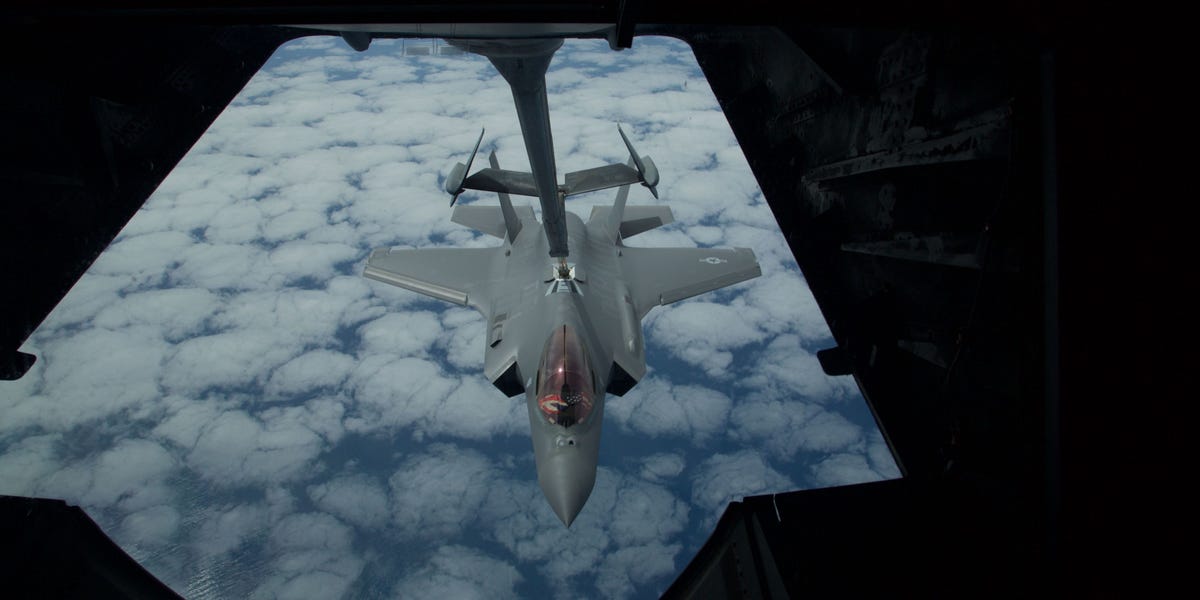
The F-35 era is no longer a futuristic defense brochure with dramatic clouds and suspiciously perfect sunsets. It is here, noisy, expensive, data-hungry, politically unavoidable, and increasingly central to how the United States and its allies think about airpower. The Lockheed Martin F-35 Lightning II has moved from “controversial program” to “global military ecosystem,” and that shift matters far beyond aviation enthusiasts arguing online with the passion usually reserved for barbecue techniques.
At its best, the F-35 is not just a fighter jet. It is a flying sensor node, stealth aircraft, electronic warfare platform, strike fighter, reconnaissance tool, and battlefield information hub rolled into one very expensive, very complicated machine. At its worst, it is also a reminder that modern airpower comes with software delays, sustainment headaches, spare-parts bottlenecks, and budget debates that can make even seasoned Pentagon watchers reach for stronger coffee.
Still, the big picture is clear: the F-35 era has taken flight because modern warfare increasingly rewards stealth, data fusion, networking, and interoperability. The jet is reshaping how pilots fight, how allies train together, how air forces modernize, and how governments calculate deterrence in an unpredictable world.
What Makes the F-35 Different?
The F-35 is often described as a fifth-generation fighter, but that label can sound like a phone upgrade. “Now with better cameras and more storage!” In reality, fifth-generation combat aircraft combine low-observable design, advanced sensors, powerful computing, electronic warfare tools, and the ability to share information across a broader force.
Traditional fighters often required pilots to gather information from separate instruments, radar displays, radio calls, and offboard sources. The F-35’s central trick is sensor fusion: it collects data from onboard sensors and outside networks, processes it, and presents the pilot with a clearer picture of the battlespace. In plain English, the aircraft tries to turn chaos into something a human can act on before the other side does.
That is why people who understand the jet rarely talk about it as simply a replacement for older fighters. The F-35 is more like a quarterback in the sky. It can strike targets, defend itself, gather intelligence, and help other aircraft or forces understand what is happening. A fourth-generation jet may still carry weapons and perform brilliantly in many missions, but the F-35’s value comes from seeing, sharing, and surviving in contested environments.
The Three Variants: One Family, Different Personalities
The F-35 family comes in three major variants, and each has its own job description.
F-35A: The Conventional Workhorse
The F-35A is the conventional takeoff and landing model used by the U.S. Air Force and many allied air forces. It is the most common variant and is designed for operations from traditional runways. If the F-35 family were a garage, the F-35A would be the main daily driver: still wildly advanced, but the most straightforward to operate compared with its siblings.
F-35B: The Short-Runway Acrobat
The F-35B is the short takeoff and vertical landing version used by the U.S. Marine Corps and several partners. It can operate from amphibious assault ships and expeditionary locations where long runways are unavailable. This gives commanders flexibility, especially in island chains or dispersed operations where a large air base might be too obvious, too vulnerable, or simply too far away.
F-35C: The Carrier Specialist
The F-35C is built for aircraft carrier operations. It has larger wings, strengthened landing gear, and features designed for the brutal world of catapult launches and arrested landings. Carrier aviation is already one of humanity’s more dramatic hobbies; adding stealth and sensor fusion makes the F-35C a major part of the U.S. Navy’s future air wing.
Why the F-35 Era Matters Now
For years, the F-35 was discussed mostly in terms of cost overruns, development delays, and political arguments. Those issues were real and remain important. But the aircraft has now reached a scale that changes the conversation. More than a single American procurement program, it has become a shared platform among U.S. allies across Europe, the Pacific, and the Middle East.
That matters because alliances do not fight with press releases. They fight, deter, train, and coordinate with systems that can communicate. When multiple nations operate the F-35, they gain common tactics, maintenance practices, training pipelines, mission data frameworks, and operational habits. In a crisis, that shared foundation can make multinational air operations faster and more coherent.
For NATO, the F-35 is becoming especially important. Countries such as the United Kingdom, Italy, the Netherlands, Norway, Denmark, Belgium, Poland, Finland, Germany, and others are either operating, receiving, or planning to operate the aircraft. The result is not just more jets with angular noses. It is a shift toward a more integrated allied air network.
Stealth Is Only Part of the Story
The F-35 is famous for stealth, but stealth alone does not define the aircraft. Stealth helps reduce detection, especially against certain radar systems, but modern air combat is not a magic invisibility contest. It is a competition involving sensors, emissions control, electronic warfare, cyber resilience, satellites, command networks, missiles, drones, and human judgment.
The deeper value of the F-35 is that it was designed for that messy environment from the beginning. Its low-observable shape helps it operate in dangerous airspace. Its sensors help detect threats. Its software helps merge information. Its communications systems allow it to act as part of a larger force. The aircraft’s real identity is not “invisible fighter.” It is “information-age combat aircraft.” Less superhero cape, more extremely intense group project with classified Wi-Fi.
The Software Jet: Why Updates Matter So Much
Older aircraft could be upgraded, but the F-35 lives and breathes through software. New capabilities often depend on computing power, mission systems, displays, electronic warfare upgrades, weapons integration, and data libraries. That makes modernization both promising and painful.
Technology Refresh 3, known as TR-3, is a major hardware and software modernization package intended to support future Block 4 capabilities. Block 4 is expected to add a wide range of improvements, including better sensors, electronic warfare enhancements, and weapons integration. In theory, this is how the F-35 remains relevant for decades. In practice, modernization has faced delays, testing challenges, and cost growth.
This is one of the defining truths of the F-35 era: airpower now depends on code as much as metal. A jet may look complete on the runway, but its real capability depends on processors, software maturity, test results, cybersecurity, and logistics systems. The aircraft is not a finished object; it is a platform in continuous evolution.
The Cost Question: The Elephant in the Hangar
No honest article about the F-35 can ignore cost. The program is enormous, and its lifetime sustainment bill is one of the most debated topics in defense policy. Acquisition cost gets the headlines because buying a fighter jet is never exactly a coupon-clipping activity. But the long-term cost of operating, maintaining, repairing, upgrading, and supporting the fleet is the bigger challenge.
The F-35 is expected to serve for decades, which means sustainment matters as much as production. Spare parts, depot capacity, engine maintenance, software support, contractor arrangements, and data systems all affect readiness. A stealth fighter that cannot fly when needed is not a deterrent; it is an expensive sculpture with excellent branding.
Recent watchdog reporting has highlighted declining mission capable and full mission capable rates across the U.S. F-35 fleet. That does not mean the aircraft is useless. It means the program must solve the unglamorous problems that decide whether advanced technology actually shows up on the flight line. Readiness is where strategy meets supply chains, and supply chains rarely care about patriotic speeches.
Global Demand Keeps Rising
Despite criticism, global demand for the F-35 remains strong. Many countries are choosing it because they want fifth-generation capabilities, close alignment with the United States, and interoperability with other allied forces. Russia’s war against Ukraine, China’s military modernization, and broader uncertainty in the Indo-Pacific and Europe have all reinforced interest in advanced air defense and strike capabilities.
Poland’s F-35 acquisition is a telling example. As a NATO country on the alliance’s eastern flank, Poland views advanced airpower as part of a broader deterrence strategy. Other European nations are making similar calculations. In the Pacific, the F-35 is central to U.S., Japanese, Australian, South Korean, and Singaporean planning. The aircraft has become not just a product, but a geopolitical signal.
That signal says: we want to plug into the most advanced allied air combat network available. For smaller air forces, this can be transformative. For larger ones, it can become the backbone of modernization.
The F-35 and the Future of Allied Airpower
The F-35 era is also an alliance-management story. A shared aircraft can help allies train together more effectively, but it can also create dependence on common supply chains, software updates, U.S. approvals, and multinational logistics systems. This is both a strength and a vulnerability.
On the positive side, common aircraft make joint operations easier. Pilots from different countries can use similar tactics and understand similar systems. Maintenance teams can share lessons. Exercises become more realistic. Air forces can plan around a common platform rather than a patchwork of unrelated aircraft.
On the challenging side, a widely shared platform concentrates risk. If a software delay affects one customer, it may affect many. If spare parts are scarce, multiple nations may compete for them. If sustainment costs rise, defense ministries from Washington to Warsaw start having the same uncomfortable budget meeting.
What About Sixth-Generation Fighters?
The F-35 era does not mean aviation technology stops here. The United States is already pursuing next-generation air dominance concepts, including future crewed aircraft, drones, advanced sensors, new engines, and collaborative combat aircraft. In other words, the future is not just one pilot in one jet. It may involve teams of crewed and uncrewed systems sharing information at machine speed.
But that does not make the F-35 obsolete. If anything, it makes the F-35 a bridge. It is likely to operate alongside sixth-generation aircraft and autonomous systems for decades. Its role may evolve from strike fighter to networked command node, sensor platform, electronic warfare participant, and partner to uncrewed aircraft.
The F-35 may not be the final form of airpower, but it is the platform teaching air forces how to live in the next era.
The Human Side: Pilots, Maintainers, and Training
The F-35 era is not only about stealth coatings and software releases. It is also about people. Pilots must learn to manage information rather than simply fly fast and maneuver hard. The aircraft’s cockpit is designed to reduce workload, but the mission environment can still be overwhelming. The skill is not just stick-and-rudder flying; it is decision-making inside a flood of data.
Maintainers face a different challenge. The F-35 is packed with sensors, specialized materials, advanced diagnostics, and digital maintenance systems. Keeping it mission-ready requires technical expertise, parts availability, and efficient repair processes. A mechanic with a wrench still matters, but so does the technician interpreting data from a maintenance system. The toolbox now includes laptops, secure networks, and patience of almost spiritual depth.
Training also changes. Simulators are increasingly important because pilots need to practice complex missions that may be too expensive, sensitive, or dangerous to fully replicate in the air. Live-fly exercises remain essential, but the F-35 era leans heavily on synthetic training environments where pilots can rehearse high-end scenarios without needing half the planet’s airspace.
Criticism Is Part of the Story
The F-35 has passionate defenders and equally passionate critics. Both sides have points worth hearing. Supporters argue that no other widely available allied fighter combines stealth, sensors, networking, and multirole flexibility at this scale. Critics argue that the program has been too expensive, too complex, too contractor-dependent, and too slow to deliver promised upgrades.
The mature view is that both statements can be true. The F-35 can be strategically valuable and still suffer from serious sustainment problems. It can be technologically impressive and still frustrating to manage. It can be the centerpiece of allied airpower and still require relentless oversight.
That is not hypocrisy. That is modern defense procurement. If you want simple, buy a bicycle. If you want a stealth fighter that fuses sensor data while operating across multiple services and allied nations, welcome to the paperwork volcano.
Specific Examples of the F-35 Era in Motion
In Europe, the F-35 is becoming a NATO standard by momentum rather than decree. Norway and Denmark already operate the aircraft. Poland is bringing the jet into service as part of a broader defense buildup. Finland, Germany, Belgium, and others are joining or preparing to join the community. This creates a growing network of fifth-generation operators across the continent.
In the Indo-Pacific, the aircraft supports deterrence in a region defined by long distances, advanced missile threats, maritime disputes, and the rapid modernization of Chinese air and naval power. Japan and Australia are especially important operators, while U.S. Marine Corps F-35Bs add flexibility from amphibious ships and expeditionary locations.
At sea, the F-35C gives U.S. Navy carrier air wings a stealthy aircraft designed for contested environments. For decades, carrier aviation has projected power from mobile sea bases. The F-35C adds fifth-generation sensing and survivability to that tradition.
In the Marine Corps, the F-35B fits a future built around mobility, dispersion, and operating from unexpected locations. Its short takeoff and vertical landing capability gives commanders more basing options, though those options still require fuel, maintenance, security, and logistics. Vertical landing is cool; logistics still sends the bill.
What Comes Next?
The next phase of the F-35 era will be defined by three questions.
Can Modernization Stay on Track?
TR-3 and Block 4 are crucial because they shape the aircraft’s future combat relevance. If upgrades arrive late or over budget, the F-35 community will feel the effects across multiple countries. If they stabilize, the jet’s long-term value rises.
Can Readiness Improve?
The program must make the aircraft easier and more affordable to sustain. Better spare-parts flow, depot capacity, maintenance data, engine durability, and contractor accountability will matter as much as new sensors or weapons.
Can the F-35 Integrate with New Systems?
The future battlefield will include drones, satellites, cyber operations, long-range missiles, electronic warfare, and artificial intelligence-enabled decision tools. The F-35 must remain useful inside that larger web, not as a lone hero but as a connected player.
Experiences from the F-35 Era: What the Shift Feels Like
To understand the F-35 era, imagine standing near the fence line at an air show. The aircraft rolls by with its sharp angles, helmeted pilot, and oddly calm menace. It does not look like the sleek Cold War fighters that seemed designed by people who believed speed alone could solve every problem. The F-35 looks more like a machine built around secrets. Even parked, it gives the impression that it knows something you do not.
For aviation fans, the first experience is usually sound. The F-35 is loud in a way that feels less like an engine and more like the sky clearing its throat through a stadium speaker. People point phones at it. Children cover their ears. Someone nearby confidently explains the entire aircraft to a stranger despite being wrong about at least three things. This, too, is part of the airpower ecosystem.
For pilots transitioning from older fighters, the experience is less about raw flying drama and more about information management. The F-35 asks a pilot to think like a mission commander. Instead of chasing one radar contact or focusing on one target, the pilot receives a fused picture of threats, friendly forces, and mission data. The aircraft becomes a filter between the human mind and the overwhelming complexity of modern combat. That can be empowering, but it also demands discipline. More information is only useful if the pilot can trust it, prioritize it, and act at the right moment.
For maintainers, the F-35 era can feel like stepping into a new trade while still carrying the old one. Aircraft still need inspections, repairs, fuel, tires, panels, and careful hands. But the jet also produces data, depends on software, and requires specialized support. Maintenance becomes a conversation between human experience and digital diagnostics. When everything works, the system helps crews find problems earlier. When it does not, the aircraft can become a puzzle box with wings.
For allied air forces, receiving the F-35 is often more than a delivery ceremony. It changes training schedules, base infrastructure, security procedures, simulator needs, pilot selection, maintenance pipelines, and long-term budgeting. A country does not simply “buy F-35s” the way someone buys a new truck. It joins a community, accepts a technological culture, and reorganizes part of its military around a shared platform.
For taxpayers and policymakers, the experience is more complicated. The F-35 represents deterrence, jobs, industrial capacity, and alliance strength. It also represents massive cost, long timelines, and uncomfortable oversight questions. That tension is not going away. The F-35 era will require governments to be both ambitious and skeptical: ambitious enough to modernize, skeptical enough to demand performance.
And for the public, the F-35 is becoming a symbol of modern defense itself. It is brilliant, flawed, powerful, networked, expensive, and never truly finished. It reminds us that the future of airpower is not a single dramatic dogfight in a blue sky. It is a contest of information, readiness, alliances, software, logistics, and trust. The jet may take flight in seconds, but the era behind it is built over decades.
Conclusion: The F-35 Era Has Arrived, Problems and All
The F-35 era takes flight not because the aircraft is perfect, but because it reflects where airpower has gone. Modern combat aviation is no longer just about speed, altitude, and firepower. It is about who sees first, who understands first, who shares information fastest, and who can keep advanced systems ready under pressure.
The F-35 brings stealth, sensor fusion, networking, and multirole flexibility to a growing group of U.S. and allied forces. It also brings sustainment problems, software delays, cost concerns, and management challenges that cannot be waved away with glossy marketing. The program’s future success depends on whether it can improve readiness, deliver upgrades reliably, control long-term costs, and integrate with the next generation of air combat systems.
For now, one thing is certain: the F-35 is no longer waiting for its era. Its era is already airborne.