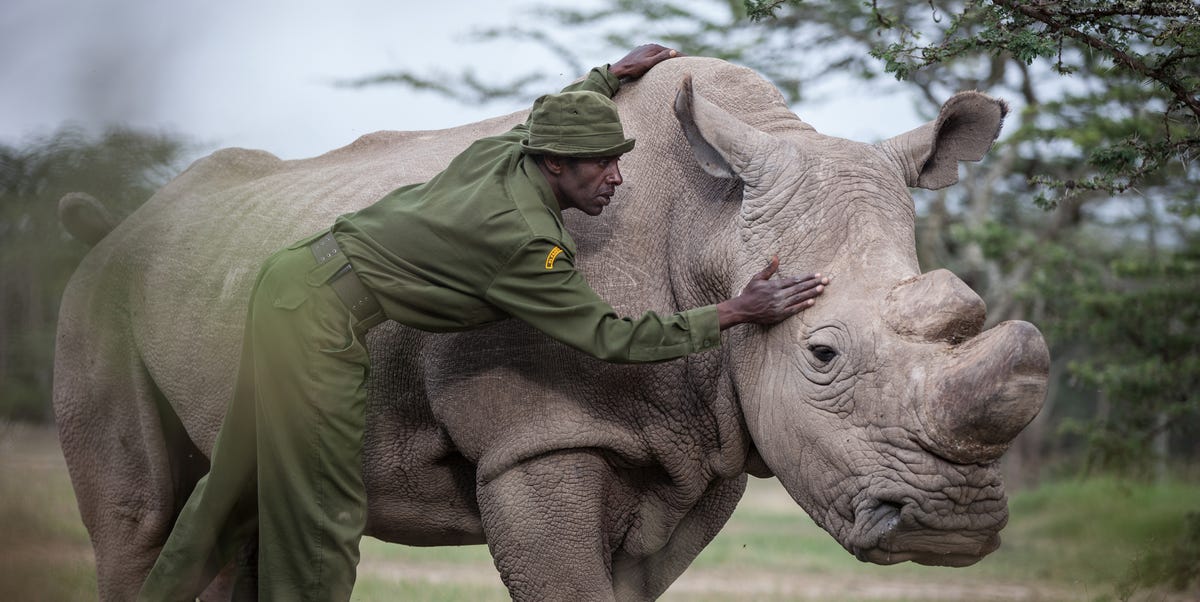
There are comeback stories, and then there are stories so audacious they sound like they were brainstormed at 2 a.m. by a sleep-deprived scientist with a whiteboard and a heroic amount of coffee. The plan to save the northern white rhino belongs firmly in the second category. This is not a simple breeding program, not a routine conservation campaign, and definitely not a “let nature take its course” situation. Nature, sadly, already got mugged by poaching, war, habitat loss, and human greed.
Today, the northern white rhino is functionally extinct. Only two remain, both female: Najin and Fatu. That means no natural mating, no ordinary population rebound, and no old-fashioned conservation miracle waiting quietly in the grass. If this rhino is going to have a future, it will likely come through an extraordinary blend of reproductive biology, stem cell science, cryopreservation, genomics, veterinary care, and enough international coordination to make a moon launch look cozy.
In other words, the northern white rhino is no longer just a conservation story. It is one of the boldest bioengineering experiments ever attempted in wildlife rescue.
Why the Northern White Rhino Reached the Brink
The northern white rhino once ranged across parts of Central and East Africa. It was not supposed to end like this. But decades of poaching, political instability, and weak conservation infrastructure devastated the subspecies. Rhino horn became more valuable to criminals than the living animal was to the ecosystems it shaped. By the time the world fully grasped the scale of the disaster, the population had already collapsed.
Conventional conservation measures arrived too late. Zoos tried breeding. Protected areas tried security. Scientists tried to buy time. Time, however, had other plans.
That is how the story narrowed to two living animals under round-the-clock protection in Kenya. Najin and Fatu are not just the last of their kind. They are living endpoints of a long human failure. They are also, strangely enough, the beginning of a very high-tech gamble.
What Makes This Rescue Plan Different
Traditional species recovery usually depends on protecting habitat, stopping poaching, and helping a surviving population reproduce. The northern white rhino does not have that luxury. There is no viable breeding population left. So scientists have had to reverse the order of conservation. Instead of saving a population and letting biology do the rest, they are trying to rebuild biology itself and then return it to conservation.
That effort has two main tracks.
Track One: IVF and Surrogate Mothers
The first strategy uses eggs collected from Fatu, the younger of the two surviving females, and frozen sperm from deceased northern white rhino males. Scientists fertilize the eggs in the lab to create embryos, then freeze those embryos for transfer into surrogate southern white rhinos.
This matters because southern white rhinos are the northern white rhino’s closest living relatives. They are similar enough that researchers believe southern white females can carry northern white embryos to term. In plain English: the plan is to use one rhino subspecies to help deliver the calf of another. It is reproductive science doing a very delicate and very expensive favor.
The approach has already produced a meaningful number of embryos, which is remarkable given how difficult rhino reproduction is even under normal circumstances. Rhino ovaries are not exactly built for convenience, and egg retrieval is a specialized veterinary operation that requires precision, planning, and careful ethical oversight.
There is also an uncomfortable truth here: the embryo count is precious because every single egg matters. This is not a situation where researchers can shrug and say, “We’ll get more next season.” The window is narrow, the animals are aging, and biology is not taking pity on anyone.
Track Two: Stem Cells and Future Gametes
The second strategy is even more futuristic, and frankly, if you pitched it in a movie script, an editor might tell you to tone it down. Scientists have preserved living cells from additional northern white rhinos in frozen biobanks. Those cells can be reprogrammed into induced pluripotent stem cells, which are cells capable of becoming many different cell types.
The dream is to turn those cells into sperm and eggs. That would allow researchers to create embryos from animals that are already dead, dramatically expanding the genetic base of any future northern white rhino population. This is the real bioengineering gambit: not merely making embryos from the last surviving females, but eventually generating reproductive cells from cryopreserved tissue and using them to create genetically distinct calves.
Important detail: these future calves would not be clones. That point gets lost whenever people hear phrases like “frozen cells” and “species revival.” Cloning would create near-genetic copies of one animal. This project aims for sexual reproduction, just assisted in a laboratory. The goal is a breeding population of unique individuals, not a copy-and-paste zoo.
The Breakthrough That Changed the Mood
For years, the northern white rhino rescue effort sounded hopeful in the way very ambitious science often does: noble, smart, and one disaster away from being called impossible. Then came a crucial turning point. Researchers achieved the first IVF rhino pregnancy using a southern white rhino embryo and a surrogate mother. The pregnancy did not survive to term because the surrogate died from an unrelated bacterial infection, but the experiment proved something enormous: embryo transfer in rhinos can work.
That milestone was not the finish line. It was more like finally proving the airplane can get off the runway, even if it still has a very stressful flight ahead.
For the northern white rhino project, proof of concept was everything. It showed that researchers were not chasing a fantasy. It transformed the conversation from “Can this be done at all?” to “How do we improve the odds fast enough?” That is a much better question, even if it is still wrapped in uncertainty.
Why Genomics Matters So Much
Embryos alone do not solve the species problem. A population built from too few genomes can suffer from inbreeding, developmental problems, reduced fertility, and weak long-term resilience. That is why genome science has become a key part of the northern white rhino strategy.
A complete reference genome gives researchers a clearer picture of what healthy northern white rhino cells should look like. That matters enormously when working with stem cells, because stem cells can accumulate harmful mutations during cultivation. Without a reliable genomic map, scientists are trying to repair a priceless machine while guessing where half the parts go.
With better genomic tools, researchers can evaluate cell integrity, choose stronger stem cell lines, and make future embryo creation more responsible and more precise. In conservation terms, this is quality control. In everyday terms, it is the difference between building a bridge from tested steel or hoping the bolts are probably fine.
The Ethics: Should We Do This Just Because We Can?
No serious conservation discussion is complete without the awkward but necessary questions. Should so much money, time, and scientific effort go toward one functionally extinct subspecies when so many other species are declining right now? Does spectacular rescue science distract from the less glamorous work of habitat protection and anti-poaching enforcement? Are we saving a species, or engineering a symbol?
These are fair questions. They also have uncomfortable answers.
On one hand, critics argue that prevention is cheaper than resurrection. They are right. If humanity had protected northern white rhinos earlier, none of this would be necessary. On the other hand, that truth does not erase the value of what scientists are learning now. The tools being developed for the northern white rhino could benefit other endangered species, especially those facing reproductive bottlenecks, fragmented populations, or looming extinction.
The project also does not eliminate the need for traditional conservation. A lab-made calf still needs a safe world to grow into. Science can help produce an animal; it cannot single-handedly rebuild a functioning landscape, stop organized crime, or teach politicians how not to wreck biodiversity policy before lunch.
So the ethical answer is not “bioengineering instead of conservation.” It is “bioengineering plus conservation, or the whole exercise collapses under its own ambition.”
Why This Is Bigger Than One Rhino
The northern white rhino has become a test case for the future of conservation biology. Around the world, more species are being pushed into corners where traditional recovery may not be enough. Small populations lose genetic diversity. Reproduction fails. Climate change shifts habitats faster than animals can adapt. The old conservation playbook still matters, but it may no longer cover the whole emergency.
That is why this rhino matters beyond its own lineage. If scientists can refine egg retrieval, embryo culture, cryopreservation, surrogate pregnancy, stem-cell-derived gametes, and genomic screening in one of the most difficult large mammals on Earth, those techniques could eventually support other critically endangered species. The lessons may help rhino conservation broadly, and perhaps even provide a framework for managing future biodiversity crises.
This is the part where the northern white rhino stops being only a tragedy and becomes a template.
What Success Would Actually Look Like
Success is not one calf and a bunch of celebratory headlines. Success is a multi-generation recovery plan.
First, a healthy calf would need to be born from a surrogate southern white rhino. Then more calves would need to follow. Over time, scientists would need to expand the founder base using preserved sperm, embryos, and eventually stem-cell-derived gametes. The resulting animals would need veterinary monitoring, behavioral management, and social development. Eventually, there would need to be enough genetically viable northern white rhinos to form a sustainable breeding population.
And even then, a hard question remains: where do they go? A species is not truly saved when it exists only as a heavily managed scientific project. It is saved when it can inhabit secure landscapes, perform its ecological role, and reproduce without a constant committee standing over its shoulder.
That means the last chapter of this story is not in a lab freezer. It is in the field.
The Experience of Following This Story in Real Time
One of the strangest things about the northern white rhino story is how it makes you feel two opposite emotions at once. It is heartbreaking because the disaster is already complete in one sense. We are not watching a species drift toward danger; we are watching scientists negotiate with the aftermath. But it is also oddly energizing, because this is one of the few extinction stories where the response is not surrender. It is invention.
Following the rescue effort feels less like reading a tidy science update and more like living through a long series of tiny emotional whiplashes. One month brings news of another embryo. Another brings a reminder that only two animals remain. One report celebrates a successful procedure. The next reminds you that a surrogate pregnancy was lost. Hope arrives, but it does not arrive wearing a cape. It arrives wearing gloves, carrying ultrasound equipment, and asking everyone to please stay very calm.
There is also something deeply humbling about how many kinds of expertise have to cooperate just to give this subspecies a chance. Rangers protect the last two rhinos on the ground. Veterinarians manage dangerous procedures with extraordinary care. Reproductive biologists handle fragile eggs and embryos. Stem cell researchers work with frozen tissues gathered years ago by people who had the foresight to preserve them. Geneticists analyze cell quality. Conservation managers think about habitat, welfare, funding, and public trust. This is not one heroic scientist saving the day. It is a relay race run across continents.
For the public, the experience is equally unusual. The northern white rhino project asks people to care about something they may never physically see: a frozen embryo, a stem cell line, a genome assembly, a probability curve. Conservation usually gives us charismatic animals in dramatic photographs. This project asks us to care about invisible stages of life, and to understand that sometimes the most important wildlife story is happening in a microscope, not on a savanna.
And yet the emotional center of the whole effort remains very visible: two rhinos, Najin and Fatu, living under guard, carrying the symbolic weight of an entire lost world. Every scientific update loops back to them. Their presence keeps the story from floating away into abstract biotech optimism. This is not innovation for innovation’s sake. It is a response to damage already done.
That may be the most powerful experience this story offers. It forces us to sit with both guilt and responsibility. Humans drove the northern white rhino into oblivion’s waiting room. Humans are now trying, with all the ingenuity we can muster, to pull it back out. There is no guarantee of success. But there is moral clarity in the attempt. If a species is hanging by a thread that people themselves shredded, then trying to braid science, ethics, and conservation into a rescue line feels less like vanity and more like obligation.
And maybe that is why this story stays with people. It is not merely about whether biotechnology can save a rhino. It is about whether human intelligence, having helped cause the crisis, can mature enough to become part of the repair.
Conclusion
The bioengineering gambit to save the northern white rhino is ambitious, expensive, risky, and scientifically unprecedented. It is also one of the clearest examples of conservation refusing to accept a human-made extinction as the final word. IVF embryos, surrogate southern white rhinos, frozen cell banks, stem-cell-derived gametes, and advanced genomics are not science-fiction props here. They are practical tools in a rescue mission that exists because ordinary options ran out.
No one should pretend the outcome is guaranteed. The northern white rhino may still slip away despite every brilliant intervention. But the effort itself is already changing conservation science. It is proving that protecting biodiversity in the future may require not only parks, laws, and armed rangers, but also cell culture labs, genome maps, and a willingness to innovate before the obituary is written.
If the northern white rhino does return, it will not be because one miracle happened. It will be because hundreds of careful, unglamorous, astonishing steps were taken by people unwilling to confuse “nearly impossible” with “not worth trying.”