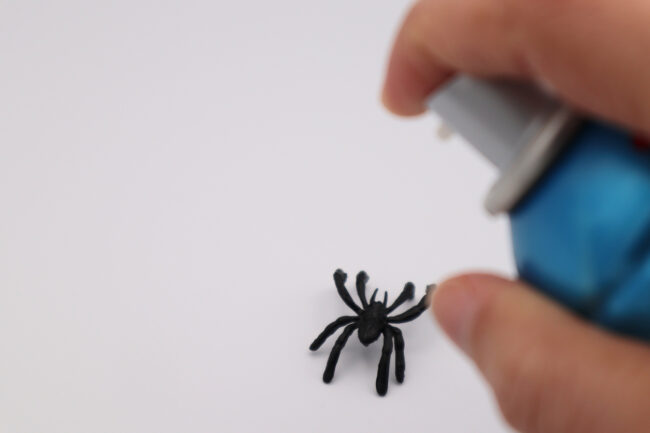
Finding a spider in the house can turn an otherwise calm evening into an unscheduled furniture-moving competition. One moment you are watching television; the next, everyone is standing on the couch while one tiny arachnid calmly reviews the property.
Fortunately, the best spider killer is not necessarily the strongest chemical available. Effective spider control usually combines the right product with practical prevention: removing webs, trapping wandering spiders, reducing the insects they eat, sealing entry points, and treating only the areas that genuinely need attention.
Bob Vila’s selection of top spider-control products includes diatomaceous earth, plant-based contact sprays, essential-oil repellents, glue traps, and an outdoor lawn treatment. Each option has a different job, so the smartest purchase depends on whether spiders are hiding indoors, building webs around windows, wandering through a basement, or gathering outside near the foundation.
Quick Comparison of Bob Vila’s Top Spider-Killer Picks
| Category | Product | Best Use | Main Consideration |
|---|---|---|---|
| Best Overall | Safer Brand Diatomaceous Earth Insect Killer | Dry cracks, crevices, garages, and other protected areas | Dust can irritate the eyes and respiratory system |
| Best Value | Safer Brand Home Indoor Pest Control Spray | Direct contact with indoor spiders and crawling insects | Limited residual repellent effect after drying |
| Upgrade Pick | Wondercide Outdoor Pest Control Concentrate | Large yards, patios, foundations, and outdoor living areas | Outdoor use only; coverage depends on the current formula |
| Best Repellent | Wondercide Indoor Pest Control Spray | Baseboards, doorways, cabinets, windows, and hard surfaces | May affect delicate fabrics; spot-test first |
| Best Peppermint Spray | Mighty Mint Spider Repellent | Entry points and areas where recurring spiders are seen | Strong scent and more frequent reapplication |
| Best Trap | Catchmaster Spider and Insect Glue Traps | Basements, garages, closets, and under appliances | Must be kept away from children and pets |
| Best for Lawns | Ortho BugClear Insect Killer for Lawns and Landscapes | Outdoor perimeter, lawns, ornamentals, and listed plants | Prevent drift and runoff into drains or waterways |
The Best Spider Killers Reviewed
1. Best Overall: Safer Brand Diatomaceous Earth Insect Killer
Diatomaceous earth, commonly shortened to DE, is a mineral-based insecticide made from fossilized microscopic aquatic organisms. Rather than poisoning a spider through its nervous system, the dry particles damage the protective outer surface of crawling pests and contribute to dehydration.
This makes Safer Brand Diatomaceous Earth a practical choice for protected, low-traffic locations such as wall voids, gaps beside baseboards, dry garage corners, crawl spaces, and cracks around utility lines. It has no strong chemical odor and can remain useful while the powder stays dry and undisturbed.
However, “natural” does not mean “sprinkle it around like powdered sugar.” Diatomaceous earth can irritate the nose, lungs, skin, and eyes. Apply only a thin, label-directed layer, ventilate the area, and avoid creating airborne clouds. It is not ideal for open floors where children, pets, or robotic vacuums can redistribute it throughout the house.
Best for: Homeowners who want a long-lasting dry treatment in cracks and sheltered areas.
Skip it when: The target area is damp, windy, frequently cleaned, or easily reached by pets and children.
2. Best Bang for the Buck: Safer Brand Home Indoor Pest Control Spray
Safer Brand Home Indoor Pest Control Spray is designed as a convenient contact treatment for spiders and other household pests. Its plant-derived active ingredients include oils such as clove and cottonseed oil, providing an alternative to conventional residual pyrethroid sprays.
The main advantage is speed and simplicity. There is no powder to measure, trap to assemble, or concentrate to mix. When a spider appears beside the refrigerator at the exact moment you are carrying three grocery bags, a ready-to-use bottle has obvious appeal.
The compromise is residual performance. A contact spray works best when it reaches the pest directly. Once the treated surface dries, it may not continue controlling spiders for an extended period. That makes this product more suitable for occasional encounters than for a large, established infestation.
Even with a plant-based formula, users should follow the label, avoid spraying food or food-contact surfaces unless specifically permitted, and keep people and animals away during application as directed.
Best for: Fast indoor spot treatment at a reasonable cost.
Skip it when: You need a strong residual barrier rather than direct-contact control.
3. Upgrade Pick: Wondercide Outdoor Pest Control Concentrate
Spiders frequently gather around a home because the yard supplies a buffet of mosquitoes, ants, flies, crickets, and other prey. Wondercide Outdoor Pest Control Concentrate addresses the broader food-chain problem by targeting multiple outdoor pests with a cedarwood-oil-based formula.
This option is most useful for homeowners with a large yard, patio, deck, ornamental garden, or foundation perimeter. Instead of chasing individual spiders around the porch with a spray bottle, a properly mixed outdoor concentrate can treat a much larger area.
Current product directions should always take priority over old reviews or retailer descriptions. Coverage rates, listed pests, application intervals, ingredients, and approved treatment sites can change. The current Wondercide product information also states that some outdoor formulas should not be applied to food-use sites, including vegetable or fruit gardens, so checking the exact label is essential.
Best for: Broad outdoor pest reduction around larger properties.
Skip it when: You need an indoor treatment or want to spray an edible garden not listed on the label.
4. Best Indoor Repellent: Wondercide Indoor Pest Control Spray
Wondercide Indoor Pest Control Spray is a ready-to-use, cedarwood-oil-based treatment intended for common household pests, including spiders. It can be applied to appropriate hard surfaces near baseboards, windows, doors, cabinets, and other routes used by crawling pests.
This product is especially appealing when the goal is not merely to eliminate one spider but to make frequently invaded areas less inviting. It can also help reduce some of the insects spiders hunt. No prey, no reason to establish a tiny eight-legged restaurant near the pantry.
Essential-oil products still deserve careful handling. Strong botanical ingredients can irritate sensitive skin, eyes, or airways when misused. Test the spray on a hidden section before treating rugs, painted surfaces, upholstery, or delicate materials, and use it only according to the current directions.
Best for: Recurring indoor activity around common spider entry points.
Skip it when: Household members dislike cedar fragrances or the target surface could stain.
5. Best Peppermint Spray: Mighty Mint Spider Repellent
Mighty Mint uses concentrated peppermint oil to deter spiders and other unwanted visitors from treated areas. It is useful around window frames, door thresholds, cracks, utility openings, baseboards, storage spaces, and sheltered porch areas where spiders repeatedly appear.
The spray’s fresh peppermint aroma is a major selling point for some households. For others, it can make a room smell as though a candy cane factory has experienced a containment failure. Fragrance sensitivity matters, particularly in bedrooms or compact spaces.
Botanical repellents generally require more frequent application than conventional residual pesticides. They also perform better as one part of an integrated plan than as a magical scented force field. Use the spray after removing webs and sealing obvious gaps rather than spraying the same open crack every three days forever.
Best for: Homeowners seeking a fragrant, plant-based spider deterrent.
Skip it when: Anyone in the home is sensitive to strong peppermint aromas.
6. Best Trap: Catchmaster Spider and Insect Glue Traps
Glue traps are among the simplest ways to capture ground-wandering spiders without spraying chemicals into indoor air. Catchmaster traps can be placed flat or folded into covered tunnels, depending on the location and the need to shield the adhesive from dust.
Place traps flush against walls because wandering spiders often travel along edges rather than marching confidently across the middle of the room. Useful locations include behind appliances, beneath cabinets, inside garages, beside basement walls, near utility penetrations, and in dark storage spaces.
Traps also function as monitoring tools. A trap that repeatedly catches spiders near one foundation wall is providing a clue: there may be an entry gap, moisture source, cluttered hiding place, or insect population nearby.
Keep glue boards out of reach of children and pets. Although they do not release insecticide, exposed adhesive can stick to fur, skin, toys, or anything else curious family members decide to investigate.
Best for: Chemical-free indoor capture and activity monitoring.
Skip it when: The trap cannot be placed securely away from pets or young children.
7. Best for Lawns: Ortho BugClear Insect Killer for Lawns and Landscapes
Ortho BugClear is a conventional outdoor insecticide intended for numerous listed lawn and landscape pests, including spiders. Depending on the selected version, it may be sold as a concentrate, ready-to-spray liquid, or granular treatment.
This is the heavy-duty option in the group. It is better suited to widespread outdoor insect pressure than to a single harmless web under a porch light. Because it controls many insects, it can indirectly reduce spider activity by limiting available prey around the lawn and foundation.
The tradeoff is greater responsibility. Apply only to listed sites, avoid windy or rainy conditions, prevent runoff, and observe all restrictions for people, pets, edible plants, pollinators, and waterways. More product does not create more protection; it creates more exposure and potentially more environmental damage.
Best for: Significant outdoor pest activity across lawns and landscaped areas.
Skip it when: A nonchemical method can solve the problem or runoff cannot be controlled.
How to Choose the Right Spider Killer
Match the Product to the Location
Indoor and outdoor products are not interchangeable. Indoor treatments must be specifically labeled for indoor use, while lawn products belong outside on approved surfaces. Never assume that a product suitable for a foundation can also be used in a bedroom, pantry, vegetable bed, or pet area.
Decide Whether You Need a Killer, Repellent, or Trap
A contact killer handles a spider you can see. A repellent discourages activity in a treated location. A glue trap captures and monitors spiders traveling across floors. A residual outdoor pesticide treats broader pest activity. Buying the wrong format often leads to disappointing results and a cabinet full of products that each performed a job you did not actually need.
Consider Children, Pets, and Sensitive Adults
Evaluate whether a powder can become airborne, whether a trap may stick to a pet, and whether a scented spray may trigger discomfort. Remove children, toys, food, and animals from treatment areas when required, and do not allow reentry until the label says it is permitted. Store all pest-control products in their original containers in a secure location.
Read the Entire Label Before Buying
Confirm that the label lists spiders, the intended location, the correct application method, and any required protective equipment. An attractive bottle with a leaf on the front is not a substitute for directions. The label is the legal instruction manual, not a decorative suggestion printed in extremely small type for entertainment.
Why Spider Sprays Alone Rarely Solve the Problem
Most spiders enter through openings around foundations, windows, vents, utility lines, garage doors, and exterior doors. They remain where they can find shelter and prey. A spray may kill a visible spider, but it does not repair the gap behind the washing machine or remove the silverfish population in the basement.
University extension and pesticide-information programs consistently recommend an integrated approach: vacuum spiders, webs, and egg sacs; install tight door sweeps; repair screens; seal cracks; reduce clutter; control humidity; trim vegetation away from the structure; and use sticky traps to identify active routes. Residual pesticide applications may provide temporary support, but they are not a replacement for housekeeping and exclusion.
A Safer Step-by-Step Spider-Control Plan
- Identify the problem. Determine whether you are seeing an occasional spider, several wandering spiders, repeated webs, egg sacs, or a medically significant species.
- Vacuum first. Remove visible spiders, webs, egg sacs, and insect debris. Empty the vacuum outdoors afterward.
- Place monitoring traps. Put glue boards along walls and beneath furniture in inaccessible locations.
- Seal entry points. Repair screens, caulk gaps, install weather stripping, and replace worn door sweeps.
- Reduce spider food. Address flies, mosquitoes, ants, roaches, silverfish, and other insects attracting predators.
- Correct moisture problems. Repair leaks, improve ventilation, and use a dehumidifier in damp basements when appropriate.
- Apply the least hazardous suitable treatment. Use a targeted trap, dust, repellent, contact spray, or outdoor product only where needed.
- Recheck after one to two weeks. Trap locations and new webs will reveal whether the strategy is working.
Most spiders found around homes are not dangerous, and outdoor spiders help control garden pests. When possible, leave outdoor spiders alone and focus on keeping them outside. For persistent activity, uncertain identification, or suspected black widow or recluse populations, contact a qualified extension specialist or licensed pest-management professional.
Practical Homeowner Experience: What Usually Works in the Real World
The most useful lesson from managing spiders is that the dramatic momentthe spider sprinting across the flooris rarely the whole problem. The important evidence is usually less exciting: an old web behind a storage shelf, a worn garage-door seal, insects gathering near an exterior light, or cardboard boxes sitting untouched in a damp basement.
A common first attempt is to buy a strong-smelling spray and treat every baseboard. The house smells impressively minty, but spiders eventually return because the exterior gap remains open. A better approach begins with observation. Place glue traps along several walls and label each trap with its location and date. After a week, compare the results. Two empty traps and one busy trap beside the water heater tell you exactly where to focus.
Vacuuming provides another immediate improvement that people often underestimate. Removing active webs, dust, dead insects, and egg sacs eliminates shelter and food in a single pass. It also creates a clean baseline. When a new web appears two days later, you know the area is active rather than staring at a web that may have been abandoned during the previous presidential administration.
Diatomaceous earth works best when applied with restraint. A nearly invisible layer in a dry crack is more practical than a miniature snowbank across the garage floor. Thick piles are messy, easily disturbed, and more likely to become airborne. The product must also remain dry, so applying it beside a leaking basement wall is an excellent way to create expensive mud.
Glue traps are especially valuable in garages and basements because they reveal movement patterns. They should sit tightly against walls, not in the center of the room. Folding them into tunnels keeps dust off the adhesive and reduces the chance of accidental contact. Check them regularly and replace them when full, dusty, or no longer sticky.
Essential-oil sprays are convenient around doors and windows, but scent tolerance varies dramatically. Test one small area before treating an entire room. A fragrance that smells refreshing during the first minute may become exhausting after six hours. Consistent light application is usually preferable to soaking every surface.
Outdoor treatment produces better results when combined with landscape maintenance. Move firewood away from exterior walls, remove debris, trim plants that touch the siding, clean webs from patio furniture, and consider using outdoor bulbs that attract fewer flying insects. A bright light surrounded by moths is essentially a glowing dinner reservation for web-building spiders.
The most successful strategy is layered rather than aggressive. Start with cleaning and exclusion, add traps for monitoring, use a low-risk targeted treatment where appropriate, and reserve broader pesticides for problems that justify them. This method usually uses less product, creates less household exposure, and delivers longer-lasting control than repeatedly spraying every spider that auditions for a role in the living room.
Final Verdict
Safer Brand Diatomaceous Earth is Bob Vila’s best overall pick for homeowners who need a dry treatment for protected cracks and crevices. Safer Brand Home Indoor Pest Control Spray is the convenient value choice for direct indoor treatment, while Catchmaster glue traps offer the simplest pesticide-free option for monitoring and capturing wandering spiders.
For repellency, Wondercide Indoor Pest Control and Mighty Mint provide plant-based options for doorways, windows, and baseboards. Wondercide Outdoor Pest Control Concentrate suits larger exterior areas, while Ortho BugClear is the conventional lawn treatment for more serious outdoor pest pressure.
No single bottle will permanently spider-proof a house. The winning combination is product selection plus prevention: remove webs, reduce insect prey, control moisture, eliminate clutter, seal openings, and monitor activity. In other words, make your home less attractive to spiders without making it less attractive to the humans paying the mortgage.
Note: Product formulas, registrations, approved uses, coverage rates, and safety directions may change. Always read the current label before purchasing or applying any pesticide. Never use a product in a location or against a pest that is not specifically listed.
Editorial research note: This guide synthesizes information from Bob Vila, the U.S. Environmental Protection Agency, the National Pesticide Information Center, Oregon State University, Colorado State University Extension, the University of California Statewide IPM Program, University of Minnesota Extension, Purdue Extension, Poison Control, Safer Brand, Wondercide, Mighty Mint, Catchmaster, Scotts/Ortho, and The Home Depot.