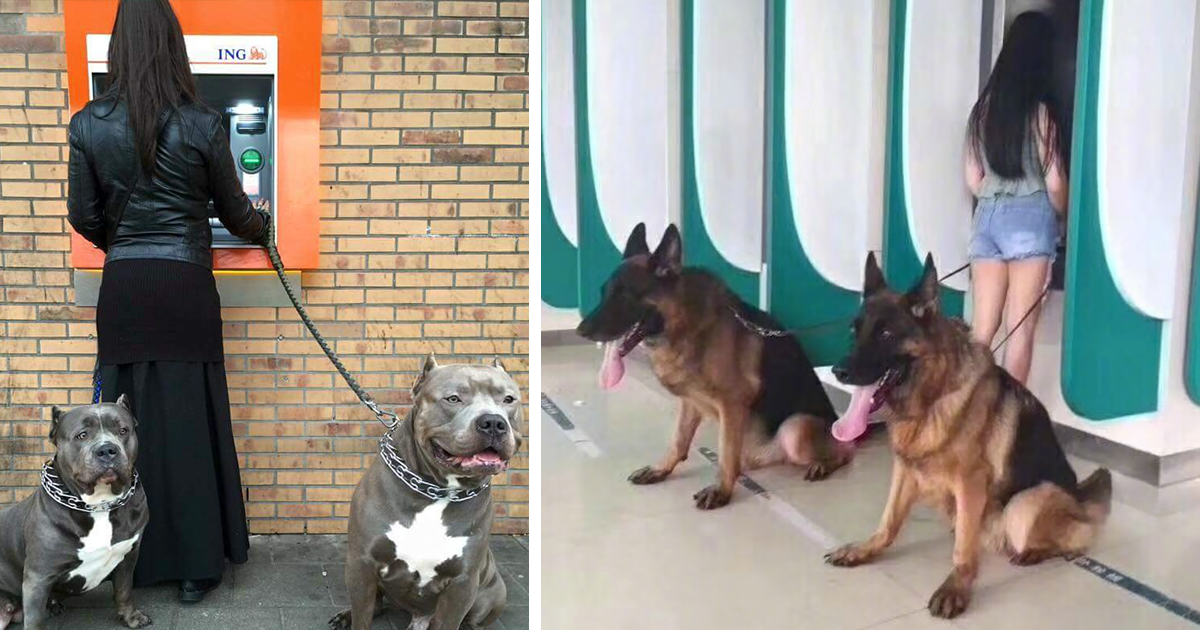
ATM withdrawal safety sounds like one of those grown-up topics that arrives wearing beige shoes and carrying a clipboard. But add a loyal dog standing behind you like a four-legged bodyguard with opinions, and suddenly personal finance has a tail, a bark, and excellent comic timing.
The internet has long loved the idea of “ATM withdrawal defense” photos: people using cash machines while their dogs sit, stand, glare, patrol, or silently judge anyone who gets too close. It is funny because it is dramatic. It is relatable because many people have felt that tiny ATM moment of vulnerability: card in the machine, PIN on the screen, cash about to appear, and your back facing the entire world like you are starring in a low-budget suspense movie.
Of course, real ATM safety is not about turning your Labrador into a security contractor named Sir Barks-a-Lot. The best defense combines awareness, smart habits, fraud prevention, and choosing safer withdrawal environments. Dogs can be wonderful companions, but the true goal is not confrontation. It is prevention. Think of this article as a playful tour through 13 picture-worthy ATM defense moments, plus practical advice on how to withdraw cash safely without needing a soundtrack from an action film.
Why ATM Withdrawal Defense Matters
ATMs are convenient because they give us quick access to cash, account balances, deposits, and basic banking services. That same convenience can also attract opportunists. The main risks around ATM withdrawals usually fall into two categories: physical safety and account fraud.
Physical safety includes things like being watched too closely, using a poorly lit machine, withdrawing cash late at night, or being distracted while leaving the ATM. Fraud risks include card skimming, hidden cameras, fake keypads, shoulder surfing, stolen cards, and unauthorized electronic transfers. In plain English: someone may try to steal your cash, your card information, your PIN, or your peace of mind. Rude? Extremely.
The good news is that most ATM safety habits are simple. Use well-lit machines. Inspect the card reader. Cover your PIN. Put cash away before walking off. Check your account alerts. Report suspicious transactions quickly. And, if you happen to have a calm, well-trained dog standing with you, enjoy the bonus intimidation factorjust do not rely on it as your only security plan.
The Best ATM Withdrawal Defense: 13 Picture-Worthy Moments
Since the title promises 13 pics, here are 13 publish-ready photo concepts, captions, and safety lessons inspired by the classic “dogs guarding humans at ATMs” theme. You can use these as image captions, gallery sections, or humorous breaks inside the article.

1. The Back-Watcher
The most classic ATM defense move is simply having someone watch your back. In the dog version, that someone has ears like radar dishes and a face that says, “I may not understand compound interest, but I understand suspicious vibes.” In real life, awareness is the point. Before using an ATM, take a second to scan your surroundings. If a person is hovering too close, acting oddly, or making you uncomfortable, skip that machine and choose another location.

2. The Bank-Branch Buddy
Using an ATM inside or directly attached to a bank branch is often safer than using a random outdoor machine in an isolated corner. Bank locations are usually better lit, may have cameras, and are more likely to be monitored. Your dog may look like the star of the operation, but the real hero is choosing a smarter environment.

3. The Night-Time Safety Check
If you must use an ATM at night, choose one in a busy, bright, visible area. Avoid machines hidden behind buildings, blocked by shrubbery, or placed where you cannot easily see who is nearby. A dog can make a night withdrawal feel less lonely, but lighting, visibility, and a quick exit route matter more than a dramatic canine stare.

4. The PIN Shield
Covering your PIN is one of the simplest ATM security tips and one of the easiest to forget. Hidden cameras and shoulder surfers do not need much information to cause trouble. Use your free hand, wallet, or body angle to block the keypad. Even if nobody appears to be nearby, cover it anyway. It costs zero dollars and makes you look pleasantly mysterious.

5. The Skimmer Spotter
Card skimmers can be attached to ATMs to capture card data, and some setups include tiny cameras to record PINs. Before inserting your card, look for loose, crooked, damaged, scratched, or unusually bulky parts. Wiggle the card reader gently. Check whether the keypad looks raised, mismatched, or poorly fitted. If something seems off, do not use the machine. Report it to the bank or business that operates the ATM.

6. The Space Bubble
At an ATM, personal space is not just etiquette; it is security. If someone stands too close, politely wait, cancel the transaction, or step away. You do not owe anyone a rushed withdrawal. A good rule is simple: if a stranger can read your screen, they are too close. If they can guess your PIN from your shoulder movement, they are way too close.

7. The Drive-Up Defense
Drive-up ATMs can be convenient, but do not treat them like a pause button for caution. Keep doors locked and passenger windows up. Have your card ready before you pull up, and put cash away before driving off. If another car or person makes you uneasy, leave and try another ATM. Your dog may love the car ride, but your locked doors are doing the real work.

8. The Cash Concealer
Once the cash comes out, put it away immediately. Do not count a stack of bills in public unless you are auditioning for the role of “person who attracts attention.” Place the money in a wallet, pocket, or bag before leaving the ATM. Keep your receipt or choose not to print one if you do not need it. Receipts can show partial account information or balances, and leaving them behind is a tiny gift basket for nosy people.

9. The Account Alert System
Modern banking alerts are an underrated ATM defense. Turn on push notifications, text alerts, or email alerts for withdrawals, debit card use, low balances, and suspicious activity. The faster you know something is wrong, the faster you can report it. Your dog may bark at the mail carrier, but your banking app can bark at unauthorized withdrawals.

10. The Cancel Button Strategy
If anything feels wrong, cancel the transaction. Maybe the machine looks altered. Maybe someone is lingering. Maybe your instincts are waving a red flag while wearing tap shoes. Trust that feeling. A cash withdrawal can wait. Your safety cannot.

11. The Buddy System
When possible, go with another person, especially for larger withdrawals or late-night trips. A friend can watch the surroundings while you focus on the machine. If your “friend” happens to be a dog, wonderfuljust remember that a human companion can call for help, drive, notice details, and hold you accountable when you say, “I’ll just use the sketchy ATM behind the closed laundromat.”

12. The Cardless Option
Some banks offer cardless ATM access through mobile apps or digital wallets. This may reduce the risk of card skimming because you are not inserting a physical card into a compromised reader. Still, cardless does not mean risk-free. Protect your phone with a strong passcode or biometrics, keep your banking app updated, and never share one-time codes with anyone.

13. The Calm Exit
The withdrawal is not over when the cash appears. It is over when you have secured your money, card, phone, keys, and receipt, then left the area safely. Do not stand around checking messages or reorganizing your entire life at the machine. Move with purpose. A calm exit is the final scene in every good ATM defense story.
Real ATM Safety Tips That Actually Work
Funny dog photos are delightful, but real ATM withdrawal defense is built on repeatable habits. The most important one is situational awareness. Look around before you walk up. If the ATM area feels unsafe, leave. Your instincts are not being dramatic; they are doing their job.
Next, inspect the ATM. Criminals sometimes install skimming devices over card readers or fake keypads over real keypads. Warning signs include parts that look loose, crooked, bulky, scratched, mismatched in color, or different from nearby machines. If the card reader wiggles or the keypad feels strange, do not continue.
Always cover the keypad when entering your PIN. This protects against hidden cameras and people watching from behind. Use your hand, wallet, or body to shield the numbers. Also avoid PINs that are easy to guess, such as birthdays, repeating digits, or the classic “1234,” also known as the PIN equivalent of leaving your front door open with a welcome mat that says “Please Rob Responsibly.”
Use ATMs in safer locations whenever possible. Bank branches, grocery stores, airports, hotels, and well-lit shopping centers are usually better choices than isolated outdoor machines. During travel, use official ATM locators from your bank or card network to find legitimate machines. When fees appear on screen, read them before accepting. A surprise fee may not be fraud, but it can still feel like your wallet got lightly heckled.
After the transaction, secure your cash and card before walking away. Do not count money openly. Do not leave receipts behind. Check your account activity regularly, especially after using unfamiliar ATMs. If your bank offers transaction alerts, enable them. Alerts can help you catch unauthorized activity quickly, which matters because debit and ATM card protections depend heavily on how soon you report a problem.
What to Do If Something Goes Wrong
If the ATM keeps your card, do not accept help from a stranger who suddenly appears with advice. That person may be part of a scam. Stay near the machine only if it feels safe, call your bank using the number on the back of another card or from the official banking app, and report the issue immediately.
If you notice unauthorized withdrawals, contact your bank or credit union as soon as possible. Explain what happened, provide transaction details, and ask about freezing or replacing your card. Under U.S. electronic fund transfer rules, timing matters. Reporting quickly can limit potential losses, while waiting too long can make recovery harder.
If you believe a skimmer is attached to an ATM, do not try to remove it unless you are instructed by the bank or law enforcement. You do not know who installed it or whether someone nearby is watching. Instead, stop using the machine, move to a safe place, and report it. If you feel physically threatened, leave immediately and call 911.
And yes, if your dog growls at someone near an ATM, pay attentionbut do not escalate. Dogs can sense unusual behavior, but they can also be offended by hats, shopping carts, automatic doors, and one specific pigeon from 2019. Use your judgment. Your safest move is almost always to leave, not confront.
Why Dogs Make the Internet’s Favorite ATM Bodyguards
There is something naturally funny about dogs at ATMs. They do not understand money, banking networks, withdrawal limits, or overdraft fees. They do understand loyalty, personal space, and the suspicious crinkle of a snack wrapper from three rooms away. Put a serious-looking dog behind someone withdrawing cash, and the scene instantly becomes comedy gold.
Big dogs, especially, create a visual joke because they look like professional security staff who accept payment in biscuits. A German Shepherd sitting behind its owner looks as if it has read the entire bank security policy. A bulldog looks like a grumpy accountant. A Chihuahua looks like the alarm system has gained legs and rage. Even a sleepy Golden Retriever can appear protective, as long as no tennis ball rolls by.
But the deeper reason these photos work is that they tap into a real feeling: vulnerability. When you use an ATM, your attention is split. You are reading prompts, entering a PIN, collecting cash, and trying not to accidentally choose “Spanish” unless you meant to. Having a companion nearbyhuman or caninecreates comfort. The humor comes from exaggerating that comfort into a full security operation.
Still, responsible pet ownership matters. Dogs should be calm, leashed where required, and under control. A dog should never be encouraged to threaten people at an ATM. The best “ATM defense dog” is not aggressive; it is steady, well-socialized, and more interested in standing close than starting trouble. Think bodyguard energy, not lawsuit energy.
Experience Section: What ATM Defense Feels Like in Real Life
Anyone who has used an ATM late at night knows the tiny internal monologue that begins the moment the screen says, “Please enter your PIN.” Suddenly every sound becomes suspicious. A passing bicycle becomes a dramatic chase scene. A plastic bag blowing across the parking lot becomes “possible accomplice.” Your own reflection in the ATM screen looks like someone sneaking up behind you, and now your heart is doing cardio without permission.
That is why the best ATM withdrawal defense starts before you even touch the machine. I have learned to slow down and do a quick “three-second scan.” Is the area well lit? Are people standing too close? Does the ATM look normal? Is my card ready? Do I know where I am putting the cash after it comes out? These tiny questions make the whole experience feel less chaotic. It is like giving your brain a clipboard and saying, “You are in charge now.”
One practical habit that makes a big difference is preparing before reaching the ATM. Do not dig through your bag in front of the machine like you are mining for ancient treasure. Have your card ready, know your transaction, and keep your phone available but not distracting you. The less time you spend at the ATM, the less exposed you feel.
Another habit is choosing location over convenience. The closest ATM is not always the best ATM. A machine inside a busy grocery store may be worth the extra five minutes compared with a dim outdoor ATM near an empty parking lot. The same goes for withdrawing during daylight when possible. Cash is useful, but so is not feeling like you are in episode three of a crime documentary.
Travel adds another layer. In unfamiliar cities, I avoid random standalone ATMs when I can. I look for machines attached to known banks, inside reputable businesses, or in areas with steady foot traffic. I also check my account afterward. Not obsessively, but enough to catch anything strange. Banking alerts make this easier because they turn your phone into a tiny watchdog. Less drool, more data.
The funniest “ATM defense” experience is watching how dogs behave around cash machines. Some dogs stand proudly as if they own the bank. Some sit with their backs to the machine, scanning the sidewalk like retired police chiefs. Others immediately lose focus because a leaf moved. Still, their presence changes the emotional tone. You feel less alone. People tend to give you a little more space. And the dog gets to believe it has completed a very important mission, even if the mission was mostly “stand here while I withdraw twenty dollars.”
The key lesson is balance. A dog can be comforting. A friend can be helpful. A bright location can reduce risk. But your strongest defense is a routine: look, inspect, shield, withdraw, secure, leave, monitor. Repeat that every time, and ATM safety becomes less about fear and more about being calmly prepared. You do not need to be paranoid. You just need to be the kind of person who notices when the card reader looks like it was installed by someone using chewing gum and bad intentions.
And if you do bring a dog? Give the good security officer a treat afterward. Not because the dog understands ATM fraud prevention, but because loyalty deserves snacks.
Conclusion
The Best ATM Withdrawal Defense (13 Pics) is funny because dogs make everything better, including personal finance. But beneath the adorable gallery idea is a serious reminder: ATM safety is about awareness, smart choices, and fraud prevention. Choose safer ATM locations, inspect machines before using them, cover your PIN, keep personal space, secure your cash quickly, and monitor your account afterward.
A dog may be the most charming “security system” in the world, but your real defense is preparation. Whether you withdraw cash once a month or three times a week, a few simple habits can help protect your money, your card information, and your personal safety. Stay alert, skip suspicious machines, trust your instincts, and never underestimate the power of a calm exit.