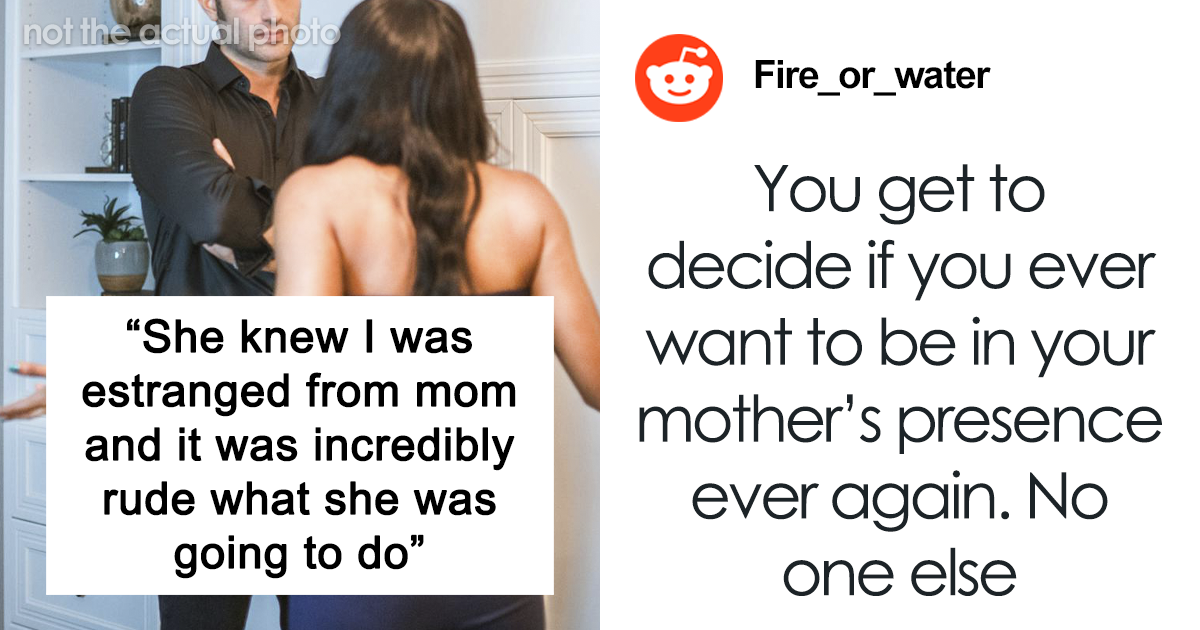
Weddings are supposed to be about vows, cake, dancing, and at least one uncle who suddenly believes he is Bruno Mars. They are not supposed to be the setting for emotional ambushes. Yet that is exactly the problem at the center of the viral story behind the title: “Guy Learns About Sister’s Wedding Surprise, Kicks Her Out Of The Wedding.”
The situation sounds dramatic at first glance, but the details make it far more complicated. A groom had been no-contact with his mother for years after a painful family breakdown. His sister, who still had a relationship with their mother, reportedly planned to bring the estranged mom to the wedding as a surprise. Not a surprise flower arrangement. Not a surprise dessert table. A surprise estranged parent. That is less “heartwarming family reunion” and more “emotional land mine wearing formalwear.”
When the groom found out, he removed his sister from the wedding. Online reactions were intense, with many people arguing that he was not being cruel; he was protecting a boundary that had already been clearly drawn. The story raises a bigger question: when does family loyalty become emotional pressure, and when is it fair to uninvite someone from your wedding?
Why This Wedding Drama Hit Such a Nerve
Stories about weddings often go viral because they combine money, family expectations, social etiquette, unresolved history, and high emotional stakes. In other words, a wedding is basically Thanksgiving in expensive shoes. Everyone arrives with opinions, and some people bring baggage large enough to require its own seating chart.
In this case, the groom’s boundary was not vague. He did not want contact with his mother. He had maintained that distance for years. His sister knew this, yet she allegedly planned to use the wedding as the moment to force a reunion. That is why so many readers reacted strongly. The issue was not simply about a plus-one. It was about consent, trust, and whether a person’s wedding day should be used to solve someone else’s emotional agenda.
Wedding etiquette experts often emphasize that the couple gets to decide who attends their celebration. Guest lists are not public property. Invitations are not transferable tickets. A person invited by name does not automatically get to bring anyone they choose, especially someone the couple has specifically excluded. When the uninvited person is an estranged parent, the stakes become even higher.
The “But She’s Your Mother” Argument Is Not Always Fair
One of the most common responses to family estrangement is the familiar line: “But she’s your mother.” It sounds simple, but real life rarely fits on a greeting card. Being related to someone does not automatically mean they are safe, trustworthy, or entitled to access.
In many families, outsiders see only the title: mother, father, sister, brother, grandparent. They do not see the history behind the relationship. They do not know the years of conflict, betrayal, manipulation, neglect, or pain that may have led someone to go no-contact. That is why forcing reconciliation can be harmful. It reduces a complicated decision to a sentimental slogan.
The groom’s sister may have believed she was creating a beautiful reunion. But good intentions do not erase bad judgment. A wedding is not therapy. A reception is not a mediation session. The dance floor is not the place to process childhood trauma between the chicken entrée and the cake cutting.
Wedding Boundaries Are Not Rude; They Are Necessary
Modern weddings require clear boundaries because the day involves limited space, limited budget, emotional vulnerability, and months of planning. Couples make decisions about children, plus-ones, dress codes, seating, speeches, photography, religious traditions, alcohol, and family roles. Every boundary exists to protect the event’s purpose: celebrating the couple’s marriage.
When a guest ignores those boundaries, the problem is not “wedding control.” The problem is disrespect. If a couple says, “Please do not bring this person,” that request should be honored. If a family member decides to sneak someone in anyway, the couple has every right to reconsider that family member’s invitation.
What Makes This Situation Different From Normal Family Tension?
Not every disagreement deserves an uninvitation. Someone complaining about centerpieces is annoying, but not usually grounds for exile. Someone asking for a different meal option can be handled with a polite email. Someone trying to bring an estranged parent as a “surprise,” however, crosses into a different category.
The key difference is emotional safety. The groom was not avoiding his mother because of a small misunderstanding. He had made a long-term decision to keep distance. Whether every reader agrees with his reason is beside the point. His wedding was not the appropriate place for his sister to challenge it.
Why Forced Reunions Usually Backfire
Forced reunions are popular in movies because they can be resolved in two hours with a swelling soundtrack. Real life is less cooperative. When someone is pushed into contact before they are ready, the result is often anger, panic, resentment, or deeper estrangement.
Healthy reconciliation requires willingness from the people directly involved. It also requires timing, accountability, emotional preparation, and respect for boundaries. None of those things happen when someone is ambushed at a formal event in front of guests.
A surprise reunion at a wedding also puts the estranged person in a no-win position. If the groom reacts badly, he looks dramatic. If he stays quiet, he suffers through his own wedding. If he leaves, the day is ruined. If he confronts the person, guests may witness a scene. The person who planned the surprise gets to imagine themselves as a peacemaker, while the person being ambushed carries the emotional cost.
The Sister’s Role: Peacemaker or Boundary Breaker?
The sister’s defenders might argue that she missed her family being whole. She may have wanted her brother and mother to reconnect. She may have believed that love, weddings, and a nice outfit could soften old wounds. That is understandable on a human level.
But being understandable is not the same as being acceptable. If she knew her brother wanted no contact and still planned to bring their mother, she was not simply hoping for peace. She was overriding his choice. She was deciding that her version of family healing mattered more than his autonomy on his wedding day.
That is why the groom’s reaction makes sense to many readers. Removing his sister from the wedding was not just punishment; it was damage control. If someone has shown they cannot respect a boundary before the wedding, the couple has reason to worry about what that person might do during the wedding.
The Fiancée Factor: Why Partners Must Be a Team
One of the most important parts of this story is the groom’s relationship with his fiancée. In any marriage, each partner brings family history into the union. Some families are warm and uncomplicated. Others come with pressure points, painful memories, and strict limits.
A supportive partner does not need to fully understand every old wound to respect it. If one partner says, “I am not ready to see this person,” the other partner should take that seriously. Marriage is not just about joining families; it is also about protecting the household the couple is building together.
That does not mean a fiancée can never ask questions or encourage healing. But encouragement must be private, respectful, and pressure-free. Secretly supporting a surprise reunion would be a major breach of trust. Before walking down the aisle, couples need to know they are on the same team, especially when family drama arrives wearing a corsage.
Was Kicking the Sister Out Too Harsh?
The answer depends on what “kicking her out” means. If the groom instantly cut her off forever without a conversation, some people may see that as extreme. But if he removed her from the wedding because she planned to violate a clear boundary, that decision is easier to defend.
Weddings are high-stakes events. There is little room for experiments. A person who plans an emotional ambush is not a safe guest, let alone a member of the wedding party. Bridesmaids and groomsmen are not just decorative humans in matching clothes. They are trusted participants. Their job is to support the couple, not hijack the day for a family plot twist.
In this case, the sister’s invitation came with responsibility. If she could not respect the groom’s no-contact boundary, he had reason to remove her from a role that required trust.
What This Story Teaches About Wedding Guest Lists
The biggest wedding guest list lesson is simple: clarity beats chaos. Couples should name invited guests clearly, set plus-one rules early, and communicate sensitive exclusions directly to the people who need to know. It may feel awkward, but it is far less awkward than discovering an unwanted guest near the champagne table.
For family members, the lesson is equally simple: do not freelance someone else’s wedding. Do not add guests. Do not arrange surprise announcements. Do not decide that the couple’s carefully planned day needs your emotional subplot. If you want to help, ask what support looks like. Sometimes support means giving a speech. Sometimes it means keeping quiet and not bringing the one person the groom specifically does not want to see.
Practical Ways Couples Can Prevent Similar Wedding Drama
Couples dealing with difficult family dynamics should consider several practical steps. First, make invitations specific. Use names rather than vague “and guest” language when necessary. Second, tell trusted vendors or coordinators about potential issues. Third, assign a calm friend or relative to handle unexpected guests so the couple does not have to manage conflict in formalwear.
Fourth, have direct conversations before the wedding. If a sibling or parent has a history of pushing boundaries, state the rule clearly: “This person is not invited, and anyone who attempts to bring them will be asked to leave.” It sounds firm because it is. Wedding boundaries should not require a decoder ring.
Why Estrangement Is More Common Than People Think
Family estrangement is not rare. Many adults have limited or no contact with a close relative because the relationship became emotionally unsafe, damaging, or impossible to maintain. Sometimes the reason is abuse. Sometimes it is betrayal. Sometimes it is years of disrespect that never changed. Sometimes it is one final incident that confirms what a person already knew.
The painful part is that estrangement often creates pressure from people who are not directly involved. Relatives may insist on forgiveness. Friends may assume the conflict cannot be “that bad.” Partners from healthier families may struggle to understand why someone would cut off a parent. But no-contact decisions usually come after a long emotional process, not a random Tuesday mood swing.
That is why the groom’s boundary deserved respect, even from people who wished the family could heal. Reconciliation cannot be meaningful if it begins with a trap.
The Difference Between Forgiveness and Access
One of the smartest lessons from this story is that forgiveness and access are not the same thing. A person can forgive someone privately and still choose not to invite them to major life events. A person can let go of anger and still protect their peace. A person can wish someone well from a distance and still say, “You are not welcome at my wedding.”
This distinction matters because families often treat forgiveness as a door key. They assume that if someone has healed, they must reopen the relationship. But healing may be exactly why the boundary remains. Sometimes peace comes from distance, not reunion.
How the Mother Could Have Handled It Better
If the estranged mother wanted to reconnect, the wedding was the wrong place to start. A better approach would have been patient, respectful, and indirect. She could have written a letter without demanding a response. She could have acknowledged the past without defending herself. She could have told her daughter not to interfere. Most importantly, she could have accepted that her son might never be ready.
Real accountability does not arrive as someone’s unauthorized plus-one. It does not hide behind a bridesmaid. It does not rely on public pressure. It says, “I hurt you, and I respect your right to decide whether I am part of your life.”
Online Reactions: Why People Sided With the Groom
Many online commenters sided with the groom because the story touched a familiar frustration: people with peaceful families sometimes underestimate the damage caused by toxic ones. To them, a mother at a wedding sounds normal. To someone with painful history, it may feel unbearable.
Readers also focused on trust. The sister knew the boundary and allegedly planned around it. That made her actions feel deliberate rather than accidental. In wedding terms, this was not forgetting to RSVP. This was trying to rewrite the guest list behind the groom’s back.
People may disagree about whether the groom should eventually speak to his mother. But many agreed that the choice belongs to him, not his sister, not his fiancée, and definitely not a surprise entrance at the ceremony.
Experiences Related to This Topic: What Real Families Can Learn
Many families have a person who believes they can “fix” everyone else. This person often means well, but their help feels like a bulldozer with a ribbon on it. They arrange lunches between people who are not speaking. They pass along private updates. They say things like, “Life is short,” as if that automatically solves betrayal, emotional neglect, or years of conflict. In wedding situations, this fixer energy can become especially dangerous because the event feels symbolic. A wedding looks like the perfect place for healing, but that symbolism belongs to the couple, not the family fixer.
Imagine a bride who has not spoken to her father in eight years. Her aunt believes the father deserves to walk her down the aisle, so she secretly tells him the venue and ceremony time. The aunt may imagine tears, hugs, and a beautiful memory. The bride may experience shock, fear, humiliation, and the feeling that her own wedding has been taken from her. The aunt gets to chase a fantasy. The bride pays the emotional bill.
Or consider a groom whose parents divorced after years of conflict. He invites one parent but not the other because the excluded parent has repeatedly insulted his partner. A cousin decides this is “unfair” and brings the excluded parent as a guest. Suddenly the couple’s reception becomes a courtroom, with relatives whispering over salad about who is right. Nobody remembers the floral arch. Everyone remembers the argument near the bar.
The lesson from these experiences is that boundaries are not obstacles to love. They are instructions for staying in someone’s life safely. When a person says, “Please do not bring this up,” or “Please do not invite this person,” they are giving others a map. Ignoring that map does not prove devotion. It proves that the boundary-breaker values their preferred outcome more than the person asking for respect.
For couples planning weddings, the best experience-based advice is to treat family drama as a planning category, just like catering or transportation. That may sound unromantic, but it is practical. If there is a high-risk relative, plan for it. If someone might bring an unwanted guest, prepare for it. If a sibling has already hinted at a surprise, shut it down early. Love may be patient and kind, but wedding logistics need spreadsheets and consequences.
For guests, the rule is even simpler: do not make yourself the author of someone else’s wedding story. If the couple wants a reunion, they will arrange it. If they want a proposal during the bouquet toss, they will approve it. If they want estranged relatives present, they will invite them. Your role is to celebrate, not direct. The best wedding guests understand that support sometimes means stepping back, respecting the seating chart, and saving the family therapy session for another day.
Conclusion: The Real Surprise Was the Broken Trust
The story of the guy who learned about his sister’s wedding surprise and kicked her out of the wedding is not just a viral family drama. It is a sharp reminder that weddings do not erase history. They magnify it. A person who has gone no-contact with a parent is not obligated to suspend that boundary because the room has flowers and a photographer.
The sister may have imagined herself as a bridge between broken family members. Instead, she became a warning about what happens when people confuse love with control. A wedding surprise should make the couple smile, not force them into emotional survival mode. Whether readers agree with every choice the groom made or not, one principle is clear: reconciliation must be chosen, not staged.
Note: This article is written as an editorial-style relationship and wedding-etiquette analysis inspired by publicly discussed family-boundary scenarios. It is not legal, psychological, or medical advice.