Editorial note: This article is an original synthesis based on publicly reported entertainment coverage, official SNL clips, cast interviews, and U.S. pop culture commentary. It avoids unnecessary quotation and rewrites the topic in a fresh, web-ready style.
There are holiday traditions that make America feel warm and fuzzy: decorating the tree, pretending not to notice how expensive wrapping paper has become, and gathering around the TV to watch two grown men in suits attempt to ruin each other’s reputations on live television. Yes, the annual SNL Weekend Update joke swap is back in the cultural conversation, and depending on your tolerance for secondhand embarrassment, it might be comedy gold, comedy chaos, or a federal workplace incident waiting to happen.
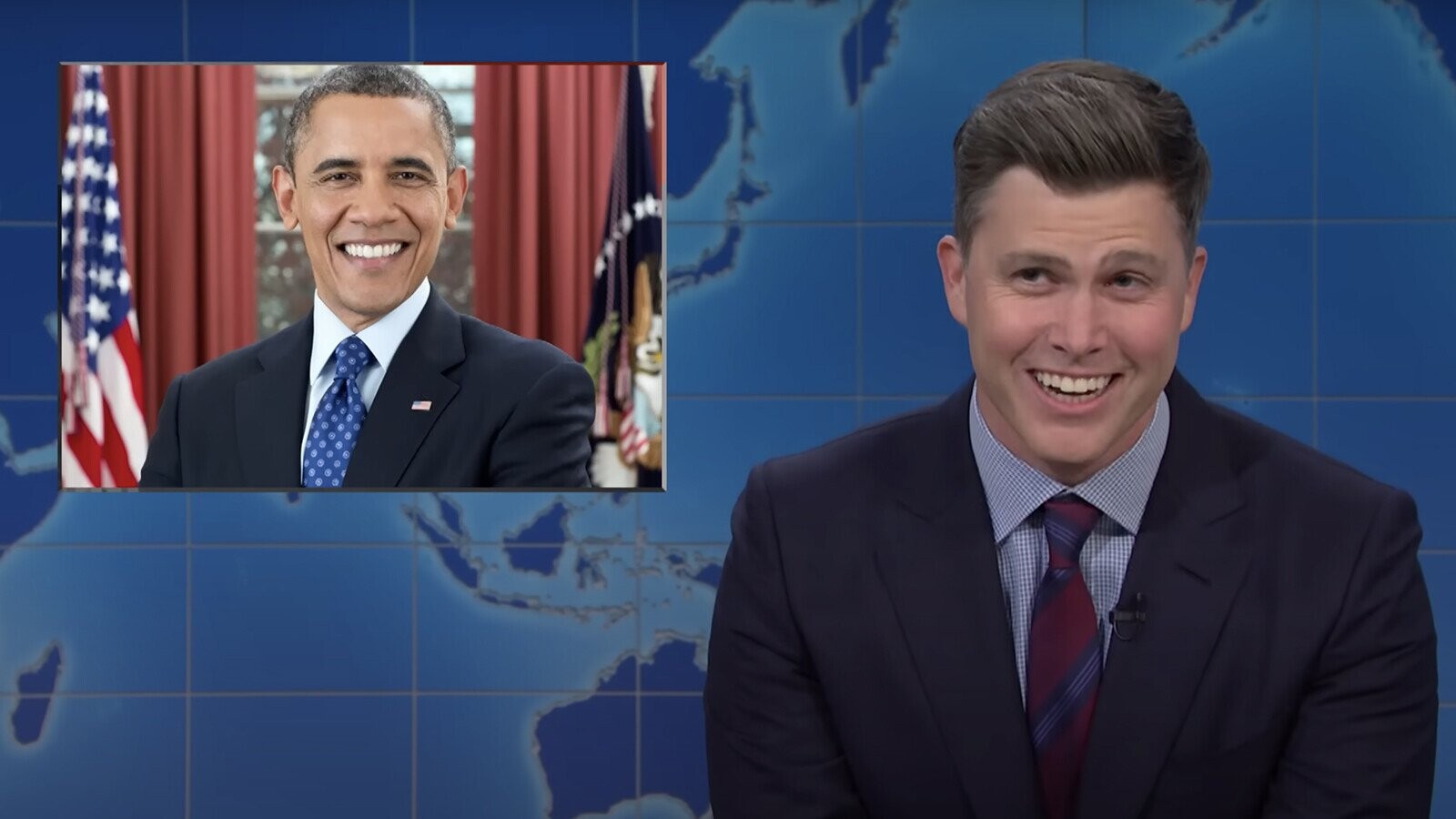
For years, Saturday Night Live anchors Colin Jost and Michael Che have turned the usually polished “Weekend Update” desk into a live trapdoor. The bit is simple: each anchor writes jokes for the other to read without seeing them first. The results are designed to be awkward, shocking, and personal. Jost usually looks like a prep-school student realizing too late that the final exam is oral. Che, meanwhile, has the smile of a man who replaced the fire extinguisher with more fire.
The latest rounds of the joke swap have pushed the tradition from “naughty late-night bit” into “how is HR not sprinting down the hallway?” territory. That is why so many viewers keep calling it one of the cringiest Weekend Update joke swaps yet. The cringe is not a bug. It is the entire engine.
What Is the SNL Weekend Update Joke Swap?
The Weekend Update joke swap is a recurring segment in which Colin Jost and Michael Che exchange surprise punchlines during the news-desk portion of Saturday Night Live. Unlike regular “Weekend Update” jokes, which are polished topical zingers about politics, pop culture, and absurd headlines, the joke swap is built around ambush comedy. Each performer must read jokes written by the other, often jokes they would never voluntarily say with their own mouth, face, career, or spouse watching.
That last part matters. The segment works because the audience understands the setup. Viewers are not watching Jost and Che reveal their personal beliefs. They are watching two comedy partners weaponize context against each other. The joke is not only the punchline; it is the face of the person forced to deliver it.
In traditional late-night comedy, the anchor controls the joke. In the joke swap, the anchor becomes the victim of the joke. That role reversal gives the bit its weird electricity. Every pause feels dangerous. Every nervous laugh feels like a tiny plea for mercy. Every camera cut to the audience says, “Yes, this is live, and no, nobody can save him now.”
Why This Joke Swap Feels More Cringeworthy Than Ever
The reason this annual SNL tradition feels especially cringey is that the bit has escalated. Early versions relied on basic discomfort: one anchor forcing the other to say something edgy, awkward, or embarrassing. Now the segment often adds extra layers: surprise guests, backstage reaction shots, fake apologies, celebrity spouses, physical stunts, and callbacks to previous humiliations.
Comedy escalation is tricky. A joke that shocks once cannot shock the same way twice. The audience adjusts. So the writers must add a twist. In recent years, Che and Jost have leaned harder into performance psychology. They do not just make each other read uncomfortable lines; they create a full social trap around the person reading them.
One of the most memorable examples involved a fictional elder activist character, introduced to sit beside Jost while he read material designed to make him look especially guilty and uncomfortable. The brilliance of that move was not the specific punchlines. It was the visual. Jost was no longer merely reading a joke; he was reading it under the silent judgment of a character built to make him sweat through his collar.
Another widely discussed version brought Scarlett Johansson into the orbit of the joke swap. Because Johansson is married to Jost, Che has repeatedly used her presence, career, and public image as a comedic pressure point. The camera cutaways became part of the joke. The audience was not only laughing at the lines; they were laughing at Jost realizing that the consequences might follow him home.
The Secret Ingredient: Colin Jost’s Panic Face
Let us be honest: the joke swap would not be nearly as viral without Colin Jost’s face. Jost has the rare ability to look polished and doomed at the same time. His expression often says, “I attended Harvard, and yet none of my education prepared me for this sentence.”
That contrast is exactly why Che’s setups land so hard. Jost’s public persona is clean, composed, and slightly country-club-coded. He looks like he knows which fork is for salad and which yacht is for tax purposes. Che understands this, and he writes jokes that exploit it. The more refined Jost appears, the funnier it becomes when he is forced to read something wildly beneath that image.
Che, by comparison, often reacts with mischievous calm. He looks less like a man being pranked and more like a man reviewing the success of a long-term infrastructure project. But Jost has found ways to fight back. Over time, his jokes for Che have become sharper, stranger, and more carefully aimed at Che’s own comic identity. The balance has improved, even if Jost still tends to look like the contestant who just found out the game show is legally binding.
Michael Che’s Strategy: Turn the Room Against the Reader
Michael Che’s best joke swap strategy is not simply writing offensive jokes. It is staging the room so the other person appears trapped by the joke. He turns the audience, the camera, and sometimes even a guest into silent accomplices. Instead of one punchline, Che builds a little humiliation machine.
That is why the fake guest format worked so well. It added a social witness. It gave Jost someone to disappoint in real time. In comedy, embarrassment becomes funnier when it has an audience inside the audience. Che understands that cringe multiplies when a performer has nowhere safe to look.
The same principle applies when the segment involves Johansson. A joke about a famous spouse is one thing. A joke about a famous spouse while cameras show that spouse reacting is something else. Suddenly the punchline has a second stage. The audience laughs at the joke, then laughs again at the emotional invoice being printed backstage.
Why Viewers Love the Cringe
The SNL Weekend Update joke swap is popular because it gives viewers the thrill of danger without the full cost of disaster. It feels live, unstable, and possibly unapproved, even though the performers are experienced professionals. The audience knows there is a structure, but the reactions feel real enough to create suspense.
In an era when so much comedy is clipped, captioned, polished, and pre-chewed for social media, the joke swap feels refreshingly sweaty. It reminds viewers that live TV can still surprise people. There is no perfect TikTok lighting. No one gets to redo the line. If Jost stumbles, he stumbles in front of millions. If Che breaks, the break becomes part of the joke.
That human messiness is valuable. Comedy is often funniest when it looks like it might fall apart. The joke swap sits right on that edge. It is not elegant. It is not subtle. It is the comedy equivalent of handing your friend your phone and saying, “Read the last text out loud.” Terrible idea. Impossible not to watch.
Is the Joke Swap Too Offensive?
That question follows the segment every year, and the answer depends on what viewers expect from Saturday Night Live. The joke swap is deliberately built around bad taste. It often touches on race, celebrity scandals, politics, age, marriage, religion, and uncomfortable cultural taboos. The bit is not designed to be cozy. It is designed to make the person reading the joke look like they immediately regret learning English.
Still, there is a difference between edgy comedy and lazy shock. The best joke swap moments are not funny simply because they are outrageous. They are funny because the target is the performer’s discomfort. The audience laughs less at the taboo subject itself and more at Jost or Che trying to survive the delivery.
When the segment works, it becomes a satire of offensive comedy. The anchors are not presented as brave truth-tellers. They are presented as fools trapped by their own game. When the segment does not work, it risks feeling like a list of forbidden punchlines with a laugh track. That tension is part of why the tradition remains controversial.
The Scarlett Johansson Factor
Scarlett Johansson’s connection to the bit has made the joke swap even more viral. Her marriage to Colin Jost gives Che an obvious target, and SNL has not been shy about using that connection. Over multiple appearances, Johansson has become both subject and spectator, turning the joke swap into a strange marital obstacle course.
For viewers, the appeal is partly celebrity access. Most people will never know what it is like to be married to a movie star while your co-worker writes embarrassing jokes about that marriage on national television. Thankfully, Colin Jost has volunteered as tribute.
The Johansson moments also add stakes. Even when everyone involved is in on the joke, the audience senses that Jost is navigating two performances at once: the live comedy performance and the private husband performance. His smile says “great bit.” His eyes say “I will be explaining this later near a sink.”
How the Joke Swap Became a Viral Machine
The segment is practically engineered for social media. It has all the ingredients: celebrity names, shocking premises, visible reactions, short clips, and a clear format that viewers can understand in five seconds. You do not need to watch the whole episode to get it. The headline writes itself: “Michael Che makes Colin Jost read the worst joke of his life.”
That clip-friendly structure helps explain why the joke swap often travels farther online than many traditional sketches. A sketch may require context, characters, or a full setup. The joke swap requires only a desk, two anchors, and the knowledge that one of them is about to regret trusting the other.
It also benefits from repetition. Because viewers know the format, they anticipate the escalation. Each new edition becomes a mini-event: How bad will it get this time? Will Jost survive? Will Che finally be rattled? Will someone’s publicist need a long walk?
The Hair-Stunt Era of Joke Swap Chaos
The more recent joke swap episodes show how far the bit has evolved beyond words. In one season finale, the comedy escalated into a physical gag involving Jost’s hair, with a barber brought into the segment as part of the humiliation. The joke was not merely what Jost read; it was the possibility that the bit might alter his appearance.
That is a major shift. The joke swap started as a writing prank. It has become a live spectacle. The stakes have moved from embarrassment to theatrical consequence. Even if the danger is playful, the audience responds because it feels like the boundaries of the bit are expanding.
And that is why many viewers describe the latest versions as the cringiest yet. Cringe is not only about offensive words. Cringe is anticipation. It is watching someone realize the trap has a second trap under it. It is seeing a joke become a whole obstacle course while the band waits patiently off camera.
Why Jost and Che’s Chemistry Still Carries the Segment
For all the chaos, the joke swap works because Jost and Che have real chemistry. They have anchored “Weekend Update” together for more than a decade, building a rhythm based on contrast. Jost is crisp and buttoned-up. Che is looser and more deadpan. Jost often plays the anxious professional. Che plays the amused saboteur.
That relationship gives the segment permission to go further than it otherwise could. The audience senses that the humiliation is mutual, not malicious. The two anchors may be trying to destroy each other for laughs, but they are doing it inside a long-running partnership. It is less “workplace hostility” and more “best friends ruining dinner.”
Without that trust, the joke swap would feel mean. With it, the bit feels like a dangerous game between people who know exactly where the floor is, even if they keep pretending to fall through it.
What the Joke Swap Says About Modern Comedy
The joke swap has lasted because it reflects a larger debate about comedy itself. Viewers argue constantly about what jokes are allowed, who gets to tell them, and whether context matters. The SNL segment throws those questions onto live television and turns them into a prank.
Its central joke is not, “Isn’t this offensive thing funny?” Its central joke is, “Look at this person being forced to own a joke he clearly does not want to own.” That distinction is important. The performer’s discomfort becomes a built-in critique of the material. The bit knows it is tasteless. That self-awareness is why many fans defend it.
But self-awareness is not a magic shield. A joke can still miss. A segment can still make some viewers roll their eyes instead of laugh. The cringiest joke swap moments live in that messy zone where comedy, discomfort, satire, and shock all crowd into the same elevator and nobody wants to press the button.
Personal Viewing Experience: Why This Bit Is So Hard to Look Away From
Watching the annual SNL Weekend Update joke swap feels like attending a holiday party where the quietest person in the room suddenly picks up the microphone. You know something bad might happen. You also know you are not emotionally mature enough to leave before it does.
The first time many viewers discover the bit, the reaction is usually confusion followed by nervous laughter. At first, it seems like Jost and Che are simply telling unusually harsh jokes. Then the format clicks: they did not write their own lines. They are reading each other’s traps. That realization changes everything. Suddenly every awkward pause becomes part of the punchline.
Part of the experience is physical. You laugh, then immediately make the face people make when they hear a plate break in another room. You cover your mouth. You lean back from the screen. You say, “No, no, no,” while absolutely not turning it off. That is the strange magic of cringe comedy. It makes the viewer both judge and accomplice.
The Jost moments tend to be the most memorable because his discomfort is so visible. He often starts with the posture of a news anchor and ends with the energy of a man reading a ransom note that he wrote in a previous life. His smile becomes thinner. His eyes search the cue cards like there might be a legal disclaimer hidden between the lines. When the audience gasps, he looks as if he has personally disappointed every guidance counselor he ever had.
Che’s reactions are different but equally fun. He often acts like he is above the chaos, but the best joke swap editions catch him off guard too. When Jost manages to land a counterattack, Che’s grin changes for half a second. That tiny crack is satisfying because the bit is usually framed as Che tormenting Jost. When Jost gets revenge, it feels like watching the substitute teacher finally confiscate the laser pointer.
The celebrity-spouse angle adds another layer of awkwardness. Any time Scarlett Johansson is pulled into the orbit of the segment, the room changes. The joke is no longer contained at the desk. It expands backstage, into the audience, and into the viewer’s imagination. Everyone understands that it is comedy, but the performance of embarrassment feels real enough to make the moment sparkle with danger.
That is why the joke swap remains such a reliable online conversation starter. It gives people something to argue about: Was it hilarious? Was it too much? Was Jost actually nervous? Did Che go too far? Is this genius television or two men daring Peacock’s legal department to develop a twitch?
Personally, the bit works best when it focuses on the friendship and the trap rather than the shock alone. The funniest moments are not the most offensive lines; they are the moments right before and after them. The inhale. The frozen smile. The glance at the audience. The “I cannot believe you made me say that” energy. That is the real joke swap experience: not just hearing comedy, but watching comedy become a prank in real time.
Conclusion: Cringe, Chaos, and the Strange Joy of Live TV
The annual SNL Weekend Update joke swap might be the cringiest one yet because it keeps evolving from a joke-writing prank into a full live-TV stress test. Colin Jost and Michael Che have turned discomfort into a format, and somehow, the format still has room to get worse, weirder, and funnier.
At its best, the joke swap is not just a collection of edgy punchlines. It is a performance about trust, context, embarrassment, and the ridiculous courage required to read a sentence your comedy partner clearly wrote to ruin your week. It is messy. It is dangerous. It is occasionally too much. But it is also one of the few recurring SNL bits that still feels genuinely unpredictable.
Whether you laugh, cringe, or watch through your fingers like it is a horror movie about cue cards, the joke swap remains a reminder of what live comedy can do when performers are willing to look foolish on purpose. And if Colin Jost keeps agreeing to this, we must assume either he is deeply committed to comedy or Michael Che has hidden his car keys.