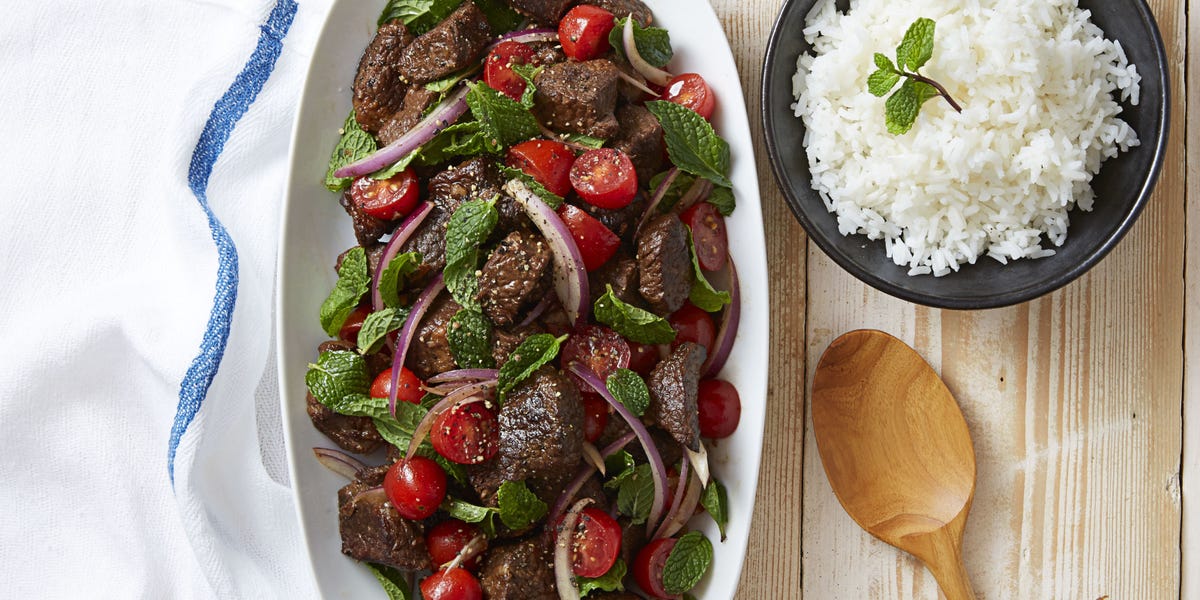
This is the kind of dinner that feels like you hired a personal chef… except your “chef” is a slow cooker doing the
heavy lifting while you live your life. You toss in a few big-flavor pantry staples (soy sauce, fish sauce, rice vinegar,
brown sugar), let time work its magic, then finish with a bright tomato-mint salad that tastes like summer showed up
wearing sunglasses.
The result: tender, savory-sweet soy-braised beef plus a punchy, juicy salad that keeps every bite from feeling heavy.
It’s part comfort food, part “I definitely eat vegetables,” and 100% weeknight-friendly.
Why This Soy-Braised Beef + Tomato-Mint Salad Works
A great braise is basically a romance novel for tough cuts of beef: low heat, long time, and suddenly brisket becomes
melt-in-your-mouth. In this recipe, the braising liquid isn’t wine or stockit’s an umami-forward blend that leans on
soy sauce and fish sauce for depth, with rice vinegar for brightness and brown sugar for balance.
Then comes the “salad” part, which is less leafy-greens-and-regret and more tomato-mint party. The tomatoes bring
sweetness and acidity. The red onion brings bite. The mint brings that cool, fragrant lift that makes the whole dish
taste lighter, fresher, and more interesting than your average slow-cooker situation.
The flavor math (in plain English)
- Salty + savory: soy sauce + fish sauce = deep umami without needing a long ingredient list.
- Sweet: brown sugar rounds out the salt and helps the sauce taste glossy, not harsh.
- Bright: rice vinegar keeps the beef from tasting “brown-on-brown.”
- Fresh crunch: tomatoes + onion + mint = contrast that makes every bite pop.
Ingredients You’ll Need
For the soy-braised beef
- 3 lb beef brisket, trimmed and cut into 1-inch chunks
- 5 cloves garlic, chopped
- 1/4 cup brown sugar
- 1/4 cup rice vinegar
- 1/4 cup soy sauce
- 3 Tbsp fish sauce
- 1/2 tsp black pepper
For the tomato-mint salad finish
- 1 pint grape tomatoes, halved
- 1 small red onion, thinly sliced
- 1/2 cup mint leaves
To serve
- Steamed jasmine rice (or your favorite grain)
Ingredient notes (because details matter)
Brisket: Brisket is ideal here because it’s flavorful and built for slow cooking. Cutting it into
1-inch chunks speeds up tenderness and gives more surface area for that savory sauce to cling to.
Soy sauce: Regular soy sauce works, but if you’re sensitive to salt, use a lower-sodium soy sauce and
taste as you go.
Fish sauce: This is the “trust me” ingredient. You won’t taste “fish,” you’ll taste more beefy depth.
Think of it as the background singer making the lead vocalist sound better.
Mint: Spearmint is classic. If your mint is super strong, start with a little less, then add more.
We’re going for fresh and herbynot toothpaste.
Step-by-Step: How to Make Soy-Braised Beef & Tomato-Mint Salad
1) Build the braise (slow cooker)
- Add the brisket chunks to a 7–8 quart slow cooker.
- Add garlic, brown sugar, rice vinegar, soy sauce, fish sauce, and black pepper.
- Stir briefly so the beef is coated and the sugar isn’t sitting in one lonely pile.
2) Let time do the work
- Cook on Low for 6 to 8 hours, until the beef is very tender.
- If you can, give it a stir once halfway through. If you can’t, it will still be fineyour slow cooker won’t hold a grudge.
3) Make the tomato-mint salad finish
- Halve the grape tomatoes. Thinly slice the red onion. Rinse and dry the mint leaves.
- Right before serving, add tomatoes, onion, and mint to the slow cooker and toss gently with the hot beef and juices.
4) Serve like you planned this all along
Spoon the soy-braised beef and tomato-mint mixture over steamed jasmine rice. Make sure everyone gets some tomatoes,
onions, and mint in each servingthose are the “wow” bits.
What to expect when it’s done (tenderness cues)
You want the brisket to feel soft and yielding when you press it with a spoon. If it’s still chewy, it usually just needs
more time. Tough cut + slow cooker = patience pays.
Smart Tips for Better Results
Don’t start with frozen beef
It’s tempting to treat the slow cooker like a magical “unfreeze and cook” portal, but food safety guidance generally
recommends thawing first so the meat heats through in a safe timeframe. If your brisket is frozen, thaw it in the fridge
before cooking.
Make it less salty (without making it sad)
- Use low-sodium soy sauce.
- Trim big chunks of surface fat from the brisket, but don’t remove every bitfat carries flavor.
- Add an extra spoonful of rice vinegar at the end if the sauce tastes “flat.” Acid wakes up everything.
Want extra aroma?
The original recipe is beautifully simple. But if you want to take a small (delicious) detour, try adding one of these:
- Ginger: a 1-inch knob, sliced.
- Star anise: 1 pod for a subtle warm spice note.
- Scallions: stir in at the end with the mint.
Keep it lightthis dish is about bold-but-clean flavor, not a spice cabinet yard sale.
Serving Ideas (Beyond Rice)
Jasmine rice is classic, but you’ve got options:
- Rice noodles: make it a slurpable bowl with extra tomatoes and mint on top.
- Quinoa or brown rice: for a nuttier base.
- Lettuce cups: spoon warm beef into butter lettuce and top with the tomato-mint mix.
- Sandwich mode: pile leftovers onto a roll, add quick-pickled onions, and pretend you’re at a cool lunch spot.
Storage, Make-Ahead, and Leftovers
Refrigerator
Store in an airtight container for up to 3–4 days. The flavor often gets even better overnight (like it went to bed and
woke up with a plan).
Freezer
Freeze the beef (preferably without the fresh mint mixed in) for up to 2–3 months. Thaw overnight in the fridge and
reheat gently. Add fresh tomatoes, onion, and mint after reheating for best texture.
Reheating
Warm on the stovetop over medium-low heat with a splash of water if needed. Microwave works toojust stir halfway
through so it heats evenly.
FAQ
Can I use a different cut of beef?
Yes. Chuck roast is a great substitute because it also breaks down beautifully with long, moist heat. Keep the 1-inch
chunks for faster tenderness and maximum sauce coverage.
Is fish sauce required?
“Required” is a strong word. But it’s doing important work. If you skip it, you’ll still have a tasty soy braise, just
with a little less savory depth. If you want a substitute, try a small splash of Worcestershire plus a pinch of extra
saltthen adjust to taste.
Will the mint wilt?
Yes, and that’s okay. You’re not making a crisp green saladyou’re making a warm tomato-mint finish. If you want
maximum freshness, toss the tomatoes and onion with the beef first, then sprinkle mint on top right before serving.
What if my sauce tastes too strong?
Add a bit more rice vinegar (brightness), a spoonful of hot water (dilution), or a pinch more brown sugar (balance).
The goal is savory-sweet-tangy, not “soy sauce punched me in the face.”
Conclusion
This Soy-Braised Beef & Tomato-Mint Salad is proof that “slow cooker dinner” doesn’t have to mean beige food and
boredom. You get tender beef with deep, savory flavorthen you flip the script with juicy tomatoes and cooling mint.
It’s easy enough for a Monday, impressive enough for company, and flexible enough that you can riff on it all year long.
If you make it once, you’ll start doing that thing where you casually tell friends, “Oh yeah, it’s just something I throw
in the slow cooker,” as if you weren’t secretly thrilled by how good it turned out.
Kitchen Experiences: What It’s Like to Actually Make This
The first time you make this, you’ll probably have the same thought most of us do with slow cooker recipes:
“This seems too easy… am I missing a step?” You’re not. The magic trick is that the ingredient list is short, but every
item is pulling its weight. You dump in brisket chunks, garlic, and that sweet-salty-tangy mix, and it smells promising
immediatelylike someone turned on a “cozy dinner” candle, but in a way that’s actually edible.
Around hour three or four, the kitchen aroma shifts from “soy and vinegar” to “deep savory.” That’s when you know the
beef is getting serious. If you crack the lid (brieflydon’t babysit it like it’s a sleeping puppy), you’ll notice the sauce
looks darker and richer. This is also the point where you start planning your side dish. Jasmine rice is the obvious move,
but I’ve also had success with rice noodles when I wanted something more slurp-friendly. Once, I served it with a bowl of
cucumbers tossed in vinegar and salt because I needed crunch in my life. No regrets.
The tomato-mint part is where the recipe goes from “nice” to “wait, why is this so good?” Grape tomatoes are sweet and
sturdy, and when they hit that warm sauce, they soften just slightlylike they’re surrendering to deliciousness without
totally losing their shape. Red onion brings a sharp bite, but it mellows in the heat, turning pleasantly tangy instead of
aggressively raw. And then the mint shows up like the friend who convinces everyone to go out for dessert: unexpected,
refreshing, and suddenly the whole night gets better.
One time I used mint straight from a grocery clamshell that had been in the fridge a little too long (you know the one
limp, a bit sad, questioning its purpose). Even then, the dish was great. Another time, I used mint from a backyard pot
that was thriving like it paid rent. That batch was next-level fragrant. Lesson: fresh mint is worth it, but the recipe
doesn’t punish you if your mint is having an off day.
Leftovers are basically a second recipe. The next day, I’ve piled the beef and tomatoes into a bowl with hot rice and an
extra splash of vinegar. I’ve also tucked it into a sandwich with crunchy lettuce for contrast, which feels like a weird
choice until you take a bite and realize it’s genius. If you’re the kind of person who meal preps, this is a dream because
the beef reheats beautifully. Just hold back the mint if you’re freezing itadd fresh mint after reheating so it stays bright
and aromatic.
My favorite “real life” moment with this dish is when someone tries it and pauses mid-chew like they just discovered a new
life hack. They’ll usually say something like, “What is that flavor?” and you get to answer, casually, “Oh, it’s probably the
fish sauce,” which sounds like a prank until they try it again and nod in agreement. That’s the joy of this recipe: it’s
simple, but it tastes like you knew what you were doing the whole time.