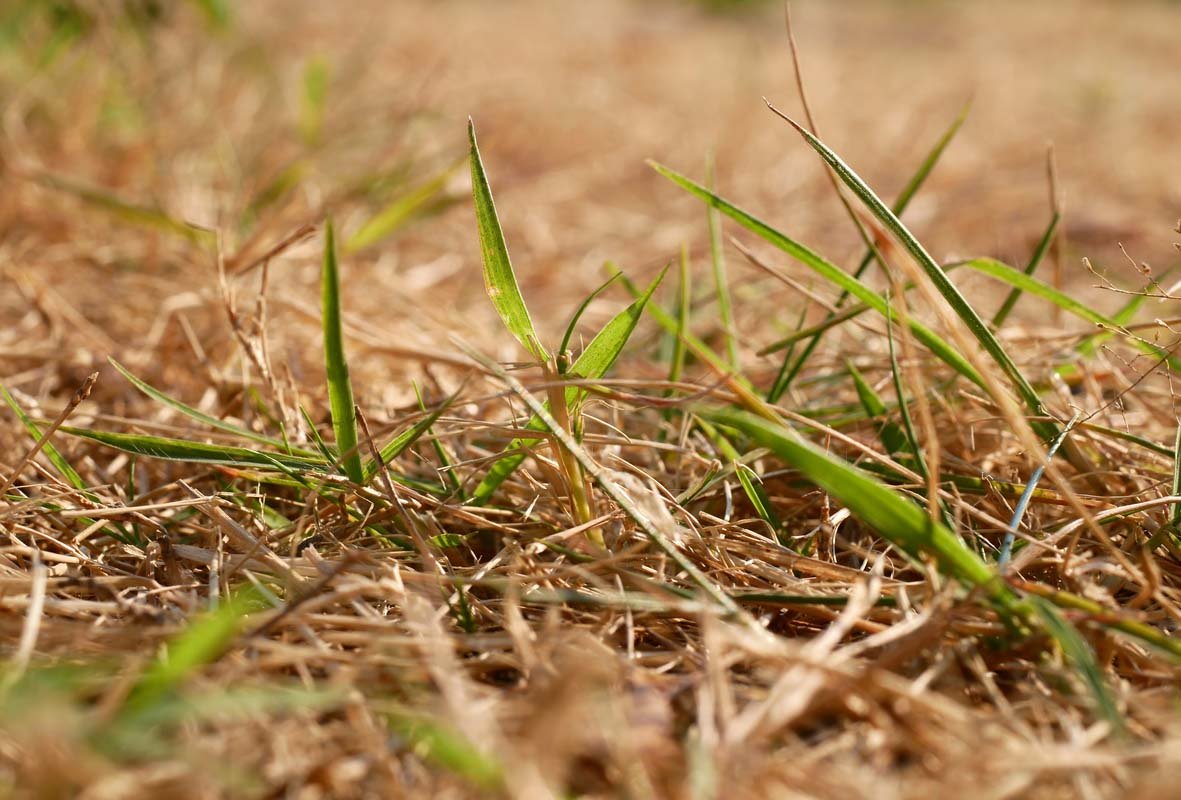
A brown lawn in midsummer can look like a landscaping emergency, but it is not always a turf funeral. Many grasses respond to heat and low moisture by slowing their growth or going dormant, a survival strategy that protects the crown and roots until better weather returns. The smartest recovery plan is not to dump on water, fertilizer, seed, and every product in the garage. It is to diagnose the problem, reduce stress, water efficiently, and wait for the right season to repair real damage.
First, Make Sure Drought Is Really the Problem
Drought-stressed grass commonly turns dull blue-green, gray-green, yellow, or straw-colored. The blades may fold inward, feel dry, and remain flattened after you walk across them. Brown areas often appear first on south-facing slopes, beside hot pavement, in compacted soil, or where sprinkler coverage is poor.
Try the footprint test: Step on the grass and check it a few minutes later. Healthy, hydrated blades usually spring back. Grass that holds your footprint is asking for moisture. You can also push a screwdriver into the soil. If it meets hard resistance several inches down, the root zone is probably dry. For a more accurate check, remove a narrow soil plug with a trowel and inspect the moisture 4 to 6 inches below the surface.
Drought Stress, Dormancy, or Dead Grass?
Dormant grass is brown above ground but still alive at the crown, the small growing point near the soil surface. Gently tug a handful. If it remains firmly rooted, there is a good chance it is dormant. If the blades and roots lift away easily and the crowns are brittle, the patch may be dead.
Also look for patterns that suggest another culprit. Circular patches, colored leaf spots, web-like fungal growth, chewed roots, loose sod, or damage that keeps expanding despite improved moisture may point to disease, insects, pet urine, fertilizer burn, or an irrigation malfunction. Drought often weakens turf and makes those problems worse, so a lawn can suffer from more than one issue at once. Lawns, apparently, enjoy complicated plot twists.
Diagnostic guidance synthesized from U.S. university extension and EPA resources.
How to Treat a Drought-Stressed Lawn
1. Stop Piling On New Stress
When turf is heat-stressed, the first rule is restraint. Pause fertilizer, herbicide, dethatching, aggressive raking, and heavy traffic. These activities either push the grass to grow when it is conserving energy or physically damage crowns that are already struggling.
Do not mow a fully dormant lawn. It is not growing, so mowing accomplishes little beyond giving the mower a dusty afternoon. If the lawn is still growing slowly, mow only after rainfall or irrigation has rehydrated the blades.
2. Water Deeply, Not Constantly
For actively growing, established turf, a useful starting point is about 1 inch of total water per week from rainfall and irrigation. However, grass type, soil, weather, slope, and local rules can change that amount. The goal is to moisten the root zone roughly 6 inches deep, not merely polish the leaves.
Apply water in one deep session or divide it into two sessions if the soil cannot absorb the full amount without runoff. Clay or compacted ground may need cycle-and-soak watering: Run the sprinkler briefly, pause so the water can infiltrate, and then repeat. Sandy soil accepts water quickly but dries faster, so it may require a different schedule.
Water in the early morning, when temperatures are cooler and wind is usually lighter. Midday irrigation loses more moisture to evaporation, while late-evening watering can leave foliage wet for many hours and increase the risk of lawn diseases.
3. Measure the Water Instead of Guessing
Sprinkler run time is not a universal measurement. One system may apply an inch in 35 minutes; another may need much longer. Place several straight-sided cans or rain gauges around each irrigation zone, run the system, and measure the depth collected. Differences between containers reveal poor coverage, clogged heads, tilted sprinklers, blocked spray, or water-pressure problems.
Hand-water isolated hot spots rather than running an entire zone for one dry corner. Repair leaks, aim sprinkler heads away from pavement, and make sure water is not racing down the gutter. Your driveway has never complained of thirst.
4. Use Survival Watering for Dormant Turf
If an established cool-season lawn has gone uniformly dormant, trying to force it green during extreme heat can waste water and create an awkward cycle of partial revival followed by renewed stress. Instead, use only enough irrigation to keep the crowns and roots alive during a prolonged drought.
Recommendations vary by climate and turf species. Some extension programs advise approximately 1 inch per month for dormant cool-season grass. Others recommend a larger single soaking after 4 to 6 dry weeks, repeated about monthly if drought continues. Follow local extension guidance and mandatory watering restrictions.
Survival watering is not supposed to restore emerald color. Its job is to preserve the living parts that can regrow later.
5. Raise the Mowing Height
Longer grass shades the soil, reduces evaporation, protects the crown, and supports a deeper root system. Many cool-season lawns perform better during heat when maintained around 3 to 4 inches, while warm-season species have different recommended heights. Never remove more than one-third of the blade in a single mowing.
Keep the mower blade sharp. A dull blade tears grass, leaving ragged tips that lose moisture and may become more vulnerable to disease. Leave short clippings on the lawn when they are not clumped. They decompose quickly, recycle nutrients, and help reduce unnecessary fertilizer use.
Watering and mowing guidance synthesized from Bob Vila, UMN, Iowa State, EPA, CSU, UC IPM, and Texas A&M.
What Not to Do to a Drought-Stressed Lawn
Do Not Fertilize Brown, Dormant Grass
Nitrogen encourages leaf growth. That is useful when turf is actively growing and moisture is adequate, but it is counterproductive when roots are conserving energy. Fertilizer applied during drought may go unused, increase the risk of fertilizer burn, wash away when storms finally arrive, or stimulate growth that demands even more water.
Wait until the lawn has recovered and entered an appropriate growth period for the species. For cool-season turf, the most useful fertilization period is often early fall. Warm-season grass should be fertilized according to its regional growing calendar.
Do Not Aerate Bone-Dry Turf
Core aeration can improve water infiltration, reduce compaction, and support deeper rooting, but timing matters. Running an aerator across hard, drought-stressed soil can tear weak turf and produce poor cores.
Aerate when the grass is actively growing and the soil is moderately moistnot muddy and not concrete. For cool-season lawns, early fall is often ideal. Warm-season lawns are generally aerated during active late-spring or early-summer growth.
Do Not Seed During Severe Heat
New grass seed must stay consistently moist during germination, which is difficult and water-intensive during drought. Hot soil can also reduce establishment, and young roots are far less resilient than those of mature turf.
Mark dead areas now, but wait for the best seeding window in your region. For many cool-season lawns, late summer to early fall offers warmer soil, cooler air, fewer annual weeds, and better establishment conditions.
Do Not Treat Every Brown Patch With Chemicals
Herbicides and fungicides do not cure thirst. Applying them without identifying a pest or disease adds expense and may further stress the lawn. Correct irrigation coverage, mowing height, soil compaction, and traffic first. If suspicious patches persist after the weather improves, submit a sample or clear photographs to a local extension diagnostic service.
Stress-avoidance and seasonal treatment guidance synthesized from UMN, Iowa State, Maryland Extension, and Penn State resources.
How to Repair the Lawn After the Drought Breaks
Wait for Evidence of Recovery
After cooler temperatures and dependable rain return, dormant turf may begin greening from the crown. Give it time before declaring failure. Recovery can be uneven because different grass species, slopes, soils, and irrigation zones respond at different speeds.
Rake Lightly and Identify Truly Dead Areas
Once the soil is moist and the grass is growing, lightly remove loose debris and dead blades. Avoid turning the job into an enthusiastic demolition project. Living crowns can be damaged by hard raking. Patches that remain straw-colored, pull up easily, and show no new growth are candidates for reseeding or sod.
Test the Soil Before Fertilizing
A soil test can reveal pH problems and nutrient deficiencies, preventing random product applications. Follow the report and local fertilizer rules. Cool-season lawns usually receive their most valuable feeding during fall growth, when roots are rebuilding reserves. Warm-season lawns should be fertilized according to their active growing season and regional recommendations.
Aerate Compacted Soil, Then Overseed
Core aeration is especially useful where water puddles, soil feels hard, or foot traffic is heavy. After aerating, overseed thin areas with grass adapted to the site.
Tall fescue offers strong heat and drought tolerance among cool-season grasses because of its deeper roots. Fine fescues use relatively little water and suit lower-input or partly shaded lawns. Bermudagrass and certain other warm-season grasses tolerate heat and drought well in appropriate climates.
Match seed to sun exposure, winter temperatures, traffic, soil, and irrigation capacity rather than buying the bag with the greenest photograph. A drought-tolerant species planted in the wrong climate is still the wrong grass.
Keep New Seed Moist Without Flooding It
Newly seeded soil needs frequent, light moisture until germination, followed by gradually deeper and less frequent watering as roots develop. This is the exception to the deep-and-infrequent rule for established lawns. Avoid runoff, standing water, and long periods of soggy foliage.
Recovery and turf-selection guidance synthesized from UMN, Iowa State, Maryland Extension, Colorado State, and UC IPM.
Build a More Drought-Resistant Lawn for Next Summer
Recovery is useful; prevention is cheaper. Start by programming irrigation according to actual weather and soil moisture rather than a fixed daily schedule. A rain sensor, soil-moisture sensor, or weather-based controller can prevent needless watering. Check each zone at least once per season because sprinklers have a mysterious talent for rotating toward sidewalks when nobody is watching.
Improve compacted or low-organic-matter soil during the correct growing season. Core aeration followed by a thin compost topdressing can improve infiltration in heavy soil and moisture retention in fast-draining sandy soil. Maintain a suitable mowing height, sharpen mower blades, and leave short clippings.
Reduce traffic during periods of extreme heat and create paths through frequently crossed areas. Consider shrinking turf in narrow strips, steep slopes, deep shade, and awkward corners that are difficult to irrigate efficiently. Replace those areas with regionally suitable native plants, mulch, ground covers, or hardscape.
The best drought-stressed lawn treatment may be deciding that a 3-foot ribbon of grass between the driveway and fence never needed to be grass.
Finally, check local conditions through your water utility, state drought resources, or the U.S. Drought Monitor. Restrictions take priority over general lawn-care advice, and local extension specialists can tailor recommendations to your grass type and climate.
Practical Experiences: Lessons Homeowners Often Learn the Hard Way
The following composite examples reflect common homeowner experiences and field observations rather than a claim of personal ownership of a specific lawn.
The Daily Ten-Minute Sprinkler Trap
A homeowner notices pale grass and responds by running the sprinkler for 10 minutes every evening. The surface looks wet, so the routine feels productive. Two weeks later, the lawn is still struggling, mushrooms have appeared in a shady corner, and the water bill has developed a personality.
The problem is that brief irrigation may wet only the top inch of soil. Roots stay shallow, sunny areas dry quickly, and shaded sections remain damp too long. When the homeowner measures sprinkler output and switches to a longer morning cycle with pauses for infiltration, moisture reaches deeper soil. The lawn does not transform overnight, but the surviving turf becomes more stable and footprints stop lingering.
The Fertilizer “Rescue” That Backfires
Another common experience begins with a bag labeled “green-up.” Brown grass looks hungry, so feeding it seems logical. But drought-stressed turf is not necessarily short of nitrogen; it is short of usable water and favorable growing conditions. A heavy fertilizer application can push tender leaf growth, increase water demand, and scorch stressed plants.
The better result comes from waiting. After temperatures moderate and the grass resumes active growth, the homeowner obtains a soil test and applies only what is recommended. The recovery is less dramatic than a television makeover, but it is healthier, less expensive, and much less likely to end with another brown-out.
The “Dead” Lawn That Was Only Sleeping
A uniformly straw-colored cool-season lawn can look beyond saving in August. The owner may price sod, rent a tiller, and mentally apologize to the neighborhood. Then September brings cooler nights and steady rain. Green shoots emerge from the crowns, and much of the lawn returns without replacement.
The lesson is to test before renovating. Firmly rooted turf with living crowns may be dormant. Survival watering, limited traffic, and patience can preserve it. Truly dead patches can still be repaired during the proper seeding window, but tearing up the entire yard in peak heat wastes money and removes grass that might have recovered.
The Mystery Brown Strip Beside the Driveway
Sometimes most of the lawn improves while a narrow strip remains crispy. The irrigation timer is running, so the homeowner assumes the grass is diseased. A catch-can test reveals that a sprinkler head is partly blocked and pavement heat is increasing moisture loss.
The fix is not fungicide. It is cleaning or adjusting the sprinkler head, hand-watering the hot spot when permitted, and mowing at the correct height. This experience demonstrates why patterns matter. Drought stress often exposes flaws in irrigation coverage, compacted routes, shallow soil, and reflected heat that were invisible during rainy weather.
The Lawn That Becomes Smallerand Better
After repeated summer stress, some homeowners stop trying to maintain turf in every square foot. A steep sunny bank becomes a drought-tolerant planting bed. A shaded area beneath a mature tree receives mulch instead of another doomed batch of seed. A narrow side yard becomes a path.
The remaining lawn is easier to water evenly, receives less traffic, and can be managed as a useful outdoor surface rather than a decorative obligation. In many cases, the most satisfying drought-recovery experience is not restoring the old lawn exactly as it was. It is redesigning the yard so the next dry summer requires fewer emergency measures and fewer conversations with a malfunctioning sprinkler.
Conclusion
A drought-stressed lawn needs accurate diagnosis and careful timing more than a shopping cart full of treatments. Confirm that the grass is dry rather than diseased, water established turf deeply and efficiently, mow higher, protect dormant crowns, and postpone fertilizer, aeration, and seeding until growing conditions improve.
When recovery begins, repair only the areas that are truly dead and choose grasses suited to your climate and water supply. Brown grass is often an alarm bell, not an obituary. Give the lawn enough help to survive, and then make long-term changes that improve roots, soil, irrigation coverage, and drought tolerance.
Note: Watering limits, recommended grass species, fertilizer timing, and drought-survival rates vary by region. Always follow local restrictions and consult your state or county Cooperative Extension service for location-specific advice.
Overall research synthesis also consulted current federal drought guidance and U.S. university extension sources.