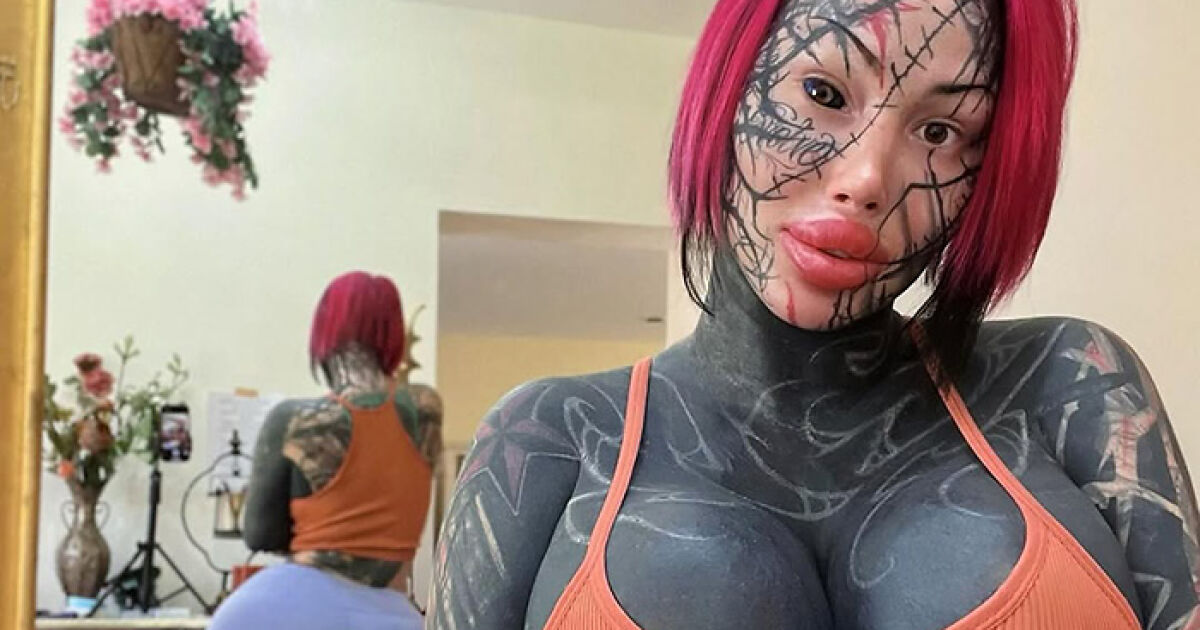
Mary Magdalene, the online name used by Denise Ivonne Jarvis Gongora, became famous for a look that was impossible to scroll past. She was part influencer, part adult-content creator, part living art project, and part warning label for a culture that keeps asking women to become more clickable, more shocking, more “after” than “before.” Her death at 33 after a high-rise fall in Patong, Phuket, Thailand, has left followers, critics, and casual internet observers trying to understand a story that is both deeply public and painfully private.
The most important fact comes first: a person died. Not a meme, not a “surgery addict” headline, not a viral before-and-after carousel. A daughter, sister, artist, and complicated human being died. Authorities have reported that she fell from the ninth floor of a high-rise condominium, and local police have continued investigating the circumstances. That means responsible coverage should avoid declaring what happened inside her mind or turning her final hours into internet theater.
Still, Mary Magdalene’s life and death raise difficult questions about influencer culture, cosmetic surgery, body image, online attention, and mental health. Those questions deserve more than gossip. They deserve a sober look, a little humanity, and perhaps one small reminder: the internet may be forever, but people are not.
Who Was Mary Magdalene?
Mary Magdalene was the online persona of Denise Ivonne Jarvis Gongora, a Mexican-Canadian influencer known for dramatic cosmetic procedures, extensive tattoos, adult-content work, and psychedelic artwork. She built a large following across social media, where her appearance became her brand. Her image was not subtle. It was deliberately extreme, colorful, provocative, and designed to stop thumbs mid-scroll like a traffic cone in a glitter factory.
She documented procedures that reportedly included facial surgeries, breast and butt implants, dental work, body modifications, and other aesthetic changes. She also posted paintings, sculptures, and self-portraits, which complicates the simple tabloid version of her story. Mary was not only someone who changed her body; she was someone who used image-making as a language. Her face, body, art, and social accounts all became part of the same public canvas.
That public canvas brought attention, money, supporters, critics, and constant commentary. In influencer culture, visibility can feel like oxygen. But it can also become a treadmill: one more post, one more procedure, one more dramatic reveal, one more reaction from strangers who think a follow button gives them voting rights over your life.
What Happened In Thailand?
According to public reporting, Mary Magdalene died on December 9, 2025, after falling from the ninth floor of a high-rise condominium in Patong, a beach town on Phuket Island. Building staff reportedly discovered her body in the parking area. She had checked in for a one-night stay, and police continued examining the circumstances after the incident.
Reports also noted that she posted a final social media update the day before her death featuring imagery from The Truman Show, including the famous farewell line from the film. Some followers interpreted the post as ominous. Others treated it as a final goodbye. But interpretation is not evidence. Social media posts can be clues, performances, moods, jokes, cries for help, or fragments of a person’s private storm. Sometimes they are all of those things at once.
That is why the phrase “she was not well,” which has circulated in coverage and online conversation, should be handled carefully. It may reflect concern from people who watched her behavior or followed her posts, but it should not become a casual diagnosis. Mental health is not a comment-section guessing game. Nobody should be reduced to their worst day, their most edited photo, or the last thing they posted.
The Cosmetic Surgery Conversation Is Bigger Than One Influencer
Cosmetic surgery is not automatically a tragedy. Many people choose procedures for personal, medical, gender-affirming, reconstructive, or confidence-related reasons and are satisfied with their decisions. The goal is not to shame anyone who gets Botox, a nose job, implants, fillers, or a revision. People have been decorating, shaping, styling, piercing, tattooing, and transforming their bodies for centuries. Instagram did not invent vanity; it just gave vanity a ring light.
But Mary Magdalene’s story sits at the extreme edge of a much larger trend. Interest in aesthetic procedures has remained strong in the United States, with cosmetic surgeries and minimally invasive treatments continuing to draw steady demand. Procedures such as injectables, body contouring, breast work, facial surgery, and revisions are no longer whispered about in waiting rooms. They are discussed openly on TikTok, YouTube, podcasts, and group chats with the casual energy once reserved for haircut appointments.
The problem begins when transformation stops being a choice and starts feeling like a requirement. Online beauty culture can turn the face into a project that is never finished. A person fixes one “flaw,” then the algorithm introduces another. Lips are too small, then too big, then not symmetrical enough. The nose is wrong from one angle. The jawline needs “snatching.” Skin must be poreless, which is funny because pores are not optional accessories. They are part of having skin.
When Beauty Becomes A Loop
Mary Magdalene spoke publicly over the years about complications and regret connected to some procedures. That matters because cosmetic work is often marketed through the language of empowerment, but the recovery, risks, revisions, and emotional aftermath can be far less glamorous than the reveal photos. Aesthetic procedures can involve infection, scarring, implant complications, dissatisfaction, nerve changes, pain, and the possibility of needing additional surgeries.
Breast implants, for example, are not considered lifetime devices. The longer a person has them, the greater the chance of complications, and some complications require more surgery. That does not mean implants are inherently bad; it means they are medical devices, not magic beans. A realistic consultation should include risks, alternatives, maintenance, and the possibility that the final result may not match the fantasy saved in someone’s camera roll.
Extreme cosmetic surgery also invites a psychological question: what happens when the desired result keeps moving? Some people pursue a procedure, feel temporary relief, then find another feature to worry about. Others become trapped in revision cycles after complications. Still others build an income around being visually shocking, which can create pressure to keep escalating. The internet rewards novelty, and novelty is a hungry little raccoon. Feed it once, and it comes back with friends.
Body Dysmorphic Disorder: Important Context, Not A Diagnosis
No responsible article can diagnose Mary Magdalene from afar. Diagnosis belongs to qualified clinicians, not strangers reading headlines. However, her story has sparked public discussion about body dysmorphic disorder, often called BDD, because BDD is highly relevant to cosmetic-surgery culture in general.
Body dysmorphic disorder involves a distressing preoccupation with perceived flaws in appearance that are minor or not visible to others. It can cause compulsive behaviors such as mirror checking, reassurance seeking, camouflaging, comparing, excessive grooming, and seeking cosmetic treatment. BDD is not vanity. It is a serious mental health condition that can impair work, relationships, social life, and basic daily functioning.
Research and clinical guidance repeatedly warn that cosmetic procedures usually do not resolve BDD symptoms. In some cases, dissatisfaction continues or shifts to another body part. This is why many experts encourage screening for body image distress before elective cosmetic treatment. Ethical surgeons and dermatology providers should be willing to say no, pause, or refer a patient for mental health support when expectations seem unrealistic or distress appears severe.
That point is worth underlining in permanent marker: a good provider is not merely someone who can perform a procedure. A good provider is someone who can recognize when a procedure may not be the answer. Sometimes the safest cosmetic decision is not “smaller implant or bigger implant?” but “should we slow down and talk about what you hope this will fix?”
The Influencer Economy Rewards Extremes
Mary Magdalene’s fame did not happen in a vacuum. She rose in an online economy where attention is currency and extremity often pays better than balance. A creator with an unusual look can gain followers, paid subscribers, interviews, and viral coverage. That attention may feel validating, especially for someone who has spent years feeling unseen or misunderstood.
But attention has a dark side. Once a person becomes known for being extreme, the audience may expect the next version to be more extreme still. The creator becomes a brand, and the brand becomes a cage. Fans praise the transformation. Critics mock it. Media outlets package it. Platforms monetize the clicks. And somewhere underneath the captions and filters, a real person has to wake up every morning inside the body everyone is debating.
This is the strange cruelty of internet fame: it can make a person visible and invisible at the same time. Millions may know the face, but few know the person. People may recognize the implants, tattoos, surgeries, and viral photos while missing the loneliness, pain, humor, creativity, fear, or exhaustion behind them.
How To Talk About A Death Like This Responsibly
When a public figure dies in circumstances that are still under investigation, the responsible approach is simple: state what is known, clearly separate confirmed facts from speculation, and avoid turning tragedy into a detective game. It is also wise to avoid graphic language. Readers do not need every disturbing detail to understand that something devastating happened.
Headlines about influencers often lean toward shock because shock gets clicks. But there is a difference between public interest and public appetite. Mary Magdalene’s death can be covered without reducing her to “the woman with extreme surgeries.” Her surgeries were part of her public identity, yes, but not the total sum of her life.
It is also important to remember the people left behind. Family members, friends, former partners, collaborators, and followers may be grieving while strangers speculate. A comment that feels clever for five seconds can become a permanent wound for someone who loved the person being discussed. The internet has enough cruelty in stock; it does not need overnight shipping.
Lessons For Anyone Considering Cosmetic Surgery
If Mary Magdalene’s story pushes one useful conversation forward, it should be the conversation about informed consent and emotional readiness. Cosmetic surgery should never be rushed because of a trend, breakup, viral filter, comparison spiral, or pressure from followers. A patient should understand the procedure, the provider’s credentials, the recovery period, the costs, the risks, and the possibility of dissatisfaction.
It is smart to ask direct questions before any elective procedure: What are the common complications? What are the rare but serious risks? How many times have you performed this procedure? What happens if I dislike the result? Will I need maintenance or future surgery? Am I doing this for myself, or because I feel unworthy without it?
That last question may be the most important. Cosmetic work can change a feature. It cannot guarantee love, safety, career success, emotional peace, or freedom from self-criticism. If a person expects a procedure to rebuild their entire identity, the procedure is being asked to do a therapist’s job while wearing surgical gloves.
Experiences And Reflections Related To Mary Magdalene’s Story
Many people who followed Mary Magdalene did so with mixed feelings. Some admired her fearlessness. Some were fascinated by the spectacle. Some worried about her. Some judged her harshly, then kept watching anyway, which is one of the internet’s least flattering habits. Her story mirrors experiences many people have had on a smaller scale: the feeling that changing your appearance might finally make life easier.
Consider the ordinary person who edits a selfie five times before posting and still deletes it. Or the teenager who compares their face to filtered influencers and starts believing normal skin texture is a personal failure. Or the adult who walks into a med spa asking for “just a little refresh” after months of staring at their face on video calls. These experiences are not the same as Mary Magdalene’s extreme public transformation, but they live on the same spectrum of modern appearance pressure.
One common experience is the “after” fantasy. People imagine that after losing weight, after getting filler, after fixing teeth, after changing hair, after surgery, life will finally begin. Confidence may improve after a change, and that is valid. But if self-worth is always placed on the far side of the next alteration, peace keeps moving. It becomes a finish line on roller skates.
Another experience is the feedback loop. Someone posts a new look and receives praise. The praise feels amazing. Then the praise fades, as praise always does, because even viral approval has the shelf life of a banana. The person may feel tempted to create another transformation to get the feeling back. In extreme cases, the body becomes content, and content demands updates.
There is also the experience of regret. People do not always talk about regret because admitting disappointment can feel embarrassing. Cosmetic procedures are expensive, personal, and often wrapped in hope. When the result is painful, medically complicated, or emotionally disappointing, a person may feel isolated. That is why honest conversations about cosmetic surgery should include not only beautiful results but also revisions, complications, mental health screening, and the emotional weirdness of looking different in the mirror.
Friends and family can play a protective role. If someone seems obsessed with a perceived flaw, jumps from provider to provider, wants repeated procedures despite distress, or believes one change will solve every problem, the loving response is not mockery. It is curiosity and support. Ask how they are feeling. Encourage a consultation with a qualified mental health professional. Offer to help them slow down. A person in distress does not need a courtroom; they need a bridge.
Mary Magdalene’s death is not a simple morality tale. It is not proof that cosmetic surgery is evil, nor proof that influencers are doomed, nor proof that everyone online is secretly broken. It is a reminder that public image can hide private suffering, that beauty culture can become dangerous when it loses its brakes, and that mental health should be part of the conversation whenever bodies become projects.
Conclusion: Beyond The Headline
Mary Magdalene’s passing is tragic because it ended a life that was still unfolding. She was controversial, creative, vulnerable, provocative, and human. Her story forces uncomfortable questions about what audiences reward, what platforms amplify, what beauty industries sell, and what individuals may endure while trying to become the version of themselves they believe will finally be enough.
The respectful takeaway is not to stare harder at her surgeries. It is to look more carefully at the culture around them. When appearance becomes identity, when attention becomes income, and when pain becomes content, people can get lost in plain sight.
If you or someone you know is experiencing emotional distress, a mental health crisis, or thoughts of self-harm in the United States, call or text 988 for immediate support. Outside the U.S., contact local emergency services or a trusted crisis hotline. Asking for help is not dramatic. It is maintenance for being human, and humans need maintenance more often than algorithms admit.