Note: This article is written from real historical information synthesized from reputable U.S. sources, including the National Park Service, Library of Congress, National Archives, Smithsonian Institution, American Battlefield Trust, and Civil War textile references.
Introduction: When a Blanket Carries More Than Warmth
A Civil War Fort Sumter Blanket sounds simple at first: a cozy throw, maybe printed with a historic fort, a patriotic design, or a vintage battlefield map. But the phrase carries much more weight than a piece of fabric tossed across a couch. Fort Sumter was not just another brick fort in Charleston Harbor. It was the place where the first shots of the American Civil War were fired in April 1861, turning years of political tension into a national conflict that changed the United States forever.
That is why a Fort Sumter blanket can feel like a small history lesson you can actually fold. It blends comfort, memory, design, and symbolism. Unlike a textbook, it does not glare at you from a desk demanding a quiz on Tuesday. It sits quietly in a living room, cabin, classroom, museum shop, or collector’s space and invites a question: “What happened there?”
This article explores the meaning behind the Civil War Fort Sumter Blanket, the history of Fort Sumter, the role of blankets during the Civil War, and why historical blankets remain popular among collectors, educators, reenactors, and anyone who likes their home décor with a side of cannon smokemetaphorically speaking, of course.
What Is a Civil War Fort Sumter Blanket?
A Civil War Fort Sumter Blanket is typically a commemorative, decorative, educational, or reproduction-style blanket inspired by Fort Sumter and the American Civil War. It may feature images of the fort, Charleston Harbor, Civil War-era flags, soldiers, maps, artillery silhouettes, patriotic lettering, or vintage-style artwork. Some versions are designed as cozy throw blankets, while others are closer to historical reproductions meant for reenactment displays or museum-style interpretation.
The idea is not only to keep someone warm. Any blanket can do that. Even the suspicious one in the back of the closet with the mysterious stain has basic thermal ambitions. A Fort Sumter blanket, however, also tells a story. It connects an everyday household object with one of the most dramatic opening scenes in American history.
Common Uses for a Fort Sumter-Themed Blanket
People use Civil War-themed blankets in several ways. Some place them on sofas or beds as conversation pieces. Others use them in history classrooms, heritage displays, Civil War roundtables, reenactment camps, or museum gift collections. A Fort Sumter design can also make a thoughtful gift for history buffs, teachers, veterans, Charleston visitors, or anyone who has ever said, “I only need one more historical item,” while clearly needing six more.
Fort Sumter: The Place Where the Civil War Began
Fort Sumter sits in Charleston Harbor, South Carolina, positioned between the Atlantic Ocean and one of the South’s most important port cities. Construction began in the 1820s as part of a broader coastal defense system intended to protect American harbors. The fort was named for Thomas Sumter, a Revolutionary War figure from South Carolina.
By 1860 and 1861, Fort Sumter had become far more than a military structure. It became a symbol of federal authority in a state that had chosen secession. South Carolina seceded from the Union in December 1860, following the election of Abraham Lincoln. Soon after, federal installations in the South became points of conflict. Major Robert Anderson, commanding U.S. forces in Charleston, moved his small garrison from Fort Moultrie to the stronger Fort Sumter on December 26, 1860.
That move made Fort Sumter the center of national attention. To Union supporters, Anderson was protecting federal property. To Confederate leaders, the fort represented unwanted U.S. power in a harbor they believed belonged to the new Confederacy. In modern terms, it was the worst possible neighborhood dispute, except everyone had artillery and nobody was bringing cookies.
The Bombardment of Fort Sumter
In April 1861, after failed negotiations and growing pressure, Confederate forces under Brigadier General P.G.T. Beauregard demanded that Anderson surrender Fort Sumter. Anderson refused. Before dawn on April 12, 1861, Confederate batteries around Charleston Harbor opened fire. The bombardment continued for roughly 34 hours.
The Union garrison was badly outnumbered, low on supplies, and surrounded by Confederate positions. Fort Sumter could not effectively withstand the assault for long. On April 13, Anderson agreed to surrender, and the U.S. soldiers evacuated the fort on April 14. There were no combat deaths during the bombardment itself, though a tragic accident during the farewell salute caused the first Union fatalities associated with the event.
Fort Sumter’s surrender did not end the crisis. It ignited it. President Lincoln called for volunteers, more Southern states seceded, and the Civil War became unavoidable. The fort remained a symbol throughout the war and was heavily damaged during later Union efforts to retake Charleston Harbor.
Why Fort Sumter Belongs on a Blanket
At first, putting Fort Sumter on a blanket might sound unusual. Historic sites usually appear on plaques, postcards, paintings, maps, and school worksheets that somehow always smell faintly like pencil shavings. But blankets are powerful carriers of memory. They are personal, practical, and visible. A Fort Sumter blanket turns a national story into something people can touch, display, and discuss.
Historical blankets often work because they soften big history without trivializing it. Fort Sumter represents division, courage, uncertainty, military duty, political failure, and the painful question of what kind of nation the United States would become. A blanket can present that story in a format that feels approachable rather than intimidating.
A Blend of Comfort and Conflict
The contrast is exactly what makes the Civil War Fort Sumter Blanket interesting. A blanket suggests warmth and shelter. Fort Sumter suggests tension and rupture. Put them together, and you get an object that reminds us history is not only made in grand speeches and battlefield decisions. It also lives in ordinary things: uniforms, letters, canteens, flags, and yes, blankets.
The Role of Blankets During the Civil War
Blankets were essential gear for Civil War soldiers. Union soldiers were commonly issued wool blankets, and surviving artifacts show how important they were for warmth, sleeping, and protection from cold or damp weather. A soldier’s blanket was not a luxury item. It was a survival tool, a portable bed, a coat substitute, a ground cover partner, and occasionally the closest thing a tired soldier had to privacy.
Military blankets of the era were often made of wool because wool remained warm even when damp, resisted sparks better than many fibers, and held up under rough conditions. A standard U.S. Army blanket was generally gray wool and marked with “U.S.” lettering. Soldiers carried blankets in knapsacks or rolled them over the shoulder in what became known as a blanket roll.
For reenactors and collectors, the Civil War blanket is one of the most recognizable pieces of camp life. Rifles and flags may get the dramatic paintings, but blankets did the quiet daily work. They were there when soldiers slept, marched, shivered, waited, and wrote letters home. History loves a heroic charge, but every soldier also needed somewhere to sleep after the mud had won the day.
Design Elements Found in Civil War Fort Sumter Blankets
A modern Fort Sumter Civil War blanket can take several design directions. Some are patriotic and formal, using subdued colors, antique maps, and historic typography. Others lean into battlefield art, showing Fort Sumter under bombardment or surrounded by Charleston Harbor defenses. Still others focus on a vintage Americana style, pairing the fort with stars, stripes, dates, and sepia-toned imagery.
1. Historic Map Designs
Map-based blankets are especially effective because Fort Sumter’s location matters. The fort sits in the harbor, and its position shaped the entire confrontation. A blanket showing Charleston Harbor, Fort Moultrie, Morris Island, and surrounding batteries helps viewers understand why the Union garrison was so vulnerable.
2. Fort Illustration Designs
Some blankets feature illustrations of the fort itself. These may show the brick walls, harbor waters, U.S. flag, or the later ruined structure. A fort illustration works well for people who want a clean, recognizable design rather than a full battlefield scene.
3. Reproduction Military Blanket Style
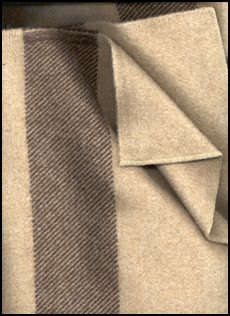
A more historically inspired version may resemble a Civil War wool blanket, using gray tones, simple stripes, and “U.S.” markings. This style may not show Fort Sumter directly, but when paired with Fort Sumter interpretation, it can evoke what soldiers might have carried during the early war period.
4. Museum Gift Style
Museum-style blankets often balance education and decoration. They may include dates, short captions, engraved-style artwork, or a clean commemorative layout. The goal is to make the blanket attractive enough for everyday use and accurate enough that a history teacher does not immediately raise one eyebrow.
Why Collectors Like Fort Sumter and Civil War Blankets
Civil War collectors are often drawn to objects that connect directly to daily life. A blanket is not just a symbol of military history; it is a reminder that soldiers were human beings facing discomfort, uncertainty, weather, and exhaustion. Fort Sumter adds another layer because it marks the beginning of the war. Together, the theme has strong emotional and educational value.
Collectors may look for reproduction blankets, commemorative throws, woven designs, or vintage souvenir textiles. Authentic Civil War blankets are rare, fragile, and often preserved in museums or private collections. Modern Fort Sumter blankets are more accessible and can be displayed without the terrifying responsibility of owning a 160-year-old textile that looks like it might disintegrate if someone sneezes in the next room.
How to Use a Civil War Fort Sumter Blanket in Home Décor
A historical blanket can work beautifully in a home when styled with intention. The trick is to avoid making the room look like a museum storage closet had a dramatic week. A Fort Sumter blanket pairs well with leather chairs, wooden trunks, dark bookshelves, framed maps, brass lamps, vintage prints, and neutral bedding.
In a study or reading room, it can sit over an armchair beside Civil War books or Charleston travel guides. In a guest room, it can serve as a themed accent piece. In a classroom, it can be used during lessons about secession, the Civil War’s opening, material culture, or the everyday life of soldiers.
Simple Styling Ideas
Drape the blanket over a chair rather than folding it too perfectly. Place it near a framed Fort Sumter map or a shelf of American history books. Use it as a wall hanging if the design is especially detailed. For a cleaner modern look, pair it with plain pillows and let the blanket be the main historical feature.
Educational Value: A Blanket That Starts a Conversation
The best historical objects invite questions. A Civil War Fort Sumter Blanket can help explain where the war began, why Charleston Harbor mattered, how soldiers lived, and why material culture matters. Students often connect more easily with tangible objects than with dates alone. A blanket makes the past feel less abstract.
For example, a teacher could use a Fort Sumter blanket to open a lesson with a simple question: “Why would a blanket matter in a war?” From there, the discussion can move into soldier life, supply systems, weather, camp conditions, and the symbolic importance of Fort Sumter. Suddenly, students are not just memorizing April 12, 1861. They are thinking about people, place, and experience.
Historical Accuracy Matters
When choosing or writing about a Fort Sumter blanket, historical accuracy matters. Fort Sumter should be connected to Charleston Harbor, Major Robert Anderson, Confederate General P.G.T. Beauregard, April 12–14, 1861, and the start of the Civil War. Designs should avoid confusing Fort Sumter with later battles such as Gettysburg or Antietam. All Civil War history is not one giant sepia collage, even if souvenir racks sometimes try their best.
It is also important to remember the deeper cause of the war. Fort Sumter was the opening military event, but the conflict grew from secession and the national crisis over slavery. A responsible article, display, or product description should not reduce the Civil War to uniforms and cannons alone. The blanket may be decorative, but the history behind it deserves honesty.
Care Tips for a Civil War-Themed Blanket
Modern Fort Sumter blankets may be cotton, wool, acrylic, fleece, or woven textile blends. Always follow the care label. Printed fleece throws are usually easier to wash, while woven cotton or wool-style blankets may require gentle cycles, cold water, or dry cleaning. If the blanket is a collectible or limited-edition piece, avoid harsh detergents and direct sunlight, which can fade the design over time.
If you own an antique or suspected historic blanket, do not toss it into a washing machine while whispering, “It’ll probably be fine.” It will not be fine. Antique textiles should be handled with clean hands, stored flat when possible, kept away from moisture, and evaluated by a textile conservator or museum professional.
Experience Section: Living With a Civil War Fort Sumter Blanket
Owning or displaying a Civil War Fort Sumter Blanket is a different experience from hanging a standard poster or buying a generic throw. It has a way of attracting attention without shouting. Someone may notice the fort image first, then the date, then the Civil War connection. Before long, a simple blanket has turned into a conversation about Charleston Harbor, secession, Abraham Lincoln, military duty, and the beginning of a conflict that reshaped the nation.
One of the best experiences connected to this kind of blanket is using it as a storytelling piece. Imagine placing it across a reading chair in a home library. Nearby are books on the Civil War, a framed map of South Carolina, and maybe a small brass lamp. The blanket immediately gives the space a historical mood. It says, “This is where we read serious things,” but also, “Yes, you may still drink coffee here.” That balance matters. History should be respected, but it does not have to be frozen behind glass every second of the day.
For families, a Fort Sumter blanket can become an easy way to introduce younger readers to American history. Instead of beginning with a dense chapter, start with the image. Ask what they see. Is the fort in the water? Why would that matter? Who controlled it? Why did people care so much about one harbor fort? The blanket becomes a soft doorway into a hard topic. It encourages curiosity without making history feel like a punishment invented by adults with clipboards.
For travelers, the blanket can also serve as a memory of visiting Charleston or Fort Sumter National Historical Park. Anyone who has taken the ferry across the harbor knows that the location itself is part of the story. The wind, water, skyline, and distance from shore all help explain why Fort Sumter felt isolated and exposed in 1861. Bringing home a Fort Sumter-themed blanket can preserve that sense of place. It is more useful than a refrigerator magnet and less likely to fall behind the appliance forever, where all souvenir magnets apparently go to retire.
Collectors may appreciate the blanket for its connection to Civil War material culture. Even when a modern blanket is not a reproduction of an exact artifact, it still points toward the importance of textiles in wartime. Soldiers depended on blankets for warmth, rest, and survival. A Fort Sumter design adds symbolic power because it connects that everyday necessity to the opening moment of the war.
There is also an emotional experience in using historical décor responsibly. A Civil War Fort Sumter Blanket should not glorify war. Instead, it should encourage reflection. It can remind us that national division has consequences, that political choices affect real people, and that ordinary objects often carry extraordinary stories. The most meaningful historical items are not always the loudest ones. Sometimes they are quiet, folded, and waiting on the back of a chair.
Conclusion: A Cozy Object With a Serious Story
The Civil War Fort Sumter Blanket brings together comfort, design, and American memory. It represents more than a decorative throw. It points to Fort Sumter’s role as the opening site of the Civil War, the daily realities of soldiers who depended on blankets, and the continuing power of historical objects to start meaningful conversations.
Whether used in a living room, classroom, reenactment display, study, or museum-inspired collection, a Fort Sumter blanket can make history feel present and approachable. It reminds us that the past is not only preserved in monuments and archives. Sometimes it is woven into the objects we live with, the questions we ask, and the stories we choose to keep warm.