Some D&D spells whisper. Some sparkle. Shatter enters the room like someone dropped a church bell down a staircase. This 2nd-level evocation spell is one of the earliest area-of-effect damage options available to many arcane casters in Dungeons & Dragons 5e, and it does something wonderfully dramatic: it turns sound into a weapon.
At first glance, Shatter looks simple. Choose a point, create a burst of thunderous force, and make enemies roll Constitution saving throws while everyone at the table suddenly remembers that glass windows exist. But the spell is more than “small Fireball, but louder.” It damages creatures, threatens fragile objects, punishes inorganic enemies, and gives clever players a way to solve problems without asking the fighter to kick another door into early retirement.
This Shatter D&D 5e spell guide breaks down the spell’s effects, best uses, limitations, class options, tactical value, and table-friendly examples so you can decide when it deserves a precious spell slot.
What Is Shatter in D&D 5e?
Shatter is a 2nd-level evocation spell that creates a violent burst of thunder damage in a small area. In legacy 5e rules, it is commonly available to bards, sorcerers, warlocks, and wizards. Some subclasses and expanded options may also gain access through domain, class, feat, or setting-specific spell lists. In newer 2024 rules references, Shatter is generally associated with bard, sorcerer, and wizard spell lists, while some legacy access may be handled separately depending on your table’s sourcebooks.
The basic spell profile is easy to remember:
| Spell Detail | Shatter 5e Information |
|---|---|
| Level | 2nd-level evocation |
| Casting Time | 1 action |
| Range | 60 feet |
| Area | 10-foot-radius sphere |
| Saving Throw | Constitution save |
| Damage | 3d8 thunder damage, half on a successful save |
| Components | Verbal, somatic, material |
| Material Component | A chip of mica |
| Duration | Instantaneous |
| Concentration | No |
The lack of concentration is a major advantage. You can maintain a control spell, defensive buff, or battlefield effect while still using Shatter as a burst of damage. For casters who already have concentration spoken for, Shatter is a convenient “press button, make noise, cause consequences” option.
How Shatter Works
When you cast Shatter, you choose a point within 60 feet. The spell erupts in a 10-foot-radius sphere centered on that point. Every creature inside the area must make a Constitution saving throw. On a failed save, the creature takes 3d8 thunder damage. On a successful save, it takes half damage.
The spell has three important features that players sometimes overlook.
1. It Targets an Area, Not One Creature
Shatter does not require an attack roll. You are not trying to hit one goblin in the forehead with a magical cymbal crash. Instead, you choose a point, and the spell affects creatures inside the area. This makes it useful against clustered enemies, hidden creatures in a known location, or targets with high Armor Class but weaker Constitution saves.
2. It Punishes Inorganic Creatures
Creatures made of inorganic material, such as stone, crystal, or metal, have disadvantage on the saving throw. That makes Shatter especially flavorful against animated armor, stone guardians, crystal monsters, metal constructs, and similar enemies. It is not automatically better against every construct, because monster statistics and resistances still matter, but when the right enemy appears, Shatter feels like the spell was written with a tiny evil grin.
3. It Damages Certain Objects
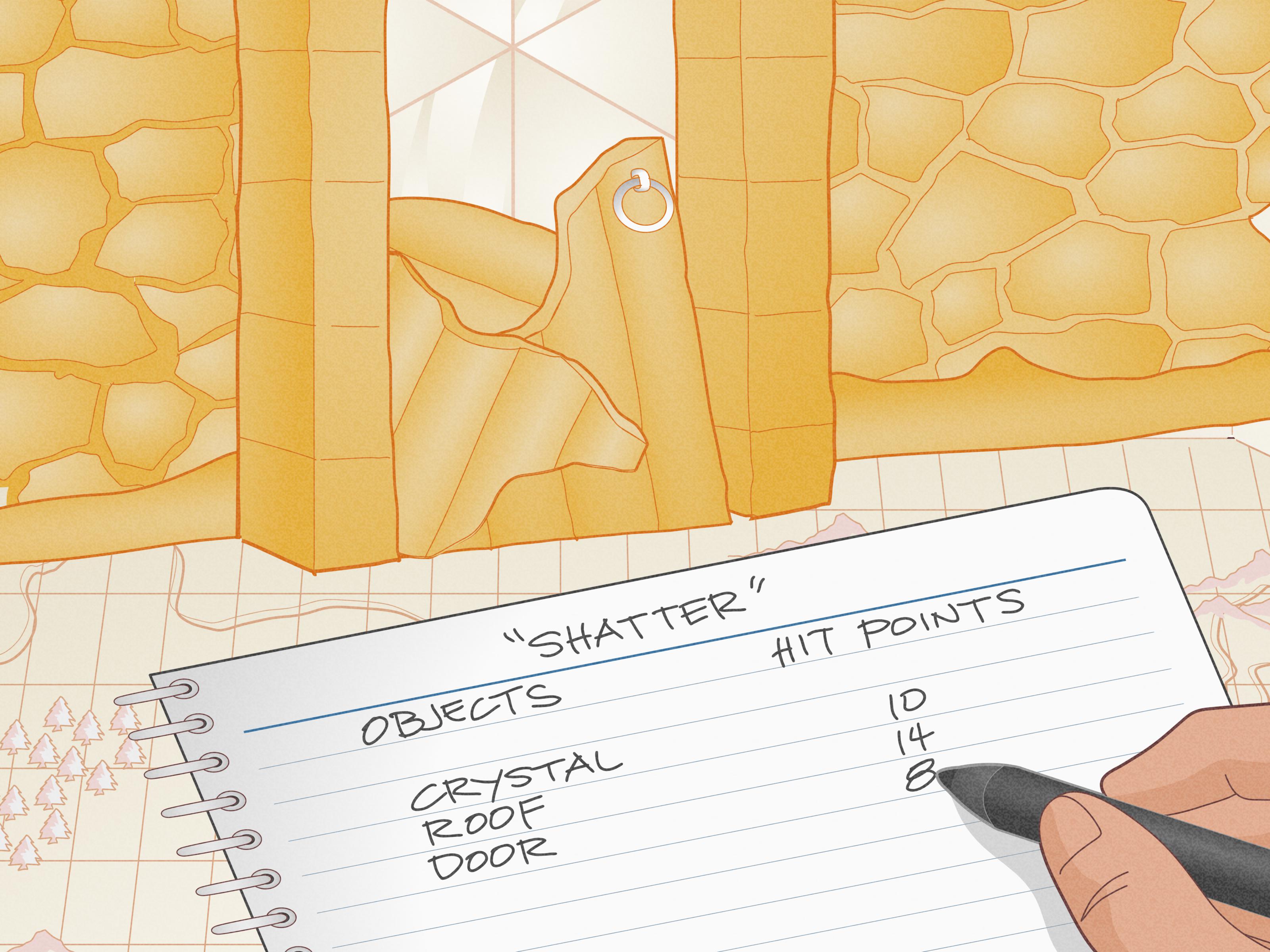
Nonmagical objects that are not being worn or carried also take damage if they are inside the spell’s area. This is the part that turns Shatter from “damage spell” into “problem-solving tool.” A locked chest, brittle support, barred window, chandelier, fragile bridge section, or suspiciously dramatic crystal idol may all become candidates for thunder-based negotiation.
However, Shatter does not automatically destroy everything in the room. Object durability, material, size, damage thresholds, and Dungeon Master judgment still matter. A wine glass is in danger. A castle wall may simply laugh in architecture.
How Much Damage Does Shatter Deal?
At its base level, Shatter deals 3d8 thunder damage. The average damage is 13.5 on a failed save, or roughly 6 to 7 damage on a successful save. For a 2nd-level spell, that is respectable when you can hit multiple enemies. It becomes less impressive when used against one sturdy target with a strong Constitution save.
When cast with a spell slot of 3rd level or higher, Shatter gains an extra 1d8 damage for each slot level above 2nd. That means:
- 2nd-level slot: 3d8 thunder damage
- 3rd-level slot: 4d8 thunder damage
- 4th-level slot: 5d8 thunder damage
- 5th-level slot: 6d8 thunder damage
Upcasting Shatter is sometimes useful, but it competes with stronger higher-level spells. At 3rd level, for example, many casters start comparing it to Fireball, Lightning Bolt, Hypnotic Pattern, or other powerful options. Shatter still has a niche because thunder damage is relatively uncommon, it does not require concentration, and it can damage objects. But as pure damage, it is usually strongest in early play or when its special traits matter.
Best Uses for Shatter in D&D 5e
Clearing Groups of Weak Enemies
Shatter shines when enemies bunch together. A 10-foot-radius sphere is not enormous, but it is big enough to punish groups standing near a doorway, surrounding an ally, guarding a hallway, or hiding behind the same wagon like they all signed a bad tactical agreement.
Against low-hit-point enemies, 3d8 thunder damage can remove multiple threats at once. Even if some creatures succeed on their saving throws, the half damage may still finish wounded enemies.
Damaging Enemies Behind Cover
Because Shatter affects an area centered on a point, it can sometimes reach enemies who are protected from direct attacks but still within the burst. You still need to follow normal spell targeting rules, including whether you can choose a valid point, but the area effect can pressure enemies who thought a table, statue, or overturned cart made them safe.
Breaking Objects During Exploration
Shatter can be a loud, magical crowbar. It may damage locks, fragile doors, windows, chains, cages, nonmagical containers, and environmental obstacles. This is not subtle. Casting Shatter in a dungeon is like announcing, “Hello, monsters on floor two, we are currently doing crime.”
Still, when stealth has already collapsed or time is short, Shatter can create a path quickly. It is excellent for cinematic moments: cracking a glass dome, dropping a chandelier, bursting a brittle barricade, or destroying a villain’s dramatic crystal focus before the villain can finish a speech that definitely had three more paragraphs.
Fighting Constructs and Stone-Like Creatures
The disadvantage clause against inorganic creatures is one of Shatter’s signature advantages. If the party faces animated armor, statues, metal guardians, or crystalline enemies, Shatter becomes more attractive. Constitution saves are often strong on tough monsters, but disadvantage can tilt the odds back toward the caster.
Finishing Wounded Enemies
Because Shatter deals half damage on a successful save, it can be a useful finisher. If several enemies are already injured, you do not need every target to fail. You just need enough thunder damage to clean up the board. That reliability matters, especially when an enemy with 4 hit points is still perfectly capable of stabbing your wizard in the confidence.
When Shatter Is Not the Best Choice
Shatter is useful, but it is not always efficient. It can disappoint when cast against a single high-Constitution monster, especially if that creature has a large hit point pool. Many brutes, giants, beasts, undead, and boss monsters have solid Constitution saves. If only one target is in the area, a spell like Hold Person, Blindness/Deafness, Suggestion, Web, or another control option may offer better value depending on your class.
The spell is also noisy by design. If your party is sneaking through a fortress, Shatter is not the spell you cast unless your stealth plan has already become a public performance. It is thunder damage, not polite damage.
Another limitation is the area size. A 10-foot-radius sphere is useful but not massive. It rewards careful positioning and teamwork. If your fighter is standing in the middle of the enemy group, ask before turning the battlefield into a sound-based blender. Friendly fire is not friendly just because you say “my bad” afterward.
Shatter vs. Thunderwave
Shatter and Thunderwave are often compared because both deal thunder damage and arrive early in a caster’s career. Thunderwave is a 1st-level spell with a close-range cube effect and a push rider. It is excellent when enemies are too close and you need personal space immediately.
Shatter, by contrast, works from 60 feet away and affects a sphere around a point you choose. It does not push creatures, but it offers better range, higher base damage, and object damage. Thunderwave says, “Get away from me.” Shatter says, “That group over there looks too organized.”
Shatter vs. Fireball
Once 3rd-level spells enter the game, Fireball becomes the obvious damage benchmark. Fireball has a much larger radius and deals more damage in a bigger area. In pure blasting terms, Shatter cannot compete.
But Shatter still has reasons to exist. It uses thunder damage instead of fire, it can damage objects in a targeted way, and it is available earlier. It also uses a smaller area, which can be an advantage when you are trying to avoid allies in cramped rooms. Fireball is a wildfire. Shatter is a hammer blow.
Class-by-Class Advice
Bard
For bards, Shatter is one of the most direct early damage spells available. Bards often lean into support, control, and social magic, so having a reliable area damage option can round out the toolkit. It is especially nice for a bard who wants to contribute in combat without giving up concentration on a bigger ongoing spell.
Sorcerer
Sorcerers can use Shatter well because metamagic adds flexibility. Careful Spell may help protect allies at some tables, while Heightened Spell can make an important target more likely to fail. Transmuted Spell may not be necessary because thunder damage is already useful, but sorcerers enjoy having a compact area blast that does not demand concentration.
Warlock
In legacy 5e, warlocks often appreciate Shatter because their spell slots automatically scale and they have limited area damage options at low levels. The downside is obvious: warlocks have very few spell slots, so every cast must matter. Shatter is best for a warlock when it hits several enemies, damages an important object, or solves a problem Eldritch Blast cannot.
Wizard
Wizards value flexibility, and Shatter offers a useful blend of combat and utility. It is not always the strongest prepared spell, but it is excellent when the adventure includes constructs, fragile terrain, locked barriers, or crowded encounters. A wizard who prepares Shatter should think like an engineer with a noise complaint.
Practical Examples at the Table
The Goblin Doorway Problem
Four goblins cluster behind a half-broken doorway, firing arrows at the party. The fighter cannot reach them yet, and the rogue has no clean shot. A bard casts Shatter just behind the doorway, catching all four goblins in the sphere. Even if two succeed on their saves, the damage may be enough to scatter or defeat the group.
The Animated Armor Ambush
The party enters a gallery lined with suits of armor. Naturally, because dungeons have no respect for interior design, two suits animate and attack. Shatter becomes a strong option because the targets are made of metal and suffer disadvantage on the save. The wizard gets to feel clever, and the armor gets to regret its career change.
The Locked Gate Escape
The party is trapped in a prison corridor with enemies approaching. The rogue fails to pick the lock because dice are tiny cubes of betrayal. The sorcerer casts Shatter on the gate. The DM determines whether the gate is damaged, weakened, or broken based on its material and durability. Either way, the spell creates a dramatic attempt to change the scene fast.
Dungeon Master Tips for Shatter
Dungeon Masters should reward creative Shatter uses without letting the spell become a universal demolition machine. The spell damages nonmagical unattended objects, but not every object should collapse from one casting. Consider size, material, thickness, construction, and whether the object has a damage threshold.
For example, a brittle glass case might burst instantly. A wooden door may crack, splinter, or break depending on the damage. Iron bars may be damaged but not necessarily destroyed. A stone bridge might lose a weakened section, but a fortress wall probably needs more than one dramatic sound wave and a confident smile.
Also remember consequences. Shatter is loud, destructive, and obvious. Nearby guards may investigate. Civilians may panic. Delicate treasure may be ruined. The spell is exciting because it changes the environment, and good consequences make those changes feel real.
Is Shatter a Good Spell?
Yes, Shatter is a good spell when used in the right situation. It is not the highest-damage spell forever, and it should not be treated as the answer to every fight. Its value comes from flexibility: area damage, thunder damage, object interaction, no concentration, and special pressure against inorganic creatures.
Choose Shatter if your character needs an early area damage spell, expects to fight constructs or animated objects, or wants magical utility for breaking unattended nonmagical objects. Skip it if your spell list is already crowded with stronger control options and your party rarely faces clustered enemies or destructible environments.
Experience Notes: What Shatter Feels Like in Real Play
In actual D&D 5e sessions, Shatter often performs best when players treat it less like a “damage number” and more like a tactical tool. The most memorable casts usually happen when the spell changes the situation, not when it merely subtracts hit points. A simple example is the classic hallway fight. Enemies rush into a choke point, the party’s front-liner holds the line, and the caster drops Shatter just far enough behind the enemies to avoid allies. Suddenly, the encounter swings. Weak enemies fall, stronger ones are softened, and the party gains breathing room.
Another common experience is discovering how much the object-damage clause matters. Players who read quickly may miss it, but the first time Shatter cracks a barred window, damages a suspended cage, bursts a brittle container, or ruins a villain’s focus object, the table remembers. It gives casters a way to interact with the environment that feels different from thieves’ tools, brute strength, or fire. It also encourages creative thinking. Instead of asking, “Which enemy do I hit?” the player starts asking, “What in this room should stop existing?” That is a very wizard question.
Shatter also teaches positioning. New players sometimes aim it directly at the largest enemy because that seems obvious. Experienced players look for clusters, fragile objects, or targets with poor saving throw odds. They also check where allies are standing. A 10-foot-radius sphere is manageable, but it can still catch the rogue who was absolutely, definitely “about to move next turn.” Communication matters. A quick “Can I place this behind them without hitting you?” keeps the spell fun instead of turning it into party drama with thunder damage.
One of the funniest table patterns is Shatter’s relationship with stealth. Players love solving problems loudly, then acting surprised when the rest of the dungeon has ears. That is not a flaw; it is part of the spell’s personality. Shatter is excellent when the alarm has already been raised, when speed matters more than subtlety, or when the party has accepted that the plan is now “exit pursued by everything.” It is less ideal during a delicate infiltration unless the goal is to create a distraction so dramatic that even the bard thinks it might be too much.
From a Dungeon Master’s perspective, Shatter is most satisfying when the environment has meaningful objects. Empty square rooms make the spell feel ordinary. Rooms with chains, glass, bells, statues, unstable balconies, crystal growths, weapon racks, cages, and old masonry make it shine. The spell rewards encounter design that includes things players can damage, exploit, or regret damaging. Nothing says “fantasy adventure” like saving the prisoner while accidentally destroying the expensive evidence chest beside them.
The best advice from real play is simple: prepare Shatter when you want a spell that can blast, break, and create a scene. Cast it when at least two targets are in range, when an object matters, or when the enemy’s material composition makes the saving throw disadvantage relevant. Do not cast it just because it is on your sheet. Cast it when the moment deserves thunder.
Conclusion
Shatter is one of the most flavorful 2nd-level spells in D&D 5e because it combines damage, utility, and cinematic chaos in one compact thunderclap. It is not always the strongest spell on paper, but it is often one of the most satisfying spells at the table. Used wisely, it can clear clustered enemies, punish inorganic creatures, break key objects, and turn a boring room into a very loud memory.
If your character needs a non-concentration area spell with practical utility, Shatter deserves serious consideration. Just remember: it is not quiet, it is not subtle, and it is definitely not what the innkeeper wanted you to cast indoors.
Note: This article is written as publish-ready HTML body content only, with original wording, practical examples, and SEO metadata included at the end in JSON format.