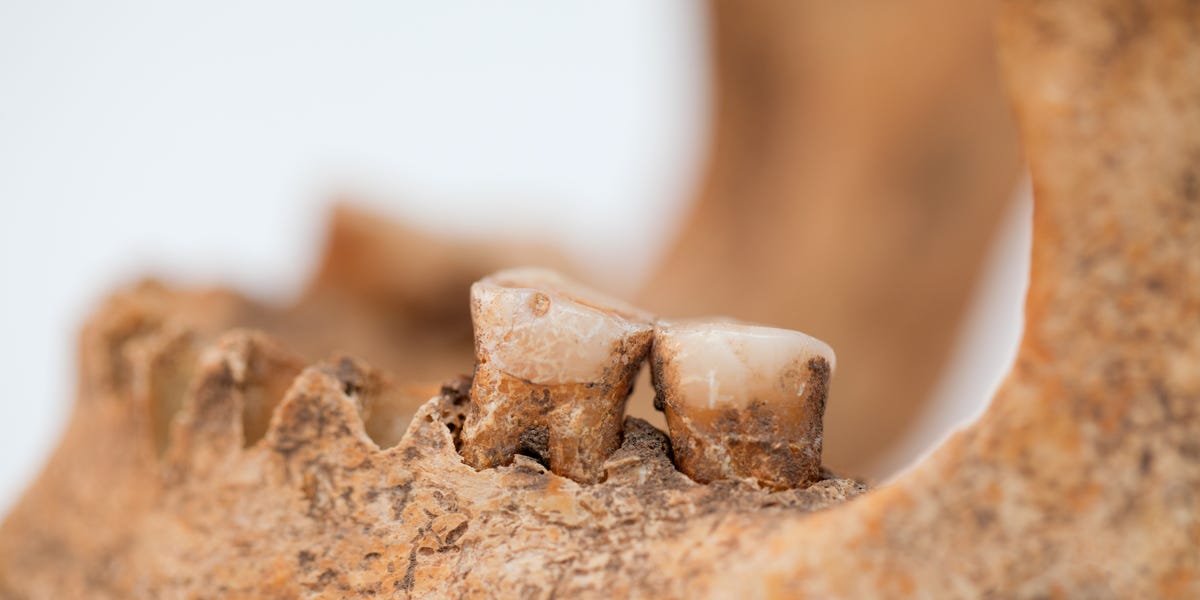
Every once in a while, science reminds us that history does not always arrive as a golden crown, a royal tomb, or a dramatic skeleton posed like it is waiting for a museum selfie. Sometimes, it arrives as teeth. Thirteen of them, to be exact. Small, fossilized, and frankly not the sort of thing most people would call glamorous, these ancient teeth from Ethiopia may force scientists to rethink a key chapter in human evolution.
The discovery comes from the Ledi-Geraru research area in Ethiopia’s Afar region, a place already famous among paleoanthropologists for producing some of the oldest evidence connected to the genus Homo. Researchers studying the site identified 13 fossil teeth dating roughly between 2.8 million and 2.6 million years ago. Some appear to belong to early Homo, the genus that eventually includes us, Homo sapiens. Others seem to represent a previously unknown species of Australopithecus, the same broad genus as Lucy, the superstar fossil who has been carrying the celebrity burden of human origins since the 1970s.
In plain English: our family tree may have been less like a straight ladder and more like a messy group chat with multiple branches talking at once. These teeth suggest that early Homo and a new kind of Australopithecus lived in the same region at around the same time. That matters because it challenges the tidy old picture of one ancestor neatly replacing another, like upgrading from a flip phone to a smartphone. Evolution, as usual, was not that polite.
Why 13 Ancient Teeth Matter So Much
To the casual observer, teeth may not seem like blockbuster fossils. A skull looks dramatic. A skeleton looks complete. A tooth looks like something you would rather not find in your soup. But to paleoanthropologists, teeth are treasure chests. They preserve well, they carry clues about diet, growth, anatomy, and species identity, and they can survive long after more delicate bones have vanished.
The Ledi-Geraru teeth are especially important because they come from a poorly understood window in human evolution. The period between about 3 million and 2.5 million years ago was a turning point. Around this time, older australopiths were still present, early members of Homo were appearing, environments were changing, and stone tool use was becoming more significant. It was not a quiet era. It was more like evolution’s crowded kitchen: several cooks, sharp tools, changing ingredients, and nobody clearly in charge.
The researchers found that ten of the teeth, around 2.63 million years old, likely belonged to an unidentified species of Australopithecus. Three other teeth, dated roughly between 2.78 million and 2.59 million years old, show traits linked to early Homo. That combination suggests that different hominin lineages shared the same broad landscape during the same evolutionary period.
The Ledi-Geraru Site: A Hotspot for Human Origins
Ledi-Geraru is not new to scientific fame. In 2013, researchers working there discovered a jawbone known as LD 350-1, dated to about 2.8 million years ago. That fossil has been widely discussed as one of the earliest known examples associated with the genus Homo. It showed a fascinating mix of traits: some more modern, some still primitive. In other words, it looked like evolution had not finished editing the draft.
The area has also produced evidence of some of the earliest Oldowan stone tools, dating to more than 2.58 million years ago. These tools matter because they suggest that early hominins were not merely surviving in changing environments; they were adapting with technology. The tools were simple compared with later hand axes or modern gadgets, but even a sharp stone flake is a major innovation when your dinner comes wrapped in hide, shell, or tough plant fiber.
The newly described teeth add another layer to this already rich story. They do not simply tell scientists that one ancient species lived there. They suggest overlap. The region may have hosted multiple hominin species, each with different bodies, diets, behaviors, and survival strategies. Instead of one ancestral line marching confidently toward modern humans, Ledi-Geraru points to a branching evolutionary landscape where several relatives may have crossed paths, competed, ignored one another, or occupied slightly different ecological niches.
A New Australopithecus Species?
The most exciting part of the discovery is the possibility of a previously unknown Australopithecus species. Australopithecus is a genus of early hominins known for combining ape-like and human-like traits. Members of this group walked upright, but they still had small brains and body proportions that remind us evolution does not hand out upgrades all at once.
The famous Lucy fossil belongs to Australopithecus afarensis, a species that lived roughly between 3.85 million and 2.95 million years ago. Lucy and her relatives helped prove that upright walking came before big brains in human evolution. For years, A. afarensis has been central to discussions about where our genus came from.
But the Ledi-Geraru teeth appear distinct from Lucy’s species. Researchers have not formally named the new species yet, and for good reason. Naming a species from teeth alone is possible in some cases, but it is also risky. Science is not supposed to work like naming a pet goldfish after five minutes of ownership. More fossils from the jaw, skull, limbs, or other parts of the body would help confirm exactly where this creature fits.
Still, the dental evidence is strong enough to suggest that this was not simply a late-surviving version of Lucy’s species. If confirmed, the new Australopithecus would expand the number of known hominin species living in East Africa near the origin of Homo. That is a big deal, because it makes the evolutionary scene more diverse than a simple textbook diagram can comfortably show.
Why This Challenges the “Straight Line” View of Evolution
Many people still imagine human evolution as a straight parade: ape-like ancestor, slightly less ape-like ancestor, caveman, person holding coffee. It is a familiar image, but scientists have been trying to retire it for decades. The 13 teeth from Ledi-Geraru give that outdated model another strong push toward the exit.
Evolution does not work like a staircase. It works more like a tree, a bush, or, on especially complicated days, a tangled pile of phone chargers. Species branch, overlap, adapt, disappear, and sometimes coexist for long periods. One species does not always vanish the moment another appears. Nature is not a corporate office replacing old software across all departments overnight.
The Ledi-Geraru fossils suggest that early Homo and at least one kind of Australopithecus were neighbors in time and space. That means the emergence of our genus may have happened in a world full of close relatives. Some may have eaten different foods. Some may have used landscapes differently. Some may have been better adapted to dry grasslands, while others stayed closer to wooded or water-rich environments.
This makes the origin of humans more interesting, not less. Instead of asking, “Which species turned into us?” scientists can ask better questions: Which populations survived changing climates? Which diets gave certain groups an advantage? Which anatomical traits mattered most? Did tool use help early Homo compete? Were these species avoiding one another, competing directly, or simply living different lives in the same region?
Dating the Teeth: How Scientists Know They Are Millions of Years Old
One of the most common questions about ancient fossils is simple: how do scientists know how old they are? Nobody found a tiny prehistoric calendar next to the teeth. Instead, researchers rely on geology.
The Afar region of Ethiopia is an active rift zone shaped by volcanic activity, shifting sediments, ancient rivers, and changing landscapes. Volcanic ash layers are especially useful because they can contain minerals such as feldspar, which scientists can date using radiometric methods. When fossils are found between datable ash layers, researchers can estimate their age by determining when the surrounding volcanic deposits formed.
At Ledi-Geraru, this geological record gives scientists a reliable time frame. The fossil teeth were discovered in sediments bracketed by volcanic layers, allowing researchers to place them between about 2.8 million and 2.6 million years ago. That date range lands directly in one of the most important and mysterious periods in the history of the human lineage.
What the Teeth May Reveal About Diet and Survival
Teeth are not just species labels. They are also menus written in enamel. Shape, size, wear patterns, and chemical traces can reveal what ancient hominins may have eaten. Large molars can suggest heavy chewing. Enamel chemistry can help distinguish diets based more on grasses, leaves, fruits, meat, or mixed resources.
Researchers are especially interested in whether the new Australopithecus and early Homo ate the same foods. If they did, the two groups may have competed for similar resources. If they did not, they may have shared the landscape by occupying different ecological niches. Think of it as two restaurants on the same street: one survives by selling noodles, the other by selling tacos. Competition exists, but specialization helps.
This question becomes even more interesting because stone tools appear in the same broad time and region. Early toolmaking may have changed what some hominins could eat by allowing them to cut meat, crack bones, process tough plants, or prepare food before chewing. If early Homo used tools more regularly, that technology may have reduced pressure on teeth and jaws over time. Biology and behavior were not separate stories. They were dance partners, though probably not graceful ones.
The Bigger Picture: Human Evolution Was Crowded
The Ledi-Geraru discovery fits a broader trend in paleoanthropology: the more scientists find, the less simple the story becomes. East Africa around 2.5 million to 3 million years ago may have hosted several hominin species. In addition to early Homo and this possible new Australopithecus, fossils from the region and nearby areas point to other forms, including Australopithecus garhi and later Paranthropus lineages elsewhere in East Africa.
That crowded picture matters because it changes how we understand our own origins. Our ancestors were not the only experiment in upright walking, flexible diets, or survival under environmental stress. They were one branch among several. The branch that eventually led to us survived, but other branches were real, successful for a time, and important to the story.
This is humbling. Modern humans often like to imagine ourselves as the obvious final result of evolution. But the fossil record says otherwise. We are not the inevitable winners of a prehistoric tournament bracket. We are the living twig of a much larger tree, and many of its branches broke before anyone could take a family photo.
Why Scientists Are Being Careful
As exciting as the discovery is, researchers are careful not to overstate it. The possible new Australopithecus species has not yet been formally named. Teeth can reveal a lot, but they cannot answer every question. More fossils are needed to understand body size, walking style, brain shape, hand anatomy, and other traits.
This caution is not a weakness. It is how good science works. A flashy headline may say the discovery “rewrites human evolution,” but the real process is more careful. The teeth add evidence. They sharpen questions. They challenge old assumptions. They do not magically solve every mystery of where we came from.
In that sense, the discovery is powerful precisely because it is incomplete. It reminds us that human evolution is built from fragments: a jaw here, a tooth there, a stone tool nearby, a layer of ash above and below. Each piece is small. Together, they change the map.
Experience Section: Standing Before 13 Teeth and Feeling the Deep Past
Imagine standing in a dry, wind-shaped landscape in Ethiopia, where the ground looks quiet until someone trained in fossil hunting sees what everyone else missed. To most of us, a tiny object weathering out of sediment might look like a pebble. To a paleoanthropologist, it might be a message from 2.6 million years ago. That is the first emotional lesson of this discovery: deep history rarely announces itself with fireworks. It waits patiently in dust.
Reading about the 13 ancient teeth creates a strange feeling. On one hand, the fossils are scientifically technical. There are measurements, comparisons, volcanic layers, sediment dates, and dental traits with names that sound like they belong in a dentist’s nightmare. On the other hand, the story is deeply personal. These teeth belonged to living beings. They chewed food, wore down with age, and helped their owners survive in a changing world. They were not “specimens” to themselves. They were bodies moving through riverside habitats, grasslands, and volcanic landscapes long before humans invented names for anything.
There is also something funny about teeth becoming the heroes of human evolution. Teeth are usually the body parts we complain about. They ache, need cleaning, and occasionally generate dental bills capable of making adults stare silently into the middle distance. Yet here they are, doing serious academic work millions of years later. A molar can become a time machine. A premolar can complicate a family tree. Somewhere, a fossil tooth is having a better career than most influencers.
The experience of thinking through this discovery also changes how you look at human identity. We tend to ask, “Where did we come from?” as if the answer should be one place, one species, one moment. But the teeth suggest a richer answer. We came from a world of experiments. Some relatives had powerful chewing adaptations. Some may have used tools. Some walked upright but never became us. Some lived beside our early lineage and vanished. Their disappearance does not make them failures. It makes them part of the living complexity that shaped the conditions from which we emerged.
This discovery also makes museums feel different. The next time you see a fossil tooth behind glass, it may not look like much at first. It will not tower over you like a dinosaur skeleton. It will not grin dramatically like a reconstructed skull. But it may carry more information than its size suggests. A tooth can reveal diet, age, species, environment, and evolutionary relationship. It can show that two ancient relatives shared a landscape. It can push scientists to redraw diagrams that generations of students memorized.
Finally, the 13 teeth offer a useful lesson beyond science: small evidence can change big stories. A few fragments from Ledi-Geraru remind us not to trust overly neat narratives. Life is rarely linear. Progress is rarely tidy. Families, histories, cultures, and species all branch in unexpected ways. Human evolution is not a heroic march from primitive to perfect. It is a long, branching, experimental story full of cousins, dead ends, surprises, and lucky survivals. And sometimes, the clue that helps us understand it all is not a skull or a spear, but a tooth small enough to fit in your palm.
Conclusion
The discovery of 13 ancient teeth at Ledi-Geraru does not give us a complete new chapter of human evolution, but it gives us several astonishing sentences. The fossils suggest that early Homo and a previously unknown species of Australopithecus may have lived side by side in Ethiopia between about 2.8 million and 2.6 million years ago. That finding challenges the old idea of human evolution as a straight line and supports a more accurate view: a branching tree filled with multiple hominin species adapting, competing, and disappearing across deep time.
The teeth are small, but their implications are large. They connect anatomy, geology, diet, climate, and technology into one fascinating puzzle. They remind us that the origin of humans was not a single dramatic leap, but a complicated process shaped by many relatives and many environments. In the end, these fossilized teeth may not rewrite every page of human evolution, but they definitely scribble important notes in the margins. And in science, margin notes sometimes become the next big headline.