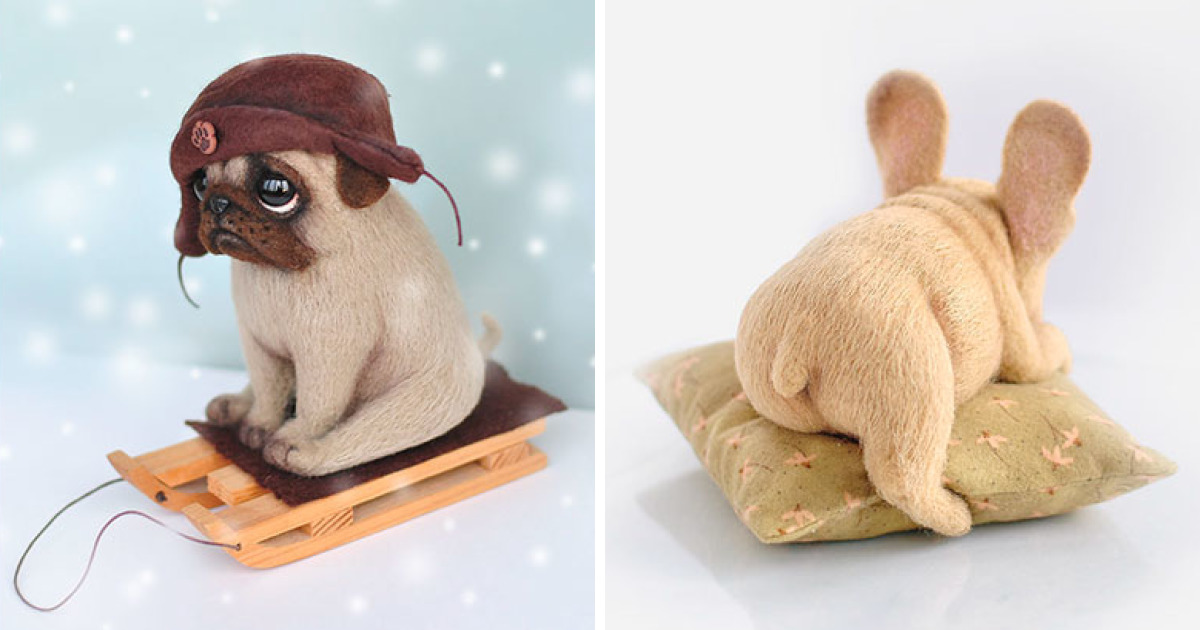
Some art politely asks to be admired from a distance. Then there are tiny felted dogs that seem to look directly at you and say, “Yes, I know I’m adorable. Please act normal.” That is the magic behind the charming handmade creations of MamaDocha, a Russian creative duo known for crafting collectible animals from wool, fabric, and plush.
Their felted dogs are not just soft little sculptures. They feel like miniature personalities with paws. One pup looks like it has just heard the word “treat.” Another seems mildly offended that dinner is late. A third appears ready to forgive everyone, including the vacuum cleaner. These tiny wool companions prove that handmade art can carry more expression than a room full of mass-produced decor.
Needle felted dogs have become especially popular among craft lovers, pet owners, collectors, and anyone who has ever lost ten minutes of productivity to a cute animal photo. But what makes these Russian felt artists stand out is not only technical skill. It is the way each dog appears to have a mood, a backstory, and possibly a very strong opinion about squirrels.
The Artists Behind the Felted Dogs
MamaDocha is described as a creative tandem from Russia formed by Anna Kolesnikova and Irina Khokhlova. Their artistic collection includes rabbits, hedgehogs, cats, bears, chickens, and other sweet collectible toys. Still, their felted dogs have a special kind of emotional magnetism. They are small, expressive, and carefully made, often standing around 15 to 20 centimeters tall.
That size matters. These are not oversized plush toys meant to be tossed on a bed and forgotten. They are palm-friendly art pieces, the kind that sit on a shelf, desk, or display cabinet and quietly become the most charming member of the room. Their scale invites close inspection: the tilt of an ear, the curve of a nose, the sleepy expression around the eyes, the posture that suggests a tiny dog with a full schedule of naps.
Each piece is made as a unique copy, which gives the dogs an even stronger sense of individuality. In a world where many products come from identical molds, a one-of-a-kind felted dog feels refreshingly personal. It is less “item number 4837” and more “this is Boris, he likes biscuits and judges your shoes.”
What Is Needle Felting?
Needle felting is the craft of turning loose wool fibers into firm shapes by repeatedly poking them with a special barbed needle. Unlike sewing needles, felting needles have tiny notches along the shaft. Those notches catch the wool fibers and push them together, causing the fibers to tangle and compact into felt.
It sounds simple until you try it. Then you realize that making a believable dog from fluff requires patience, control, and a healthy respect for sharp objects. The artist begins with wool roving or batting, forms a rough shape, and gradually builds density. More wool is added for the body, legs, muzzle, cheeks, ears, and tail. Details are sculpted through thousands of tiny pokes. Yes, thousands. Needle felting is basically sculpting by politely attacking wool until it agrees to become art.
The best needle felted animals depend on balance. Too loose, and the sculpture looks unfinished. Too dense, and it can lose softness and charm. Artists must understand anatomy, texture, proportion, and expression. A millimeter can change a face from “curious puppy” to “small tax accountant.” That is why handmade felted dogs are so impressive: they combine textile craft, sculpture, character design, and pet portraiture in one fuzzy package.
Why These Felted Dogs Feel So Alive
The secret is expression. Real dogs communicate through posture, ear position, eyes, mouth shape, tail movement, and body tension. Skilled felt artists borrow from those same visual cues. A slightly lowered head can make a dog look shy. Forward ears can suggest curiosity. A rounder muzzle can make the sculpture feel younger and sweeter. A sideways glance can turn a felted pup into a tiny comedian.
MamaDocha’s dogs are adorable because they do not look generic. Their faces seem to say something. Some appear gentle and loyal. Some look playful. Some carry the dignified seriousness of a dog who has never missed a meal and does not intend to start now. This sense of character is what turns a felted figure into a collectible with emotional appeal.
That emotional appeal is especially strong for dog lovers. People do not see dogs as decorations. They see companions, family members, emotional support experts, snack detectives, and unpaid household supervisors. A felted dog taps into that bond without needing batteries, feeding schedules, or emergency carpet cleaning.
The Art of Making Personality From Wool
Creating a dog with character starts long before the final details. The artist has to decide what kind of dog the sculpture wants to be. Is it proud? Bashful? Sleepy? Mischievous? Is it a puppy still learning how legs work, or an older dog with wise eyes and a heroic relationship with the couch?
From there, every choice supports the personality. A round body can create a cozy, huggable feeling. Long legs can make the dog look alert or elegant. Floppy ears add softness and vulnerability. Tiny eyebrows, even when made with subtle shading, can completely change the mood. The eyes are often the strongest feature. In miniature animal art, eyes are where the sculpture either wakes up or remains just wool with ambition.
Color blending also plays a major role. Real dog coats are rarely one flat shade. They have highlights, shadows, patches, speckles, and soft transitions. A felt artist may layer multiple wool colors to create depth. A white dog might include cream, gray, or beige tones. A brown dog may need chestnut, caramel, dark chocolate, and lighter fibers around the muzzle. Done well, the result looks warm and organic rather than painted-on.
Why Handmade Felted Dogs Are So Collectible
Collectible handmade animals sit at the intersection of craft, nostalgia, and personality. They appeal to people who love pets, miniature art, slow design, and objects that feel human-made. Unlike factory toys, felted dogs show the artist’s hand. You can sense the time behind them. That matters.
In recent years, handmade and personalized gifts have gained strong attention because they feel more thoughtful than ordinary store-bought items. A custom or collectible felted dog can represent a beloved pet, a favorite breed, or simply a tiny character that makes someone smile. It is the kind of gift that says, “I know you,” rather than “I panicked near a checkout display.”
Miniature crafts also have a special charm online. They photograph beautifully, fit into cozy lifestyle images, and invite storytelling. A tiny felted dog sitting next to a teacup or book instantly becomes a scene. Add a knitted scarf, and suddenly the dog looks like it runs a countryside bakery and has strong opinions about cinnamon rolls.
Felted Dogs vs. Plush Toys: What Makes Them Different?
Plush toys are usually sewn from fabric and filled with stuffing. Felted dogs, especially needle felted ones, are sculpted from wool fiber. That difference changes everything. A plush toy is often soft, flexible, and designed for cuddling. A felted dog is more like a small sculpture. It may be soft to the touch, but it is usually made for display rather than rough play.
Because needle felting allows precise shaping, artists can create detailed cheeks, noses, paws, fur texture, and expressions. The finished piece often feels more handcrafted and artful than a standard plush animal. It may not survive a toddler, a washing machine, or a real dog who thinks everything is a chew toy, but it will absolutely win a shelf beauty contest.
The Role of Russian Craft Tradition
Russia has a long relationship with folk art, textile work, dolls, miniature figures, and decorative handmade objects. While MamaDocha’s felted dogs feel modern and internet-friendly, they also fit into a broader appreciation for handmade character toys. Russian artists have often brought warmth, storytelling, and expressive faces into dolls and small figures. These felted animals continue that spirit in a fresh, cozy form.
What makes this style so appealing internationally is its universal language. You do not need to speak Russian, English, or “advanced dog” to understand a tiny wool puppy with hopeful eyes. Cute travels well. So does craftsmanship. So does the quiet comedy of a dog sculpture that looks like it just stole a sock and regrets nothing.
Why Dog Lovers Connect With These Tiny Wool Pets
Dogs have an unusual talent for becoming emotionally important in very little time. They greet us like returning heroes after a five-minute trip to the mailbox. They nap with dramatic commitment. They make eye contact when we open cheese. Their personalities become part of household life.
That is why felted dogs with expressive faces feel so meaningful. They remind viewers of real pets: the nervous rescue dog, the proud terrier, the lazy senior lab, the tiny dog who believes it personally owns the sidewalk. Even when a felted dog is not an exact portrait, it can capture the emotional truth of doghood: loyalty, silliness, trust, and the occasional total lack of dignity.
Collectors often respond to handmade animals because they feel like companions rather than objects. A felted dog does not bark, shed, or require walks in the rain, but it can still brighten a corner of a room. It becomes a small reminder of affection, patience, and the beautiful absurdity of loving animals.
How Artists Add Realistic Details
Realism in needle felting comes from layering. Artists may begin with a firm core of wool, then apply softer finishing fibers on top. For fur texture, they can leave some fibers looser, trim areas carefully, or blend short and long fibers. The nose may be sculpted separately or shaped directly into the muzzle. Eyes are often glass, beads, or carefully placed dark elements that give the face life.
The mouth is especially important. A tiny line can create a smile, a pout, or a thoughtful expression. The position of the head can make the dog look attentive or sleepy. The paws can be rounded and cartoonish or shaped with more realistic toes. Every detail contributes to the character.
The best pieces avoid over-detailing. Too much realism can sometimes make a miniature feel stiff. The charm of MamaDocha’s dogs comes from the balance between realism and storybook sweetness. They are recognizable as dogs, but they are also whimsical. They look like they belong in a children’s book where everyone drinks tea and the hedgehog runs the post office.
Why This Craft Is Slow, and Why That Is the Point
Needle felting rewards patience. The process cannot be rushed without losing quality. A handmade felted dog requires repeated shaping, checking, adjusting, and refining. The artist must step back often and ask: Does the head feel too large? Are the ears balanced? Does this dog look charming, or does it look like it has just read bad news?
That slow process is part of the value. In a fast digital world, handmade fiber art feels grounding. It reflects time spent with materials. The finished dog carries that time with it. A viewer may not count every needle poke, but they can sense the care behind the piece.
Tips for Appreciating or Collecting Felted Dogs
Look for expression first
A good felted dog should make you feel something. It might make you laugh, melt, or say, “Why does this tiny wool creature understand me?” Expression is the heart of the piece.
Notice the structure
Check the proportions, posture, and balance. Even whimsical dogs need good form. The body should feel intentional, not accidental.
Study the fiber work
Look at how colors blend and how fur texture is handled. Clean transitions, thoughtful shading, and well-shaped features usually signal strong craftsmanship.
Remember that handmade means individual
Tiny differences are part of the charm. A handmade felted dog should not look like it came from a factory. It should have a little soul, a little weirdness, and possibly the energy of a dog who hears a snack bag opening three rooms away.
Experiences Inspired by Adorable Felted Dogs
The first experience many people have with felted dogs is surprisingly emotional. You may begin by thinking, “Oh, cute craft.” Then you zoom in and suddenly you are naming it, assigning it a favorite blanket, and wondering whether it would get along with your imaginary felted cat. That is the power of character-based miniature art. It invites participation. The viewer becomes part of the story.
For someone who has owned dogs, these felted figures can bring back very specific memories. A floppy-eared wool pup might remind you of the dog that used to sit by the kitchen door during breakfast. A serious-looking little terrier may resemble a family pet who believed the mail carrier was a national threat. A sleepy felted dog can recall quiet evenings when a real dog curled up nearby and made the entire room feel safer.
There is also a lovely experience in watching needle felting itself. The process looks almost magical: loose wool slowly becomes a body, then a face, then a personality. At first, the shape may resemble a fuzzy potato with ambition. After enough careful work, it becomes a dog with cheeks, ears, paws, and an expression. Watching that transformation can make people appreciate how much patience handmade art requires.
Trying needle felting for the first time is another memorable adventure. Beginners often discover two things quickly: wool is forgiving, and felting needles are not. The craft is relaxing, but it also demands attention. One distracted poke can remind you that art has boundaries. Still, the process is satisfying because every small motion changes the form. You are not waiting for a machine to produce something. You are building it slowly with your own hands.
Felted dogs also make wonderful conversation pieces. Place one on a desk and people will notice it. They may ask where it came from, whether it represents a real dog, or why it looks like it knows everyone’s secrets. Unlike generic decorations, characterful handmade animals create instant warmth. They make a space feel personal.
For gift giving, the experience can be even stronger. A felted dog inspired by someone’s pet can become a keepsake, especially if the pet is older or has passed away. It should never replace the real animal, of course, but it can honor the bond. The best handmade pet-inspired pieces capture not just markings, but spirit: the tilted head, the soft eyes, the bold stance, the goofy charm.
There is also joy in collecting felted animals as a tiny world. One dog becomes two. Two become a shelf. A shelf becomes a small wool-based society with questionable zoning laws. Add a rabbit, hedgehog, or bear, and suddenly your display has neighbors. This is how innocent craft appreciation becomes a miniature village, and honestly, there are worse problems to have.
Ultimately, the experience connected to these Russian felted dogs is about delight. They remind us that art does not need to be huge, expensive, or serious to be meaningful. Sometimes it can be small, fuzzy, funny, and full of personality. Sometimes it can be a tiny wool dog that looks at you as if it has known you forever and would very much like a biscuit.
Conclusion
Russian artists Anna Kolesnikova and Irina Khokhlova of MamaDocha have shown how much personality can fit inside a small felted figure. Their adorable wool dogs are more than cute collectibles; they are expressive miniature characters shaped through skill, patience, and imagination. Each one feels unique, from its tiny face to its posture, proving that handmade art can capture the warmth and humor people love about real dogs.
In a world full of fast products and copy-paste design, these felted dogs offer something slower and sweeter. They celebrate craft, individuality, and the emotional bond between humans and animals. Whether you are a collector, a dog lover, a fiber art fan, or just someone who appreciates tiny things with big personalities, these felted pups are hard to resist. They do not bark, chew shoes, or steal sandwiches from the counter. But they might steal your heart, which is honestly very on-brand for dogs.