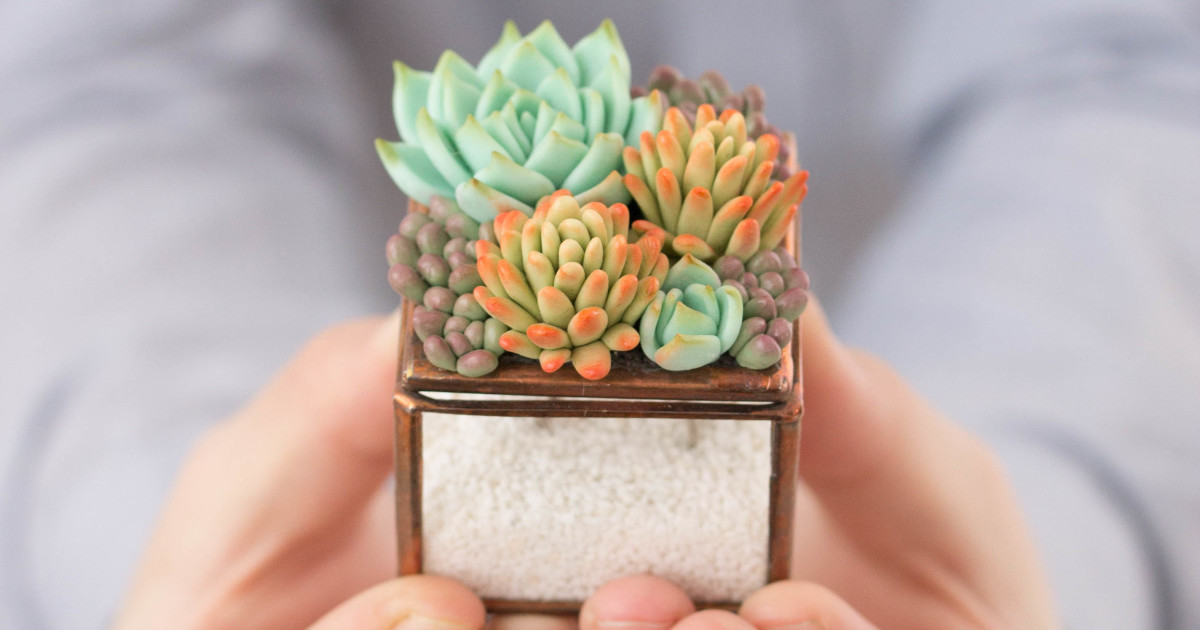
Some people collect sneakers. Some collect vintage teacups. I, apparently, collect tiny green things and the craft supplies required to make even more tiny green things. That is how I ended up with a full-blown obsession I can only describe as succulent mania, plus a side romance with polymer clay. One hobby brought in the plants. The other brought in the possibility of making them immortal.
It started innocently enough: one echeveria on a windowsill, one jade plant on a desk, one haworthia sitting there looking smug and architectural. Then came the ceramic pots, the gritty soil mix, the debates over drainage holes, and the very serious question of whether a south-facing window is a blessing or a leafy interrogation lamp. Somewhere in the middle of all that, I picked up polymer clay and realized I could sculpt the same rosettes, plump leaves, dusty colors, and dramatic silhouettes that made me fall in love with succulents in the first place.
That combination turned into a creative rabbit hole in the best possible way. Real succulents taught me about shape, texture, restraint, and survival. Polymer clay gave me a way to turn those lessons into jewelry, home decor, miniature arrangements, gift toppers, plant markers, and tiny botanical sculptures that never throw a tantrum because I watered them wrong. If you love DIY craft ideas, indoor plants, or the strange thrill of making a fake sedum look suspiciously real, welcome. You are among friends.
Why Polymer Clay and Succulents Make Such a Good Pair
There is something almost suspiciously perfect about the relationship between polymer clay succulents and real succulent plants. Succulents are naturally sculptural. They already look as if a designer spent three weeks refining every curve. Rosette varieties resemble hand-built flowers. Trailing varieties look like living beadwork. Columnar cacti have a clean, graphic structure that practically begs to be translated into art.
Polymer clay, meanwhile, is a dream material for this kind of project. It holds detail well, comes in a huge range of colors, can be blended for soft gradients, and cures into durable pieces when baked according to package directions. It also makes it easy to mimic the little details succulent fans notice immediately: powdery-looking leaves, blush-tinted edges, tight centers, sun stress colors, and the plump geometry that makes these plants so photogenic.
The best part is that this craft hobby can go in two directions at once. You can make decorative pieces inspired by your plant collection, or you can use polymer clay to support your real plants with custom pot charms, tags, tiny garden stakes, and display accents. In other words, your succulent obsession gets both an artistic outlet and a practical one. That is what I call efficient enthusiasm.
What Real Succulents Taught Me Before I Ever Touched the Clay
Before I got decent at sculpting succulents, I had to get better at actually keeping them alive. Real plant care taught me more about form than any mood board ever could. If you spend time with living succulents, you start noticing patterns: the way healthy leaves stack tightly when the plant gets enough light, the way overwatered leaves turn mushy or translucent, the way underwatered leaves wrinkle, and the way poor lighting can make a once-compact plant stretch like it is desperately reaching for a spotlight.
Light shapes the silhouette
One of the biggest lessons from succulent care is that light affects everything. Many indoor succulents thrive in bright light, and a number of popular varieties do well with bright, indirect light or a few hours of gentle direct sun depending on species. When light is too low, plants can become leggy, pale, or uneven. That matters for clay work because a convincing polymer succulent should look balanced and compact, not like it spent six months pleading with a dim corner for mercy.
Watering changes the mood
Succulents do not want constant soggy soil. They generally prefer a soak-and-dry rhythm, meaning the potting mix should dry between waterings. Containers with drainage holes and fast-draining soil are a big deal here, because sitting in water is a fast route to root rot. For artists, this becomes visual education. Healthy succulents look firm, intentional, and almost polished. Stressed ones tell a different story. Once you learn those cues, your clay pieces become more believable because you stop making generic green blobs and start making plants with personality.
Texture matters more than people think
Succulents are not just green. They are blue-green, gray-green, dusty mauve, chalky sage, and dramatic near-black. Some have smooth leaves; others have ridges, bumps, or striping. Some look matte and powdery, while others appear glossy. That range is gold for polymer clay artists. It means you can marble colors, blend subtle gradients, and use gentle surface finishing to echo what makes real succulents feel so mesmerizing in the first place.
Succulent Mania, But Make It Practical
If you are going to fall in love with succulents, it helps to know a few realities before your windowsill turns into a tiny desert kingdom. First, not all succulents want identical conditions. Some tolerate stronger sun, while others prefer bright but indirect light. Some go semi-dormant in winter and need less water. Some stay tiny and charming; others quietly plot a takeover of your shelf space.
In general, indoor succulents appreciate a gritty, well-draining mix, containers that do not trap excess moisture, and watering based on soil dryness rather than a rigid calendar. Terra-cotta pots are popular because they can help excess moisture evaporate faster than nonporous containers. During darker or cooler months, many succulents need less water than they do during active growth periods. Translation: the phrase “but I was just trying to help” has ended many a succulent.
These care basics influenced my craft work more than I expected. I started making clay pots with faux drainage details. I created miniature arrangements inspired by drought-tolerant plant groupings. I even adjusted my color palette to reflect seasonal changes, using softer greens in some pieces and sun-stressed pink edges in others. The more I learned about real plants, the less cartoonish my clay versions became.
How I Turn Succulent Inspiration Into Polymer Clay Art
Working with oven-bake clay is half technique and half patience. The clay needs to be conditioned first, which means kneading or rolling it until it becomes more workable and even. This step is not glamorous, but neither is washing your makeup brushes, and both are necessary if you want good results. Properly conditioned clay is easier to shape, less likely to crack, and much more pleasant to use.
Step 1: Build the color story
Real succulents are rarely one flat color, so I almost never use clay straight from the package without mixing. For echeveria-inspired pieces, I blend dusty green with a hint of blue, gray, or blush. For jade plant styles, I go richer and cleaner. For cactus-inspired work, I lean into deeper greens with occasional warm undertones. This is where the magic happens. Small color shifts make a sculpted plant feel collected from nature rather than stamped out of a toy factory.
Step 2: Shape leaves one by one
Rosette succulents look best when built leaf by leaf. I start with a small center and add outer leaves gradually, keeping the arrangement slightly irregular because nature loves rhythm but hates perfect symmetry. A trailing succulent or bead-like variety works differently; those pieces benefit from repeated forms and careful spacing. A cactus shape may need subtle ribbing or tiny surface texture to keep it from looking too smooth.
Step 3: Bake with discipline, not vibes
Polymer clay should be baked according to the package instructions, and using an oven thermometer is one of the smartest moves a crafter can make. Too much heat can scorch the clay, while sloppy temperature control can lead to weak or under-cured pieces. A regular home oven or toaster oven can work, but a microwave is not the tool for polymer clay curing. This is one of those moments where creativity must shake hands with the instruction label.
Step 4: Finish lightly
After curing and cooling, I sometimes sand or buff pieces for a smoother finish. If I use glaze, I test first and apply thin coats rather than trying to drown the piece in shine. Many succulents have a soft, matte appearance, so an ultra-glossy finish can look less realistic. The goal is not “wet candy.” The goal is “tiny botanical masterpiece with self-respect.”
Favorite Polymer Clay Succulent Projects
Once the obsession really took hold, I stopped asking, “Should I make another succulent-themed thing?” and started asking, “What household object has not yet been improved by a tiny fake plant?” That opened the door to a surprising range of projects.
Mini succulent earrings
These are lightweight, playful, and weirdly elegant when done well. A small rosette in muted tones can look stylish rather than kitschy, especially when paired with simple metal findings. They are also a sneaky way to wear your plant hobby in public without carrying a terracotta pot to brunch.
Desk decor and trinket dishes
Polymer clay succulent accents can turn a basic tray, pen holder, or trinket dish into something more personal. A tiny sculpted aloe or echeveria on the corner of a dish feels cheerful without being fussy. It is plant decor for people who love greenery but also lose jewelry with Olympic-level skill.
Faux arrangements for dark corners
Not every room has enough light for real succulents, and not every person wants the emotional roller coaster of wondering whether a plant is thriving or silently judging them. Faux succulent arrangements made from polymer clay solve that problem beautifully. They work well in bathrooms, bookshelves, or offices where real plant conditions are inconsistent.
Plant markers and gift toppers
For gardeners and houseplant people, personalized clay markers are a charming bonus. You can also sculpt tiny succulent charms for wrapping gifts, party favors, or seasonal decorations. They feel thoughtful, handmade, and delightfully specific.
Common Mistakes in Both Hobbies
The funny thing about loving succulents and polymer clay is that both hobbies punish overconfidence with impressive efficiency.
Succulent mistake: too much water
Overwatering is one of the most common causes of succulent trouble. Mushy leaves, rot, and sad roots are the usual result. Watering based on guilt instead of soil dryness is a classic error. Succulents are not being neglected just because you are not fussing over them every 36 minutes.
Succulent mistake: poor drainage
A cute pot without a drainage hole can become a tiny swamp. Fast-draining mix and proper containers matter. Decorative outer pots are fine, but the inner planted container should not sit in water after watering.
Clay mistake: skipping conditioning
If the clay is crumbly or stiff, trying to sculpt detailed leaves is like trying to fold crackers into origami. Condition first. Your hands, tools, and patience will thank you.
Clay mistake: baking carelessly
Guessing the temperature is a gamble, not a strategy. Follow the package directions and use an oven thermometer if possible. Also, avoid the temptation to improvise with a microwave. Polymer clay is creative, but it is not interested in chaos.
Creative mistake: making everything too perfect
Real plants are slightly asymmetrical. Leaves overlap imperfectly. Color shifts are subtle. Tiny irregularities are often what make a clay succulent look more realistic and more charming. A little wildness helps.
What This Hobby Pairing Really Gave Me
On the surface, DIY succulent crafts and houseplant care seem like simple leisure activities. But together, they turned into a creative practice that taught me to observe closely, slow down, and enjoy detail. Succulents made me pay attention to growth, structure, and restraint. Polymer clay taught me how to translate those observations into something lasting.
That is the heart of Polymer Clay And My Succulent Mania: it is not just about making cute things or collecting pretty plants. It is about noticing beauty so carefully that you want to remake it with your hands. It is about turning a windowsill obsession into an art form. It is about accepting that yes, you probably do need one more tiny rosette in one more tiny pot, even if common sense has already left the building.
A Longer Personal Note From My Clay-and-Succulent Life
If I am being completely honest, my succulent mania did not arrive with grace. It arrived like a cheerful home invasion. One week I had a normal number of plants. The next week I was rotating pots near windows, reading labels like they were legal contracts, and staring at leaf shapes with the intensity of a detective solving a botanical crime. Then polymer clay entered the scene and made everything worse in the most delightful way. Suddenly I was not just buying succulents; I was studying them. I noticed how echeverias spiral inward like living geometry. I noticed how haworthias look almost translucent at the tips, like they were designed by a minimalist with excellent taste. I noticed how string-of-pearls plants can look elegant or chaotic depending on what kind of day they are having.
My first polymer clay succulent was, to put it kindly, ambitious. It was supposed to be a delicate rosette and ended up looking like a pastry that had seen some things. But even that clumsy first attempt taught me something important: the joy was not in making a perfect object right away. The joy was in the looking, the shaping, the adjusting, and the small thrill of getting one tiny leaf just right. I started keeping actual succulents near my work table so I could study them while sculpting. That changed everything. My clay leaves became less stiff. My colors became softer and more realistic. I stopped trying to make “a succulent” and started trying to make this succulent, with its own tilt, spacing, and attitude.
There is also something deeply satisfying about having both the real and the handmade version in the same space. A living jade plant on the shelf. A polymer clay jade charm on a tray below it. A real zebra haworthia by the window. A tiny sculpted cousin hanging from a keychain. It feels like building a visual conversation between nature and craft. Real plants keep me grounded in care and patience. Clay lets me play. One reminds me to wait. The other reminds me to make.
And yes, there have been mishaps. I have overwatered a plant because I got sentimental. I have underbaked a clay piece because I got distracted. I have made a faux succulent so cute that it briefly fooled me from across the room, which is either an artistic victory or a sign I need more sleep. But that is part of the charm. This whole hobby pairing is wonderfully forgiving when approached with curiosity. Plants grow back. Skills improve. Ugly first drafts, whether botanical or artistic, are not failures; they are evidence that you showed up and made something.
These days, when life feels loud, I reach for one of two things: a watering can or a block of clay. Both ask me to pay attention. Both reward patience. Both make a room feel a little more alive, even when one of them is technically baked at a carefully monitored temperature and absolutely not photosynthesizing. So if you are standing at the edge of your own succulent mania, wondering whether it is reasonable to start sculpting tiny fake ones after collecting the real thing, I can report that it is probably not reasonable at all. It is, however, extremely fun.
Final Thoughts
Polymer clay and succulents are a surprisingly perfect match: one teaches observation, the other rewards imagination. Together, they create a hobby that is practical, artistic, relaxing, and just quirky enough to stay interesting. Whether you want to make miniature clay rosettes, decorate your home with faux plant art, or simply channel your love of indoor succulents into something handmade, this pairing offers endless room to experiment.
So go ahead. Condition the clay. Check the soil. Admire the rosettes. Make the earrings. Try the plant marker. Build the tiny arrangement. This is one of those rare obsessions that can make your shelf prettier, your desk happier, and your creative brain much more entertained.