A tension rod is one of those humble household tools that looks almost too simple to be useful. It has no remote, no app, no “smart home integration,” and it does not ask for your Wi-Fi password. Yet this adjustable little rod can rescue cabinets, closets, bathrooms, laundry rooms, pantries, and even craft corners from the quiet chaos of modern life. In a world full of expensive organizing systems, a tension rod is the budget-friendly overachiever standing in the aisle saying, “I can fix that for under twenty bucks.”
Learning how to organize with a tension rod is really about seeing unused space differently. The awkward gap under the sink, the vertical space inside a cabinet, the narrow wall of a closet, the empty area above the washer, or the inside of a pantry can all become hardworking storage zones. Because tension rods expand to fit between two surfaces and usually require no drilling, they are especially helpful for renters, small-space dwellers, college students, busy families, and anyone who would rather not spend a Saturday arguing with drywall anchors.
Below, you will find practical, room-by-room tension rod organization ideas, setup tips, safety notes, and real-life experience-based advice to help you turn this simple tool into a clutter-fighting superhero. Cape not included, but highly encouraged.
Why Tension Rods Work So Well for Home Organization
The magic of a tension rod comes from its adjustability. Most models twist or extend until the spring-loaded pressure holds the rod between two walls, cabinet sides, door frames, or other solid surfaces. That means you can create storage without permanent hardware, which is a major win when you want flexibility. Today’s under-sink cabinet can become tomorrow’s gift wrap station, and next month it can become a scarf display. Organization should be useful, not a lifetime contract.
Tension rods also help organize vertically. Many clutter problems happen because items are stacked horizontally: baking sheets piled like a metal avalanche, cutting boards leaning dramatically against nothing, cleaning bottles stuffed together like passengers on a delayed subway. A rod can separate, hang, divide, or lift those items so you can actually see what you own. Visibility is half the battle. The other half is convincing yourself you do not need seven half-empty bottles of glass cleaner.
How to Choose the Right Tension Rod
Measure Before You Buy
Before buying a rod, measure the width of the space where it will sit. Choose a tension rod with an adjustable range that comfortably includes your measurement. Do not buy a rod that barely reaches the space at its maximum length. When a rod is stretched too far, it may lose grip and slide down at the worst possible moment, usually right after you proudly tell someone, “Look what I organized.”
Match the Rod to the Weight
Lightweight rods are fine for scarves, ribbon, small baskets, or pot lids. For heavier jobs, such as hanging spray bottles, shower caddies, purses, or drying clothes, choose a sturdier rod with a thicker diameter and strong rubber end caps. Heavy-duty tension rods are better for bathrooms and laundry areas where moisture, movement, and weight can challenge weaker rods.
Check the Surface
Tension rods work best between two firm, flat surfaces. Smooth tile, painted cabinet sides, sturdy shelving, and door frames are good candidates. Uneven, crumbly, glossy, or flexible surfaces can reduce grip. If the rod will hold anything heavier than a few ounces, test it gently before loading it up. A tension rod is clever, but it is not magic. Gravity still has excellent attendance.
Organize the Kitchen With a Tension Rod
File Baking Sheets, Cutting Boards, and Trays
One of the smartest ways to organize with a tension rod is to turn a chaotic lower cabinet into a vertical filing system. Install two or more tension rods vertically from the cabinet floor to the underside of the shelf. Space them a few inches apart to create slots for baking sheets, muffin tins, cooling racks, cutting boards, and serving trays. Instead of digging through a noisy stack of metal pans, you can pull out exactly what you need.
This works especially well in deep cabinets where flat items disappear into the back like they have joined a witness protection program. Place the most-used items near the front and the occasional holiday roasting pan toward the back. Your cabinet will look calmer, and your ears will thank you for fewer pan avalanches.
Separate Food Storage Lids
Plastic container lids are tiny agents of disorder. They multiply, hide, and somehow never match the container you are holding. A small tension rod can create a dedicated lid lane inside a deep drawer or cabinet. Place the rod horizontally near the front or side, leaving a narrow channel where lids can stand upright. Stack containers behind or beside the rod.
For best results, sort lids by size first. Toss cracked, warped, or orphaned lids before organizing. A tension rod can create structure, but it cannot restore a lid whose container vanished in 2021.
Hang Kitchen Utensils With S-Hooks
In a small kitchen, every drawer is prime real estate. Install a tension rod across a window nook, inside a pantry, under a shelf, or between two cabinet walls. Add S-hooks to hang lightweight utensils, measuring spoons, oven mitts, small baskets, or dish towels. This is a simple way to keep daily tools visible and free up drawer space.
Use this method for items you reach for often. If you hang every kitchen gadget you own, the setup may start to look like a medieval cooking museum. Keep it edited: spatula, whisk, tongs, measuring spoons, maybe a small basket for clips. Done.
Organize Under the Sink
Hang Spray Bottles
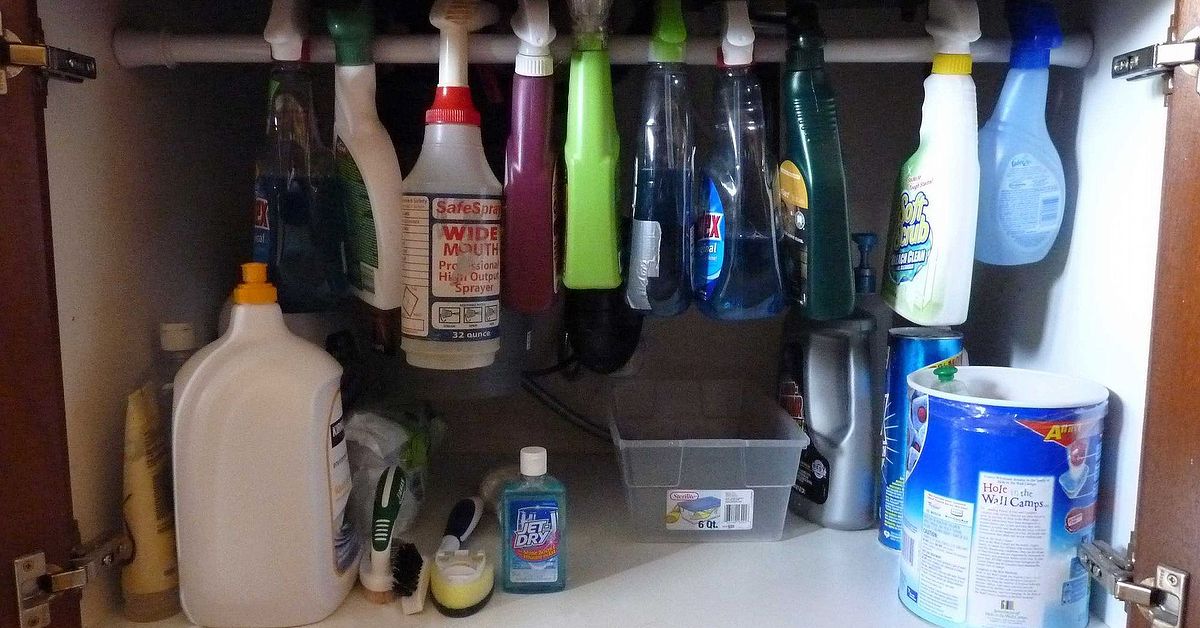
The under-sink cabinet is often where organization goes to retire. Pipes, garbage disposal parts, awkward corners, and random cleaning supplies all compete for space. A tension rod installed across the upper part of the cabinet can instantly create a hanging rail for spray bottles. Hook each bottle by its trigger and let it hang above the cabinet floor.
This clears the bottom area for bins, dishwasher pods, sponges, trash bags, or cleaning cloths. It also makes it easier to spot leaks, spills, and duplicates. If a bottle is too heavy or the trigger is flimsy, keep it in a bin instead. The goal is tidy storage, not a surprise waterfall of all-purpose cleaner.
Add Hanging Baskets
For even more storage, use S-hooks or handled baskets on the rod. Small baskets can hold scrub brushes, microfiber cloths, extra sponges, cleaning gloves, or dishwasher tablets. Choose lightweight baskets and avoid overloading them. Under-sink areas already deal with moisture, pipes, and limited space, so simple is better.
Organize the Bathroom and Shower
Create Extra Shower Storage
If your shower has one tiny ledge and a household full of shampoo personalities, a tension rod can help. Install a sturdy rod along the back wall or side wall of the shower, then hang small waterproof baskets with S-hooks. Use one basket for shampoo, one for conditioner, one for razors, and one for body wash. Suddenly, the floor of the shower stops looking like a product testing lab.
Choose rust-resistant rods and baskets for wet areas. Stainless steel, coated metal, and plastic baskets are usually better than untreated metal. Also, test the rod before loading it. Wet bottles are heavy, and a falling shower caddy has the emotional impact of a jump scare.
Hang Towels or Washcloths
A tension rod can also become a temporary towel bar in a small bathroom. Place it inside a cabinet, across a narrow wall niche, or beneath a shelf. Use it for washcloths, hand towels, or lightweight bath mats. This is especially handy in guest bathrooms, rental apartments, or dorm rooms where permanent towel bars are limited.
Organize Closets With Tension Rods
Store Scarves, Belts, and Accessories
Closet accessories often become a tangled nest. Install one or more small tension rods in a closet nook, between shelving sides, or inside a wardrobe. Add S-hooks for belts, necklaces, handbags, baseball caps, or scarves. For scarves, you can also drape them directly over parallel rods spaced several inches apart.
This method makes accessories easy to see, which matters because hidden accessories are basically forgotten accessories. If you cannot see the belt, you will not wear the belt. Then one day you find it behind a box and say, “Oh, I loved this,” like you have reunited with an old college friend.
Organize Shoes
Tension rods can help store certain shoes, especially heels. Place two rods parallel to each other near the bottom of a closet, then rest the shoes across them. Heels can hook over the front rod while the back rod supports the sole. This keeps shoes off the floor and makes pairs easier to find.
For flats, sneakers, and heavier shoes, a shelf is usually more stable. Tension rods are great, but they should not be forced into jobs they clearly did not apply for.
Add a Temporary Second Closet Rod
In a child’s closet, laundry nook, or guest closet, a sturdy tension rod can add temporary hanging space. Place it below an existing rod to create a double-hang zone for shorter clothing such as shirts, pants, kids’ outfits, or lightweight jackets. This is helpful for growing families because the layout can change as clothing sizes change.
Organize the Laundry Room
Create a Drying Station
A tension rod placed between two cabinets, walls, or shelves can become a small drying rail. Use it for delicates, damp shirts, reusable cleaning cloths, or items that should not go in the dryer. This is one of the easiest laundry room upgrades because it gives wet clothing a real home instead of forcing it to drape over doors, chairs, or the back of the nearest innocent sofa.
Choose a heavy-duty rod for drying clothes because wet fabric can be heavier than it looks. Leave space between garments so air can circulate. If your laundry room is humid, run a fan or open a door to help items dry faster.
Hang Laundry Supplies
Add S-hooks or clip-on baskets to store clothespins, mesh bags, stain-removal tools, lint rollers, or cleaning gloves. Keep frequently used supplies within arm’s reach of the washer and dryer. The more convenient the system, the more likely it is to survive real life.
Organize Craft and Gift Wrap Supplies
Build a Gift Wrap Station
Gift wrap rolls are awkward. They roll away, wrinkle, tear, and somehow make you feel judged during birthdays. A tension rod can hold wrapping paper rolls horizontally inside a closet, bookcase, or cabinet. Slide the rod through the cardboard tube of the wrapping paper, then secure it between two sides. Add separate rods for ribbon spools, tissue paper, or gift bags.
Keep scissors, tape, tags, and pens nearby in a small basket. When everything lives together, wrapping gifts becomes less of a scavenger hunt and more of a charming domestic activity. Almost.
Store Craft Ribbon and Tape
Small tension rods are ideal for ribbon spools, washi tape, twine, and craft tape. Slide the rolls onto the rod and mount it inside a cabinet or craft cart. You can pull and cut ribbon without digging through a bin. This setup is especially helpful for people who love crafting but do not love the part where the craft room begins to resemble a confetti storm.
Use Tension Rods to Hide Visual Clutter
Organization is not always about showing everything. Sometimes the best solution is to hide what needs to exist but does not need to be admired. A tension rod and a small curtain can conceal open shelving, a litter box area, under-stair storage, a laundry nook, or a messy play corner. This works well because it creates a clean visual line without requiring doors or permanent construction.
Choose washable fabric for busy areas and lightweight curtains for small rods. Keep the curtain easy to slide open. If accessing the area becomes annoying, the system will fail faster than a New Year’s resolution involving kale smoothies.
Entryway and Mudroom Ideas
Entryways collect bags, umbrellas, pet leashes, hats, and the mysterious objects people drop the second they walk in the door. A tension rod installed inside a bench cubby, closet, or narrow alcove can hold S-hooks for small bags, keys, leashes, or umbrellas. In a family entryway, assign each person a hook or basket to reduce the daily “Where is my stuff?” symphony.
You can also use a low tension rod as a divider inside a basket or cubby to separate gloves, scarves, or reusable shopping bags. The goal is to give grab-and-go items a clear landing spot before they migrate across the house.
Safety Tips for Organizing With a Tension Rod
First, respect the rod’s weight limit. If packaging lists a maximum capacity, follow it. If it does not, use common sense and start light. Second, make sure the rod is level and firmly tightened. Third, avoid placing breakable items underneath a rod that holds heavy supplies. Fourth, use rods with rubber end caps to protect surfaces and improve grip.
For bathrooms and kitchens, choose moisture-resistant materials. For painted cabinets, test the rod gently to make sure it does not leave marks. For households with small children or pets, avoid using tension rods as safety gates unless the setup is designed and supervised appropriately. A tension rod can create a visual barrier, but it should not replace a certified child safety gate at stairs or hazardous areas.
Common Mistakes to Avoid
Overloading the Rod
The most common mistake is treating a tension rod like a steel beam. It is not. Keep loads light to moderate and distribute weight evenly. If the rod bows, slides, or makes a creaking sound that seems emotionally distressed, remove some weight.
Skipping the Decluttering Step
A tension rod will not solve clutter if you simply hang clutter in a new location. Before installing one, edit the items first. Toss broken tools, expired products, duplicate lids, dried-out markers, empty bottles, and things you only keep because they “might be useful someday.” Someday has enough responsibilities already.
Installing It in the Wrong Place
The best tension rod location is easy to reach, easy to see, and connected to how you actually use the space. Do not place a daily-use item behind three other objects just because the rod technically fits there. Good organization follows behavior. Bad organization creates obstacle courses.
Experience-Based Tips: What Actually Works in Real Homes
After trying tension rod organization in different rooms, one lesson becomes obvious: the smallest projects often create the biggest relief. Under the kitchen sink is a perfect example. Before adding a rod, cleaning bottles usually sit in a crowded row, and the one bottle you need is always behind the tallest bottle you do not need. Installing a rod near the top of the cabinet and hanging spray bottles by their triggers creates instant space underneath. The cabinet looks cleaner, but more importantly, it becomes easier to use. That is the difference between decorating clutter and organizing it.
Another surprisingly effective project is the baking sheet divider. A vertical tension rod setup can make a cabinet feel custom-built. The trick is to use at least two rods per divider line when possible: one toward the front and one toward the back. This keeps pans from twisting sideways. It is also smart to place heavier cutting boards at the side of the cabinet and lighter cooling racks in the middle. Once everything stands upright, the entire cabinet becomes quieter and less dramatic. Opening a cabinet should not sound like a percussion solo.
In closets, tension rods work best when they support a specific category rather than becoming a catchall. A rod for belts works. A rod for scarves works. A rod for handbags can work if the bags are light and hung with sturdy hooks. But one rod holding belts, hats, bags, jewelry, tote bags, and that one random costume accessory from a party five years ago will quickly become clutter with better posture. Keep each rod focused.
The bathroom is another place where experience teaches moderation. Hanging baskets in the shower can be fantastic, especially when multiple people share one bathroom. However, wet products are heavy. Start with fewer bottles and choose only daily-use items. Store backup shampoo, extra soap, and rarely used treatments outside the shower. This keeps the rod stable and makes cleaning easier. A shower storage system should not require an engineering degree or a rescue plan.
For craft supplies, the gift wrap station is one of the most satisfying tension rod projects. It looks neat, saves paper from getting crushed, and makes wrapping gifts faster. The best version includes one rod for wrapping paper, one for ribbon, and a small container nearby for scissors, tape, and tags. If space is tight, mount the rods inside a closet where the rolls fit lengthwise. The key is leaving enough room between rods so the paper can spin without tearing. Nothing ruins holiday cheer like wrestling with a roll of snowman paper in a dark closet.
One practical tip that applies everywhere: install the rod slightly lower than you think if you need to remove items often. A high rod may look tidy, but if you need a step stool every time you want a sponge, the system will annoy you into abandoning it. Daily-use organization should be comfortably reachable. Save higher rods for backup supplies, seasonal items, or decorative curtains that hide storage.
Finally, remember that tension rods are best as flexible solutions. They are excellent for testing an organizing idea before investing in permanent hardware. If a rod works beautifully for six months, you may decide to upgrade to a mounted rail or custom shelf. If it does not work, you can move it in two minutes. That low-risk flexibility is why tension rods deserve a place in every organizer’s toolkit. They let you experiment, adjust, and improve your home without turning every project into a renovation.
Conclusion: A Small Rod With Big Organizing Energy
Organizing with a tension rod is simple, affordable, and surprisingly creative. Whether you are hanging spray bottles, filing baking sheets, taming scarves, creating shower storage, building a gift wrap station, or hiding visual clutter behind a small curtain, this low-cost tool can make your home easier to use. The best tension rod ideas are not about making your space look perfect. They are about making everyday life smoother, faster, and less likely to involve a cabinet avalanche.
Start with one problem area. Measure the space, choose the right rod, declutter first, and keep the setup light and practical. Once you see how useful one tension rod can be, you may start spotting opportunities everywhere. Consider this your warning: the junk drawer may be next.