Note: This article is written for web publishing and is based on current official Nintendo information, Nintendo Support guidance, and reputable U.S. gaming and technology coverage.
Introduction: The Small Switch With a Big Personality
The Nintendo Switch Lite is the console equivalent of a great travel backpack: compact, colorful, easy to grab, and surprisingly capable once you start packing games into it. Released as a handheld-only member of the Nintendo Switch family, the Switch Lite was designed for players who care less about docking a console to the TV and more about playing Mario Kart 8 Deluxe in bed, Animal Crossing: New Horizons on a commute, or The Legend of Zelda: Breath of the Wild while pretending to “just check something for five minutes.” Spoiler alert: it will not be five minutes.
Unlike the original Nintendo Switch and Nintendo Switch OLED, the Nintendo Switch Lite does not “switch” between handheld, tabletop, and TV modes. It is built specifically for handheld gaming. That sounds like a limitation, and for some players it is. But for others, especially solo players, younger gamers, travelers, students, and anyone who treats portable gaming like a lifestyle choice, the Switch Lite may be the most practical Nintendo Switch model.
In this guide, we will break down everything you need to know about the Nintendo Switch Lite: design, screen, performance, battery life, game compatibility, storage, accessories, pros and cons, and whether it still makes sense to buy one today. Think of this as your friendly, no-nonsense buying guideminus the confusing tech jargon and plus a little humor, because video games should be fun even before you press Start.
What Is the Nintendo Switch Lite?
The Nintendo Switch Lite is a dedicated handheld gaming system in the Nintendo Switch family. It plays Nintendo Switch games that support handheld mode, including many of the platform’s biggest hits. It has built-in controls, a smaller body than the standard Switch, a 5.5-inch touchscreen, and a lightweight design that makes it easier to carry around.
The biggest thing to understand is this: the Switch Lite is not a hybrid console. It cannot connect to a TV, it does not come with a dock, and its controllers are not detachable. If the original Switch is a convertible car, the Switch Lite is a sporty little scooter. It does one job, but it does that job very well.
Who Is the Switch Lite For?
The Nintendo Switch Lite is ideal for people who mainly play in handheld mode. That includes commuters, kids, college students, frequent travelers, cozy gamers, indie game fans, and households that already own a larger Switch but want a second system. It is also a strong pick for players who want access to Nintendo exclusives without paying for the larger OLED or standard models.
If your gaming habits involve a couch, a big TV, and multiplayer parties with friends, the Switch Lite may feel too limited. But if you mostly play alone with headphones on, wrapped in a blanket like a gaming burrito, the Lite makes a lot of sense.
Nintendo Switch Lite Design: Compact, Colorful, and Travel-Friendly
One of the best things about the Nintendo Switch Lite is its size. It is smaller and lighter than the standard Nintendo Switch, which makes it more comfortable for long handheld sessions. The controls are built directly into the body, giving the console a sturdy, unified feel. There is no wobble from detachable Joy-Con rails because, well, there are no detachable Joy-Cons.
The left side also includes a proper +Control Pad, often called a D-pad. This is a small but meaningful upgrade for players who love platformers, retro games, puzzle games, fighting games, and 2D indie titles. In games like Celeste, Hollow Knight, or classic collections, a real D-pad feels more precise than four separate directional buttons.
Available Colors
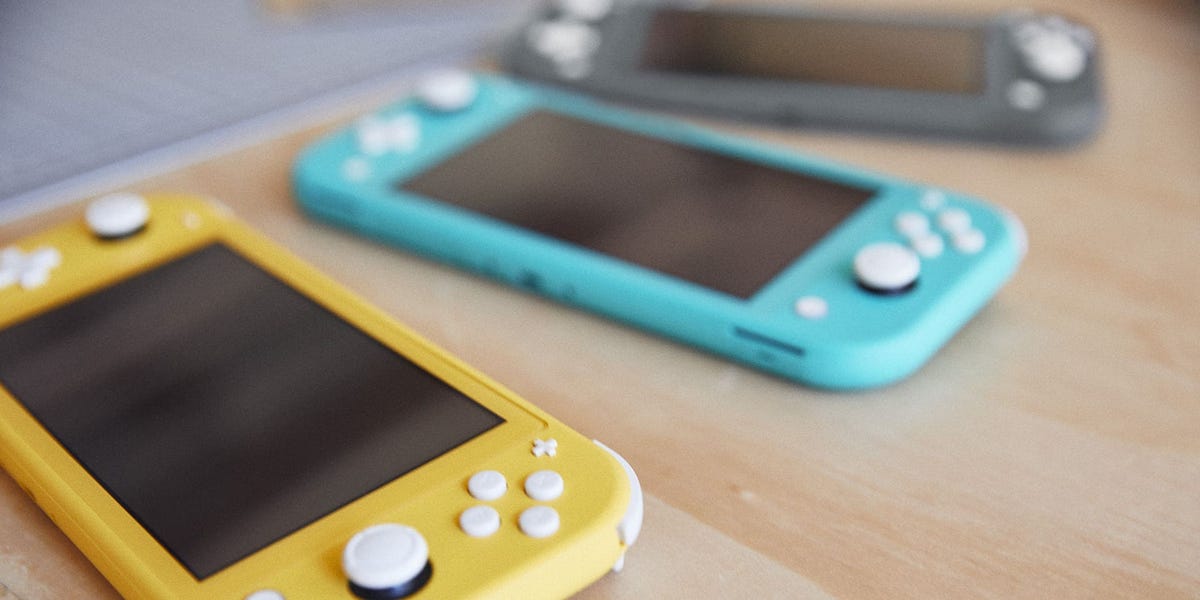
Nintendo Switch Lite comes in several cheerful colors, including blue, yellow, gray, turquoise, and coral. Nintendo has also released special editions and bundles over the years, such as themed systems tied to popular franchises. The color selection gives the Lite a playful personality, almost like Nintendo looked at a bag of candy and said, “Yes, but make it play Zelda.”
Portability and Comfort
Because the Switch Lite is lighter than other Switch models, it is easier to hold for long sessions. This matters more than people think. A console may have amazing games, but if your wrists start filing a complaint after twenty minutes, portability loses some charm. The Lite’s smaller frame makes it friendly for younger players and people with smaller hands, while still feeling substantial enough for adults.
Display and Performance: Small Screen, Same Switch Spirit
The Nintendo Switch Lite uses a 5.5-inch capacitive touchscreen with a 1280 x 720 resolution. That is the same handheld resolution as the original Switch, just on a smaller screen. Because the display is more compact, games often look sharp and clean. You will not get OLED-level contrast or the larger screen of the Nintendo Switch OLED, but the Lite’s display is perfectly serviceable for handheld play.
In terms of performance, the Switch Lite runs the same library of compatible Nintendo Switch games. It is not a more powerful version of the Switch, and it does not magically turn Pokémon frame rates into rocket science. But for most games, performance is similar to the standard Switch in handheld mode.
Best Types of Games for Switch Lite
The Switch Lite shines with games designed around handheld play. Cozy games, role-playing games, indie adventures, platformers, puzzle titles, farming sims, and turn-based games all feel right at home. Animal Crossing: New Horizons, Stardew Valley, Super Mario Bros. Wonder, Hades, Fire Emblem: Three Houses, Octopath Traveler, and Pokémon Scarlet and Violet are good examples of games that suit the portable format.
Large text-heavy games can be hit or miss depending on font size. Most major Nintendo titles are readable, but some third-party ports with tiny menus may require squinting. If you have ever tried reading microscopic inventory text and felt like you were decoding ancient runes, you know the struggle.
Game Compatibility: What Can You Play on Nintendo Switch Lite?
The Nintendo Switch Lite plays Nintendo Switch games that support handheld mode. Most Switch games do, including the majority of Nintendo’s biggest releases. Physical game cards work, digital downloads work, and Nintendo eShop access is available directly from the system.
However, not every game is equally suited to the Lite. Some titles require features found in detachable Joy-Con controllers, such as HD Rumble, IR Motion Camera functions, or motion controls. Games that rely heavily on detached Joy-Cons may require separate Joy-Con controllers to play properly.
How to Check Compatibility
Before buying a game, look for the handheld mode icon on the game’s packaging or Nintendo eShop listing. If handheld mode is supported, the game should work on Nintendo Switch Lite. This is especially important for party games, fitness games, rhythm games, and titles built around motion controls.
Games That May Need Extra Controllers
Some games can technically work on Switch Lite but are better with extra Joy-Con controllers. Examples include certain modes in Super Mario Party, motion-heavy games, and fitness titles. If a game expects you to swing, shake, point, or detach controllers, the Lite may need help from separate Joy-Cons. At that point, you should ask yourself whether buying a standard Switch would be simpler.
For most single-player and handheld-friendly titles, though, the Switch Lite is smooth sailing. It is a strong machine for Nintendo classics, indie gems, RPGs, roguelikes, platformers, and casual daily-play games.
Battery Life: Good Enough for Real Portable Play
Nintendo rates the Switch Lite battery life at approximately 3 to 7 hours, depending on the game and usage conditions. More demanding games drain the battery faster, while lighter indie games and 2D titles usually last longer. For example, a large open-world adventure will use more power than a simple puzzle game. Shocking, yesthe dragon-filled wilderness is harder on the battery than matching fruit tiles.
In practical use, many players can expect around four to five hours for moderate gaming, though your results depend on screen brightness, wireless settings, game intensity, and battery age. For travel, a USB-C charger or power bank is a smart accessory. The Switch Lite is portable, but it is not powered by fairy dust.
Charging and USB-C
The system charges through a USB-C port and includes a Nintendo Switch AC adapter in the box. Because it does not support TV output, the USB-C port is used for charging rather than docking. That simplicity is part of the Lite’s appeal: charge it, toss it in a case, and go.
Storage: Why You Will Probably Want a microSD Card
The Nintendo Switch Lite includes 32 GB of internal storage, and part of that space is reserved for system use. If you mainly buy physical game cards, that may be enough for a while. But if you plan to download full digital games, DLC, updates, and screenshots, you will probably want a microSD card sooner rather than later.
Nintendo Switch systems support microSD, microSDHC, and microSDXC cards up to 2 TB. For most players, a 128 GB or 256 GB microSD card is a sensible starting point. Digital collectors may prefer 512 GB or higher. Game save data is stored on the system memory, not copied directly to the microSD card, so keep that in mind when managing storage.
Physical vs. Digital Games
Physical games are great if you like collecting boxes, sharing games with family members, or saving internal storage. Digital games are more convenient because your library travels inside the system. The best approach for many Switch Lite owners is a mix: physical copies for huge first-party games and digital downloads for indie titles, sales, and games you play often.
Nintendo Switch Lite vs. Nintendo Switch vs. Switch OLED
The Nintendo Switch family includes multiple models, and choosing the right one depends on how you play. The Switch Lite is the smallest and most portable. The standard Nintendo Switch offers handheld, tabletop, and TV play. The Nintendo Switch OLED adds a larger OLED screen, improved kickstand, enhanced speakers, and more internal storage compared with the original model.
Choose Nintendo Switch Lite If…
Choose the Switch Lite if you only want handheld play, want the most compact Switch, prefer a lower-cost system, or need a second console for a family member. It is also a great fit for cozy gaming, travel, and casual daily sessions.
Choose Standard Switch or OLED If…
Choose the standard Switch or OLED model if you want TV output, tabletop mode, detachable Joy-Cons, local multiplayer flexibility, or a bigger screen. The OLED model is especially attractive if you play handheld often but still want docking support.
The Switch Lite is not trying to be the most flexible Switch. It is trying to be the easiest Switch to carry. That is the whole pitch, and honestly, it is a pretty good one.
Pros and Cons of Nintendo Switch Lite
Pros
- Compact, lightweight, and easy to carry.
- Built-in controls feel sturdy and comfortable.
- Proper D-pad is excellent for 2D games.
- Works with a huge library of handheld-compatible Nintendo Switch games.
- Great option for solo players, kids, travelers, and second-console households.
- Available in fun colors and special editions.
Cons
- No TV output or docking support.
- No detachable Joy-Con controllers.
- No built-in kickstand.
- Some games require separate Joy-Cons for full functionality.
- Smaller screen than standard Switch and OLED models.
- Built-in sticks mean repairs can be more inconvenient if drift appears.
Essential Nintendo Switch Lite Accessories
The Switch Lite works well out of the box, but a few accessories can improve the experience. A carrying case is almost mandatory if you plan to take it outside. The screen may be smaller than the OLED model, but it still deserves protection from keys, crumbs, and whatever mysterious objects live at the bottom of a backpack.
Recommended Accessories
- Carrying case: Protects the console during travel.
- Screen protector: Helps prevent scratches.
- microSD card: Expands storage for digital games and DLC.
- USB-C power bank: Useful for long trips.
- Bluetooth or wired headphones: Great for private gaming sessions.
- Extra Joy-Con controllers: Helpful for certain multiplayer or motion-control games.
You do not need to buy every accessory on day one. Start with a case, screen protector, and microSD card. That trio covers the basics without turning your “budget console” into a luxury shopping spree.
Is Nintendo Switch Lite Still Worth Buying?
The Nintendo Switch Lite can still be worth buying if you understand what it is. It is not the best choice for every player, especially now that Nintendo’s hardware lineup has expanded and newer systems exist. But the Lite remains appealing because it gives players access to the enormous Nintendo Switch library in a compact, handheld-first package.
The current U.S. Nintendo listing shows Switch Lite systems at a regular price of $229.99, though actual retailer pricing can vary. Sales, bundles, and used or refurbished options may make it more attractive. If you find a good deal and you mostly play handheld, the Switch Lite is still a charming little machine.
Best Buyer Profiles
The Switch Lite is best for players who want affordability, portability, and Nintendo games without needing TV play. It is a particularly good choice for children, families buying multiple systems, handheld RPG fans, and cozy gamers who spend hundreds of hours decorating islands, farming turnips, or promising themselves they will stop after “one more day.”
Who Should Skip It?
Skip the Switch Lite if you want to play on a TV, host couch multiplayer nights, use detachable Joy-Cons, or enjoy larger screens. Also consider another model if you are worried about repair convenience, since the controls are built into the system.
500-Word Experience Section: Living With the Nintendo Switch Lite
Using the Nintendo Switch Lite feels different from using a standard Nintendo Switch, and that difference becomes obvious after a few days. The first thing most players notice is how natural it feels as a handheld. The console is light enough to hold for longer sessions, compact enough to rest in a small bag, and simple enough that you do not think about setup. There is no dock, no controller rails, no decision about whether to play on the TV or in handheld mode. You just pick it up, wake it from sleep, and continue your game. That “instant play” feeling is one of the Switch Lite’s strongest advantages.
For daily gaming, the Lite is excellent for short bursts. It is perfect for checking your island in Animal Crossing, running one more dungeon in an RPG, clearing a few races in Mario Kart 8 Deluxe, or getting absolutely humbled by an indie roguelike while waiting for dinner. The system encourages casual play because it removes friction. You do not need to rearrange the living room or claim the TV. You can play on the sofa while someone else watches a show, during a lunch break, or in bed while making the classic gamer mistake of saying, “I will sleep after this quest.”
The smaller screen is usually not a problem in games with clean interfaces. Nintendo’s own games tend to scale well, and many indie games look crisp on the 720p display. However, the experience is not perfect. Some games with tiny text, dense menus, or busy visuals can feel cramped. Strategy games, complex RPG ports, and certain older PC-style games may require more patience. This does not ruin the console, but it is worth knowing before you build a digital library full of games designed for monitors.
The built-in controls are another highlight. The system feels solid in the hands, and the proper D-pad is wonderful for platformers and retro collections. On the other hand, because the controls are built in, there is less flexibility. If a regular Joy-Con develops an issue, you can replace or repair that controller separately. If a Switch Lite stick has a problem, the whole system is involved. That is not a reason to panic, but it is a reason to use a case, keep the console clean, and avoid treating it like a frisbee with buttons.
Battery life is fine for real-world portable gaming, though not infinite. For casual sessions around the house, it is rarely a concern. For travel, a power bank makes life easier. The best Switch Lite experience comes from treating it as a personal gaming companion rather than a shared entertainment hub. It is not the console you buy for a living-room party. It is the console you buy because you want your favorite games close by, ready whenever a free moment appears. In that role, the Nintendo Switch Lite remains lovable, practical, and surprisingly hard to put down.
Conclusion: A Small Console That Knows Exactly What It Is
The Nintendo Switch Lite is not the most powerful, flexible, or feature-packed Nintendo Switch model. It cannot connect to a TV, it lacks detachable Joy-Cons, and it asks players to commit fully to handheld mode. But that focus is also its strength. It is compact, comfortable, colorful, and built for people who want Nintendo games wherever life happens.
If you love handheld gaming, enjoy solo adventures, or want a lighter and simpler entry into the Switch library, the Nintendo Switch Lite is easy to recommend. If you want big-screen play and multiplayer flexibility, choose a standard Switch, Switch OLED, or newer Nintendo hardware instead. The key is knowing your play style. The Switch Lite is not for everyone, but for the right player, it is a tiny treasure chest full of Mario, Zelda, Pokémon, indies, cozy games, and portable fun.
Research Note
This article synthesizes information from official Nintendo product pages, Nintendo Support storage guidance, and reputable U.S. technology and gaming coverage, including reporting and reviews from The Verge, WIRED, GameSpot, Polygon, Tom’s Guide, PCMag, CNET, TIME, GamesRadar, IGN, and LifeWire.