Few horror films have inspired as many heated group chats, think pieces, and “wait, was that a happy ending?” debates as
Midsommar. Ari Aster’s 2019 daylight nightmare about grief, codependency, and flower crowns has quietly climbed
the lists of modern horror greats while also becoming one of the most divisive movies of the last decade. Depending on
who you ask, it’s either a slow, sun-drenched masterpiece or a beautifully shot relationship horror where nothing
“really happens” until the final act.
This article pulls together rankings, fan reactions, and critic commentary to map out where
Midsommar actually sits in the horror landscape today and why opinions about it are so wildly different.
Consider this your friendly, spoiler-filled tour through the Hårga, with a little less screaming and a lot more analysis.
Where Does Midsommar Rank in Modern Horror?
First, some big-picture context. In the years since its release, Midsommar has steadily cemented itself as one
of the signature horror films of the 2010s. It’s frequently included in lists of the best horror movies of the 21st
century and stands out as one of the defining titles of A24’s “elevated horror” wave, alongside movies like
Hereditary, The Witch, and The Lighthouse.
When critics rank Ari Aster’s feature films, Midsommar usually lands near the top often second only to
Hereditary. Many list-makers praise the movie’s confidence in slowing everything down: instead of relying on
jump scares, it leans into dread, ritual, and the horror of a breakup stretched out over nearly three hours in some
cuts. The result is a film that feels less like a rollercoaster and more like slowly sinking into quicksand while
everyone around you smiles politely.
Aggregator scores support its high status. The film boasts strong critic ratings and solid audience scores, with reviews
consistently praising its production design, Florence Pugh’s performance, and the audacity of setting so much horror in
blinding, unforgiving sunlight. Even people who don’t like the movie often admit they can’t stop thinking about
it and that kind of lingering impact is exactly what pushes a film up long-term rankings.
Why So Many Viewers Love Midsommar
The Daylight Horror Aesthetic
Horror traditionally hides in the dark. Midsommar does the opposite. Nearly everything important happens in
broad daylight, under cloudless Scandinavian skies, with flowers, white linen, and cheerful music. That visual contrast
between serenity and brutality is one of the main reasons fans rank the film so highly.
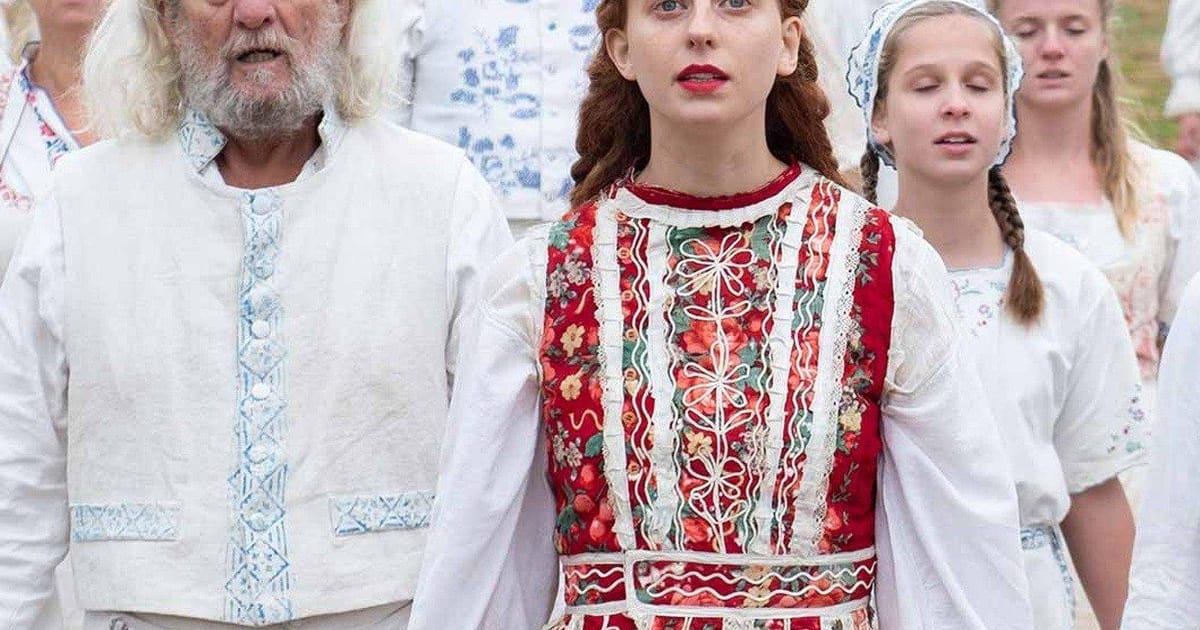
The Hårga community is deliberately designed to be visually irresistible: the maypole, the runes, the symmetrical
shots, the embroidered costumes, and the lush green fields create a dreamlike space that feels almost too perfect. This
“Instagrammable cult aesthetic” has become iconic you can spot a Midsommar-inspired Halloween costume from
across a crowded party. For many fans, this striking look alone earns the movie a permanent spot in their top horror
lists.
Florence Pugh’s Breakout, Break-Down Performance
Even people who are lukewarm on the film tend to agree on one thing: Florence Pugh absolutely anchors it. As Dani, she
moves from suffocating grief after a horrifying family tragedy to desperate emotional dependence on her boyfriend
Christian, and finally to something that looks like a twisted form of catharsis.
The opening scenes show her panic attacks, shaky phone calls, and silent crying with such rawness that the rest of the
film feels haunted by that grief. Critics often single out Pugh’s ability to make Dani’s emotions feel physically heavy,
as if you’re carrying them with her. Many viewers rank Midsommar high specifically because of her
performance they may debate the story, but they rarely debate her.
The Folk-Horror Breakup Movie
One of the most popular takes on Midsommar is that it’s a breakup movie disguised as a folk-horror film.
Dani’s relationship with Christian is already failing before the tragedy, but after her loss, breaking up feels
impossible. She clings to him because he’s all she has left, while he stays out of guilt, laziness, and fear of looking
like the bad guy.
For many viewers, this dynamic is painfully relatable. The cult’s rituals become a funhouse mirror for the breakup:
Christian’s emotional absence is echoed by his eventual literal sacrifice, and Dani’s final smile plays as the ultimate
“I’m done with you” moment just, you know, with a burning temple and bear suit involved. Fans who see the film as a
metaphor for reclaiming agency in a toxic relationship tend to rank it very highly, often above more traditional horror
stories.
Why Some Viewers Can’t Stand It
The Pacing Problem (or Feature, Depending on Your Taste)
Not everyone is on board the maypole. A common complaint is that Midsommar is “too slow” or “boring” for a
horror movie. Instead of constant shocks, the story spends a lot of time on rituals, conversations, and long, silent
shots of people staring at trees, buildings, or each other. If you go in expecting a traditional, fast-paced horror
experience, this can feel like wading through a very beautifully lit swamp.
For those viewers, the film’s length especially in the director’s cut pushes it down their personal rankings. They
might respect the craftsmanship while still ranking it below punchier films that deliver more frequent scares or clearer
plot escalation. In other words, if you like your horror to sprint, Midsommar can feel like a very strange,
unsettling, but ultimately slow motion walk.
The Graphic Violence and Emotional Brutality
Another group of viewers place Midsommar low on their lists because it’s simply too much to stomach. Even
though the film doesn’t rely on a lot of jump scares, it still contains abrupt, graphic moments of violence and suicide
that can be genuinely upsetting especially in contrast with the calm, pastoral setting.
Add to that the emotional brutality of watching Dani be dismissed, gaslit, and minimized by Christian and his friends,
and it’s easy to see why some audiences say, “Well-made, but I never want to see that again.” For them, the discomfort
outweighs any cathartic or artistic payoff, so the movie sinks in their rankings even as they acknowledge its
technical brilliance.
The Moral Ambiguity of the Ending
The ending is one of the biggest opinion splitters. Dani chooses to sacrifice Christian along with other victims, and
the villagers celebrate as the temple burns. She starts the scene sobbing and ends it with a shaky but unmistakable
smile. Some viewers read this as a dark empowerment arc she finally chooses herself over her abuser. Others see it as
a horrifying moment of total assimilation into a murderous cult.
This ambiguity is intentional, but it also creates wildly different emotional responses. Viewers who crave moral
clarity may rank Midsommar lower because they feel the movie “endorses” the cult or refuses to condemn its
violence clearly enough. Those who enjoy open-ended, unsettling conclusions, on the other hand, see that same ambiguity
as a major strength.
The Director’s Cut vs. The Theatrical Cut
Any conversation about Midsommar rankings has to acknowledge that there are essentially two versions of the
film in circulation. The director’s cut adds about 24 minutes of footage, bringing the runtime to nearly three hours.
The added material deepens the relationship drama: we see more of Christian’s passive cruelty, more of Dani’s emotional
isolation, and additional ritual scenes that make the Hårga feel even more unsettling and omnipresent.
Fans of the director’s cut argue that it makes Dani’s arc clearer and even more tragic, while rounding out Christian as
a fully realized (if thoroughly awful) person rather than just a generic bad boyfriend. The extra time also helps some
viewers understand the community’s logic, however twisted it may be.
Critics who prefer the theatrical cut say the longer version dilutes the impact by lingering on too many details and
slowing the pace further. For them, the tighter runtime keeps the dread more focused and the experience less exhausting.
Interestingly, people who love the director’s cut tend to rank Midsommar higher overall; people who found the
original already too long naturally don’t jump at the chance to watch an even lengthier version.
Big Debates and Hot Takes Around Midsommar
Is Dani Free or Completely Trapped?
One of the biggest ongoing debates is what Dani’s final smile actually means. Is she freed from Christian and her old
life, or is she now fully consumed by a cult that murders outsiders in the name of tradition? The film plays it both
ways: she finds a community that mirrors her pain and literally breathes with her during her breakdowns, but that same
community commits brutal acts under the guise of ritual.
Viewers who see the moment as liberating tend to focus on the idea of chosen family and emotional validation something
Dani never receives from Christian and his friends. Those who see it as tragic emphasize that she’s trading one form of
unhealthy dependence for another. Your interpretation often determines whether you rank the film as a cathartic
breakup-horror masterpiece or a bleak story about how grief can make you vulnerable to manipulation.
Is It Really a Horror Movie?
Another common hot take: “Midsommar isn’t horror; it’s just a weird drama with cult stuff.” People who say this
often rank it low on horror lists but may still respect it as a psychological drama. They argue that the film doesn’t
feel “scary” in the traditional sense instead, it’s deeply disturbing, unsettling, or even darkly funny.
On the flip side, defenders of the film’s horror status point out that horror doesn’t have to mean jump scares and
monsters. The horror here comes from cultural disorientation, emotional exploitation, and the slow realization that the
smiling people serving you tea also fully intend to sacrifice you at some point. The fact that it all happens in
sunlight, surrounded by flowers, makes it arguably more horrifying, not less.
Christian: The Worst Boyfriend in Horror History?
A quick scroll through fan rankings reveals that Christian is often nominated as one of the worst boyfriends in horror,
if not cinema in general. He forgets Dani’s birthday, tries to dump her right before her family tragedy, gaslights her
repeatedly, plagiarizes his friend’s academic work, and then participates in a ritual that is… let’s say “extraordinarily
not safe for relationships.”
Many viewers feel that the film’s emotional core isn’t the cult at all it’s the painfully familiar dynamic of being
with someone who would rather endure a miserable relationship than be honest. For audiences who see their own past
relationships reflected in Dani and Christian, Midsommar shoots up their rankings as one of the most emotionally
accurate horror stories about love gone rancid.
How Midsommar Fits Into the Horror Landscape
Whether you personally rank Midsommar at the top of your horror list or somewhere in the middle, it’s hard to
deny its influence. It helped solidify the idea of “daylight horror” as a recognizable aesthetic and pushed more
mainstream audiences toward slower, more psychologically driven genre films. It also arrived at a moment when horror was
increasingly dealing with trauma, grief, and mental health themes that have continued to dominate the genre.
As time goes on, the film’s reputation has held up surprisingly well. New horror releases may be flashier or more
fast-paced, but Midsommar keeps returning to conversations about toxic relationships, cults, and the strange
things we’ll tolerate to avoid being alone. That kind of staying power is exactly what allows a movie to climb the
rankings over time, even if it wasn’t universally adored on day one.
Experiences and Takeaways: Living With Your Own Midsommar Opinions
So what does it actually feel like to live with a movie as polarizing as Midsommar? If you’ve ever
tried to recommend it to a friend, you already know it’s not as simple as saying, “It’s good; you should watch it.”
Watching Midsommar is an experience, and ranking it tends to say as much about you as it does about the film.
For some viewers, the experience of watching Midsommar is almost therapeutic in a very twisted way. If
you’ve ever stayed too long in a bad relationship, ignored red flags, or tried to make yourself smaller so someone else
would stay, Dani’s journey hits hard. Her desperation in the beginning can feel uncomfortably familiar, and the final
shot can feel like a brutal kind of emotional justice. People who connect deeply with that arc often describe the film
as “healing” or “cathartic,” even though it’s surrounded by violence and death.
For others, the movie is emotionally draining. The combination of graphic imagery, suffocating grief, and relentless
cult rituals can stick in your head long after the credits roll not in a fun “let’s watch that again” sort of way,
but in a “I need a silly comedy and a snack immediately” sort of way. Those viewers may still respect the film, but their
ranking is influenced by a simple question: “Do I ever want to feel like that again?” If the answer is no, the film
drops lower, even if they admit it’s objectively strong cinema.
There’s also the social side of the experience. Midsommar is the kind of movie you watch and then have
to talk about. Post-movie conversations often turn into mini therapy sessions or ethics debates: Was Dani justified?
Does the cult actually “support” her, or are they just manipulating her? Would you have left after the first ritual? (If
your answer is “no,” please reconsider your vacation choices.)
Group rewatches can be especially revealing. People who loved the film the first time may notice new details: the way
the background subtly warps when characters are on hallucinogens, the quiet glances between villagers that hint at
future sacrifices, or the way Dani’s clothing shifts from darker tones to the bright white dress and flower crown. Viewers
who disliked it may find that knowing what’s coming makes the pacing more tolerable or that the dread hits even
harder now that they know exactly where it’s headed.
The real fun, though, is comparing rankings with friends. In one group, you might have:
- Someone who ranks Midsommar as their number one modern horror film because it “feels like being inside a
panic attack in the best way.” - Someone who puts it squarely in the middle of their list: “Great performance, love the look, but I’ll pick something
shorter next time.” - Someone who ranks it near the bottom and will never forgive you for making them watch the cliff scene.
All three are valid and that’s part of what keeps the movie relevant. You don’t just watch Midsommar and move
on; it becomes a recurring reference point for conversations about horror, relationships, and how art can make us
uncomfortably aware of our own emotional baggage.
It’s also worth remembering that the intensity behind the film extends beyond the screen. Florence Pugh has spoken about
how emotionally taxing the role was and how deeply she had to immerse herself in Dani’s grief to make it feel real.
Knowing that can make the viewing experience feel even heavier you’re not just watching a character fall apart; you’re
witnessing an actor push herself right to the edge to tell that story convincingly.
Ultimately, your personal ranking of Midsommar might change over time. You may revisit it after a breakup, a
major life change, or just a few more years of movie-watching under your belt and realize it hits differently. That’s a
sign of a film with real staying power. Whether you end up crowning it a modern classic or filing it under “never again,
thanks,” Midsommar earns its place in the cultural conversation simply by refusing to be easily forgotten.
Conclusion: So, Where Should Midsommar Rank?
If we blend critic lists, fan reactions, and the film’s growing cultural footprint, Midsommar comfortably sits
in the top tier of modern horror even if its exact ranking is hotly debated. It’s visually unforgettable, emotionally
raw, and structurally bold enough that people are still analyzing it years later.
In the end, your personal ranking comes down to what you want from horror. If you crave speed, clear moral lines, and
traditional scares, Midsommar may land in your “respect, don’t love” category. But if you’re drawn to movies
that marinate in emotion, blur the boundaries between healing and harm, and linger in your mind long after you’ve
stopped watching, don’t be surprised if it quietly climbs toward the top of your list flower crown, burning temple,
and all.